
Gochugaru has a flavor that's hard to pin down-mildly smoky, barely sweet, warm but not sharp-and that balance is what makes swapping it tricky. A good gochugaru substitute needs to match at least two of those qualities: heat level, color, and texture.
Get all three right and your dish barely skips a beat.
The best choice depends on what you're making. Flake-based options keep the visual texture in sauces and kimchi-style preparations.
Powder swaps dissolve faster but can overpower quickly. Smokiness and sweetness are the two variables most substitutes miss, so knowing your dish's flavor direction before you start will save you a lot of guesswork.
Gochugaru's balance of mild heat, light smokiness, and slight sweetness is hard to copy in one ingredient. The closest single swaps are Korean red pepper flakes and Aleppo flakes. For smoky depth, use smoked paprika plus a small cayenne pinch. Always start lower on ratio and taste before adding more.
5 Best Gochugaru Substitutes, Ranked by Flavor Match
Every substitute below is ranked by how closely it mirrors gochugaru's heat, color, and smokiness. The table gives you a fast scan before you read the detail.
| # | Substitute | Best For | Ratio | Key Note |
|---|---|---|---|---|
| 1 | Korean Red Pepper Flakes | Both | 1:1 | Closest flavor and texture |
| 2 | Thinned Gochujang | Cooking | ¾:1 | Watch sweetness levels |
| 3 | Aleppo Pepper Flakes | Both | 1:1 | Fruitier, less smoky |
| 4 | Smoked Paprika + Cayenne | Cooking | 1:1 | Best smoky color match |
| 5 | Red Pepper Flakes (crushed) | Cooking | 1:1 | Generic heat, less complex |
Flake-based swaps generally hold their texture better than powders in sauces and stews. If your dish is sweet-sensitive, hold back on gochujang until you've tasted the base.
1. Korean Red Pepper Flakes
Korean red pepper flakes from a different brand or region are the most honest stand-in here, and they work at a straight 1:1 ratio in almost every recipe. If you've run out of your usual gochugaru but have a bag from a different producer, the flavor shift is minor.
Korean-style chili flake options are worth bookmarking in our rundown of crushed chili profiles if you want to understand how brands differ.
- Best for: Sauces, marinades, and dishes where visible red flakes matter to the final look
- Ratio: 1:1 for most recipes, no adjustment needed unless the grind is coarser
- Coarser grind fix: Reduce by about 10% and let the flakes simmer longer to release flavor
Skip if: your recipe needs fine, even dispersal of chili-coarse flakes leave hot pockets instead of even heat.
2. Thinned Gochujang
Gochujang is already fermented, already red, already complex. The issue is texture and sweetness.
It is a paste, not a flake, so you thin it with a small splash of water before adding it to any liquid-based dish. We find that this fermented paste brings an almost identical base note to gochugaru but adds enough sweetness that you'll need to reduce any added sugar or honey in the recipe.
- Ratio: Start at ¾ of the listed gochugaru amount; add only if heat or color needs boosting
- How to use: Thin with 1 teaspoon of water per tablespoon of paste before adding to the pan
- Sweetness fix: Reduce honey, mirin, or any sugar in the recipe by half before tasting
Skip if: you're baking or making something where extra sweetness will throw off the entire flavor balance.
3. Aleppo Pepper Flakes
Aleppo flakes are fruity and a little oily, and they carry a gentler heat than gochugaru. They land closer to 10,000 Scoville units where gochugaru sits around 4,000-8,000, so the heat gap is real but manageable.
If you need to go further with Aleppo in other dishes, the full breakdown of swapping Aleppo out has good direction on that front.
Aleppo Pepper Flakes
Works for: Marinades, quick sauces, and dishes where fruity chili notes are welcome
Skip if: Your recipe depends on gochugaru's smokiness and you have no other smoky ingredient to compensate
- Ratio: 1:1, then add a small pinch more if heat feels low after tasting
- Flavor note: Expect fruity and slightly sun-dried rather than the faintly smoky Korean style
- Heat booster: A bare pinch of cayenne brings the heat back without changing the flake texture
4. Smoked Paprika + Cayenne
This two-part blend is the most reliable smoky match. Smoked paprika handles color and depth; a small pinch of cayenne adds back the sharpness that paprika alone never delivers. Use them together at a combined 1:1 ratio and you'll land close to gochugaru's warmth without overshooting.
If you later find yourself needing to swap out the paprika too, our guide on swapping smoked paprika covers the next step.
- Ratio: Roughly ¾ smoked paprika to ¼ cayenne, totaling 1:1 of the original gochugaru amount
- Color match: Smoked paprika produces an almost identical deep red in sauces and rubs
- Bitter-smoke fix: If the dish tastes smoky-bitter after simmering, reduce paprika by 1 teaspoon and add a small salt pinch
Skip if: you only have hot paprika instead of smoked-it will overshoot the heat fast and skip the smoky quality entirely.
5. Red Pepper Flakes (Crushed)
Crushed red pepper flakes are the pantry fallback most cooks reach for first. They give you heat and a visual red presence, but they skip gochugaru's faint sweetness and mild smoke.
Think of them as a heat-only stand-in. For anyone weighing whether standard crushed flakes can carry more flavor load, our page on hot flake alternatives is useful context.
- Ratio: 1:1 as a starting point, but taste after the first simmer before adding more
- Flavor gap: Expect a more generic chili character-less complexity, no smokiness
- Fix: Add a small pinch of smoked paprika alongside if you want any smoky lift
Skip if: the dish depends on gochugaru's distinct Korean-style flavor and you have no smoky ingredient to add alongside.
Making Your Gochugaru Substitute Work
Getting the swap right is mostly about patience and order of operations. Start at the lower end of any ratio, stir the substitute into the dish off-heat or in a small test spoon first, and only commit to the full amount after one taste.
If you're working with choosing a gochujang alternative inside the same dish, adjust that before you calibrate the gochugaru swap, since both affect sweetness. Powder substitutes-cayenne and sweet paprika-spread faster than flakes, so they need even more restraint at the start.
- Heat last: Add spice in two rounds-half at the start of cooking, the rest after tasting near the end
- Smokiness fix: A bare ¼ teaspoon of smoked paprika alongside any flake substitute pulls the flavor closer to gochugaru without changing texture
- Baking tip: Cut powder substitutes by 15-20% for baked goods, since concentrated dry heat reads sharper when moisture is lower
Frequently Asked Questions
Yes, but thin it first and use only ¾ of the listed amount. Cut any added sugar or honey in the recipe by half before you taste and adjust.
Powder works better in baking because it disperses evenly through batter. Use sweet paprika at ¾:1 and add a small pinch of black pepper for savory depth.
Start with half the amount-a ½:1 ratio. Cayenne is significantly hotter than gochugaru, so add it in small pinches until the heat matches.
Smoked paprika matches the color and smoky note well. Add a small cayenne pinch-about ¼ teaspoon per tablespoon of paprika-to bring the heat closer.
Too hot: add a neutral splash of stock or a spoonful of yogurt to dial it back. Too mild: stir in a small cayenne pinch off-heat and taste again.
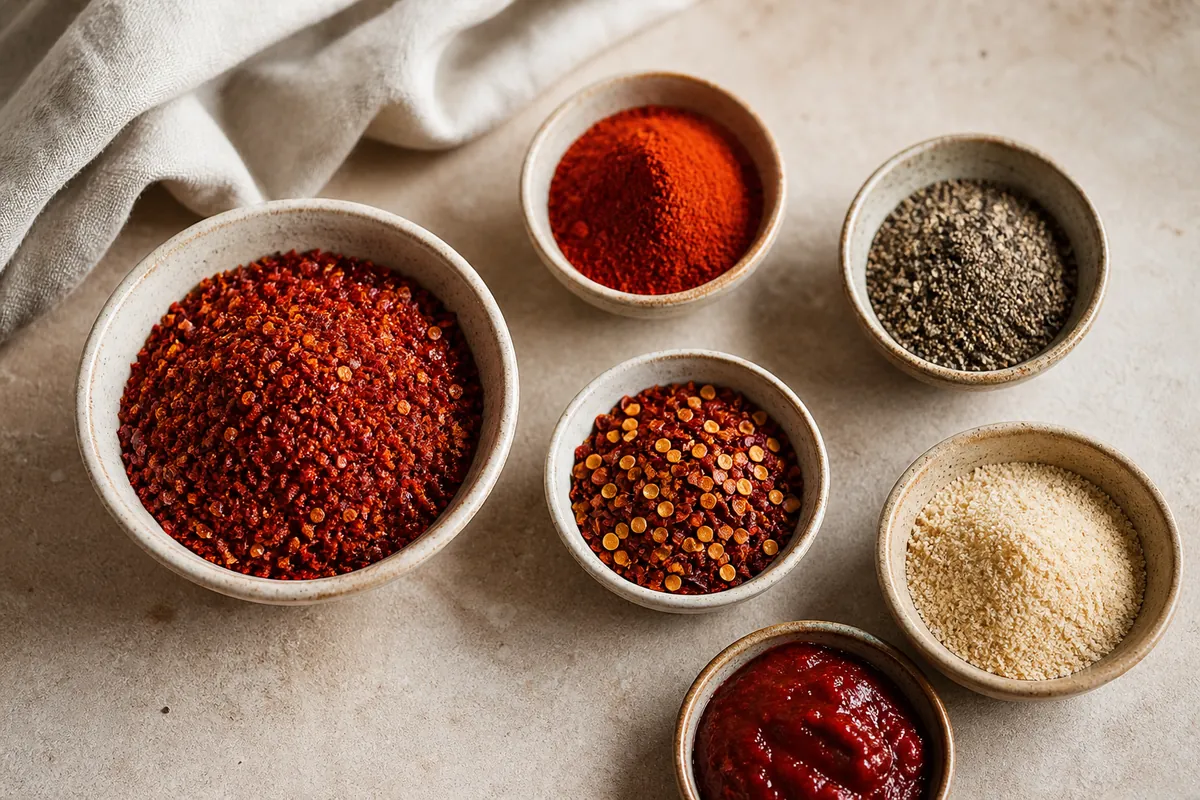
5 Best Gochugaru Substitutes (with Ratios)
Ingredients
Equipment
Method
- Identify your use case (stew/sauce vs. baking vs. quick marinade) so you choose for heat + texture, not just spice.
- Start with the closest ratio from the list, then mix the substitute into your dish off-heat first (or in a small test batch).
- Adjust in small steps: add more substitute for heat, or add a neutral splash (water/stock) if it’s tasting too sharp.
- For smoky substitutes (e.g., smoked paprika), taste after 5–10 minutes of simmering and refine with salt or a tiny pinch of cayenne.
- For baking, expect less “crunch”—reduce by 10–20% if you want flavor without noticeable texture.
Notes
- If your substitute is powder-based (cayenne, paprika), it disperses faster—start lower than you would with flakes.
- Sweetness-heavy swaps (like thinned gochujang) may require reducing added sugar in the recipe.
Tried this recipe?
Let us know how it was!
Carrie is a food writer and editor with more than 15 years of experience. She has worked for some of the biggest names in the food industry, including Bon Appétit, Food & Wine, and Martha Stewart Living.
As the Editor in Chief of EpicureDelight, Carrie oversees all of the content on the site. She also manages the team of contributing writers and editors, who help to create delicious recipes, helpful tips, and informative articles that you’ll find on the site.
A native of the Chicago area, Carrie is passionate about all things food. She loves trying new restaurants and experimenting with new recipes in her kitchen. She’s also a graduate of the Culinary Institute of America, so she knows a thing or two about food!



