Green chartreuse has a flavor that's genuinely hard to pin down. It's herbal and sweet, with a sharp minty-lime finish and enough alcohol (55% ABV) to make it noticeable in both cocktails and cooked dishes.
When you run short, a good green chartreuse substitute keeps that herbal-sweet complexity alive without leaving your recipe flat.
No single swap replicates it perfectly. Chartreuse uses 130+ alpine herbs, so you're matching a role, not a formula.
The goal is to keep the herbal brightness, a touch of sweetness, and enough aromatic lift to carry the dish.
Green chartreuse brings herbal complexity, minty-lime sweetness, and strong alcohol to cocktails and cooking. Yellow chartreuse is the closest swap. For baking, a green herbal liqueur works well. Absinthe works but needs reduction. Gin plus mint syrup covers emergency builds. Peppermint extract is last resort only.
5 Best Green Chartreuse Substitutes You Can Trust
Each option below targets a different role: some match the herbal depth, some match the sweetness, and one is strictly for emergencies. Use the table to pick your substitute fast, then read the item for technique details.
| # | Substitute | Best For | Ratio | Key Note |
|---|---|---|---|---|
| 1 | Yellow Chartreuse | Both | 1:1 | Milder, warmer herb profile |
| 2 | Green Herbal Liqueur | Both | 1:1 | Match mint-herb intensity |
| 3 | Absinthe (green) | Cooking | ¾:1 | Reduce to avoid anise overload |
| 4 | Dry Gin + Mint Syrup | Both | 1:1 | Gin botanicals carry the swap |
| 5 | Herbal Bitters + Simple Syrup | Cooking | 1:1 | Add syrup to balance bitterness |
1. Yellow Chartreuse
Yellow chartreuse is the most honest swap on this list. It comes from the same monastery, uses a similar botanical base, and lands at 1:1 in nearly every application.
If you want to explore swapping yellow chartreuse itself, that's a separate decision entirely, but here it sits firmly as your go-to green chartreuse stand-in.
Yellow Chartreuse
Works for: cocktails, glazes, baking, any recipe needing herbal-sweet depth without strong mint punch
Skip if: your recipe specifically needs the green's sharp minty-lime finish-yellow reads warmer and more honeyed
- Where it shines: Stirred cocktails and warm sauces where herbal complexity matters more than the green's cooling menthol edge
- How to adjust: Add a drop of white crème de menthe if you need that minty top note back; keep it tiny so it doesn't go candy-sweet
2. Green Herbal Liqueur
A store-bought green herbal liqueur like Chartreuse-adjacent bottles (Dolin Génépy, Bénédictine with mint added, or similar alpine styles) can step in at 1:1 with minimal fuss. The key is reading the label: you want botanical complexity, not just sweetness.
The minty liqueur profile of crème de menthe is related but much narrower-useful as an accent, not a direct stand-in.
Choose a bottle that feels herbal on the nose, not candied. Avoid anything where licorice or anise is the first thing you smell.
- Color/profile cue: Look for a green or amber bottle with "alpine herbs," "botanical blend," or "génépy" on the label
- Sweetness level: Should feel sweet but not syrupy; if it coats your glass like liqueur candy, dilute by 10-15%
- Mint/herb intensity: Mint should be one note among several, not the only one you detect
- Alcohol reduction tip: Add this substitute late in a short stir so the aromatic top notes survive the heat
*Skip if:* The liqueur tastes heavily of licorice or anise-it will overwhelm a cocktail and turn harsh in cooking.
3. Absinthe (Green)
Best for intensity. Absinthe brings real herbal firepower, and its green color keeps the visual cue intact. The anise-forward swap options for absinthe itself confirm how dominant that note can be, which is exactly why you reduce it here. Use ¾ of what the recipe asks for green chartreuse.
- Flavor role: Covers the herbal and aromatic lift; doesn't replicate Chartreuse's sweetness, so add a small sugar bump
- Dilution/ratio: Start at ¾ the original measure; for sauces, cut to ½ and reduce slowly over low heat
- Timing: Add early for body in long-cooked sauces; add in the last 30 seconds of a cocktail build to preserve aroma
*Skip if:* Your dish already has fennel, star anise, or ouzo-style notes-absinthe will push them into overdrive.
4. Dry Gin + Mint Syrup
Dry gin already carries a botanical load: juniper, coriander, citrus peel, and often angelica root. That base is closer to green chartreuse than most people expect.
Pairing it with a small amount of liquid sweetener versus granulated matters here-mint syrup or a few drops of crème de menthe integrate faster and more evenly than dissolved sugar.
Use the gin as your 1:1 base, then add mint sweetness at roughly 1 teaspoon per 30ml of gin. Build it in two steps for the cleanest result.
- Step 1: Measure your gin at the full recipe amount; taste it alongside your other ingredients to gauge how herbal it already reads
- Step 2: Stir in mint syrup (or 2-3 drops crème de menthe) gradually, tasting after each addition until the herbal-sweet balance matches what Chartreuse would bring
*Skip if:* You're baking at high heat for an extended time. Mint syrup fades quickly-stir it in near the end of baking instead.
5. Green Herbal Bitters + Simple Syrup
Bitters are concentrated. One full measure of herbal bitters without any sweetener will read as sharp and medicinal, not liqueur-like.
The fix is simple: combine a neutral spirit base with bitters and syrup in a ratio that mimics the sweetness level of the original. Think of the syrup as the carrier that makes bitters behave like a liqueur.
Herbal Bitters + Simple Syrup
Works for: sauces, glazes, finishing drizzles, cocktails where you want herbaceous edge without buying a new bottle
Skip if: your recipe already has honey glaze or other heavy sweeteners-the bitters will compound complexity into harshness
- Starting ratio: Use 2 parts simple syrup to 1 part green herbal bitters, then taste and add syrup in small increments
- For sauces and glazes: Stir the bitters-syrup blend in off heat; prolonged cooking sharpens bitterness instead of mellowing it
- Sweetness correction: If it still tastes bitter after two additions of syrup, add a small squeeze of lime juice-it bridges bitterness and herbal notes without adding more sugar
Making Green Chartreuse Substitutes Work
Matching a substitute isn't just about swapping volume. You're matching three things at once: herbal intensity, sweetness level, and alcohol strength.
Start by identifying which of those your recipe leans on most. A Last Word cocktail needs all three in balance; a glaze mainly needs the herbal-sweet finish; a baked good mostly needs the aroma.
Once you know the role, you know how much to adjust. If you're curious about this herb-forward spirit's full flavor profile before you substitute, that's a good baseline to read first.
- For cocktails and drinks: Add the substitute at the same stage you'd add the original-late in the build for stirred drinks, early for shaken ones where it needs to integrate
- For baking and sauces: Add earlier for alcohol body and depth; add in the final minutes if you want herbal aroma to survive the heat
- For taste correction: Too much anise? Add a small squeeze of citrus. Too sweet? Add a drop of plain herbal bitters. Too mild? Use the warm honeyed notes of yellow chartreuse as a reference point and boost herb intensity with a fresh mint muddled in
Frequently Asked Questions
Yellow chartreuse is the closest match at 1:1. It keeps the herbal-sweet complexity with a slightly warmer, more honeyed profile instead of the sharp minty-lime finish of the green.
Yes, but reduce it to ¾ of the original amount. Absinthe is more alcohol-intense and anise-forward, so it needs a small sweetness bump to read closer to Chartreuse.
Add simple syrup in small increments and taste after each addition. A small squeeze of lime juice also bridges bitterness without adding noticeable sweetness.
A green herbal liqueur or the gin-plus-mint-syrup combo works best. Add it near the end of baking so herbal aroma doesn't evaporate before the dish is done.
Only as a last resort. Dilute extract heavily in vodka and add gradually-peppermint extract is highly concentrated and can overpower a dish with just a few drops too many.
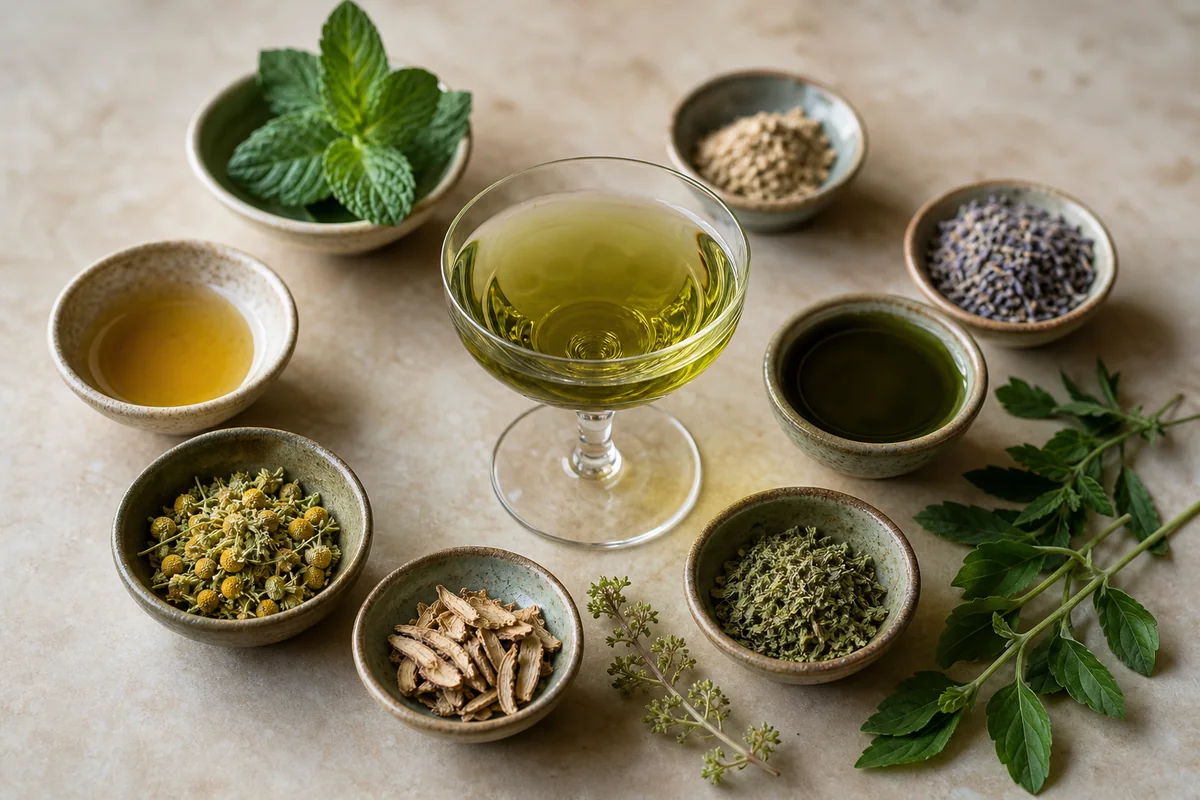
5 Best Green Chartreuse Substitutes You Can Trust
Ingredients
Equipment
Method
- Identify your use case: cocktails/drinks vs. baking vs. sauces/glazes (alcohol evaporates differently than herbal top notes).
- Start with the listed ratio for your substitute, then taste as you go—Chartreuse is herbal and sweet, not just “minty.”
- If your substitute is too intense (e.g., absinthe or extract), reduce the amount and add a small sweetness bump to smooth it out.
- When using in baking or long-cooked sauces, add the substitute earlier for body or later for brighter aroma depending on the dish.
- For extract/oil swaps, avoid over-concentration: add gradually and dilute with vodka or another neutral alcohol.
Notes
- Chartreuse flavor comes from complex botanicals plus sweetness; aim for both, not just one note.
- If your substitute is darker/more anise-forward, reduce slightly and add a small sweetness correction.
Tried this recipe?
Let us know how it was!
Carrie is a food writer and editor with more than 15 years of experience. She has worked for some of the biggest names in the food industry, including Bon Appétit, Food & Wine, and Martha Stewart Living.
As the Editor in Chief of EpicureDelight, Carrie oversees all of the content on the site. She also manages the team of contributing writers and editors, who help to create delicious recipes, helpful tips, and informative articles that you’ll find on the site.
A native of the Chicago area, Carrie is passionate about all things food. She loves trying new restaurants and experimenting with new recipes in her kitchen. She’s also a graduate of the Culinary Institute of America, so she knows a thing or two about food!