
Hemp oil has a flavor that's easy to underestimate. It's nutty and faintly grassy, with a softness that works beautifully drizzled over a bowl or whisked into a vinaigrette.
The catch is that it breaks down fast under heat, making it a poor choice for the stove.
Picking the right hemp oil substitute depends almost entirely on how you're using it. A walnut or flaxseed oil can mirror that cold-press nuttiness for finishing dishes.
A more stable oil, like avocado or rice bran, handles heat far better but won't replicate the flavor.
Hemp oil is nutty and grassy, best used cold or at low heat. For cold dishes, walnut or flaxseed oil come closest in flavor. For cooking, avocado or rice bran oil hold up better. Use a 1:1 ratio for all substitutes, then taste and adjust.
5 Best Hemp Oil Substitutes Ranked by Use-Case
Each substitute below is matched to a specific role: cold dressing flavor, omega-3 alignment, heat stability, fruitiness, or bold aroma. The table is a fast reference.
The sections below it explain how to make each one work.
| # | Substitute | Best For | Ratio | Key Note |
|---|---|---|---|---|
| 1 | Walnut Oil | Cold Finish | 1:1 | Closest nutty flavor match |
| 2 | Flaxseed Oil | Cold Only | 1:1 | More assertive, adjust down |
| 3 | Avocado Oil | Cooking | 1:1 | Neutral, high smoke point |
| 4 | Olive Oil (EVOO) | Dressings | 1:1 | Fruity shift, not nutty |
| 5 | Toasted Sesame Oil | Bold Dishes | ½:1 | Very strong, dilute first |
If you're making a homemade dressing and want to keep things fresh longer, understanding storing finished dressings properly matters as much as the oil you pick.
1. Walnut Oil
Walnut oil is the closest thing to hemp oil in a cold-use context. It has the same low-heat delicacy, a clear nutty character, and a subtle earthiness that mirrors hemp oil's grassy edge without being loud about it.
If you want more nut-based oil swaps beyond walnut, there are several solid options depending on the dish.
- Best for: Vinaigrettes, salad drizzles, grain bowls, and cold noodle dishes
- Flavor match: Very close - nutty, mild, slightly earthy without the grassy bite of hemp
- Intensity adjustment: No adjustment needed at 1:1; taste before adding more
- Cooking limit: Keep it cold or room temperature only; heat turns it bitter
Skip if: You're sautéing or roasting anything. Walnut oil is a finishing oil only, and heat ruins it quickly.
2. Flaxseed Oil
Flaxseed oil overlaps with hemp oil on omega-3 content, which makes it a logical swap for health-conscious cooks. The flavor is more assertive, though.
It carries a slightly grassy, almost bitter edge that can overwhelm mild dishes. Understanding the flavor notes in cold-pressed oils helps you decide how far to push it.
Flaxseed Oil vs Hemp Oil
Works for: Cold salads, smoothies, drizzled grain bowls, and raw dressings where a stronger nutty-grassy note is acceptable
Skip if: The dish is warm or gently cooked-flaxseed oil oxidizes under heat, developing an unpleasant taste
- Start ratio: Begin at 1:1, then reduce by 10-20% if the flavor reads as too sharp
- Best use: Cold applications only - dressings, smoothie bowls, dips, and raw sauces
- Avoid: Any warm dish, direct heat, or extended contact with acidic marinades before eating
Skip if: Your recipe involves any heat at all. Flaxseed oil is strictly a cold-finish oil.
3. Avocado Oil
Avocado oil is the practical pick when your recipe actually requires cooking. Its smoke point is around 500°F, which means it handles sautéing, roasting, and stir-frying with no drama.
The flavor is mild and faintly buttery, nowhere near hemp oil's nuttiness.
That flavor gap is real, but it's workable. Season the dish with toasted nuts, a little sesame, or a final squeeze of lemon to add back the aromatic dimension that avocado oil doesn't bring on its own.
For dishes where you're swapping between cooking oils regularly, avocado oil is one of the most versatile bases you can keep on hand.
Skip if: You want the dish to carry hemp oil's specific nutty-grassy flavor in the final bite. Avocado oil is great for cooking, not for flavor-forward finishing.
4. Extra-Virgin Olive Oil
Extra-virgin olive oil is an easy reach, and it works well for dressings and light drizzles. The flavor shift is real - you're trading hemp's nuttiness for olive's fruitiness and mild pepper notes.
That trade works fine on green salads, roasted vegetables, and bread-dipping situations. If you keep a light, grassy EVOO in the pantry rather than a bold or bitter one, the gap between it and hemp oil is smaller than you'd expect.
- Best dish types: Vinaigrettes, light pasta finishes, drizzled on soups, roasted vegetable plates
- Intensity adjustment: A mild EVOO needs no adjustment at 1:1; a sharp one may need 10% less
- Cooking limit: Fine for low-to-medium sautéing; skip very high heat, which degrades EVOO flavor
Skip if: Your dish leans on hemp oil's nutty profile specifically and olive's fruity note would clash with the other ingredients.
5. Toasted Sesame Oil
Toasted sesame oil is aromatic in a way that hemp oil simply isn't. It's warm, smoky-nutty, and immediately recognizable.
That intensity is both its strength and its problem as a substitute. Hemp oil is subtle.
Sesame is not. When swapping in bold oils like this one, the dish context matters more than the ratio.
It earns its place here because the aroma category overlaps: both oils are nutty and add depth to a dish without adding color. In the right context, sesame oil feels at home where hemp oil would have gone.
- When it works: Asian-inspired dressings, cold noodle sauces, grain bowls with soy or ginger
- How to reduce intensity: Mix half sesame with half neutral oil (avocado or rice bran) to reach hemp oil's softer tone
- Pair with: Rice vinegar, citrus, or fresh herbs to balance the smokiness and keep it from dominating
- What to avoid: Cooking it directly in a hot pan - it burns fast and turns acrid
Skip if: The recipe is a delicate light vinaigrette or any dish where a strong, smoky sesame aroma would feel out of place.
Making Hemp Oil Substitutes Work
The swap itself is easy. Getting the result right takes one extra step.
Start by deciding whether your oil is doing a flavor job (finishing, dressing) or a functional job (cooking fat, heat transfer). That single decision narrows the field immediately.
When you understand what this grassy cold-pressed oil actually contributes flavor-wise, the right swap becomes obvious.
- Match by heat first: Walnut and flaxseed for cold or no-heat use; avocado, olive, or rice bran for cooking
- Adjust intensity for flax and sesame: Start at 1:1, taste after mixing, and cut by up to 25% if the flavor is too forward
- Time your oil right: Add finishing oils (walnut, sesame) at the end, off heat - adding them early wastes the flavor and risks bitterness
If you're only chasing heat performance and not flavor, pick any high-smoke-point oil and rebuild hemp's aromatic character separately with toasted seeds, crushed walnuts, or a squeeze of citrus.
Frequently Asked Questions
Walnut oil is the closest match for cold dressings. It has a similar nutty softness and works at a 1:1 ratio without needing any other adjustment.
Yes, but only if you choose the right one. Avocado oil and rice bran oil handle sautéing well. Walnut, flaxseed, and sesame oils will burn and taste bitter under direct heat.
Walnut oil is closer. Olive oil brings fruitiness and mild pepper notes, while walnut oil has a softer, earthier nuttiness that mirrors hemp oil more directly.
Not exactly. Flaxseed oil has a sharper, slightly more bitter flavor. Start with a little less than the recipe calls for and taste before adding more.
Store opened bottles in a cool, dark place or refrigerate them. Walnut and flaxseed oils oxidize quickly and should be used within 4-6 weeks of opening.
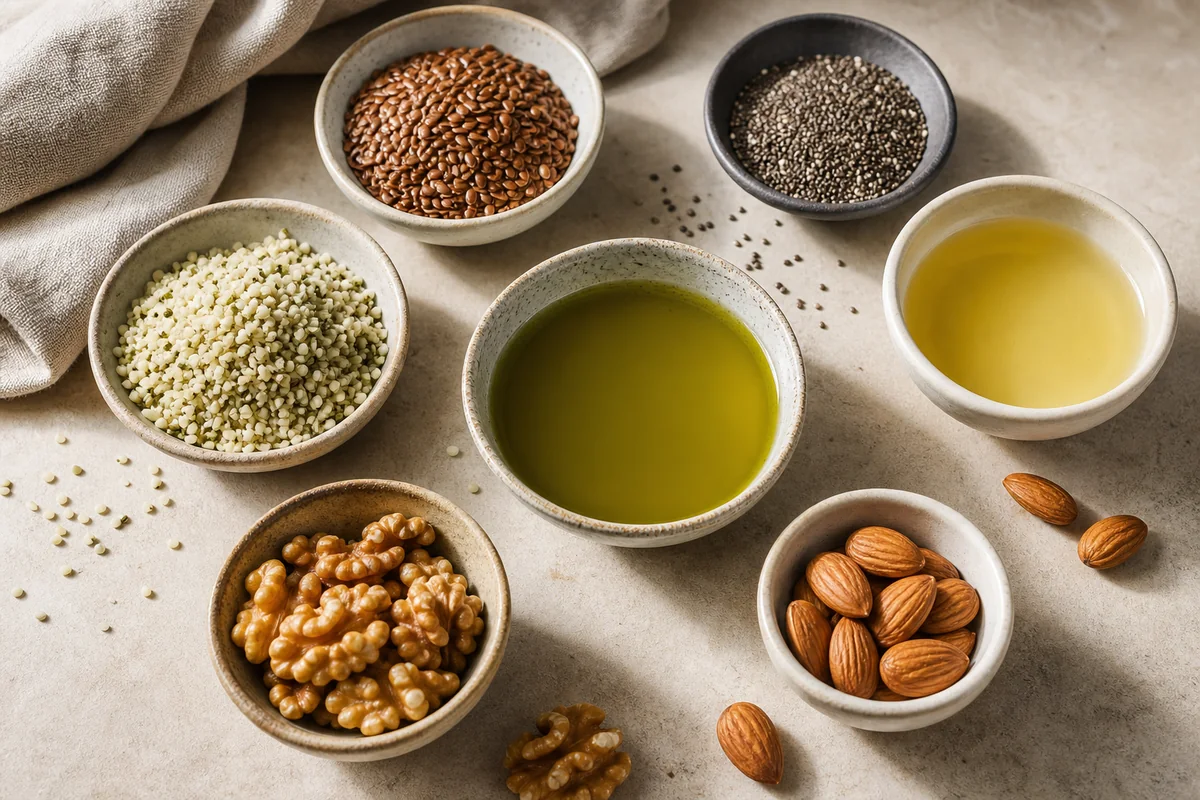
5 Best Hemp Oil Substitutes for Better Results
Ingredients
Method
- Decide how you’re using hemp oil: finish a dish (cold/low heat) or cook at higher heat—this determines which substitute to pick.
- Choose the closest option from the list: walnut/flax for a nutty finish, avocado/olive/rice bran for cooking stability, or sesame for bold aroma.
- Apply at a 1:1 ratio, then adjust for intensity (especially flaxseed and sesame oils).
- If the substitute is stronger or more fragrant than hemp oil, reduce by 10–25% and top up only after tasting.
- Store opened oils away from light and heat and use within a shorter window to prevent rancid flavors.
Notes
- For best flavor, use nut/flax-style substitutes for finishing rather than deep frying.
- If you’re swapping for health claims (omega-3), prioritize flaxseed oil and handle it carefully to avoid oxidation.
Tried this recipe?
Let us know how it was!
Carrie is a food writer and editor with more than 15 years of experience. She has worked for some of the biggest names in the food industry, including Bon Appétit, Food & Wine, and Martha Stewart Living.
As the Editor in Chief of EpicureDelight, Carrie oversees all of the content on the site. She also manages the team of contributing writers and editors, who help to create delicious recipes, helpful tips, and informative articles that you’ll find on the site.
A native of the Chicago area, Carrie is passionate about all things food. She loves trying new restaurants and experimenting with new recipes in her kitchen. She’s also a graduate of the Culinary Institute of America, so she knows a thing or two about food!



