
Smooth icing depends on one thing: sugar fine enough to dissolve without leaving grit. When the bag is empty and a recipe is waiting, the right icing sugar substitute can save the batch-if you pick one that matches the texture job at hand.
Icing sugar is used in three main ways: thin drizzle glazes, thick pipable frostings, and cookie doughs where a powdery sweetness is key. Each job needs a different level of fineness, and that's what separates a good swap from a grainy mess.
Confectioners' sugar is the closest match at a 1:1 ratio. For homemade, pulse granulated sugar with a small amount of cornstarch until silky-fine, then sift twice. Caster sugar works for thin glazes but may feel sandy in piped icings. Always do a finger-rub texture check before committing to a batch.
5 Best Icing Sugar Substitutes (Quick Swaps)
| # | Substitute | Best For | Ratio | Key Note |
|---|---|---|---|---|
| 1 | Confectioners' sugar (sifted) | Both | 1:1 | Closest match, no grit |
| 2 | Powdered sugar (check label) | Both | 1:1 | Watch starch content |
| 3 | Homemade (sugar + cornstarch) | Both | 1:1 | Sift twice for smoothness |
| 4 | Caster sugar + cornstarch | Glazes | ¾:1 | Thin drizzles only |
| 5 | Granulated (pulsed) + cornstarch | Glazes | ¾:1 | Emergency use; re-sift |
1. Confectioners' Sugar
Confectioners' sugar and icing sugar are nearly identical in most markets. Both are ultra-fine, both include a small amount of cornstarch for anti-caking, and both dissolve quickly in this fine-grained powder form without turning cloudy or gritty.
Use it exactly where the recipe says icing sugar, at the same weight or cup measure.
- Best for: All icing jobs, piped frostings, glazes, dusting
- Ratio: 1:1 by weight or volume
- Thickness tip: Add liquid 1 teaspoon at a time to reach drizzle or spreadable consistency
- Sifting: Always sift, even from a fresh bag, to guarantee lump-free results
Skip if: you need a product without any anti-caking starch and cannot confirm the label.
2. Powdered Sugar
In the US, "powdered sugar" and "confectioners' sugar" mean the same thing. In some other countries, this finely milled sugar may have a slightly different starch ratio or grind level, so check the label before assuming it behaves identically to icing sugar.
- Best for: Glazes, cookie icings, simple buttercream
- Ratio: 1:1 in most cases
- Higher starch content: Can produce a slightly drier, thicker icing-add ½ teaspoon of liquid to loosen
- Lower starch content: May thin out faster, so reduce any added milk or cream by 1 teaspoon first
Skip if: your powdered sugar is pre-flavored (vanilla or otherwise) and the recipe needs a neutral base.
3. Homemade Icing Sugar
Put 1 cup of granulated sugar and 1 tablespoon of cornstarch into a high-powered blender or food processor. Pulse in 10-second bursts until the texture shifts from sandy to silky.
The cornstarch is not optional-it prevents clumping and gives the finished powder a softer body in icing.
Too Coarse (Under-Pulsed)
Works for: sprinkling lightly over baked goods where some texture is fine
Skip if: making any icing or glaze (grit will be obvious on the tongue)
Sifted Powder-Fine
Works for: glazes, frostings, piped decorations, and 1:1 replacement in most recipes
Skip if: you need royal icing consistency-true powdered sugar is still more stable
- Pulse goal: Run until the sugar no longer sounds gritty against the blender walls
- Sift: Pass through a fine-mesh sieve twice before using
- Ratio: 1 cup granulated + 1 tablespoon cornstarch yields roughly 1 cup icing sugar
- Texture check: Rub a pinch between your fingers-zero grit means it's ready
Skip if: your blender or processor isn't powerful enough to fully pulverize sugar (a weak motor leaves grit).
4. Caster Sugar + Cornstarch
Caster sugar is already finer than standard granulated, which gives it a head start. Still, it is not fine enough to dissolve cleanly in no-cook icings on its own.
If you want to explore fine-grain sugar swaps more broadly, there are other uses worth knowing, but for icing specifically, always combine it with cornstarch.
- Ratio: Use ¾ cup caster sugar + 1 tablespoon cornstarch per 1 cup icing sugar needed
- Best for: Thin drizzle glazes over cakes or loaves where a slight grain is acceptable
- Where it fails: Thick piped decorations-the texture can feel sandy against the tooth
- Liquid adjustment: Add liquid slowly; caster dissolves faster than granulated but slower than true icing sugar
Skip if: you need smooth, pipable icing with a clean finish. Caster-based swaps are for drizzles only.
5. Granulated Sugar (Pulsed) + Cornstarch
This is the emergency option when nothing else is in the pantry. Standard coarser white sugar needs serious blender time to get anywhere near icing-sugar territory.
We recommend at least 60 to 90 seconds of pulsing in a high-speed blender, then a mandatory double sift.
- Pulse time: 60-90 seconds minimum; feel the powder between fingers before stopping
- Cornstarch: Add 1 tablespoon per cup of sugar before pulsing, not after
- Ratio: ¾ cup pulsed granulated + 1 tablespoon cornstarch per 1 cup icing sugar needed
- Still gritty? Re-pulse for 30 seconds, sift again through the finest sieve you own
Skip if: you're short on time. Grit in a smooth icing is hard to hide and ruins the finish.
Making Icing Sugar Substitutes Work (Texture + Sweetness)
Getting a substitute to behave like real icing sugar comes down to two steps: starting fine enough and adding liquid in small amounts. A substitute that passes the storing and using stage in good condition is already halfway there.
Sift every substitute before measuring, and stop adding liquid the moment the icing coats a spoon cleanly.
- Sift or pulse first: No substitute skips this step. Even store-bought powders benefit from a pass through a fine-mesh sieve.
- Add liquid gradually: Start with half the liquid the recipe calls for, then add the rest 1 teaspoon at a time until the right consistency appears.
- Finger-rub check: Pinch a small amount of the dry substitute before mixing. If you feel grit, the powder needs more processing before it goes into the icing.
Frequently Asked Questions
Confectioners' sugar is the closest match and swaps in at a 1:1 ratio with no adjustments needed. Sift it first to remove any compressed clumps from the bag.
Yes. Pulse 1 cup of granulated sugar with 1 tablespoon of cornstarch in a high-powered blender until silky-fine, then sift twice. The result works well in most glazes and simple frostings.
Grit means the sugar was not pulsed or sifted finely enough before use. Re-pulse for another 30 seconds and sift through the finest-mesh sieve you have.
For icing that is too thick, stir in warm water ½ teaspoon at a time. For icing that is too thin, sift in a little more powdered sugar and stir until it coats a spoon cleanly.
Caster sugar works in cookie dough because baking dissolves the finer crystals. Avoid it in no-cook icings or decorating, where it stays grainy.
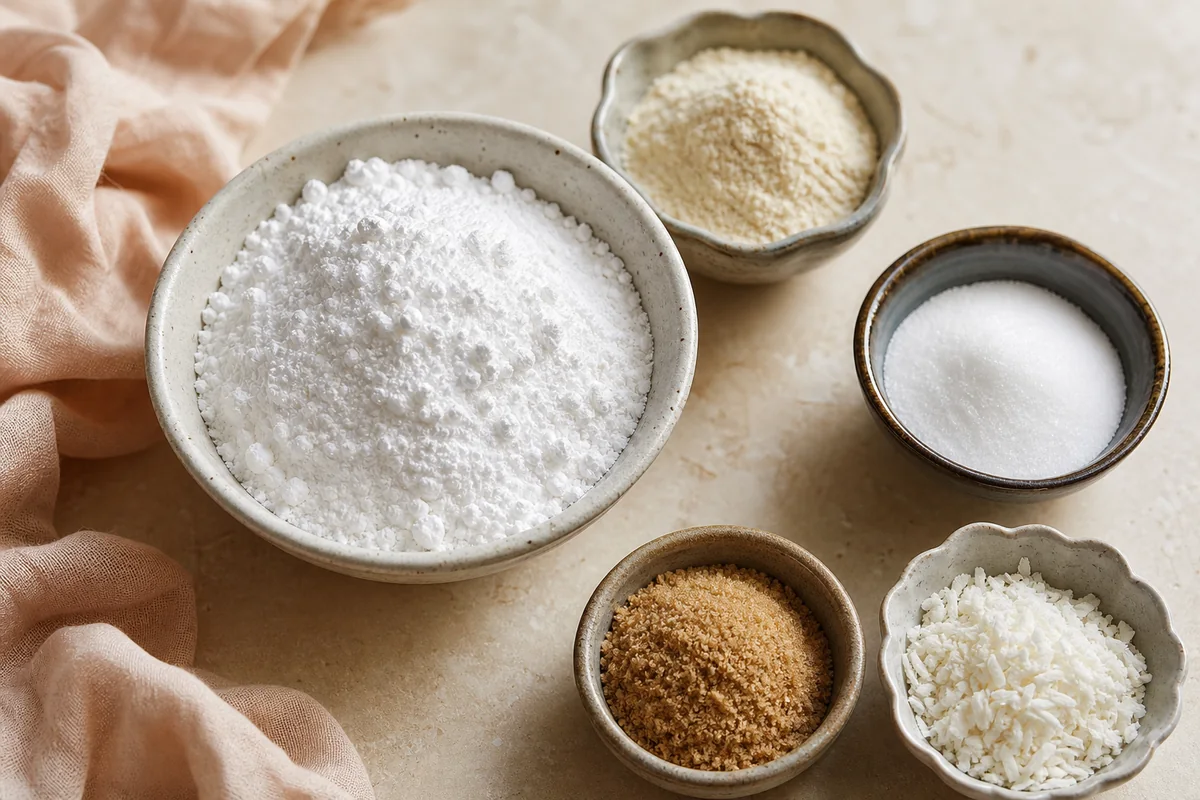
5 Best Icing Sugar Substitutes (Tested)
Ingredients
Equipment
Method
- Identify your goal: thin drizzle icing, thick piped icing, or cookie/dough sweetening.
- Choose the closest match from the table: prioritize store-bought confectioners/powdered sugar for smooth results.
- If using a homemade powder, pulse sugar until silky-fine, sift twice, then weigh/measure to match the 1:1 ratio.
- If your substitute is less powdery (caster/granulated), whisk in a pinch of cornstarch and add liquid slowly until it reaches the right thickness.
- Do a quick texture check: rub a bit between fingers (no grit) and adjust with more cornstarch (thicker) or a splash of liquid (thinner).
Notes
- Smoothness depends on how finely the sugar is powdered; grit usually means insufficient pulsing/sifting.
- Sweetness is roughly similar across icing sugar/powdered sugar, but some substitutes are drier or thinner—adjust with liquid.
Tried this recipe?
Let us know how it was!
Carrie is a food writer and editor with more than 15 years of experience. She has worked for some of the biggest names in the food industry, including Bon Appétit, Food & Wine, and Martha Stewart Living.
As the Editor in Chief of EpicureDelight, Carrie oversees all of the content on the site. She also manages the team of contributing writers and editors, who help to create delicious recipes, helpful tips, and informative articles that you’ll find on the site.
A native of the Chicago area, Carrie is passionate about all things food. She loves trying new restaurants and experimenting with new recipes in her kitchen. She’s also a graduate of the Culinary Institute of America, so she knows a thing or two about food!



