
That sharp, grassy bite in your salsa or taco filling? That's jalapeno pepper substitute territory the moment you realize your fridge has none.
Jalapeños bring two things at once: moderate heat and a distinctly fresh green-pepper flavor. Most swaps cover one well but need a little coaxing to hit both.
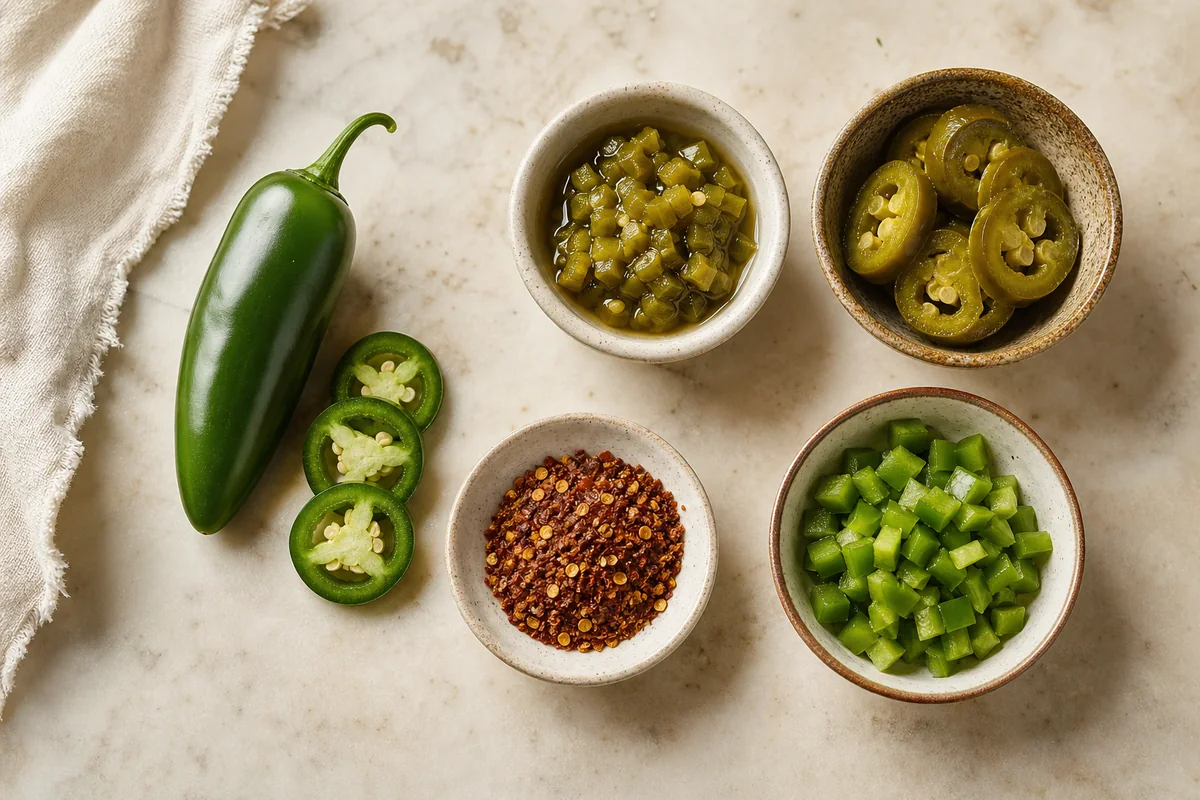
For the closest fresh flavor, serrano is your best pick. Go poblano or Anaheim when you want pepper flavor with less heat. Reach for pickled jalapeños when fresh isn't an option. Use cayenne only when texture doesn't matter.
5 Best Jalapeno Pepper Substitutes (Heat + Flavor Match)
Pick your swap below by scanning heat level and best use. The ratio column tells you where to start - then adjust by seeds and taste.
| # | Substitute | Best For | Ratio | Key Note |
|---|---|---|---|---|
| 1 | Serrano Pepper | Both | 1:1 | Hotter - remove seeds first |
| 2 | Poblano Pepper | Both | 1:1 | Mild - add cayenne for heat |
| 3 | Anaheim Pepper | Both | 1:1 | Very mild - boost with spice |
| 4 | Pickled Jalapeños | Both | 1:1 | Drain for cleaner pepper taste |
| 5 | Cayenne Powder | Heat Only | 1:8 | No texture - start very small |
1. Serrano Pepper
Serrano is the sharpest flavor match for jalapeño. It has the same fresh, grassy green-pepper character, and those familiar sharp pepper notes translate well in salsas, dips, and stir-fries.
The one catch is heat. Serranos run two to five times hotter than jalapeños.
Start with half the amount your recipe calls for, then taste and add more.
Seeds In vs. Seeds Out
Works for: keeping seeds when you want the full serrano heat in cooked sauces or marinades
Skip if: your recipe is raw (salsa, guac) - remove seeds and membrane to pull heat closer to jalapeño level
- Salsa and dips: Use half a seeded serrano per jalapeño called for; taste before adding more
- Stir-fries and cooked dishes: You can use a full serrano if you want bold heat
- Pickling: Works 1:1 - the brine tames heat slightly over time
Skip if: you're cooking for people sensitive to spice. Serrano's floor is already above jalapeño's ceiling.
2. Poblano Pepper
Poblano is the go-to when you want a genuine pepper flavor but need far less heat. It's earthy, slightly sweet, and holds up beautifully when roasted.
If you're curious about choosing a milder alternative, poblano is usually the answer.
The tradeoff is obvious: poblanos are much milder than jalapeños. Plan to add a pinch of cayenne or a splash of hot sauce to bring heat back up.
- Roasted salsas: Char the poblano directly over a flame for a smoky, complex base
- Casseroles and stuffed peppers: Use 1:1 by volume; the larger size actually gives you more to work with
- Heat adjustment: Add ¼ teaspoon cayenne per poblano to approximate jalapeño warmth
- Finely diced toppings: Works well where you want pepper flavor but no one wants surprise heat
Skip if: the recipe depends on jalapeño heat as a core flavor. Poblano alone won't get you there.
3. Anaheim Pepper
Anaheim peppers are mild, slightly sweet, and easy to find in most grocery stores. They carry a clean green-pepper flavor that works well when swapping in a gentle pepper makes sense for the dish.
They are significantly milder than jalapeños. Plan to add heat separately if your recipe needs it.
The best strategy with Anaheim is to layer in heat from another source. A pinch of cayenne or a few drops of hot sauce added after chopping gets you surprisingly close. Finely diced Anaheim also holds its shape well in cooked dishes.
- Chopped toppings: Use 1:1; the mild flavor lets other ingredients shine
- Cooked sauces: Sauté until soft, then stir in ¼ teaspoon cayenne per pepper for heat
- Tacos and bowls: Excellent when the rest of the dish already has spice built in
Skip if: your dish depends on jalapeño's specific moderate heat. Anaheim alone is too mild to fake it.
4. Pickled Jalapeños
Pickled jalapeños are the fastest fix when fresh peppers aren't around. They keep jalapeño's heat intact and add a tangy edge that can actually improve certain dishes.
The earthy fresh-pepper contrast you'd normally get fades a little here, but the brine fills in with its own character.
- Nachos, tacos, grain bowls: Use straight from the jar - 1:1 by volume with fresh jalapeño
- Salsas and dips: Drain first, then add; taste before squeezing in any lime (the brine is already acidic)
- Baking (cornbread, muffins): Pat dry after draining to avoid excess moisture in the batter
- Hot sauces and marinades: Keep a little brine - it adds brightness without extra lime
Skip if: you want purely fresh jalapeño flavor. The pickling tang is noticeable and does shift the overall taste of raw preparations.
5. Cayenne Pepper Powder
Cayenne delivers real heat, but it won't give you fresh pepper texture or that grassy green flavor. It's best for cooked dishes, marinades, and baking where no one expects a visible pepper piece.
Understanding substituting cayenne well means knowing it's a heat tool, not a flavor replica.
| Use | Ratio | Notes |
|---|---|---|
| Sauces and soups | ⅛ teaspoon per jalapeño | Start here; taste and add by pinches |
| Marinades | ⅛-¼ teaspoon per jalapeño | Mix into liquid first for even distribution |
| Baking (savory) | ⅛ teaspoon per jalapeño | Sift with dry ingredients to avoid hot spots |
| Dry rubs | ¼ teaspoon per jalapeño | Combine with paprika to soften harshness |
- Mix into liquids first: Cayenne clumps in dry batters; dissolve in oil or broth before adding
- Combine with paprika: A 1:1 ratio of cayenne to smoked paprika adds body and softens sharp heat
- Build slowly: Add, stir, wait 2 minutes, then taste - heat from cayenne blooms with time
Skip if: your recipe needs fresh pepper pieces. Cayenne is heat-only and the texture difference will be obvious.
Making the Substitute Taste Like Jalapeño
The gap between your substitute and a fresh jalapeño usually comes down to three things: seed control, chop size, and acidity. A larger dice on serrano or poblano reads more like jalapeño in the mouth. Removing seeds from a hotter pepper pulls heat into jalapeño's range without sacrificing that green-pepper character.
When you're working with hotter pepper swaps especially, these small adjustments matter.
- Control heat with seeds: Remove seeds and membrane from serrano or Anaheim to lower heat; leave them in if you want to match jalapeño's upper range
- Add a small acid hit: A squeeze of lime juice or ½ teaspoon white vinegar stirred in after cooking brightens any substitute and mimics jalapeño's fresh finish
- Match the chop size: Cut your substitute to roughly the same size as your recipe would call for with jalapeño - texture in the mouth affects perceived heat and flavor balance
If the dish already has a spice blend measuring heat (a taco seasoning, for example), skip the adjustments and just taste. The blend usually compensates on its own.
Frequently Asked Questions
Serrano pepper is the closest match in flavor and heat for fresh salsa. Remove the seeds to bring heat down toward jalapeño level, then use half the amount and taste.
Add ¼ teaspoon of cayenne per pepper to approximate jalapeño heat. Stir it in during cooking so it distributes evenly and doesn't spike in one spot.
Yes, but drain and pat them dry first to avoid adding excess moisture to the batter. Use the same volume as the fresh jalapeño your recipe calls for.
Start with ⅛ teaspoon of cayenne per jalapeño and taste before adding more. Cayenne is significantly hotter, so building slowly prevents overshooting.
Yes. Removing seeds and the white membrane from a serrano drops heat noticeably while keeping the same fresh green-pepper flavor. Start with half the amount your recipe lists.
5 Best Jalapeno Pepper Substitutes for Better Results
Ingredients
Equipment
Method
- Match your goal: fresh pepper flavor (try serrano, poblano, or Anaheim) vs. heat-only (cayenne or red pepper flakes).
- Use the ratio in the table as your starting point; for hotter options, reduce quantity first.
- If you’re using a fresh pepper, chop finely; for powder/flakes, sprinkle gradually so you don’t overshoot heat.
- Adjust heat and balance: remove seeds for less heat, and add a small splash of acid (lime/vinegar) if the swap tastes flat.
- Taste and refine—especially for salsas and dips where jalapeño character is obvious.
Notes
- Fresh swaps mimic jalapeño best when finely chopped and seeded/unseded to control heat.
- Powder/flakes substitute heat only—expect less “fresh pepper” texture.
Tried this recipe?
Let us know how it was!
Carrie is a food writer and editor with more than 15 years of experience. She has worked for some of the biggest names in the food industry, including Bon Appétit, Food & Wine, and Martha Stewart Living.
As the Editor in Chief of EpicureDelight, Carrie oversees all of the content on the site. She also manages the team of contributing writers and editors, who help to create delicious recipes, helpful tips, and informative articles that you’ll find on the site.
A native of the Chicago area, Carrie is passionate about all things food. She loves trying new restaurants and experimenting with new recipes in her kitchen. She’s also a graduate of the Culinary Institute of America, so she knows a thing or two about food!



