
Poblano peppers have a particular personality: thick walls, mild-to-medium heat, and a roasted sweetness that other peppers don't quite copy. When your store is out, the swap matters more than people think.
Matching poblano's roasted chile depth is the key challenge. Most substitutes can cover heat level, but fewer deliver that smoky, lightly sweet pepper flavor that makes chile rellenos and mole bases work.
The five options below are ranked by how closely they replicate that roast-forward character. Each comes with a clear "skip if" so you don't waste a dish on the wrong choice.
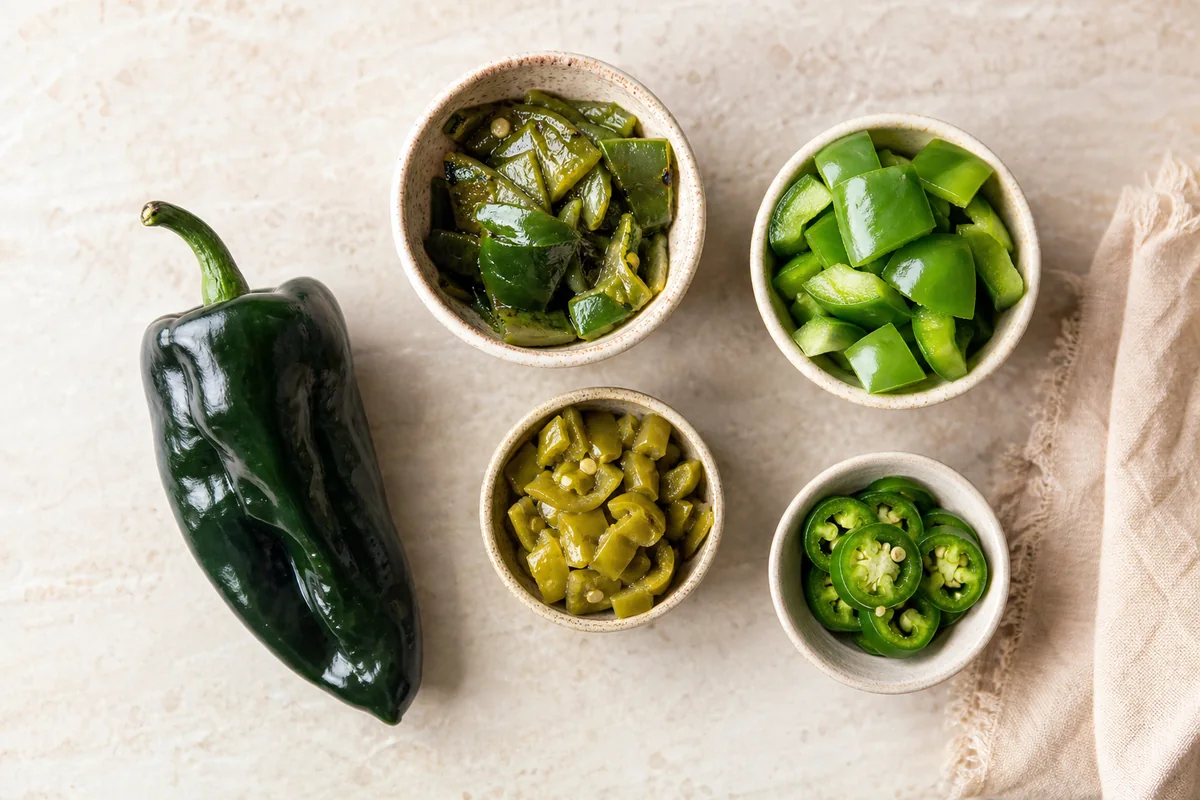
For the best poblano pepper substitute, reach for Anaheim pepper first. It roasts cleanly, matches mild heat, and swaps 1:1. Pasilla chile brings deeper smoky earth for sauces. Bell pepper plus smoked paprika is the pantry fallback. Jalapeño works in small doses when seeded and roasted down.
5 Poblano Pepper Substitutes Ranked by Roast Flavor
Use this table to match your recipe's cooking method. The closer a substitute ranks to the top, the better it mimics both mild heat and roasted pepper character.
| # | Substitute | Best For | Ratio | Key Note |
|---|---|---|---|---|
| 1 | Anaheim Pepper | Both | 1:1 | Roast for best flavor |
| 2 | Pasilla Chile | Sauce | 1:1 | Rehydrate before blending |
| 3 | New Mexico Chile | Sauce | ¾:1 | Milder; reduce slightly |
| 4 | Bell Pepper + Smoked Paprika | Both | 1:1 | Texture only; add paprika |
| 5 | Jalapeño (seeded) | Both | ½:1 | Roast to mellow heat |
1. Anaheim Pepper
Anaheim is the go-to swap. It shares poblano's mild green-pepper base, holds its shape well under high heat, and when you roast it, you get nearly the same sweet, lightly smoky result.
If you know when to pick Anaheim over other chiles, it saves a lot of second-guessing in the kitchen.
- Flavor: Mild and green-forward; roasting adds sweetness that reads very close to poblano
- Heat: Slightly milder than poblano on average; rarely surprises
- Best uses: Roasted strips, stuffed pepper dishes, chile salsas, and sautéed toppings
- Prep: Roast directly over flame or under broiler until blistered, then peel and slice
Skip if: your recipe needs a deeper, earthier chile undertone. In that case, pasilla is the better call.
2. Pasilla Chile
Pasilla brings something Anaheim can't: an earthy, dark-roast chile flavor that fills out sauces and braises in a way that feels intentional, not substituted.
Dried pasilla needs a quick rehydration: submerge in hot water for 15 minutes, then drain and blend. Fresh pasilla, when available, can be treated just like a poblano.
- Heat: Mild-to-medium; similar to poblano
- Flavor depth: Smokier and earthier than Anaheim; closer to mole territory
- Prep (dried): Toast in a dry pan 30 seconds per side, then soak in hot water 15 minutes
- Best for: Blended salsa, chile sauce bases, marinades, and braises
Skip if: you need a pepper that holds its shape as a roasted slice. Rehydrated pasilla is soft, and fresh pasilla is harder to find than Anaheim.
3. New Mexico Chile
New Mexico chile is mild-leaning and works well as a poblano-style base, especially when the pepper is blended into a sauce or used as a braising liquid component. The flavor is chile-forward but without sharp heat.
This dried southwestern pepper is widely available in dried form and reconstitutes cleanly in hot water.
Use about ¾ of what the recipe calls for in poblano, especially if anyone at the table is heat-sensitive. New Mexico chile can read more as "chile spice" than "fresh green pepper," so it's better in cooked or blended applications than in fresh preparations.
Skip if: the recipe counts on that fresh-roasted green pepper character. New Mexico skews more toward dried chile depth than poblano's bright, vegetal sweetness.
4. Bell Pepper + Smoked Paprika
Bell pepper alone is flat. That's the honest truth.
But pair it with smoked paprika and you get a workable poblano stand-in for most cooked dishes.
Bell Pepper
Works for: texture, color, bulk in fillings and sautés
Skip if: you need chile depth-it reads sweet without the spice
Smoked Paprika
Works for: adding roasted, smoky backbone to flat peppers
Skip if: your dish is already heavy on spice-too much paprika overpowers
For mild pepper swaps in quick weeknight meals, this combo hits well above its weight.
- Ratio: 1 poblano = 1 bell pepper + ½ teaspoon smoked paprika
- Best for: Chile-forward fillings, blended sauces, and quick sautés
- Tip: Red or green bell both work; red reads sweeter, green reads closer to raw poblano
Skip if: you're roasting the pepper to get char flavor. Bell pepper blisters but lacks the chile backbone that makes roasted poblano worthwhile.
5. Jalapeño (Seeded)
Jalapeño is hotter than poblano, but it's manageable. Seeding drops the heat significantly, and roasting or sautéing softens the sharp bite further.
If you know picking the right smoky backup for your spice rack matters, combining seeded jalapeño with a pinch of smoked paprika gets you closer to poblano's rounded flavor.
- Ratio: Use ½ jalapeño per poblano called for in the recipe
- Prep: Remove seeds and white veins, then roast at 450°F until softened and lightly charred
- Best for: Sauces, fillings, and blended dips where some heat is acceptable
- Boost: Add ¼ teaspoon smoked paprika per pepper to fill in the smoky depth
Skip if: your dish is meant to be mild and family-friendly. Even seeded jalapeño carries a noticeable kick that poblano never does.
Making Poblano Substitutes Taste Right
The biggest mistake is swapping one-for-one without adjusting for heat or flavor depth. Roasting almost always improves the result, regardless of which substitute you pick.
For the method details on what makes this thick-walled pepper so distinct in cooked dishes, it helps to understand what you're actually trying to replicate before you begin.
- Roast first: For Anaheim, jalapeño, or bell pepper, high heat (broil or open flame) until blistered skins develop sweetness and smoke that raw peppers don't have
- Adjust ratio by heat: Use 1:1 for Anaheim and pasilla; drop to ¾:1 for New Mexico; use ½:1 for jalapeño to keep heat levels close to poblano's mild range
- Finish with acid: A squeeze of lime or a small splash of vinegar at the end brightens muted substitutes, especially dried chiles that can taste flat after rehydration
Frequently Asked Questions
Anaheim pepper is the closest 1:1 swap. It shares poblano's mild heat and green-pepper flavor, and it roasts and peels nearly the same way.
Yes, but add ½ teaspoon smoked paprika per pepper to compensate for the missing chile depth. Bell pepper alone reads too sweet and flat.
Toast the dried chile briefly in a dry pan, then soak in hot water for 15 minutes. Drain and blend directly into your sauce or base.
Anaheim pepper is your best option. It holds its shape when roasted, stuffs cleanly, and won't surprise anyone with unexpected heat.
Not always, but roasting strongly improves results for Anaheim, bell pepper, and jalapeño. Dried chiles like pasilla skip roasting and go straight to rehydration.
5 Best Poblano Pepper Substitutes (Honest Picks)
Ingredients
Equipment
Method
- Identify your goal: roasted flavor (stuffing, topping, charred strips) or sauce/base flavor (blended into salsa/crema).
- Pick the closest match from the table: Anaheim (closest fresh), Pasilla (best smoky earth), New Mexico (mild chile), or Bell+smoked paprika (texture).
- Swap using the ratio. If your substitute is hotter, seed it and use the smaller ratio; if it’s milder, you can add a pinch of extra smoked paprika or salt.
- If the pepper benefits from char, roast under high heat until blistered, then peel and slice before using in your dish.
- Taste at the end and adjust: a small squeeze of lime or a touch of vinegar can brighten sauce flavors when the substitute is more muted.
Notes
- Roasting is the biggest lever for making non-poblano peppers taste more alike.
- If substituting for stuffed peppers, prioritize pepper that stays sturdy after roasting (Anaheim works best).
Tried this recipe?
Let us know how it was!
Carrie is a food writer and editor with more than 15 years of experience. She has worked for some of the biggest names in the food industry, including Bon Appétit, Food & Wine, and Martha Stewart Living.
As the Editor in Chief of EpicureDelight, Carrie oversees all of the content on the site. She also manages the team of contributing writers and editors, who help to create delicious recipes, helpful tips, and informative articles that you’ll find on the site.
A native of the Chicago area, Carrie is passionate about all things food. She loves trying new restaurants and experimenting with new recipes in her kitchen. She’s also a graduate of the Culinary Institute of America, so she knows a thing or two about food!



