
That mild, slightly tangy green pepper you reach for at the back of the produce drawer has a lot going for it. Anaheim peppers roast beautifully, stuff without falling apart, and add just enough chile warmth to feel intentional without scorching anyone's palate.
When you can't find one, the swap you choose depends heavily on whether you need that roasted char, a structural vessel for stuffing, or just a mild pepper flavor in the background.
The best anaheim pepper substitute is poblano for most cooked applications, green bell pepper when heat is unwelcome, and jarred green chiles when you're in a hurry. Understanding the flavor of anaheim pepper helps here: it reads mellow and earthy with a faint grassiness, which means your swap should land in a similar register rather than leaning too sharp or sweet.
Anaheim peppers are mild, earthy, and roast-friendly. The closest match is poblano (1:1, similar heat and texture). Green bell pepper works for heat-free cooking with added smoked paprika. Jalapeño or serrano work if you de-seed and scale down. Jarred green chiles are the fastest pantry swap.
5 Best Anaheim Pepper Substitutes (Reference Guide)
Your substitute choice shifts depending on the cooking method. Roasting calls for a pepper with enough structure and skin to blister; stuffing needs a wide cavity; sautéing is the most forgiving.
The table below covers all five options at a glance.
| # | Substitute | Heat vs Anaheim | Flavor Match | Best For | Ratio |
|---|---|---|---|---|---|
| 1 | Poblano | Same / slightly up | Roasted, earthy | Stuffing, roasting | 1:1 |
| 2 | Green Bell Pepper | Zero heat | Sweet, green | Baking, sauté, casserole | 1:1 |
| 3 | Jalapeño | Hotter | Green, grassy | Roasted dishes, salsas | ½:1 |
| 4 | Serrano | Much hotter | Sharp, bright | Salsas, fajita mixes | ¾:1 |
| 5 | Jarred Green Chiles | Mild to medium | Roasted, soft | Baked, cooked dishes | 1:1 by vol |
1. Poblano Pepper
Poblano is the straightest line from here to there. It has a similar mild heat range, a comparable earthy-roasted flavor after char, and a wide, thick-walled cavity that makes it almost identical to anaheim for stuffed pepper recipes.
If you want to go deeper on what else works when poblano itself runs out, check out poblano pepper substitutes for a parallel set of options.
Roast poblano the same way you'd handle an anaheim: directly over a flame or under the broiler until the skin blisters, then cover and steam for 10 minutes before peeling.
- Heat adjustment: Poblano usually lands mild, but individual peppers can run hotter; taste a small sliver raw before committing to the full amount.
- Texture in baked dishes: Walls hold their shape well under heat, just like anaheim.
- Flavor after roasting: Develops a smoky, slightly chocolate note that anaheim doesn't quite reach, but it reads better than most alternatives.
- Ratio: Use 1 poblano per 1 anaheim called for.
Skip if: your recipe is designed for very mild green chile heat and you've had hot poblanos burn you before.
2. Green Bell Pepper
A bell pepper won't bring any chile heat to the dish, but it carries the green pepper body and structural firmness that anaheim provides in sautés, casseroles, and baked dishes. The flavor gap is real, and you'll want to close it with added seasoning rather than pretending it doesn't exist.
Add a pinch of smoked paprika or chili powder directly to your dish when swapping bell pepper. That's often enough to restore the mild peppery depth that anaheim contributes without dialing up actual heat.
- Flavor gap: Bell pepper is sweeter and lacks the grassy chile edge; compensate with ¼ teaspoon smoked paprika per pepper replaced.
- Best cooking methods: Fajita-style sauté, casseroles, egg dishes, and baking where chile heat isn't a requirement.
- Ratio: Start at 1:1 by pepper count, then season to taste after cooking.
- Texture: Firmer than anaheim when raw; softens to a similar tenderness when cooked through.
Skip if: you need that specific mild chile flavor without leaning on added seasoning to get there.
3. Jalapeño (De-seeded and Roasted)
A jalapeño runs significantly hotter than an anaheim, but you can bring it into range with two steps: remove the seeds and inner membrane, then roast or simmer before using. If you already work with jalapeño regularly and need options when it's unavailable, jalapeno substitutes cover the reverse problem in detail.
The result after roasting is a softer, less aggressive pepper that gets closer to anaheim's mellow profile. Still expect some residual heat, especially near the stem end.
Anaheim (Mild)
Works for: stuffing, roasting, everyday recipes where you don't want heat surprises
Skip if: you want a brighter, sharper pepper character in the finished dish
Jalapeño (Roasted + De-seeded)
Works for: salsas, roasted sauces, dishes where slight extra kick is acceptable
Skip if: the dish feeds heat-sensitive guests or children
- Heat ratio: Use ½ jalapeño for every 1 anaheim when chopping raw; up to ¾:1 if roasted and fully de-seeded.
- Prep method: Roast on a baking sheet at 425°F until blistered, about 12-15 minutes; peel and chop.
- Flavor fix: A squeeze of lime after cooking softens jalapeño's sharpness and moves it toward anaheim's mild tang.
Skip if: your recipe absolutely cannot tolerate extra heat even after de-seeding and roasting.
4. Serrano Pepper
Serrano pepper is noticeably hotter than anaheim, and using it at a 1:1 swap will overpower most dishes quickly. The key is to reduce the amount and remove every seed.
Understanding serrano pepper heat before you commit to the swap helps you decide how far to scale back.
Start at ¾ of the anaheim quantity called for, de-seed thoroughly, and taste the dish before adding more. For those who frequently use serrano and want to swap in the other direction, replacements for serrano pepper covers that angle well.
- Heat match: Often two to three times hotter than anaheim; de-seeding is non-negotiable for this swap.
- Swap ratio: Start at ¾:1 de-seeded; taste after cooking before adjusting upward.
- Best uses: Salsas, fajita mixes, and cooked sauces where chile heat is easy to dial in gradually.
- Texture: Thinner walled than anaheim; doesn't work for stuffing, but blends or chops well.
Skip if: you're serving people who avoid heat entirely, or your dish has no way to dilute extra spice.
5. Jarred Green Chiles
Canned or jarred green chiles are the fastest anaheim pepper alternative you'll find in a pantry. Most commercial green chiles are in fact made from anaheim-type peppers, so the flavor match is closer than it looks.
For storing and maximizing your jarred chile shelf life, a pantry guide on chili powder swaps also touches on managing dried and jarred chile products across recipes.
Drain them well before using. Blotting with a paper towel cuts down on the excess liquid that can make casseroles or egg dishes watery.
| Use | Ratio | Notes |
|---|---|---|
| Casseroles / baked | 1:1 by volume | Drain and blot; add after mixing wet ingredients |
| Egg dishes / scrambles | 1:1 by volume | Drain fully; fold in at the end |
| Salsas / sauces | 1:1 by volume | No blotting needed; extra liquid can help consistency |
| Stuffed pepper recipes | Not recommended | Too soft to hold structure; use poblano instead |
- Salt level: Jarred chiles are often pre-salted; reduce added salt in your recipe by about ¼ teaspoon per use.
- Texture: Soft and pliable, not crisp; works best in cooked or baked applications, not raw dishes.
- Heat: Varies by brand from near-zero to medium; check the label before assuming mild.
Skip if: your recipe needs fresh pepper crunch or a specific char from roasting.
Making the Swap Work (Heat, Timing, and Taste Checks)
Swapping peppers isn't just about choosing the right one - it's about knowing when to taste, when to pull back, and how to fix the dish if the heat lands wrong. When seasoning with dried spices to fill a flavor gap (especially for bell pepper swaps), knowing your smoked paprika substitutes options prevents a last-minute scramble if that jar is also empty.
- Heat adjustment: If your swap runs hotter than expected, add a tablespoon of diced raw tomato or a small amount of sour cream to the dish mid-cook; both dilute capsaicin perception without dulling flavor.
- Texture matching: For roasting, peel the substitute after blistering; for stuffing, choose a pepper with walls at least ¼ inch thick (poblano qualifies, bell pepper qualifies, jalapeño does not).
- Taste-check timing: Always taste 5 minutes before the dish is done, not at serving - that gives you time to balance heat with a squeeze of citrus or a drizzle of olive oil before plating.
Frequently Asked Questions
Poblano is the best choice for both roasting and stuffing. It has a similar mild heat, a wide thick-walled cavity, and develops the same earthy roasted flavor at a 1:1 swap ratio.
De-seed both peppers completely and use less: start at ½:1 for jalapeño and ¾:1 for serrano. Roasting before adding them also reduces sharpness noticeably.
Yes. Use a 1:1 ratio and add ¼ teaspoon of smoked paprika per pepper to restore the mild chile depth. Bell pepper adds no heat and works well in casseroles and egg bakes.
Peel roasted peppers (poblano, jalapeño) once blistered to remove any charred skin bitterness. De-seed hotter peppers like jalapeño and serrano to control heat and avoid a sharp aftertaste.
Yes, by volume in cooked dishes. Drain and blot them first, and reduce added salt slightly since most jarred chiles are already seasoned. They won't work for stuffing recipes.
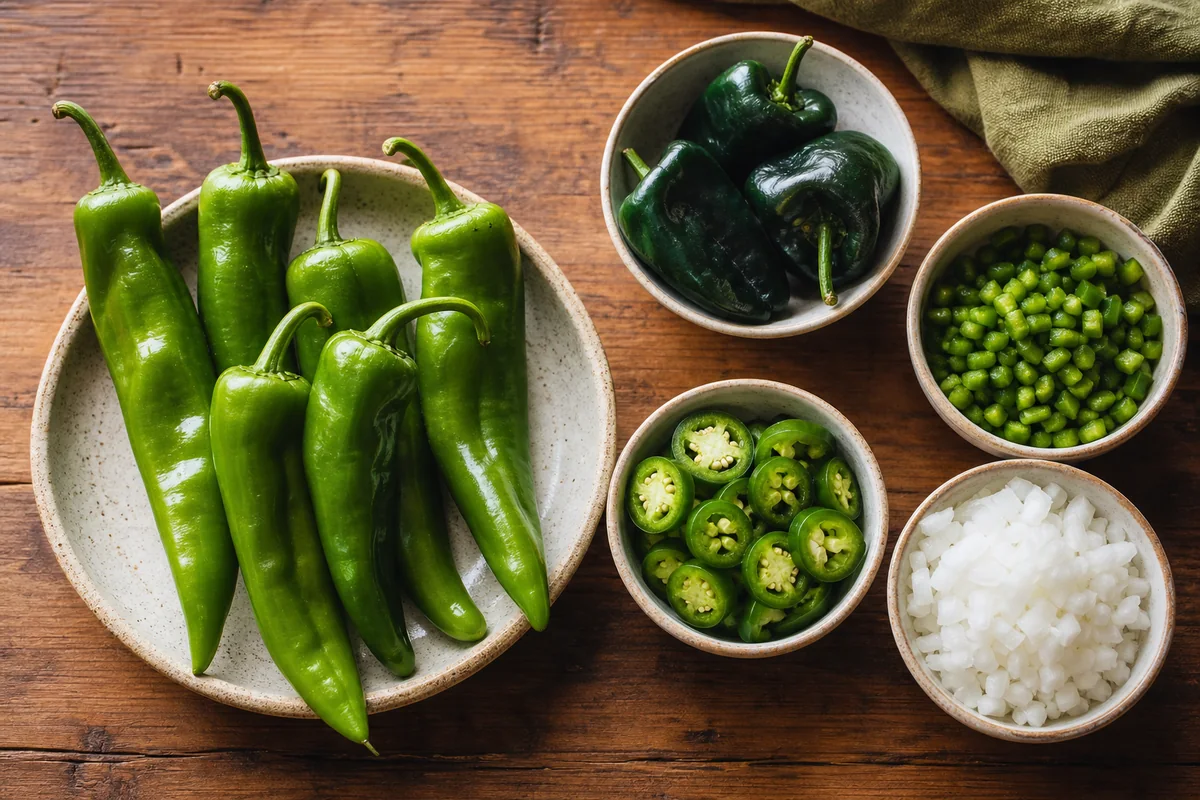
5 Best Anaheim Pepper Substitutes (Tested Swaps)
Ingredients
Equipment
Method
- Match the use-case: choose poblano for roasting/stuffing, bell pepper for sweetness without heat, and jalapeño/serrano for recipes that tolerate extra kick.
- Use the listed ratio (1:1, ¾:1, or ½:1) as your starting point, then taste-test after cooking if your dish relies on pepper flavor.
- If using a hotter pepper (serrano or jalapeño), de-seed and roast or quick-simmer to bring flavor closer to anaheim.
- For bell pepper swaps in baked recipes, add a pinch of smoked paprika or chili powder to restore anaheim-like roasted depth.
Notes
- Heat level is the main variable—adjust the substitute amount and de-seed if needed.
- For best flavor, roast hotter peppers briefly before adding to dishes.
Tried this recipe?
Let us know how it was!
Carrie is a food writer and editor with more than 15 years of experience. She has worked for some of the biggest names in the food industry, including Bon Appétit, Food & Wine, and Martha Stewart Living.
As the Editor in Chief of EpicureDelight, Carrie oversees all of the content on the site. She also manages the team of contributing writers and editors, who help to create delicious recipes, helpful tips, and informative articles that you’ll find on the site.
A native of the Chicago area, Carrie is passionate about all things food. She loves trying new restaurants and experimenting with new recipes in her kitchen. She’s also a graduate of the Culinary Institute of America, so she knows a thing or two about food!



