
That mild, nutty pull of Jarlsberg melting over a sandwich is specific. It's sweet without being cloying, firm enough to shred, and forgiving in the oven.
Finding a jarlsberg cheese substitute that hits the same notes takes more than grabbing the nearest block in the dairy aisle.
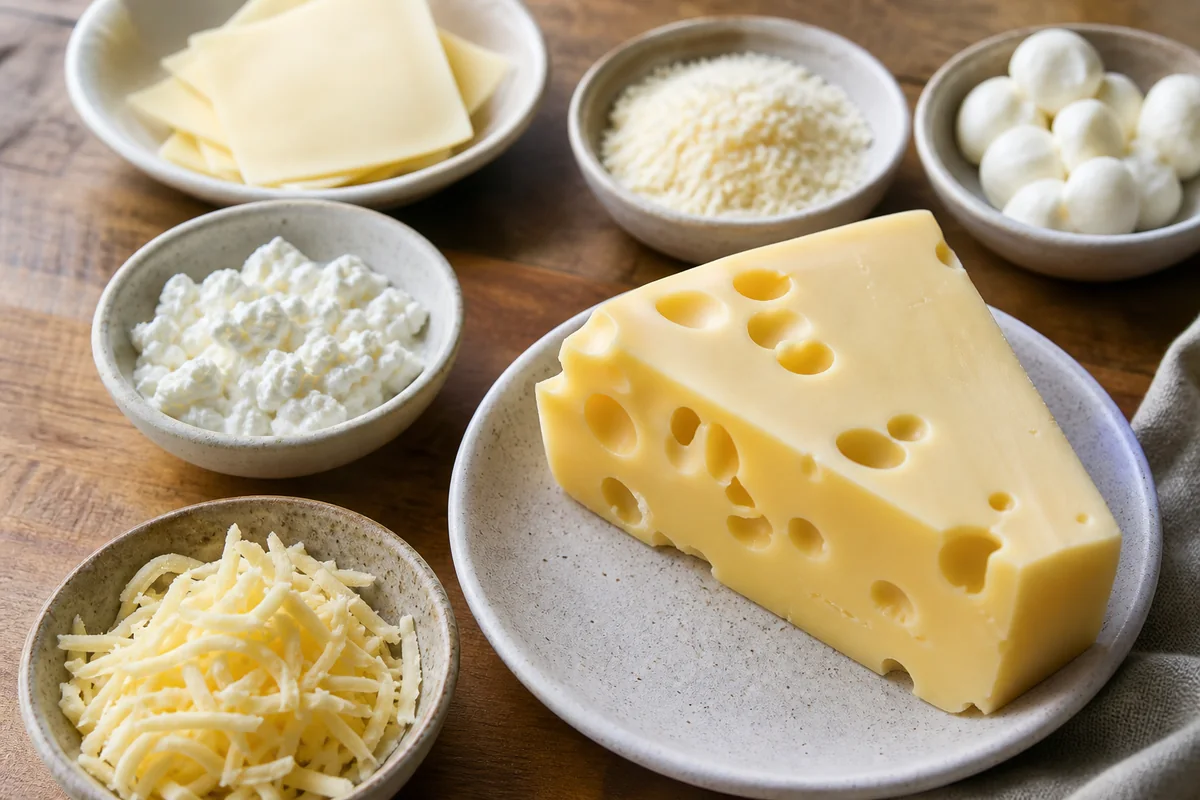
Jarlsberg belongs to the Swiss-style family. It's semi-hard, has those signature small holes, and melts without turning grainy or pooling too fast.
The flavor is gentle: a little hazelnut, a little sweetness, with almost no sharpness.
The picks below are sorted by what they do best. Some are closest on flavor, some on melt, and some are just honest emergency options for when the store is out.
Swiss cheese (Emmental-style) is the closest overall match for Jarlsberg's nutty-sweet profile and reliable melt. Gruyère works well for baking. Havarti is the smoothest swap for grilled sandwiches. Edam and Provolone cover everyday use with minimal fuss.
5 Jarlsberg Cheese Substitutes Ranked by Flavor and Melt
Each pick below earns its place for a specific reason. No single cheese does everything Jarlsberg does, so the table and sections below match each substitute to its strongest use.
Keep in mind that provolone swap ideas and stretchy-melt options behave differently cold versus baked.
| # | Substitute | Best For | Ratio | Key Note |
|---|---|---|---|---|
| 1 | Swiss (Emmental) | Both | 1:1 | Closest flavor family |
| 2 | Gruyère | Baking | ¾:1 | Stronger; blend if needed |
| 3 | Havarti | Both | 1:1 | Creamier, softer melt |
| 4 | Edam | Both | 1:1 | Mild-sweet, less stretch |
| 5 | Provolone (mild) | Baking | 1:1 | Choose mild, not sharp |
1. Swiss Cheese
Swiss (Emmental-style) is the most direct replacement for Jarlsberg. Both are semi-hard, hole-bearing cheeses from the same Alpine family, and the flavor difference is small enough that most people won't notice in a hot dish.
For sandwich versus melt decisions, Swiss holds up well on both sides of that comparison.
- Flavor match: Mild, nutty, and lightly sweet - nearly identical to Jarlsberg's baseline profile
- Melt behavior: Shreds cleanly and melts evenly without turning grainy at normal oven temps
- Best use: Sandwiches, quiche, baked pasta, and cheese boards where you want a subtle Swiss note
Skip if: You specifically need Jarlsberg's slightly fruitier sweetness. Some Swiss cuts run drier and a bit plainer, so blend with Havarti to nudge the sweetness back up.
2. Gruyère
Gruyère sits in the same Swiss family but with noticeably more muscle. It's nuttier, more roasty, and a little more complex than Jarlsberg's gentle profile.
That roasty aged depth is exactly what makes it shine in gratins and baked sandwiches, where heat mellows it out.
Use ¾ of the amount the recipe calls for, then fill the rest with a mild Swiss or Havarti. That blend keeps the melt smooth while pulling the flavor back toward Jarlsberg's lighter register.
- Flavor match: Nuttier and more intense - expect a richer, slightly earthier finish
- Melt behavior: Melts cleanly and browns well; shred thin to speed the melt and avoid clumping
- Best use: Gratins, baked sandwiches, French onion soup, and any recipe that uses oven heat
Skip if: You're building a cold snack plate or an unheated sandwich. Without heat to mellow it, Gruyère's intensity can feel heavy next to lighter ingredients.
3. Havarti
Havarti is the easiest swap when you need a smooth, low-drama melt and a gentle flavor. It's buttery and mild, and it doesn't fight other ingredients the way stronger cheeses can.
For grilled cheese, understanding how Havarti's flavor behaves when heated makes it an obvious pick here.
It browns less sharply than Gruyère, which actually keeps it closer to Jarlsberg's softer browning behavior. The mouthfeel is creamier, so expect a slightly softer pull compared to Jarlsberg's firmer slice.
Skip if: You want that characteristic firm Swiss body in a cold application. Havarti is noticeably softer and can feel a little too creamy when served unmelted alongside crackers or deli meats.
4. Edam
Edam is underused as a Jarlsberg stand-in. It's semi-hard, mild, and carries a gentle sweetness that reads surprisingly close to Jarlsberg's profile in cooked dishes.
If you've wondered about other Swiss-style options, Edam fits that conversation well.
Edam vs. Jarlsberg
Works for: Baked pasta, grilled sandwiches, cheese boards, mild-flavored casseroles
Skip if: Your recipe depends on a long, stretchy pull - Edam is firm but not particularly stretchy
- Flavor match: Mild and lightly sweet; less nutty than Jarlsberg but very close in overall gentleness
- Melt behavior: Melts solidly for most applications, though it's slightly less silky than Swiss or Havarti
- Best use: Everyday sandwiches, baked egg dishes, and any recipe where mild sweetness is an asset
5. Provolone (Mild)
Mild provolone is a solid fallback for when you need a cheese that melts cleanly and doesn't compete with other flavors. It's not a flavor twin for Jarlsberg, but it stays neutral enough that most dishes still taste right. Soft-ripened cheeses stored improperly lose their melt quality faster, and the same applies to provolone: buy it fresh and shred it just before use.
Shredding thin is the key move here. Thick slices of provolone can pool and separate under heat, while thin shreds melt evenly across the surface.
- Flavor match: Neutral and mild - much closer to Jarlsberg than sharp provolone, which adds unwanted tang
- Melt behavior: Smooth and even when shredded thin; great for baked sandwiches and casseroles
- Best use: Hot sandwiches, baked pasta, and casseroles where melt quality matters more than flavor complexity
Skip if: You only have sharp provolone in the fridge. Its tang pulls the dish away from Jarlsberg's flavor zone and can clash with mild fillings like ham or roasted vegetables.
Making Jarlsberg Cheese Substitutes Work
Swapping cheese is only half the job. How you prepare the substitute determines whether the final dish lands close to Jarlsberg or misses entirely.
A few simple techniques close most of the gap, especially for Swiss-style flavor notes that depend on even melting to come through properly.
- Shred or slice thin: Thick cuts melt unevenly and can pool liquid. Thin shreds or slices (about 2mm) melt faster and coat evenly in both pans and casseroles.
- Blend when needed: If your substitute is stronger (Gruyère), mix it with a milder option at a 1:2 ratio to pull the overall flavor back toward Jarlsberg's gentler register.
- Season after melting: If the swap tastes flat (mozzarella, Muenster), add a pinch of ground mustard or black pepper once the cheese has melted. Seasoning before can over-salt the dish before you've tasted it.
One more tip: let fresh stretchy cheese come to room temperature before baking. Cold cheese takes longer to melt and can release more moisture mid-cook, which dilutes your sauce or filling.
Frequently Asked Questions
Swiss (Emmental-style) is the closest match for cold or grilled sandwiches. Havarti is the next best option if you want a creamier, softer melt.
Yes, but start at ¾ of the amount to avoid overpowering the dish. Gruyère's roastier flavor mellows with heat, making it well-suited for gratins and baked sandwiches.
Blend it with Swiss or Edam at a 1:1 ratio by weight. That combination restores the nutty-sweet flavor range while keeping mozzarella's smooth melt.
Edam melts well enough for grilled cheese but is slightly less fluid than Jarlsberg. Shred it thin and use medium heat for the most even result.
Gruyère is the strongest-flavored substitute still within the Swiss family. Use it in baked dishes where heat softens its intensity.
5 Best Jarlsberg Cheese Substitutes (Honest Picks)
Ingredients
Equipment
Method
- Decide your use: cold snack/sandwich (flavor + slice quality) vs baking (melt + browning).
- Pick the closest flavor family first (Swiss-style or Gruyère), then match melt behavior (Havarti/Provolone/Mozzarella).
- Use a 1:1 swap by weight; if the substitute is stronger (Gruyère), start at ¾:1 and top up with a milder cheese.
- For oven baking, shred or slice thin so the cheese melts evenly and doesn’t pool.
- Taste the finished dish once melted; adjust seasoning (pepper/ground mustard) if the swap tastes flatter than jarlsberg.
Notes
- Flavor intensity varies by brand/age; for closer jarlsberg mildness, blend a stronger swap with Swiss or Edam.
- Thin slicing/shredding improves melt and reduces greasy separation.
Tried this recipe?
Let us know how it was!
Carrie is a food writer and editor with more than 15 years of experience. She has worked for some of the biggest names in the food industry, including Bon Appétit, Food & Wine, and Martha Stewart Living.
As the Editor in Chief of EpicureDelight, Carrie oversees all of the content on the site. She also manages the team of contributing writers and editors, who help to create delicious recipes, helpful tips, and informative articles that you’ll find on the site.
A native of the Chicago area, Carrie is passionate about all things food. She loves trying new restaurants and experimenting with new recipes in her kitchen. She’s also a graduate of the Culinary Institute of America, so she knows a thing or two about food!



