
Lancashire cheese has a quiet confidence. It's mild, slightly tangy, creamy enough to melt without fighting the other ingredients, and firm enough to slice cleanly.
That combination is harder to replace than it sounds.
Most supermarket cheeses skew either sharper or butterier. The good news is that a few common cheeses get close enough that your bake, toastie, or sauce won't know the difference.
Knowing which swap fits which job is what this article covers. For a lancashire cheese substitute in baking, the melt behavior matters most.
For sandwiches or light gratins, texture and mild tang take priority.
Red Leicester is the closest block-style match. Mild cheddar is the most reliable melt swap. Gouda and Havarti work when you want a creamier result. Monterey Jack is the mild, neutral fallback. Use a 1:1 ratio for all five and adjust seasoning after tasting.
Best Lancashire Cheese Substitutes: Quick Swap Table
Before picking your swap, scan the table below. It maps each substitute to its best use and melt behavior so you can choose in under a minute.
| # | Substitute | Best For | Ratio | Key Note |
|---|---|---|---|---|
| 1 | Red Leicester | Both | 1:1 | Closest tang and melt |
| 2 | Mild White Cheddar | Both | 1:1 | Most reliable melt |
| 3 | Gouda (Young) | Both | 1:1 | Sweeter, creamier melt |
| 4 | Havarti | Both | 1:1 | Buttery, soft melt |
| 5 | Monterey Jack | Both | 1:1 | Mild, needs seasoning |
5 Best Lancashire Cheese Substitutes Ranked by Use
1. Red Leicester
Red Leicester is the most natural starting point. It's a block cheese with a mild, slightly nutty tang, and it melts in a smooth, even layer that behaves almost identically to Lancashire in a hot oven.
The orange color is deeper, but that won't affect your dish's flavor. If you want to read more about its flavor profile, Leicester flavor notes break it down well.
Red Leicester
Works for: baked toast, gratins, casseroles, and cheese sauces where mild tang and smooth melt both matter
Skip if: your recipe is butter-forward or very cream-like - Red Leicester can feel slightly firmer than Lancashire in those applications
- Baking ratio: Use 1:1 and shred finely for even coverage across the dish
- Melt quality: Smooth and even; works in gratins, Welsh rarebit-style toast, and potato bakes
- Age to choose: Young or medium Red Leicester is closest; aged will be drier and sharper
- Flavor note: Slightly more defined tang than Lancashire, but it softens after cooking
Skip this if your dish is delicate and cream-based. The difference is minor, but Red Leicester's slightly firmer body can stand out in a very soft sauce.
For those cases, Havarti is a better call.
2. Mild White Cheddar
Mild cheddar is what you grab when you need a swap to work without any fuss. The melt is predictable, the flavor stays in its lane, and it handles heat well in everything from mac-style bakes to broiled toasties.
The key word is mild. Sharp or extra-mature cheddar will overpower Lancashire's gentle profile.
For a broader look at white cheddar options, that page covers more specific swaps if needed.
- Shred, don't slice: Shredded mild cheddar distributes evenly and melts faster than thick-cut slices
- Best use cases: Cheese sauces, toast bakes, potato gratins, baked pasta dishes
- Flavor check: If it tastes flat after baking, add a small squeeze of lemon or a pinch of mustard powder to the recipe
- Amount: Use 1:1; reduce by 1-2 tablespoons if your cheddar is on the sharper end
Skip this if you only have mature or extra-sharp cheddar in the fridge. The tang goes past what Lancashire ever reaches, and no amount of reducing the quantity fully fixes that.
3. Gouda (Young)
Young Gouda melts into a silky, creamy pool. It's not quite Lancashire.
The flavor leans sweeter and nuttier rather than mildly tangy. But in baked pasta, casseroles, or grilled sandwiches, that difference is small enough that most people won't notice.
If you're curious about what Gouda brings nutritionally before committing, choosing Gouda covers that angle. For more on how it tastes across ages, the Gouda flavor profile is worth a look.
- Melt behavior: Smooth and creamy; young Gouda stays stretchy and doesn't break under moderate heat
- Best in: Baked pasta, casseroles, grilled cheese, and sandwiches where melt is the priority
- Balancing the sweetness: Add a small pinch of mustard powder or a few drops of white wine vinegar to the recipe to push closer to Lancashire's tang
- Avoid aged Gouda: Medium-aged is fine, but older Gouda gets crystalline and won't melt the same way
Skip this if your dish is specifically built around Lancashire's tang. Gouda reads sweeter, and no small seasoning tweak will fully replicate that mild sharpness.
4. Havarti
Havarti is creamy, soft, and quick to melt. It's buttery in a way Lancashire isn't, but in a warm dish the distinction mostly disappears.
It shreds easily and spreads across a bake without pooling. The Havarti melt profile explains why it behaves so differently from block-style cheeses at high heat.
| Cut Style | Ratio | Notes |
|---|---|---|
| Shredded | 1:1 | Best for gratins and casseroles; melts fast and evenly |
| Sliced thin | 1:1 | Good for toast bakes and open sandwiches; layer flat |
| Cubed (small) | 1:1 | Use in baked pasta; cubes melt into pockets of creaminess |
- Heat caution: Havarti softens very quickly, so distribute it evenly to prevent greasy pooling
- Flavor gap: It lacks Lancashire's tang; add a few drops of lemon juice or a pinch of salt after baking to taste
- Best for: Warm bakes, toasties, and egg dishes where a buttery, smooth melt is welcome
Skip this if your dish is served barely warm or at room temperature. Havarti tastes noticeably richer than Lancashire in uncooked or lightly warmed applications.
5. Monterey Jack
Monterey Jack is mild, melts like a dream, and is easy to find. What it doesn't have is any real tang.
It's close to flavorless in a stand-alone bite, which is both its weakness and its advantage. If you're seasoning the dish well, that neutral base is easy to work with.
Check out Jack cheese swaps if you also happen to be out of Monterey Jack.
Monterey Jack
Works for: quick bakes, cheese sauces, and casseroles where you control flavor with seasoning (mustard, pepper, herbs)
Skip if: your recipe is cheese-forward and you can't adjust seasoning - the neutral flavor may read too flat
- Tang fix: Stir half a teaspoon of Dijon mustard into the sauce or batter to add mild bite
- Best ratio: Use 1:1; no need to reduce since Monterey Jack is milder than Lancashire
- Best in: Cheese sauces, baked pasta, quick gratins, and quesadilla-style bakes
- Shred it: Monterey Jack in block form slices cleanly, but shredding gives you faster, more even melt
Skip this if the cheese is the main flavor event. Monterey Jack needs support from the recipe's other seasonings to come close to Lancashire's character.
Making Lancashire Cheese Substitutes Work in Any Recipe
The core rule is simple: match melt behavior first, then fix the flavor. All five substitutes above melt cleanly at 1:1.
What varies is tang and saltiness. Once your substitute is in the dish, taste it after the first few minutes of cooking and decide if you need a small acidic nudge or an extra pinch of salt.
For dishes where you're also rethinking cheddar swap options, the same logic applies. And if Red Leicester is your main substitute but you want to branch further, swapping Red Leicester covers the next tier of options.
- Always shred or dice: Block slices melt unevenly. Shredded cheese distributes across the dish and melts at the same rate, which prevents rubbery patches or greasy pools
- Adjust tang after tasting: If the substitute tastes flat, add a few drops of lemon juice or half a teaspoon of mustard powder directly into the recipe. If it tastes too sharp, reduce the cheese by 2 tablespoons and balance with a small knob of butter
- Taste after baking, not before: Cheese flavor changes significantly in the oven. A substitute that tastes slightly bland raw often comes into its own once melted and browned
Frequently Asked Questions
Red Leicester is the closest match for baked dishes. It has a similar block-cheese body and mild tang, and it melts in a smooth, even layer at oven temperatures.
Yes. All five substitutes listed here work at a 1:1 ratio. Texture stays consistent when you shred or dice the cheese before adding it to the dish.
Red Leicester or mild white cheddar both carry more tang than the other options. Add a small pinch of mustard powder to either if you need the bite to read stronger.
Reduce the cheese amount by 2 tablespoons and balance the dish with a small knob of butter or a splash of cream. Taste again after baking.
Yes. For sandwiches, prioritize tang and texture - mild cheddar or Red Leicester work well cold. For baking, melt behavior matters more, so Havarti or Gouda are also solid picks.
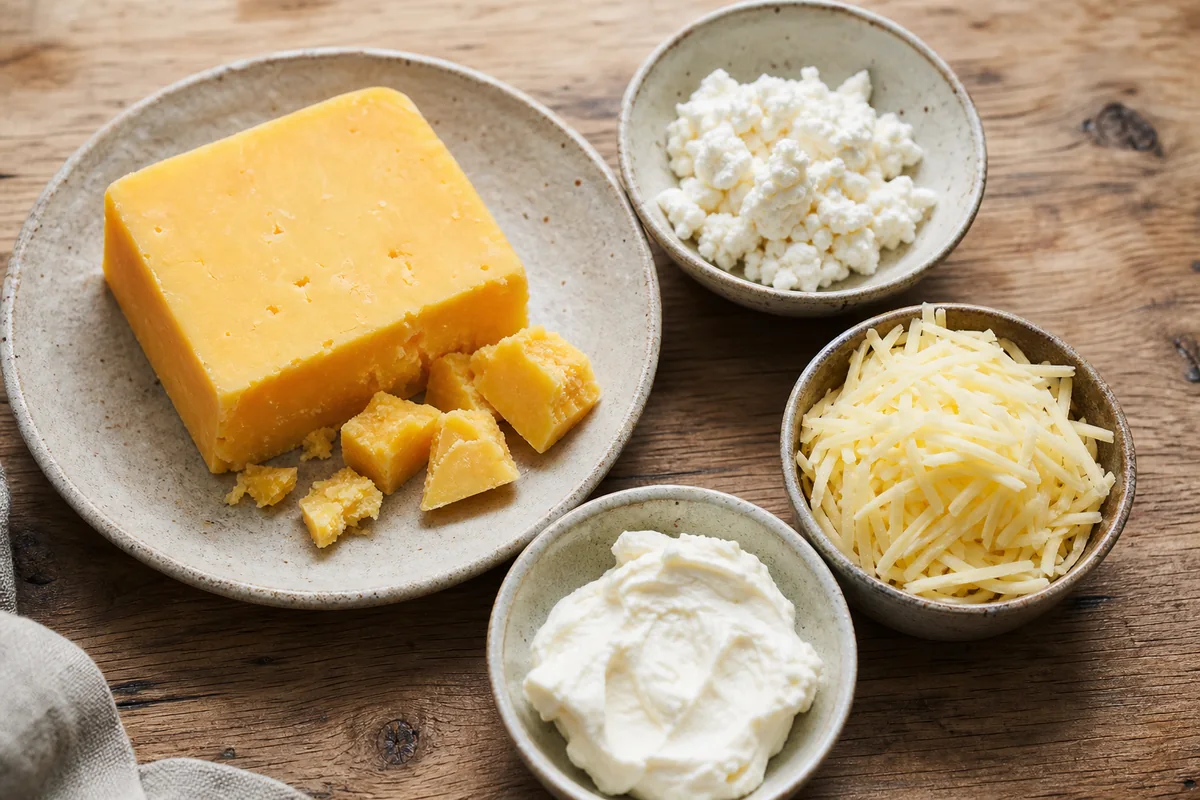
5 Best Lancashire Cheese Substitutes Worth Trying
Ingredients
Method
- Identify how you’ll use Lancashire cheese: melting (bakes/gratins) vs. crumbling (tarts/salads) vs. sandwiches.
- Choose a substitute with a matching melt/crumb texture, then use the listed 1:1 swap (or the bake-specific ratio notes below).
- If your substitute is sharper or saltier than Lancashire (like strong cheddar), reduce the amount by about 10–25% and adjust seasoning at the end.
- For best melt, shred or dice the substitute and distribute it evenly across the dish.
- Taste after baking/broiling; if flavor feels flat, add a small pinch of salt or a squeeze of lemon for mild tang.
Notes
- Use mild block-style cheeses when you want Lancashire’s creamy tang without going sharp.
- Cheese flavor intensity varies by brand and age—taste once melted and adjust seasoning.
Tried this recipe?
Let us know how it was!
Carrie is a food writer and editor with more than 15 years of experience. She has worked for some of the biggest names in the food industry, including Bon Appétit, Food & Wine, and Martha Stewart Living.
As the Editor in Chief of EpicureDelight, Carrie oversees all of the content on the site. She also manages the team of contributing writers and editors, who help to create delicious recipes, helpful tips, and informative articles that you’ll find on the site.
A native of the Chicago area, Carrie is passionate about all things food. She loves trying new restaurants and experimenting with new recipes in her kitchen. She’s also a graduate of the Culinary Institute of America, so she knows a thing or two about food!



