
Lime marmalade is specific in a way that matters. It has citrus tang, a measured sweetness, and those bitter peel bits that give the whole thing character.
Losing one of those three elements is what makes most swaps feel wrong. So the goal here is not just to replace sweetness.
The goal is to match citrus brightness, peel texture, and bitterness close enough that your dish doesn't notice.
The right lime marmalade substitute depends heavily on how the marmalade is used. A glaze tolerates smooth swaps.
A toast spread needs texture. A baked filling demands balance between acid and sugar.
Knowing the job narrows the list fast.
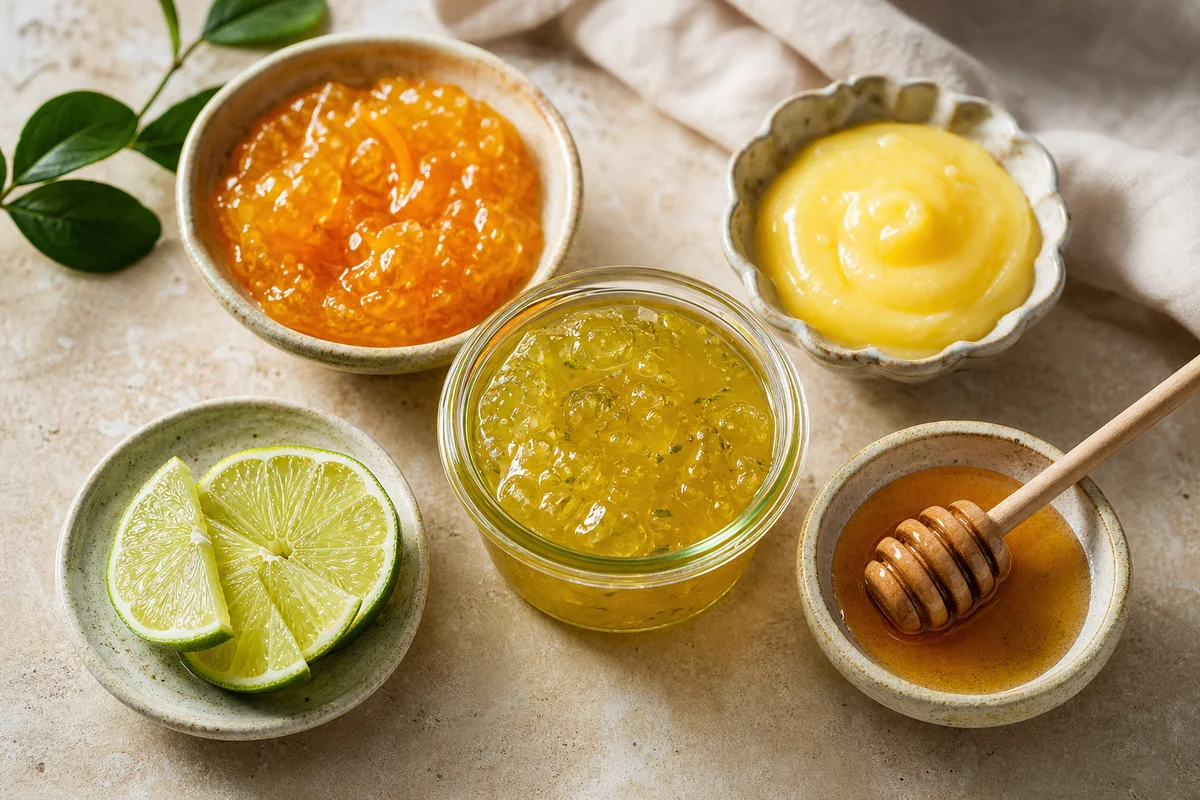
Lime jam with lime zest is the closest swap for most uses. Lime curd works for rich glazes and fillings. Lemon marmalade keeps the peel texture. Orange marmalade adds honey-sweet peel with a citrus base. Lime jelly plus zest is the emergency option when nothing else is on hand.
5 Best Lime Marmalade Swaps Ranked
These five options are ordered by how closely they match all three qualities of lime marmalade: citrus brightness, bitter peel notes, and sweetness level. Use the same amount listed in your recipe unless the table says otherwise, then taste and correct.
| # | Substitute | Best For | Ratio | Key Note |
|---|---|---|---|---|
| 1 | Lime Jam + Zest | Both | 1:1 | Add zest for peel texture |
| 2 | Lime Curd | Cooking | 1:1 | Thin with 1-2 teaspoon water |
| 3 | Lemon Marmalade | Both | ¾:1 | Add lime juice for punch |
| 4 | Orange Marmalade | Both | ¾:1 | Sweeter; needs lime juice |
| 5 | Lime Jelly + Zest | Baking | 1:1 | Add salt pinch to sharpen |
1. Lime Jam + Lime Zest
Lime jam is basically marmalade with the peel removed. That means the sweetness and citrus flavor are already in the right ballpark.
Stir in freshly grated lime zest and you recover most of the texture and bite that smooth jam is missing.
Start at 1:1, then add about half a teaspoon of zest per tablespoon of jam. You can learn more about what gives the bitter-sweet spread its character before deciding how much zest is enough for your recipe.
- Ratio: 1:1, then add ½ teaspoon grated lime zest per tablespoon of jam
- Best for: Toast, yogurt swirls, quick pan glazes, and cake fillings
- Texture fix: For visible peel bits, add a few thin strips of chopped zest, not just grated
- Sweetness check: Taste before serving; some lime jams run sweeter than marmalade
Skip if: your recipe needs the coarse peel texture of true marmalade and you can't add chopped zest to compensate.
2. Lime Curd
Lime curd is tarter and richer than marmalade, and it has no peel. But it carries real citrus intensity, which makes it a solid swap when the job is a glaze, a filling, or a sauce rather than a spread.
The egg-and-butter base means it also holds well in baked goods without weeping.
Thin it slightly if it feels thick. One or two teaspoons of water per quarter cup is usually enough.
Then taste for sweetness, adding sugar a small pinch at a time if the dish reads sharper than you want.
- Ratio: 1:1, then thin with 1-2 teaspoon water if the curd is stiff
- Best for: Tart fillings, lemon-bar-style layers, glazed pound cake, and citrus sauces
- Sweetness fix: Add sugar by the pinch; curd is tangier than marmalade by nature
- No peel: Stir in a small amount of lime zest if the recipe expects any bitterness
Skip if: the recipe depends on bitter rind notes. Curd has no peel at all, and zest alone won't fully replace that quality.
3. Lemon Marmalade
Lime Marmalade
Works for: dishes where sharp, green citrus identity matters
Skip if: lemon aroma would clash with other flavors in the recipe
Lemon Marmalade
Works for: any recipe needing bitter peel texture and citrus sweetness
Skip if: the dish must taste distinctly lime, not just "citrus"
Lemon marmalade keeps the peel structure intact, so it nails the texture that most swaps miss. The flavor is brighter and more floral than lime.
It can also run slightly sweeter depending on the brand.
Use about ¾ of the amount called for in the recipe, then taste. If the dish needs more lime character, stir in a teaspoon of lime juice.
If you're curious how choosing a citrus marmalade swap changes a recipe overall, the same logic applies across all marmalade types.
- Ratio: ¾:1 to start; adjust up if the dish can handle more brightness
- Lime punch fix: Add 1 teaspoon fresh lime juice per tablespoon of lemon marmalade used
- Peel texture: Matches well; no modification needed if texture is the main goal
Skip if: you're making a key lime-style dessert where the lime top note is non-negotiable.
4. Orange Marmalade
Orange marmalade has the peel, the structure, and the citrus base. It just skews sweeter and more honeyed than lime.
That makes it useful when you need the "marmalade effect" in a dish where strict lime identity is less critical.
Use ¾ of the recipe's called-for amount. Then add fresh lime juice a few drops at a time to pull it back toward tartness.
The warm, honeyed peel notes can actually work well in savory glazes, chicken marinades, and vinaigrettes where any citrus marmalade is welcome.
- Ratio: ¾:1, then add lime juice to taste for tartness
- Best for: Glazes, marinades, and recipes where "citrus-sweet" matters more than lime identity
- Sweetness: Orange marmalade is noticeably sweeter; reducing the quantity helps balance it
Skip if: lime flavor is central to the dish. Orange's warm, rounded character will shift the flavor profile noticeably.
5. Lime Jelly + Lime Zest
Lime jelly is smooth, sweet, and has no bitterness at all. It needs help.
Stirring in freshly grated zest solves the texture problem, and a tiny pinch of salt sharpens the citrus edge enough to mimic marmalade's bite. For most uses where the marmalade is diluted into a sauce or spread thinly, this works surprisingly well.
If you're working with store-bought lime jelly, check whether your citrus supplies include fresh limes for zest, since the zest is doing the heavy lifting here.
- Ratio: 1:1 lime jelly, then add grated zest and a pinch of salt per tablespoon
- Best for: No-bake layers, diluted glazes, and quick flavor boosts in dressings
- Bitterness fix: Salt sharpens citrus; a very small amount of fine zest adds the peel note
- Texture: Jelly is smoother than marmalade; chopped zest strips help if you need visible texture
Skip if: the recipe specifically needs peel bitterness. Salt and zest help, but they don't fully replicate the rind's complexity.
Making Lime Marmalade Substitutes Taste Right
Any swap needs at least one quick adjustment before it goes into the dish. Think of it as a three-step tune-up: get the ratio right first, then fix the acid balance, then correct the texture.
If you're unsure what zest alternatives are available, zest-based citrus swaps can give you more options for recovering that peel character. The good news is that most substitutes only need one correction, not all three.
- Step 1 - Ratio first: Use the ratio from the table above. Don't start at 1:1 with lemon or orange marmalade; begin lower and scale up by taste.
- Step 2 - Balance acid and sweetness: Too tart? Add sugar by the pinch. Too sweet? Add fresh lime juice, about half a teaspoon at a time, until it bites back correctly.
- Step 3 - Fix the texture: If your swap is smooth, fold in finely grated lime zest or a few thin strips of chopped peel to recreate the marmalade-style texture before using.
Frequently Asked Questions
Start at ¾:1 rather than a full 1:1 swap. Lemon marmalade is brighter and can overpower lime-forward dishes, so add lime juice by the teaspoon to correct the flavor.
Lime curd thinned with a teaspoon of water works well for glazes. Lime jam with zest is also a strong option since glazes tolerate a smoother texture.
Stir in freshly grated lime zest, or add thin strips of chopped lime zest for more visible texture. About half a teaspoon per tablespoon of jam is a good starting point.
It can be tangier than marmalade, but adding a pinch of sugar corrects that quickly. Lime curd holds well in baked fillings and doesn't weep the way jam sometimes does.
Let it cool completely, then transfer to a clean jar and refrigerate. Use within one week for best flavor; it is not shelf-stable like processed marmalade.
5 Best Lime Marmalade Substitutes (Ranked)
Ingredients
Equipment
Method
- Match your recipe type: for spreads/sandwiches, choose something with zest/peel; for glazes/sauces, choose citrus jam + adjust acidity.
- Start with the ratio from the table above (or the listed WPRM ingredients) and stir well to distribute zest/peel evenly.
- If your substitute is smoother than marmalade, mix in lime zest (or finely chopped peel) to recreate the rind texture.
- Taste and balance: add lime juice for tang, a pinch of sugar for sweetness, or a tiny pinch of salt to sharpen citrus.
- Use immediately for best flavor, or warm gently for glazes until it loosens and blends into the sauce.
Notes
- If your substitute lacks peel/bits, add lime zest to mimic marmalade texture.
- Adjust sweetness after the first taste—many swaps are either sweeter (orange) or more tart (curd).
Tried this recipe?
Let us know how it was!
Carrie is a food writer and editor with more than 15 years of experience. She has worked for some of the biggest names in the food industry, including Bon Appétit, Food & Wine, and Martha Stewart Living.
As the Editor in Chief of EpicureDelight, Carrie oversees all of the content on the site. She also manages the team of contributing writers and editors, who help to create delicious recipes, helpful tips, and informative articles that you’ll find on the site.
A native of the Chicago area, Carrie is passionate about all things food. She loves trying new restaurants and experimenting with new recipes in her kitchen. She’s also a graduate of the Culinary Institute of America, so she knows a thing or two about food!



