
Maggi seasoning has a taste that's oddly hard to pin down. It's salty, but not just salty.
It has that pressed-umami depth that makes a bowl of instant noodles or a quick stir-fry taste like something more. The maggi seasoning substitute you reach for should match that effect, and the right choice depends on whether you need a thin liquid seasoning, a sauce-like finish, or a pure umami kick.
The flavor is built on fermented wheat and salt. That combination means no single pantry ingredient copies it perfectly.
But several options come close enough that your dish won't suffer.
Soy sauce with a pinch of sugar is the closest everyday swap for Maggi seasoning. For soups and broths, chicken bouillon dissolved in water works well. Fish sauce delivers fast umami but use slightly less. Oyster sauce suits glazing and thick stir-fries. Miso thinned with water is a strong paste-based option.
5 Best Maggi Seasoning Substitutes Ranked by Use-Case
Each substitute below has a starting ratio. Start slightly under that ratio and taste before adding more, especially with fish sauce and bouillon.
Salt perception shifts with heat, so always taste the dish hot.
| # | Substitute | Best For | Ratio | Key Note |
|---|---|---|---|---|
| 1 | Soy sauce + pinch of sugar | Both | 1:1 | Closest everyday match |
| 2 | Chicken bouillon + water | Both | 1:1 | Best for broth-based dishes |
| 3 | Fish sauce | Both | ¾:1 | Start less, adjust up |
| 4 | Oyster sauce | Both | 1:1 | Thicker, slightly sweet |
| 5 | Miso thinned with water | Both | ¾:1 | Strong paste; thin first |
1. Soy Sauce + Sugar
Soy sauce is the most reliable everyday maggi seasoning replacement, and a small pinch of sugar is what makes it actually work. Plain soy tastes sharp and one-dimensional.
Sugar rounds the edge and gives it that "seasoned" quality Maggi delivers.
For fried rice, noodles, and quick stir-fries, this blend is the go-to. If you're choosing a soy-free option instead, coconut aminos work on the same principle with the same pinch of sugar.
- Flavor match: Savory, salty, slightly rounded. Very close to Maggi's base profile.
- Saltiness control: Start with ¾ tablespoon if the recipe already has other salty ingredients.
- Sugar timing: Stir the sugar in before adding to the pan so it dissolves evenly.
Skip if: your dish needs a thicker, glaze-style finish. Soy with sugar stays thin. Use oyster sauce for that instead.
2. Chicken Bouillon Dissolved in Water
Chicken bouillon powder dissolved in warm water is underrated as a Maggi substitute in cooking. It delivers savory depth that spreads through the whole dish rather than sitting on top. That makes it ideal for anything simmered.
The one step you can't skip is dissolving the granules first. Dry powder dropped into a dish won't mix evenly.
Use 1 teaspoon powder dissolved in 1 tablespoon warm water as a starting point, then adjust from there. For a deeper look at how bouillon compares in broth-heavy dishes, bouillon versus broth options breaks it down clearly.
- Best dish types: Soups, rice, braised vegetables, and any dish with a liquid base.
- Dissolving tip: Mix powder into warm water first. Add to dish only once fully dissolved.
- Salt adjustment: Bouillon is already salty. Reduce any additional salt in the recipe by half.
- Timing: Add early in cooking so the flavor distributes through the dish, not just on the surface.
Skip if: you need a salty finisher added at the end. Bouillon works better simmered in than dropped in at the last second.
3. Fish Sauce (Use Slightly Less)
Fish sauce punches harder than Maggi, so the ratio matters more here than with any other swap. Start at ¾ of the called-for amount and taste after the dish heats through.
The fermented sharpness that smells strong in the bottle mellows fast once it hits heat.
Most cooked dishes absorb the fishiness entirely. What stays is a savory background that's actually quite close to Maggi's umami effect.
Before using a bottle that's been sitting a while, it's worth checking fish sauce freshness first since old fish sauce can taste off even after cooking.
- Start ratio: ¾ tablespoon fish sauce per 1 tablespoon Maggi. Adjust up after tasting.
- Best uses: Stir-fries, noodle dishes, and soups where depth matters more than appearance.
- Heat tip: Add mid-cook, not at the start, so the sharp notes cook off before serving.
Skip if: any fish-adjacent flavor is a dealbreaker. In that case, the kombu-soy option below gives similar umami without it.
4. Oyster Sauce
Oyster sauce brings something the other substitutes don't: thickness. It coats ingredients with a glossy finish that makes stir-fried vegetables and noodles look and taste more complete.
That sheen is why it's common in restaurant-style Chinese cooking.
It's also slightly sweet, which changes the flavor profile a bit. If the dish tastes too sweet after adding it, a small splash of rice vinegar or a squeeze of lime pulls it back into balance.
For dishes where this thick savory sauce has been sitting in the fridge a while, check the date before using.
Oyster Sauce vs Plain Soy
Works for: Glazing, thick stir-fries, sautéed greens, noodles needing body
Skip if: You want a thin, watery seasoning liquid or a purely salty finish
- Dish match: Bok choy, broccoli beef, lo mein, and glazed tofu.
- Too sweet fix: Add ½ teaspoon rice vinegar or a few drops of soy to balance the sweetness.
- Thinning: Mix with 1 teaspoon water if you need it to pour and distribute more easily.
Skip if: the recipe needs a thin, instantly blending liquid. Oyster sauce is too thick for that use.
5. Miso Thinned with Water
White or yellow miso is a pantry umami powerhouse, but it needs thinning before it works as a Maggi swap. Straight from the tub, it's too thick and concentrated to distribute evenly. Mix 1 teaspoon miso with 1 tablespoon warm water until smooth, then use that liquid as your seasoning.
White miso is milder and closer to Maggi's flavor direction. Yellow miso is earthier and works well in heartier dishes like rice or grain bowls.
Miso has its own fermented character, so add it gradually. Adding it just before serving (rather than letting it simmer long) keeps the flavor cleaner.
- Starting ratio: ¾ tablespoon thinned miso per 1 tablespoon Maggi. Taste before adding more.
- Thinning method: Whisk miso into warm (not boiling) water until fully smooth with no lumps.
- Timing: Add at the end of cooking to preserve its fermented depth and avoid a bitter note.
- Miso choice: White for lighter dishes and noodles. Yellow for soups and grain-based recipes.
Skip if: you need a purely salt-driven seasoning with no fermented background flavor. Use soy plus sugar instead.
Making Maggi Seasoning Substitutes Taste Right
Getting a substitute to taste right is less about the ingredient and more about the order of decisions. Pick your substitute based on dish type first.
Then cut the initial amount by 25 percent and build from there rather than starting at full strength. When you're unsure whether a substitute is working, taste the dish while it's hot because salt and umami read differently at room temperature.
If the dish still tastes flat after adjusting, a small extra hit of any umami source fixes it fast. A few drops of soy sauce, a half-teaspoon of dissolved bouillon, or a tiny spoonful of miso water can all bring a dish back into balance.
For making the most of your pantry long-term, understanding storing soy correctly keeps your backup seasoning in better shape.
- Start low: Use 75 percent of the called-for amount on the first pass, especially with fish sauce and bouillon.
- Adjust salt and umami separately: If it's too flat, add umami (soy, miso water) before adding plain salt.
- Final taste always hot: Taste the dish at serving temperature. Cold tasting masks saltiness and dulls umami.
Frequently Asked Questions
Soy sauce with a pinch of sugar is the closest match for stir-fries. Use a 1:1 ratio and stir the sugar in before adding to the pan.
Yes, but plain soy tastes sharper and less rounded than Maggi. Adding a small pinch of sugar per tablespoon gets it much closer.
Use dissolved chicken bouillon powder and start at half the amount. Taste hot and add more in small increments rather than all at once.
Fishiness mostly cooks off with heat, but if you're sensitive to it, use oyster sauce or kombu-soy instead for similar umami without that note.
Start with ¾ teaspoon white miso thinned in 1 tablespoon warm water per tablespoon of Maggi. Adjust up after tasting with the dish hot.
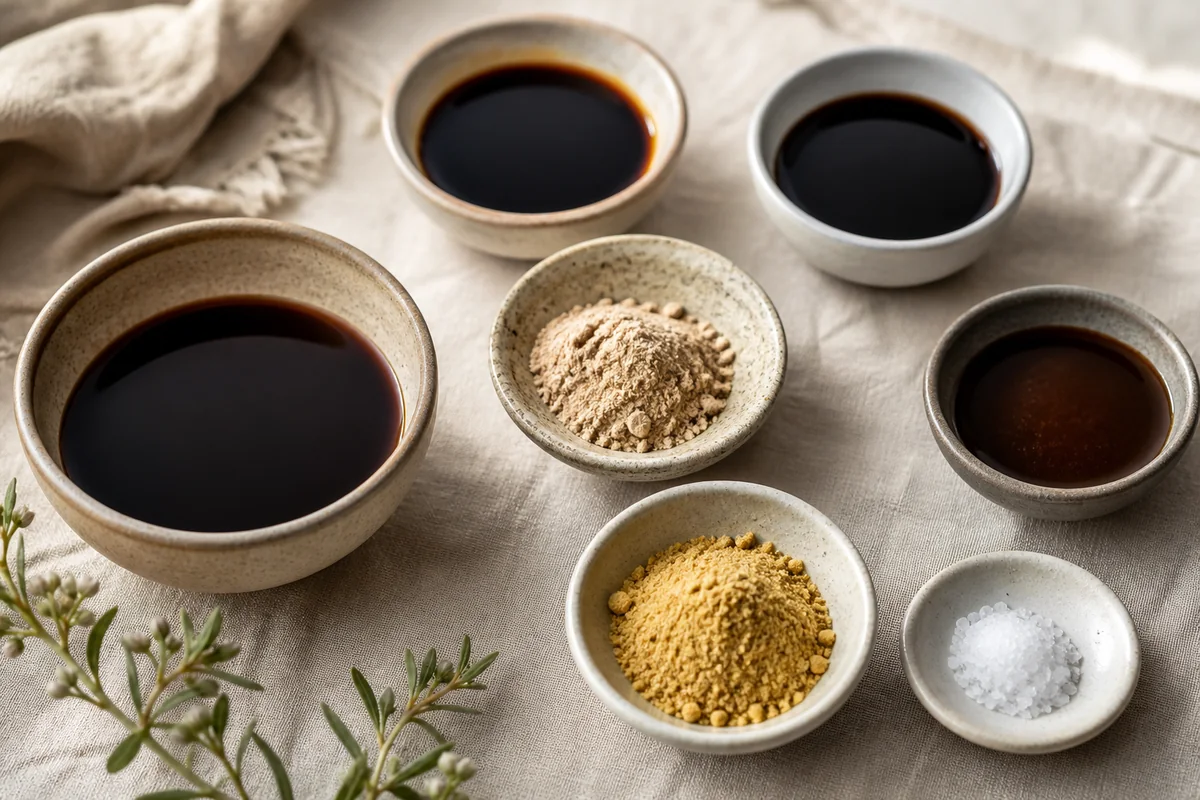
5 Best Maggi Seasoning Substitutes (That Actually Work)
Ingredients
Method
- Identify your dish style (stir-fry, soups/broth, noodles, or marinades) and whether you want a liquid seasoning effect.
- Choose the closest match from the table based on flavor goals: salt/umami depth, sauce-like thickness, or quick emergency savory boost.
- Start slightly under the listed ratio, especially with fish sauce and miso, then adjust after 1 taste cycle while the food is hot.
- If your substitute is concentrated or thick (bouillon powder, miso, oyster sauce), dissolve or thin with water so it distributes evenly.
- For sweeter-rounded “Maggi-like” flavor, add a small pinch of sugar (or a tiny splash of mirin) only if your dish tastes too sharp.
Notes
- Use hottest taste testing at the end of cooking for the most accurate salt/umami balance.
- If your substitute is salty, reduce first and correct with water, acid (lemon), or extra unsalted ingredients.
Tried this recipe?
Let us know how it was!
Carrie is a food writer and editor with more than 15 years of experience. She has worked for some of the biggest names in the food industry, including Bon Appétit, Food & Wine, and Martha Stewart Living.
As the Editor in Chief of EpicureDelight, Carrie oversees all of the content on the site. She also manages the team of contributing writers and editors, who help to create delicious recipes, helpful tips, and informative articles that you’ll find on the site.
A native of the Chicago area, Carrie is passionate about all things food. She loves trying new restaurants and experimenting with new recipes in her kitchen. She’s also a graduate of the Culinary Institute of America, so she knows a thing or two about food!



