
Sticky, dark, and faintly bitter, molasses does a lot of quiet work in baking. It keeps cookies chewy, gives gingerbread its depth, and darkens bread without adding a harsh sweetness.
When you run out, a good molasses substitute needs to match at least two of three things: color, sweetness level, and thickness.
Most pantry swaps hit two of those three. That's usually enough.
A thinner substitute might spread your cookies a little more; a sweeter one might mute that signature edge. The quick summary below maps the tradeoffs before you commit.
Molasses adds dark color, sticky moisture, and caramel-bitter flavor to baked goods. The best swaps match at least two of those three qualities. For most cookies and quick breads, dark brown sugar syrup is the closest match. Maple syrup and honey work well when you want sweeter results.
Best Molasses Alternatives (and How to Swap Them)
| # | Substitute | Best For | Ratio | Key Note |
|---|---|---|---|---|
| 1 | Dark Brown Sugar Syrup | Both | 1:1 | Closest color + sweetness |
| 2 | Maple Syrup (dark) + Salt | Baking | ¾:1 | Sweeter, caramel notes |
| 3 | Honey + Brown Sugar Blend | Baking | 1:1 | 2:1 blend for depth |
| 4 | Pomegranate Molasses | Baking | 1:1 | Tangy, use in spiced bakes |
| 5 | Corn Syrup + Spices | Both | 1:1 | Add cinnamon/ginger for depth |
Ratios shift based on how sweet and dark each substitute runs. Each H3 below expands one row from this table with specific tips and tradeoffs.
1. Dark Brown Sugar Syrup
Dark brown sugar is already part of what makes molasses taste like molasses. Dissolve 2 parts packed dark brown sugar into 1 part warm water and stir until smooth.
You get a syrup that mimics the color, stickiness, and much of the caramel depth of regular molasses.
For cookies and quick breads, this swap is the most reliable. Knowing how to store your sugar so it stays soft matters here too, since clumped sugar won't dissolve evenly.
If you find yourself reaching for sugar-based swaps often, it's worth keeping dark brown sugar stocked in a sealed container.
- Cookies and bars: Use at a 1:1 ratio; your dough may spread slightly more, so chill before baking.
- Quick breads and muffins: Add 1 tablespoon less liquid elsewhere to account for the water in the syrup.
- Marinades and glazes: Works well as-is; the color holds after heat.
Skip if your recipe needs a distinctly tangy or bitter molasses edge. This swap is sweeter and less complex, so gingerbread may taste flat.
2. Maple Syrup (Dark) + Salt
Dark maple syrup has a warm, almost woodsy sweetness that works well in spiced cookies and loaf cakes. It doesn't carry molasses's slight bitterness, but that amber depth still reads as caramel in the final bake.
Understanding how maple tastes before swapping helps you judge whether your recipe can handle the lighter profile.
- Ratio: Use ¾ cup dark maple syrup for every 1 cup molasses called for.
- Add salt: A pinch of fine salt (about ⅛ teaspoon per ¼ cup syrup) rounds off the sweetness and adds complexity.
- Thin batter fix: Maple syrup is thinner than molasses, so reduce other liquids by 1-2 tablespoon per ¼ cup used.
- Best uses: Soft ginger cookies, spiced muffins, brown butter blondies.
Skip if your recipe leans on molasses's bitter edge (classic gingerbread or dark rye). The result may taste flatter.
3. Honey + Brown Sugar Blend
Honey is thick and sweet, but on its own it can read as floral in baked goods. The fix is a 2:1 blend of honey to dark brown sugar.
That small addition of brown sugar pulls the flavor toward caramel and away from honey's more distinctive notes. The result is a thicker, darker syrup that behaves closer to molasses in cookie dough and cake batter.
This golden pantry staple works best in recipes where molasses is one of several flavor contributors rather than the dominant one.
Honey Only
Works for: light cookies, moist muffins, mild sweetness
Skip if: you need dark color or caramel depth without a floral note
Honey + Brown Sugar (2:1)
Works for: spiced cookies, quick breads, dark-colored batters
Skip if: you can't tolerate honey's aroma in a strongly spiced bake
- Mix ratio: Combine 2 tablespoon honey with 1 tablespoon packed dark brown sugar per 3 tablespoon molasses needed.
- Best uses: Oat cookies, pumpkin muffins, bran bread, sticky glaze for ham.
- Color note: The blend is lighter than molasses; expect a golden rather than dark-brown crumb.
Skip if the recipe calls for strong dark color and you can't compensate with cocoa powder or brown food coloring.
4. Pomegranate Molasses
Pomegranate molasses is sweet-tart and syrupy, closer in texture to regular molasses than most alternatives. It adds a slightly fruity, acidic edge rather than caramel bitterness.
That tartness can actually work in your favor in heavily spiced bakes. The flavor profile of pomegranate syrup leans toward Middle Eastern pantry uses, but it adapts well to gingerbread-style cookies and dark spice cakes where the acidity plays off ginger and clove.
- Best uses: Ginger spice cookies, dark fruit cake, spiced quick bread, chocolate-molasses brownies.
- Spice adjustment: Add ¼ teaspoon extra cinnamon to balance the tartness if your recipe already uses ginger.
- Ratio: Use 1:1, but taste the batter. If it reads sharp, pull back by 1 tablespoon and add a touch of honey.
- Color: Deep red-brown; your baked goods may take on a slightly reddish tint.
Skip if your batter is already acidic (recipes using buttermilk or vinegar). The combined tartness can push flavors too sharp. Also skip for classic molasses cookies where the caramel-bitter profile is the whole point.
5. Corn Syrup + Spices
Corn syrup preserves the stickiness and viscosity of molasses better than almost any other swap. The problem is flavor: corn syrup is neutral and sweet, with none of the caramel or bitter depth that molasses carries.
The solution is spice. Add ½ teaspoon cinnamon and ¼ teaspoon ginger per ¼ cup corn syrup, and you rebuild much of the aroma.
| Use | Ratio | Notes |
|---|---|---|
| Cookies | 1:1 corn syrup | Add ½ teaspoon cinnamon + ¼ teaspoon ginger per ¼ cup |
| Quick bread | 1:1 corn syrup | Add ½ teaspoon cinnamon + ⅛ teaspoon clove; reduce sugar by 1 tbsp |
| Glazes | 1:1 corn syrup | Stir in 1 teaspoon dark soy sauce for color depth |
Light Karo syrup or golden syrup both work here. Knowing how long corn syrup keeps in your pantry means you can stock it without worry.
It's a solid emergency substitute when nothing else is available.
- Texture: Nearly identical to molasses in thickness; no liquid adjustment needed.
- Color: Lighter than molasses; your baked goods will brown less. Check doneness by feel, not color.
- Best uses: Sticky cookies, pecan pie filling, glazed loaf cakes where molasses is a minor player.
Skip if you're depending on molasses for strong dark flavor or dark color. Corn syrup alone can't replicate either.
Making Your Molasses Substitute Work in Baking
Swapping molasses is mostly about matching the right quality first: color for appearance, sweetness for balance, and thickness for texture. Once you've picked your substitute from the table, a few small adjustments will keep your bake on track.
If your swap runs thin (maple syrup, honey), reduce other liquids in the recipe by 1-2 tbsp. Understanding storing brown sugar properly also matters when you're making a syrup swap, since fresh, soft brown sugar dissolves much faster. For deeper flavor, lean on this amber baking staple only when your recipe can handle a sweeter, less bitter profile.
- Match color first: If your recipe depends on a dark crumb, choose dark brown sugar syrup or pomegranate molasses over corn syrup or honey, which both bake lighter.
- Adjust spices when flavor falls flat: Add ¼ to ½ teaspoon of cinnamon, ginger, or a small pinch of clove to nudge any substitute toward molasses's signature warmth.
- Check doneness early: Molasses darkens baked goods faster than most substitutes do. Start checking 2-4 minutes before the recipe's minimum time to avoid overbaking.
Frequently Asked Questions
Not directly. Brown sugar is dry, so dissolve it with a little water to form a syrup first. Use that at a 1:1 ratio for the closest texture match.
Dark brown sugar syrup is the closest. If you want a fruitier edge, pomegranate molasses works well paired with extra ginger and cinnamon.
Use ¾ cup dark maple syrup for every 1 cup of molasses. Add a pinch of salt and reduce other liquids by 1-2 tbsp.
It will change the taste noticeably. Corn syrup is bland and neutral, so add cinnamon and ginger to approximate molasses's spiced, caramel aroma.
For too-dark results, reduce oven temp by 10-15°F next time. For too-sweet, cut the substitute by 1-2 tablespoon and add a pinch of salt to rebalance.
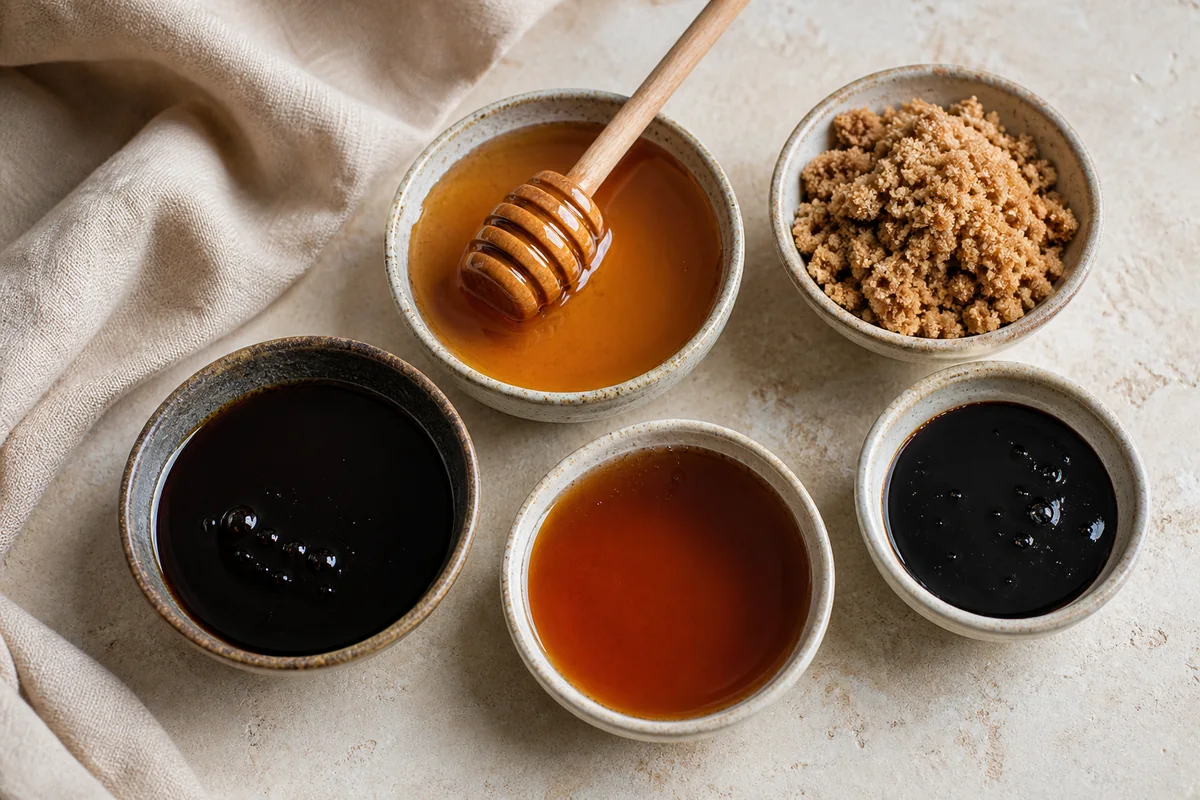
5 Best Molasses Substitutes Worth Trying
Ingredients
Equipment
Method
- Identify your use: cookies/brownies need sticky sweetness, while bread needs moisture and browning.
- Choose the closest match from the table: prioritize color depth, then sweetness, then stickiness.
- Swap using the listed ratio; if your substitute is thinner (syrups), reduce liquid elsewhere by 1–2 tablespoon per ¼ cup molasses.
- If your substitute tastes too light or sharp, add a baking spice boost (cinnamon + ginger) to mimic molasses depth.
- Bake as directed, then check doneness by color: molasses flavor darkens baked goods—start checking 2–4 minutes early if needed.
Notes
- Molasses is both sweetener and flavorant; match color depth and stickiness for best results.
- If the substitute is lighter, plan to boost spices (ginger/cinnamon) to replace the lost molasses aroma.
Tried this recipe?
Let us know how it was!
Carrie is a food writer and editor with more than 15 years of experience. She has worked for some of the biggest names in the food industry, including Bon Appétit, Food & Wine, and Martha Stewart Living.
As the Editor in Chief of EpicureDelight, Carrie oversees all of the content on the site. She also manages the team of contributing writers and editors, who help to create delicious recipes, helpful tips, and informative articles that you’ll find on the site.
A native of the Chicago area, Carrie is passionate about all things food. She loves trying new restaurants and experimenting with new recipes in her kitchen. She’s also a graduate of the Culinary Institute of America, so she knows a thing or two about food!



