That small, heart-shaped red pepper has a way of hiding in recipes where you least expect it. Pimento shows up diced into cream-cheese spreads, folded into egg salad, and tucked inside stuffed olives, and its job is always the same: sweet, soft, mellow red-pepper flavor with almost no heat.
Understanding pimento's flavor profile helps you pick the right stand-in the first time.
The key word when choosing a pimento pepper substitute is texture. Pimento is soft and tender when diced, not crunchy.
A swap that tastes right but feels wrong will change the dish more than most people expect.
Jarred roasted red peppers are the closest match for pimento in salads and spreads. Piquillo peppers work nearly as well with a slightly brighter note. For baking or sauces, a smoked paprika and tomato paste blend disperses flavor without chunks. Always drain jarred options and chop small.
5 Best Pimento Pepper Substitutes Ranked by Use
| # | Substitute | Best For | Ratio | Key Note |
|---|---|---|---|---|
| 1 | Roasted Red Peppers (jarred) | Both | 1:1 | Drain and blot first |
| 2 | Piquillo Peppers (jarred) | Both | 1:1 | Slightly brighter flavor |
| 3 | Roasted Sweet Bell Pepper | Both | 1:1 | Peel after roasting |
| 4 | Raw Red Bell Pepper | Cold | ¾:1 | Mince very fine |
| 5 | Red Pepper Relish | Both | 1:1 | Drain, taste for sugar |
The substitutes below are ordered by how closely they match pimento's soft texture and mild sweetness. Matching those two qualities, not just color, is what keeps your dish on track.
1. Roasted Red Peppers
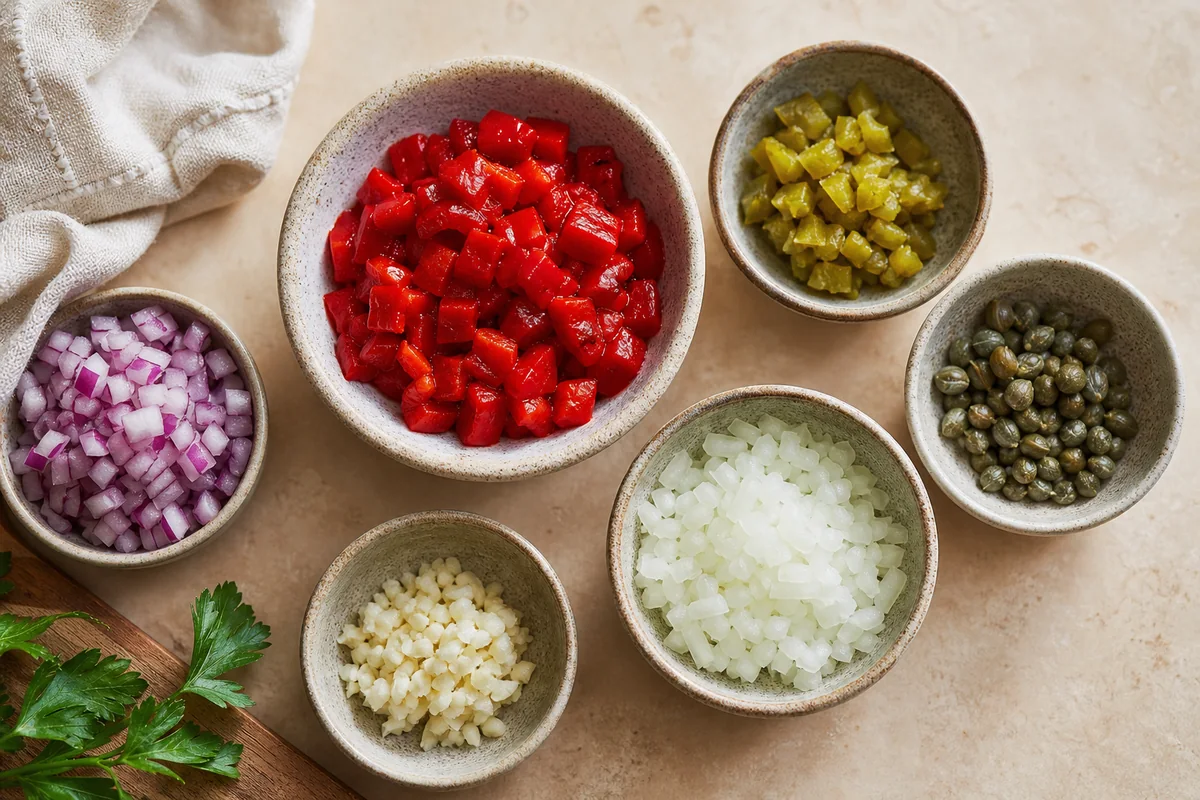
Jarred roasted red peppers are the most reliable swap for pimento. They are already soft, already sweet, and already a deep red, so the flavor shift is barely noticeable once you chop them small.
- Ratio: 1:1 after draining; dice small to match pimento's tender pieces
- Best uses: cream-cheese spreads, potato salad, pasta salad, and sandwich fillings
- Flavor note: Mild and sweet, nearly identical to pimento when the peppers are rinsed of brine
- Quick fix: If pieces still seem wet, re-chop and press gently with a clean cloth
Skip this option if you need a brighter, slightly tangier note. In that case, piquillo peppers will suit you better.
If you are curious about swapping other hot pepper types, spicy red pepper options are worth a look for heat-forward recipes.
2. Piquillo Peppers
Piquillo peppers share pimento's softness and sweetness, but they carry a touch more brightness. That edge is small enough that most mayo-based or creamy recipes won't notice the difference.
Piquillo vs. Pimento
Works for: egg salad, tuna salad, cream spreads, and any diced-pepper recipe
Skip if: your dish needs strictly mild, flat sweetness with zero acidity
- Ratio: 1:1 chopped; drain the jar liquid before measuring
- Flavor adjustment: If the brightness reads too sharp, add a small pinch of sugar to balance
- Texture: Almost identical to pimento, slightly firmer before chopping but soft once cut
Piquillo peppers have a distinct character worth understanding before you buy. A deep look at this bright jarred pepper explains their flavor in detail.
For other piquillo swaps, jarred sweet pepper picks gives a full breakdown.
3. Roasted Sweet Bell Pepper
Roasting a red bell pepper at home concentrates its sugars and softens its flesh so it behaves much more like pimento than raw bell pepper does. The result is a swap you can trust in both cold and warm applications.
- Ratio: 1:1 roasted and diced fine
- Prep steps: Roast until skin is charred, cool covered for 10 minutes, peel, and dice small
- Why it works: Heat breaks down the pepper's cell walls, giving you soft, mellow pieces close to pimento's texture
- Best uses: Sandwiches, cold spreads, warm pasta dishes, and egg-based fillings
Skip this if time is short. Raw bell pepper is crunchier and noticeably sharper in flavor, and it won't convincingly replace pimento's soft bite.
When you want to know how long your fresh peppers will last before roasting, this guide on fresh pepper storage covers timing clearly.
4. Raw Red Bell Pepper, Finely Minced
This is the pantry option. Raw red bell pepper is crunchier and slightly sharper than pimento, but with the right technique it works well enough in a pinch.
The trick is the cut. Mince it very fine so the pieces feel soft in the mix rather than crunchy.
Larger chunks will stand out against smoother ingredients like cream cheese or mayo.
- Ratio: ¾:1, since raw pepper has a bolder flavor that can dominate if used at full volume
- Mince technique: Slice into thin strips, rotate and cross-cut as small as possible
- Flavor fix: A small pinch of salt softens sharpness; a tiny pinch of sugar helps if the pepper tastes too green
- Best uses: Cold salads, dips, and spreads where some texture variation is acceptable
Skip raw bell pepper when your dish depends on pimento's tender, almost-yielding pieces. In those cases, any roasted option is worth the extra step.
For other decisions around choosing a bell pepper swap, that page handles a wider range of cooking situations.
5. Red Pepper Relish
Red pepper relish is a convenience swap that works when pimento is folded into a filling rather than eaten on its own. Most store-bought versions include vinegar and sugar, so the flavor skews sweeter and slightly acidic compared with plain pimento.
Drain it well, chop it smaller if needed, and taste before adding other sweet or tangy elements to your recipe. The relish can easily tip a dish that is already balanced.
| Use | Ratio | Notes |
|---|---|---|
| Cream cheese spread | 1:1, drained | Chop small; taste before adding any extra salt |
| Egg or tuna salad | 1:1, drained | Reduce any added sweetener in the base recipe |
| Warm casserole | 1:1 | Drain only if visibly watery; vinegar cooks off slightly |
| Baking (cornbread etc.) | Skip | Use roasted peppers instead; acidity may affect rise |
Skip red pepper relish in baking where vinegar acidity could change browning or leavening. Roasted peppers handle that application more cleanly.
If your recipe calls for smoky depth alongside pepper flavor, picking the right smoky spice can fill that gap alongside your relish swap.
Making Pimento Pepper Substitutes Work
The right swap depends on two things: the texture your dish needs and the flavor intensity you can accommodate. Cold spreads and salads need soft, tender pieces, so jarred roasted options are almost always the safer call.
Baking and sauces care less about texture and more about dispersed pepper flavor.
- Drain and blot: Jarred peppers hold brine. Press them between paper towels after draining so your spread or salad doesn't thin out.
- Size the cut to the dish: Mince fine for spreads and dips; dice slightly larger for salads where some texture is welcome; blend briefly for sauces or baked batters.
- Taste before adding more: If your substitute already has vinegar or sugar (relish, brine-packed piquillo), adjust the recipe's seasoning before reaching for extra salt or sweetener.
Frequently Asked Questions
Jarred roasted red peppers are the closest match. Drain, blot dry, and dice small for a texture and sweetness that is nearly identical to pimento in cream cheese or mayo-based spreads.
Pour off all the liquid, then press the peppers between two layers of paper towels. Re-chop after blotting so the pieces release any remaining moisture before mixing.
We don't recommend it. Raw bell pepper is crunchier and releases moisture during baking. Use roasted red peppers or a smoked paprika and tomato paste blend instead.
Piquillo is slightly brighter than pimento but rarely overpowering in creamy recipes. A small pinch of sugar brings the flavor back to pimento's mellow sweetness if needed.
Use 1:1 for roasted peppers, piquillo, or relish. Drop to ¾:1 for raw bell pepper, which has a sharper flavor that can overpower the dish at full volume.
5 Best Pimento Pepper Substitutes You Can Trust
Ingredients
Equipment
Method
- Pick your target texture: soft diced (spreads/salads) vs blended pepper flavor (baking/sauces).
- Use the ratio from the list: start at 1:1 for roasted peppers and piquillo; reduce to ¾:1 for raw bell pepper.
- Drain very wet jarred ingredients before mixing; if the substitute seems runny, blot and re-chop.
- Adjust seasoning to match pimento’s mellow sweetness: add a small pinch of salt for savory dishes or a tiny bit of sugar for overly sharp relishes.
- If using for baking, chop small or blend briefly so the pepper flavor disperses evenly.
Notes
- For spreads, prioritize softness: drained jarred roasted peppers beat raw bell pepper.
- For baking and sauces, prioritize flavor integration: smaller dice or a quick blend works best.
Tried this recipe?
Let us know how it was!
Carrie is a food writer and editor with more than 15 years of experience. She has worked for some of the biggest names in the food industry, including Bon Appétit, Food & Wine, and Martha Stewart Living.
As the Editor in Chief of EpicureDelight, Carrie oversees all of the content on the site. She also manages the team of contributing writers and editors, who help to create delicious recipes, helpful tips, and informative articles that you’ll find on the site.
A native of the Chicago area, Carrie is passionate about all things food. She loves trying new restaurants and experimenting with new recipes in her kitchen. She’s also a graduate of the Culinary Institute of America, so she knows a thing or two about food!