
Plum tomatoes have a specific job in a sauce: they thicken it. Their flesh is dense, their seed cavities are small, and the water content is low enough that a 20-minute simmer produces something spoonable.
Most other tomatoes don't behave the same way, and that's where swaps go wrong. Knowing the right plum tomato substitute means matching that flesh-to-liquid ratio first, then worrying about sweetness and acid.
The variety you reach for depends on what you're cooking. Roasting calls for something with enough body to caramelize without dissolving.
A sauce needs a tomato that breaks down evenly and thickens on its own. Choose wrong and you're reducing for an extra hour.
Roma tomatoes are the best fresh swap at a 1:1 ratio. Canned whole plum tomatoes (pulsed) are the most reliable cooked-sauce option. For emergencies, crushed tomatoes or tomato paste + water work well when simmered down to the right thickness.
Best Plum Tomato Substitutes (Quick Picks)
Every ratio below assumes a sauce or roasting context. Wetter substitutes need draining or a longer simmer; drier ones can go straight in.
Think of moisture as your main dial: turn it down by reducing uncovered, or turn it up by adding a splash of water near the end.
| # | Substitute | Best For | Ratio | Key Note |
|---|---|---|---|---|
| 1 | Roma Tomatoes | Both | 1:1 | Meaty; reduce briefly |
| 2 | Canned Whole Plum | Both | 1:1 | Pulse for texture |
| 3 | San Marzano | Sauce | 1:1 | Slightly sweeter profile |
| 4 | Cherry Tomatoes | Sauce | ¾:1 | Simmer long to thicken |
| 5 | Canned Crushed | Sauce | 1:1 | Simmer 8-12 min |
| 6 | Tomato Paste + Water | Sauce | 1:3 | No chunks; rich depth |
If you're exploring beyond tomatoes entirely, dried tomato swaps are worth a look for concentrated-flavor applications. And when a recipe leans on canned product, picking the right canned option makes more difference than most cooks expect.
1. Roma Tomatoes
Roma tomatoes are as close to plum tomatoes as a fresh substitute gets. They have thick walls, limited seed gel, and a flavor that sits between sweet and sharp without leaning too far either way.
Use them at 1:1 by weight. For roasting, halve them and roast cut-side up at 400°F until the skins wrinkle and the edges brown.
For sauce, chop them roughly and simmer 15-20 minutes uncovered; the flesh softens into chunks without going completely liquid.
If you want a side-by-side perspective on paste-style tomatoes, the Roma versus paste comparison lays out how they differ in texture and sugar content.
- Roasting: Halve, drizzle with oil, roast at 400°F for 25-30 minutes until caramelized
- Chunky sauce: Rough-chop, add directly to pan, simmer uncovered 15-20 minutes
- Seed management: Squeeze out seed pockets before adding if you want a drier result
- Skin removal: Peel after roasting if you want a smoother sauce texture
Skip if: your Romas are pale and firm with no give at the stem end. Under-ripe fruit produces a flat, slightly metallic sauce that no amount of seasoning fully fixes.
2. Canned Whole Plum Tomatoes
This is the most consistent swap for cooked sauces, full stop. The tomatoes inside the can are already ripe, already soft, and their breakdown during simmering mimics exactly what fresh plum tomatoes do over heat.
Use them at 1:1. Pulse the can's contents two or three times with an immersion blender for a chunky texture, or crush them by hand before they hit the pan.
Understanding the flavor profile of concentrated tomato products can help you calibrate how much paste or liquid to add alongside.
Canned Whole Plum Tomatoes
Works for: pasta sauces, braises, shakshuka, any recipe where the tomato needs to melt into the dish
Skip if: the label says "stewed" or lists added sugar-sweetness throws off the balance in savory sauces
- Pulse for chunks: 2-3 pulses gives a plum-tomato-like rough texture
- Hand-crush method: Squeeze each tomato over the pan for a more rustic, uneven break
- Simmer time: 5-8 minutes reduces the watery liquid that separates in the can
- Liquid use: Reserve the can juice; add it back in small amounts if the sauce gets too thick
For chunky texture, always pulse rather than blend fully. A smooth purée loses the piecey character that makes plum tomatoes useful in the first place.
3. San Marzano
San Marzano tomatoes are sweeter and less acidic than standard plum tomatoes, which is either an advantage or a problem depending on your recipe. For a slow-simmered pasta sauce, that lower acidity produces a rounder, gentler flavor.
For a brighter dish like a quick arrabbiata, you may need a small squeeze of lemon juice or a pinch of sugar-free acidity at the end to restore balance.
Use them at 1:1. The flesh breaks down beautifully and the sauce coats a spoon quickly.
If you're curious how plum tomatoes compare in flavor detail, the plum tomato flavor profile is a useful reference before you commit to a swap.
- Sweetness check: Taste before adding salt; San Marzanos may need less seasoning overall
- Acid balance: Add a small splash of red wine vinegar if the sauce tastes flat or overly sweet
- Thickness: Simmer uncovered 10-12 minutes for a sauce that holds its shape on pasta
- Label check: Look for DOP-certified cans; non-certified San Marzanos vary widely in quality
Skip if: your recipe needs a neutral, assertively tart tomato base. San Marzano sweetness is real and it shows.
4. Cherry Tomatoes
Cherry tomatoes are a workable swap when they're all you have, but they come with a caveat: sweetness. They're higher in sugar than plum tomatoes, and that shows in the finished sauce if you don't account for it.
The good news is they collapse fast, which means sauce-making time is shorter.
Use ¾ of the volume you'd normally use for plum tomatoes. Starting with less controls the sweetness and compensates for how much liquid cherry tomatoes release.
If you want to see how choosing the right sauce base affects the final dish, that breakdown covers a wider range of options.
- Prep: Halve every tomato before adding to the pan; this speeds breakdown and reduces excess water
- Simmer time: Cook uncovered on medium-high for 18-22 minutes until the sauce coats a spoon
- Sweetness fix: Add a small squeeze of lemon juice in the last 2 minutes to cut the jammy edge
- Texture note: Cherry tomatoes produce a smoother sauce than plum tomatoes; expect less chunk
Skip if: your recipe needs a neutral tomato presence. Cherry tomatoes skew sweet enough to change the character of a delicate sauce completely.
5. Canned Crushed Tomatoes
Canned crushed tomatoes are a fast, reliable pantry option. They're already broken down, so they blend into a sauce quickly, but they're wetter than plum tomatoes and need a longer simmer to reach the right consistency.
Use them at 1:1, but plan for an 8-12 minute reduction uncovered on medium heat. If the sauce still looks thin after that, a small spoonful of tomato paste (about 1 tablespoon per cup of crushed tomatoes) adds body without changing the flavor much.
For broader questions around paste-based alternatives, there are several options worth keeping in the pantry rotation.
- Start dry: Sauté your aromatics first, then add crushed tomatoes to a hot pan for faster reduction
- Simmer uncovered: 8-12 minutes, stirring occasionally, until the sauce holds a spoon-coat
- Optional boost: Add 1 tablespoon tomato paste per cup of crushed tomatoes for extra body
- Season late: Wait until the sauce reduces before adding salt; early seasoning over-concentrates as it cooks down
Skip if: your dish needs identifiable tomato pieces. Crushed tomatoes break down fully and won't give you chunks.
6. Tomato Paste + Water
This swap is about depth and body, not texture. You won't get anything that resembles plum tomato flesh, but you will get a sauce with serious tomato flavor.
It's the right call when the pantry is empty and the recipe needs richness rather than chunks. Understanding storing paste properly means you'll almost always have some on hand for exactly this situation.
Mix 1 part tomato paste with 3 parts water, stir well, and simmer for 5-10 minutes to mellow the concentrated edge.
| Use | Ratio | Notes |
|---|---|---|
| Smooth pasta sauce | 1:3 paste to water | Simmer 8-10 min; add olive oil for body |
| Braising liquid | 1:4 paste to water | Thinner base; braise ingredients add body |
| Pizza/flatbread sauce | 1:2 paste to water | Thicker spread; season well with oregano |
- Simmer step: Always cook the reconstituted mixture for at least 5 minutes to reduce the metallic edge
- Fat addition: A tablespoon of olive oil stirred in before serving rounds out the flavor
- Seasoning: This mixture needs more salt than fresh tomatoes; taste carefully and add in small amounts
Skip if: your recipe calls for visible tomato pieces or a chunky, rustic texture. This swap gives body but no structure.
Making Your Plum Tomato Substitute Taste Right
Getting the swap right is half the job. The other half is adjusting once the tomatoes are in the pan.
Most substitutes err on the side of being wetter than plum tomatoes, so the fix is usually just more time on the heat. Before you start, knowing the specific flavor notes you're trying to match makes it easier to spot when something is off.
- Reduce before seasoning: Simmer uncovered until the sauce visibly thickens, then salt. Adding salt to a thin sauce means re-seasoning once it concentrates.
- Balance sweetness last: Stir in a small splash of red wine vinegar or a few drops of lemon juice in the final 2 minutes if the sauce tastes flat or too sweet.
- Check thickness with a spoon: Run a spoon through the sauce; if the line fills in immediately, simmer 3-5 more minutes uncovered before plating.
Frequently Asked Questions
Ripe Roma tomatoes are the closest fresh option at a 1:1 ratio. Rough-chop them and simmer uncovered for 15-20 minutes to get a meaty, spoonable texture.
Yes, at a 1:1 ratio. Simmer them uncovered for 8-12 minutes to reduce the extra liquid and reach a thickness close to what plum tomatoes produce.
Simmer uncovered on medium heat until the sauce coats a spoon. Stir in 1 tablespoon tomato paste per cup of sauce if you need faster body without extra cooking time.
They can. Use only ¾ of the called-for volume and add a small squeeze of lemon juice in the last two minutes of cooking to cut the sweetness.
Use the paste-and-water mix when you need sauce depth but no chunks, such as a smooth pizza base or braising liquid. Canned tomatoes are better when texture matters.
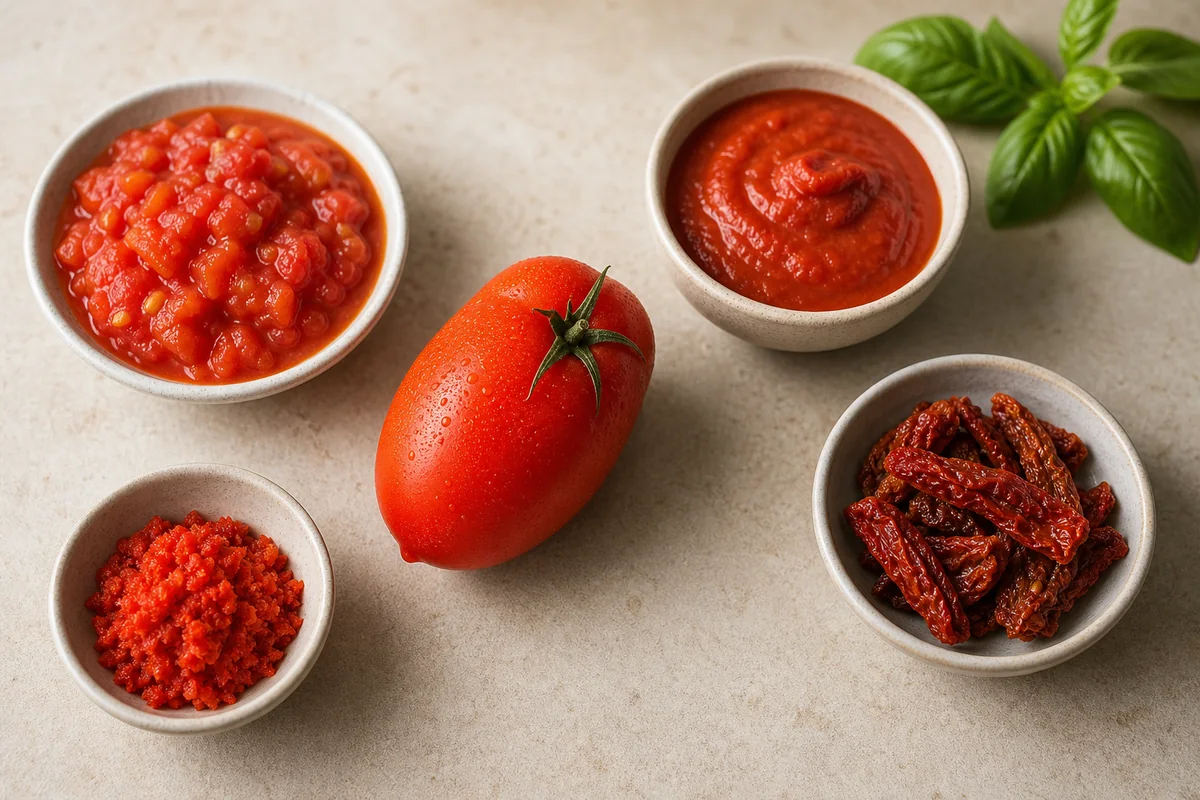
5 Best Plum Tomato Substitutes (Tested)
Ingredients
Equipment
Method
- Identify your use case: roasting/chunky sauce (fresh-like texture) vs. smooth simmered sauce (consistent cooked flesh).
- Choose a substitute from the best-match set first (Roma or canned whole plum tomatoes).
- Use the listed ratio; if the substitute is wetter than plum tomatoes, drain/strain or simmer 5–10 minutes longer.
- Adjust after cooking: add a pinch of salt for under-seasoned swaps, or simmer longer to reduce sweetness.
- Taste at the end and confirm thickness—your sauce should coat a spoon without looking diluted.
Notes
- If you’re replacing fresh plum tomatoes, the biggest success factor is matching moisture—reduce watery substitutes before serving.
Tried this recipe?
Let us know how it was!
Carrie is a food writer and editor with more than 15 years of experience. She has worked for some of the biggest names in the food industry, including Bon Appétit, Food & Wine, and Martha Stewart Living.
As the Editor in Chief of EpicureDelight, Carrie oversees all of the content on the site. She also manages the team of contributing writers and editors, who help to create delicious recipes, helpful tips, and informative articles that you’ll find on the site.
A native of the Chicago area, Carrie is passionate about all things food. She loves trying new restaurants and experimenting with new recipes in her kitchen. She’s also a graduate of the Culinary Institute of America, so she knows a thing or two about food!



