
That deep woodsy scent when dried porcini hit warm water is hard to fake. But the right porcini mushroom substitute gets surprisingly close, especially if you know which lever to pull: soaking liquid for aroma, hard browning for roasted depth, or a dried blend for layered savoriness.
Porcini's character comes from two things working together: an earthy, almost forest-floor aroma and concentrated umami that builds during cooking. Both traits intensify when you rehydrate dried mushrooms or push fresh ones to a deep golden-brown in a hot pan.
The swaps below are ranked by how closely they match that combination. Each one includes a ratio, a best use, and a note on whether the soaking liquid is worth keeping.
The best porcini mushroom substitute depends on whether your dish needs aroma, texture, or both. Dried shiitake and dried wild mushroom blends come closest in savory depth. Fresh cremini browned hard is your best fresh option. Button mushrooms work with extra effort. Always use the soaking liquid when it's available.
Best Porcini Mushroom Swaps (by Flavor Depth)
Here are the five options ranked by how close they get to porcini's earthy, savory profile, with ratios and key notes for each.
| # | Substitute | Best For | Ratio | Key Note |
|---|---|---|---|---|
| 1 | Dried Porcini (rehydrated) | Sauces, Risotto | 1:1 | Strain and keep soaking liquid |
| 2 | Dried Shiitake (rehydrated) | Braises, Risotto | 1:1 | Chop after soaking |
| 3 | Dried Wild Mushroom Blend | Soups, Gravies | 1:1 | Add soaking liquid gradually |
| 4 | Fresh Cremini (deep-browned) | Pasta, Skillets | 1:1 | Brown hard; don't crowd pan |
| 5 | Button Mushrooms (sautéed) | Weeknight Sauces | ¾:1 | Deglaze to lift fond |
1. Rehydrated Dried Porcini
If a recipe calls for porcini and you have dried porcini on hand, this is still a substitute worth naming. Many home cooks stock fresh porcini in season but turn to the dried version year-round, and the dried form often delivers more concentrated flavor than fresh anyway.
Soak in hot (not boiling) water for 15-20 minutes, then strain the liquid through a fine-mesh strainer or cheesecloth. The soaking liquid carries most of the aroma, and it belongs in the dish.
We use it to deglaze the pan or stir it into the base of a sauce in the final few minutes of simmering.
The woodsy, umami-forward character of porcini is what you're preserving here, and dried porcini protect it better than any other option on this list.
- Best for: Risotto, creamy mushroom sauces, and braised meats where aroma matters most
- Ratio: 1:1 by cooked weight - start there and taste
- Soaking liquid: Always strain and use it; don't discard
- Prep: 15-20 minutes soak, chop after rehydration
Skip this if you only have fresh mushrooms available and don't want to rehydrate anything. The cremini option below is your next best move.
2. Rehydrated Dried Shiitake
Dried shiitake is the most practical swap for most cooks. It's sold in nearly every grocery store, it rehydrates reliably, and the flavor sits close to porcini's earthy profile.
It carries slightly more of a woodsy sweetness compared to porcini's straighter savory note, but in a braise or risotto the difference is minor.
Dried Shiitake vs. Dried Porcini
Works for: risotto, braises, creamy sauces, or anywhere you need earthy umami depth
Skip if: you need a delicate mushroom topping - shiitake reads stronger than porcini when barely cooked
When you're deciding between choosing a dried alternative for a specific dish, shiitake soaking liquid is almost as useful as porcini's own. Add it in two stages: half during sautéing, half when building the sauce.
- Best for: Risotto, slow braises, and creamy mushroom sauces
- Ratio: 1:1; use a portion of the soaking liquid to round out aroma
- Prep: Soak 15-20 minutes; chop finely after rehydrating so pieces cook evenly
- Flavor note: Slightly sweeter than porcini - a pinch of black pepper balances it
3. Dried Mixed Wild Mushrooms
A good dried wild mushroom blend pulls from chanterelle, oyster, and shiitake in varying ratios, and the result is a broader, layered savoriness that works well in soups and gravies. It's less focused than porcini but more complex than any single fresh mushroom.
If your blend is heavy on earthy varieties like shiitake or chanterelle, you're in good shape.
Soak the blend in hot water for 15-20 minutes, then strain the liquid before adding it to the dish. Incorporate the soaking liquid gradually while simmering so you can control intensity.
You can read about storing leftover risotto if you end up making a big batch with this blend, since the aroma holds well when reheated gently.
- Best for: Soups, sauces, and gravies where mushroom complexity is the point
- Ratio: 1:1; adjust down if your blend skews toward milder varieties
Skip this if your blend contains mostly delicate, light-tasting mushrooms. You'll get less of that porcini-like depth and may need to compensate with a small splash of soy sauce.
4. Deep-Browned Fresh Cremini
Fresh cremini is the best fresh-mushroom stand-in for porcini, but only if you brown it properly. A pale sauté produces flat, watery mushrooms.
A hard sear in a dry, uncrowded hot pan pulls out moisture first, then builds the roasted notes that are otherwise missing from a fresh mushroom's profile.
Understanding cremini's natural flavor range helps you decide how far to push the browning. They have mild earthiness that intensifies quickly once moisture cooks off.
- Best for: Pasta sauces, skillet meals, and plated mushroom toppings with texture
- Ratio: 1:1 by weight - fresh cremini shrinks, so taste and add more if needed
- Pan tip: Cook in a dry pan without crowding; add garlic and shallot only after browning
- Flavor boost: Deglaze with a splash of wine or stock to lift fond and add savory depth
Skip this if your dish depends on peak aroma, like a classic risotto. Dried mushrooms plus soaking liquid will perform better there.
5. Button/White Mushrooms
Button mushrooms are mild, sometimes bordering on bland, and they need more help than any other option here. But they're in almost every kitchen, and with the right technique they can carry a weeknight sauce without tasting flat.
The key is time in the pan. Cook them longer than feels comfortable, until they're deeply browned and the moisture is gone.
Then the milder variety develops a nuttier, roasted character that reads closer to earthy. Deglaze the pan after browning to lift all that fond, which is where most of the flavor is hiding.
- Best for: Weeknight pasta sauces and simple pan sauces where porcini is unavailable
- Ratio: Start at ¾:1 - use slightly less if you're also adding strong seasonings like soy sauce
- Browning: High heat, dry pan, single layer; stir only every 2-3 minutes
- Deglaze: Use white wine, stock, or water; scrape the pan and let it reduce by half
- Optional boost: A small pinch of mushroom seasoning or a dash of Worcestershire adds missing savory depth
Skip this if porcini flavor is the star of the dish. Button mushrooms need too much boosting to carry a porcini-forward recipe on their own.
Making Porcini Substitutes Taste Like the Real Thing
A good substitute choice only gets you halfway there. The technique you apply in the pan covers the rest.
Whether you're working with that dense, chewy dried texture or fresh mushrooms that need a harder sear, three steps separate a flat result from one that tastes intentional. If your dish also calls for a splash of rice wine and you need an alternative, dry wine swaps cover the most common options.
- Soak and strain carefully: Use hot water, not boiling; soak dried mushrooms 15-20 minutes and strain through a fine-mesh strainer to remove grit before adding liquid to the dish.
- Brown before you build: For fresh mushrooms, cook in a hot, uncrowded pan until deeply golden; adding liquid or aromatics too early creates steam and kills browning.
- Balance salt and simmer time: Soaking liquid and soy sauce both carry salt; taste before adding seasoning, and simmer sauces 5-8 minutes after adding liquid so harsh edges mellow.
Frequently Asked Questions
Rehydrated dried shiitake is the most practical choice, with soaking liquid stirred in during the final minutes. Dried porcini (if you can find them) is even closer, but shiitake delivers most of that earthy depth.
Yes, always strain it and add it to the dish. Both carry concentrated savory aroma that replaces much of what fresh mushrooms lack.
Use a 1:1 ratio by weight, but brown the cremini hard in a hot, uncrowded pan first. Deglaze with a splash of wine or stock to capture the fond before building the sauce.
Start at 1:1 by dried weight in the recipe, then taste and adjust. Add soaking liquid gradually rather than all at once to control intensity.
Always strain soaking liquid through a fine-mesh strainer or cheesecloth, and taste the dish before adding any extra salt. Add the liquid in stages and simmer briefly so the flavor mellows.
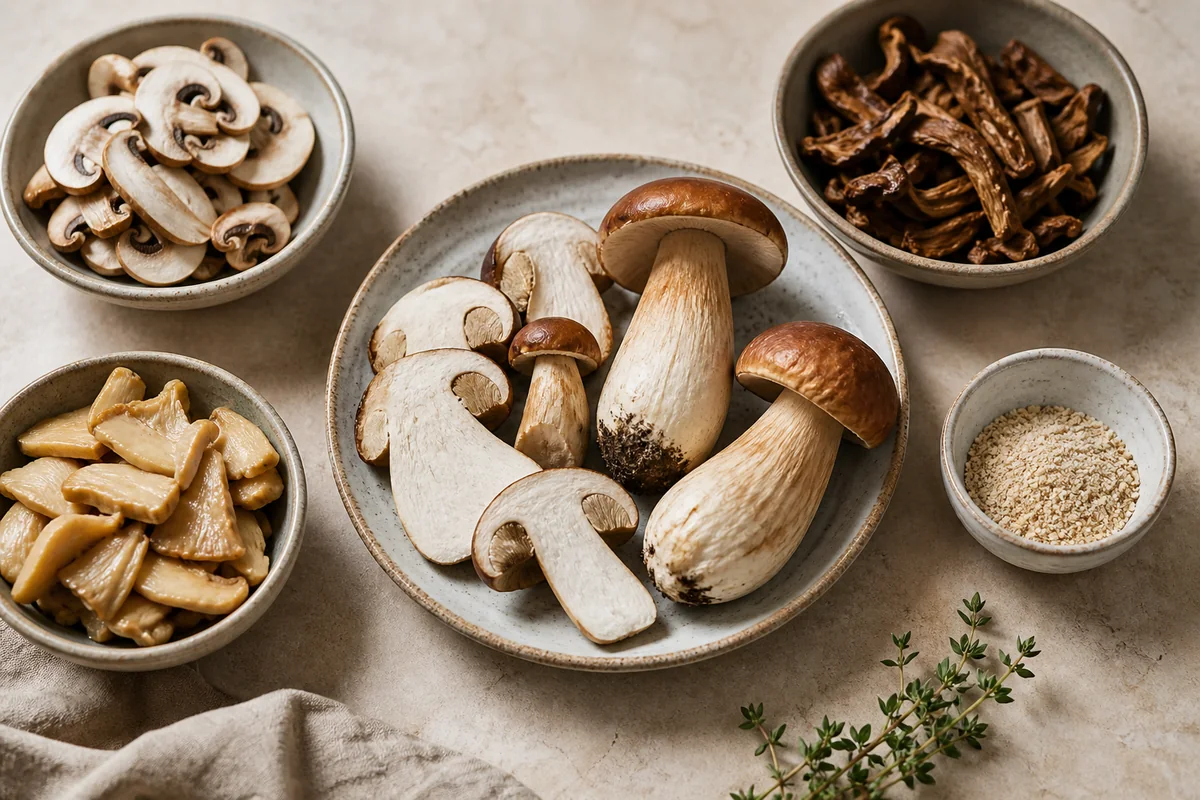
5 Best Porcini Mushroom Substitutes for Home Cooks
Ingredients
Equipment
Method
- Choose a substitute based on what you’re making: soups/sauces benefit most from dried mushrooms + soaking liquid.
- Use the table’s ratio as your starting point, then adjust seasoning after tasting (especially salt and browning depth).
- If using dried mushrooms, soak in hot water 15–20 minutes; strain and stir the soaking liquid into the dish.
- If using fresh mushrooms, sauté in a hot pan until browned; crowding prevents the deeper porcini-like flavor.
- Taste and fine-tune: add a small pinch of salt for savory depth or a tiny splash of soaking liquid to re-intensify aroma.
Notes
- Soaking liquid adds aroma and minerality—strain to avoid grit.
- Browning fresh mushrooms is the fastest way to replace porcini’s depth in pan-cooked dishes.
Tried this recipe?
Let us know how it was!
Carrie is a food writer and editor with more than 15 years of experience. She has worked for some of the biggest names in the food industry, including Bon Appétit, Food & Wine, and Martha Stewart Living.
As the Editor in Chief of EpicureDelight, Carrie oversees all of the content on the site. She also manages the team of contributing writers and editors, who help to create delicious recipes, helpful tips, and informative articles that you’ll find on the site.
A native of the Chicago area, Carrie is passionate about all things food. She loves trying new restaurants and experimenting with new recipes in her kitchen. She’s also a graduate of the Culinary Institute of America, so she knows a thing or two about food!



