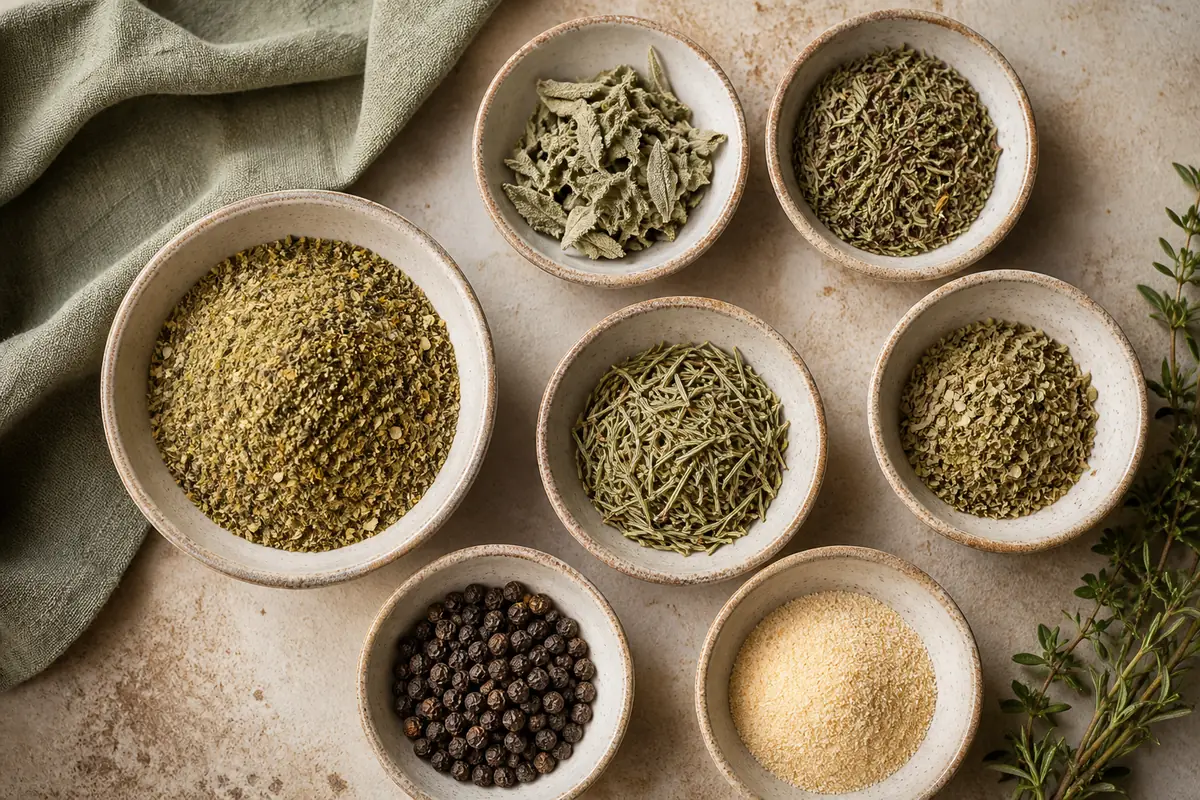
Sage, thyme, a whisper of marjoram-that's the herb backbone most cooks recognize as poultry seasoning. Without it, a chicken or stuffing dish can taste flat, like something's missing but you can't name it.
A good poultry seasoning substitute rebuilds that profile by matching the dried herb base first, then adjusting pepper and salt last.
Most poultry seasoning blends lean sage-forward with thyme underneath. That matters because swaps built on the same two herbs tend to land closest.
Keep that in mind as you read.
Sage and thyme are the core of poultry seasoning. Your best swaps rebuild that base first. A 1:1 sage-thyme blend is the closest match. Herbes de Provence and Italian seasoning work well with small adjustments. For emergencies, garlic powder with oregano and black pepper saves flavor in a pinch.
5 Best Poultry Seasoning Substitutes (Use This Table First)
Match the herb backbone before anything else. Sage and thyme should come first.
Then correct with pepper and salt once the blend is on the meat.
| # | Substitute | Best For | Ratio | Key Note |
|---|---|---|---|---|
| 1 | Sage + Thyme Blend | Both | 1:1 | Closest herb signature |
| 2 | Herbes de Provence | Both | 1:1 | Add a pinch of pepper |
| 3 | Italian Seasoning | Cooking | ¾:1 | Can taste oregano-heavy |
| 4 | Thyme + Marjoram | Both | 1:1 | Lighter, sweeter profile |
| 5 | Rosemary + Thyme | Cooking | 1:1 | Earthier, piney finish |
1. Sage + Thyme Blend
This is the one to reach for first. Dried sage and dried thyme together recreate the core of what poultry seasoning actually is.
Use equal parts and you'll get the familiar savory-herbal warmth that works in stuffing, roast chicken, and gravy alike.
The ratio is simple. For every 1 teaspoon of poultry seasoning a recipe calls for, mix ½ teaspoon dried sage with ½ teaspoon dried thyme.
If you want a little more depth, understanding dried vs fresh forms helps you judge how much to use.
- For stuffing: Use the full 1:1 ratio-stuffing needs that sage backbone to taste right.
- For chicken breasts: Start with ¾ of the called-for amount; leaner cuts absorb seasoning faster.
- For soups or gravies: Add it early so the dried herbs have time to bloom in the liquid.
Sage + Thyme Blend
Works for: stuffing, roast chicken, gravy, turkey rub, herb-heavy casseroles
Skip if: you only have Italian seasoning or want to avoid a strongly herb-forward dish
2. Herbes de Provence
Herbes de Provence is a natural fit for chicken because it already contains thyme, savory, and marjoram. The blend tends to be slightly floral, which is why a pinch of black pepper matters.
It pulls the flavor back toward savory and away from perfume.
If your jar has a noticeable lavender note, use slightly less and add more thyme separately. When comparing these two herb blends, Herbes de Provence is the gentler, more poultry-friendly choice.
- Ratio: 1:1 with poultry seasoning; add ⅛ teaspoon black pepper per teaspoon used.
- Best dishes: Roasted thighs, sheet-pan vegetables, whole chicken rub.
- Adjust if: The blend smells strongly floral-reduce by 2 tablespoon per batch and add plain thyme to compensate.
Skip if: your Herbes de Provence contains strong lavender and the dish is mild or kid-friendly.
3. Italian Seasoning
Italian seasoning is a near-match, but it carries oregano and sometimes basil, which push the flavor in a more Mediterranean direction. It works, but it is not identical.
Start at ¾ teaspoon for every 1 teaspoon of poultry seasoning called for, then taste before adding more.
For dishes where the herb blend is front and center-like stuffing or turkey-this swap shows its limits. Understanding oregano form differences also helps you dial back strength when the taste runs sharp.
- Best use: Quick sautéed chicken, sheet-pan dinners, or marinades where oregano won't clash.
- If too oregano-forward: Add ¼ teaspoon dried thyme and a small pinch of dried sage to steer it back.
- Avoid for: Turkey stuffing or gravy where sage depth is the whole point.
Skip if: your recipe is sage-driven (stuffing, classic roast turkey) and you have no sage on hand to add back.
4. Thyme + Marjoram
Thyme and marjoram together produce a gentle, savory-sweet herb note that mimics the lighter side of poultry seasoning well. This combo is best for dishes where you want herbiness without the more assertive sage bite.
Think chicken soup, light pan sauces, or thinner cuts that don't need heavy seasoning.
If the blend tastes too mild, add a small pinch of dried sage or crack some black pepper into the mix. Checking the thyme form options is worth doing here-ground thyme is more concentrated and may need a slightly smaller amount.
- Ratio: 1:1 with poultry seasoning; use equal parts dried thyme and dried marjoram.
- For more backbone: Add a pinch of sage or ⅛ teaspoon black pepper per teaspoon of blend.
- Best dishes: Chicken soup, poached poultry, light pan sauces, delicate stuffing recipes.
Skip if: you want sage-forward depth for turkey-style dishes. This combo lacks that fuller, earthier base.
5. Rosemary + Thyme
Rosemary and thyme together lean earthy and aromatic, stronger than the average poultry seasoning blend. That piney rosemary note is good on roasted chicken, but it can feel out of place in a delicate stuffing or cream-based sauce.
Use it where high heat and bold flavors are already in play.
Grind or crumble the dried rosemary before mixing it in. Coarse rosemary pieces don't distribute evenly.
Before choosing this swap, choosing alternative herbs might point you toward a gentler option if rosemary feels too strong.
Rosemary + Thyme
Works for: high-heat roasting, whole chicken, drumsticks, root vegetable trays
Skip if: you want a mild herb blend or you're cooking for anyone sensitive to bold pine-forward flavors
- Ratio: Use 1 teaspoon rosemary + thyme blend for every 1 teaspoon poultry seasoning.
- To soften the edge: Add a pinch of marjoram and reduce rosemary to 40% of the blend.
- Best dishes: Whole roasted chicken, oven drumsticks, potatoes cooked under the bird.
Making Poultry Seasoning Substitutes Taste Right
The key is herb strength, not just herb type. Dried herbs vary a lot by brand and age-an old jar of thyme may need 25% more to match a fresh jar of poultry seasoning.
Before you commit to a ratio, crumble a pinch of your chosen substitute and smell it. If it's faint, use more.
If it's sharp, use the lower end of the range. Knowing this herb blend's flavor profile makes it easier to judge whether your chosen swap hits the same notes.
Once your blend smells close, you're ready to apply it.
- Bloom the herbs first: Add your substitute to a dry pan over medium-low heat for 30-45 seconds before mixing with fat or applying to meat. This wakes up the dried herbs and improves aroma significantly.
- Season in layers: Apply the herb blend early, then add salt separately at the end. Blending salt and herbs too soon can mask how the herbs actually taste.
- Taste-correct after cooking: If the dish tastes flat, add a small pinch of pepper or a touch more thyme-not more of the whole blend-to avoid over-salting.
Frequently Asked Questions
Mix equal parts dried sage and dried thyme and use that blend 1:1. This is the closest match because those two herbs form the backbone of most commercial poultry seasoning blends.
Most substitutes work at a 1:1 ratio. Italian seasoning is the exception-start at ¾ teaspoon and adjust up after tasting, since oregano dominance can throw off the balance.
It works in a pinch, but stuffing needs sage-forward flavor that Italian seasoning doesn't deliver. Add ¼ teaspoon dried sage alongside it to get closer to the classic profile.
Add a pinch of dried sage and a small crack of black pepper. Both restore the savory warmth that flat herb blends tend to lack.
Not quite. Turkey benefits from bold sage-forward blends applied early. Chicken breasts are leaner and absorb seasoning faster, so start with about 75% of the suggested amount.
5 Best Poultry Seasoning Substitutes You Can Trust
Ingredients
Method
- Choose your substitute from the table based on what you have (sage/thyme is the closest starting point).
- Apply the listed ratio; if you’re using a blend, start slightly light (about 10–25% less) and adjust after tasting.
- If your substitute is a mix you assembled (like sage+thyme), blend it evenly so one herb doesn’t dominate the crust.
- Let the seasoning sit on the meat for 5–10 minutes before cooking for better herb bloom.
- Taste and correct at the end: add salt if flat, or add a pinch more pepper if you need bite.
Notes
- Poultry seasoning typically lands in the sage/thyme/rosemary + warm pepper territory; the goal is to match herb depth, not just “generic herbs.”
Tried this recipe?
Let us know how it was!
Carrie is a food writer and editor with more than 15 years of experience. She has worked for some of the biggest names in the food industry, including Bon Appétit, Food & Wine, and Martha Stewart Living.
As the Editor in Chief of EpicureDelight, Carrie oversees all of the content on the site. She also manages the team of contributing writers and editors, who help to create delicious recipes, helpful tips, and informative articles that you’ll find on the site.
A native of the Chicago area, Carrie is passionate about all things food. She loves trying new restaurants and experimenting with new recipes in her kitchen. She’s also a graduate of the Culinary Institute of America, so she knows a thing or two about food!