
Heat is the first thing a recipe loses when you swap out red chili pepper. The red chili pepper substitute you reach for should match two things: the heat intensity your dish needs, and the form the original chili was in.
Fresh chili gives you heat plus texture and a slight vegetal sweetness. Dried flakes give you heat plus a little chew.
Ground powder disappears into the dish entirely. Getting the form wrong is how substitutes end up tasting flat or one-dimensional.
Match your substitute to the form red chili plays in the recipe. Cayenne covers pure heat in sauces and baking. Chili flakes mimic texture. Paprika delivers color and warmth without the bite. Chipotle powder adds smoky depth. Gochugaru brings flavor complexity.
5 Best Red Chili Pepper Substitutes (and When to Use Them)
Every substitute below was chosen for how well it matches heat level, color, and cooking behavior. Some perform best bloomed in oil; others do better stirred in at the end.
The table gives you the ratio and the key constraint at a glance before you commit.
| # | Substitute | Best For | Ratio | Key Note |
|---|---|---|---|---|
| 1 | Cayenne Pepper | Both | 1:1 | Bloom in oil first |
| 2 | Red Chili Flakes | Both | ¾:1 | Crush for smooth sauces |
| 3 | Paprika | Both | 1:1 | Less heat than chili |
| 4 | Chipotle Powder | Both | ½:1 | Strong smoky intensity |
| 5 | Gochugaru | Both | ¾:1 | Distinct Korean character |
If your recipe is extremely delicate, like a custard or a quick bread, reach for sweet paprika over cayenne. You can always add more heat; you cannot pull it back once it's baked in.
1. Cayenne Pepper
Cayenne is ground from small hot peppers, so its heat profile is close to red chili powder without carrying extra smokiness or sweetness. For a deeper look at how it behaves in different recipes, the breakdown of cayenne's flavor notes is worth checking before you measure.
Use it at a 1:1 ratio, but start at ¾ if your dish is heat-sensitive.
- Bloom it: Add cayenne to warm oil for 20-30 seconds before other ingredients to soften any bitterness.
- In baking: Mix it directly into dry ingredients and reduce by ¼ teaspoon on your first try.
- In sauces: Add early and simmer so the raw pepper sharpness mellows out.
Skip if: your dish depends on fresh chili's bulk or mild vegetal sweetness. Cayenne has no texture and reads more peppery than fruity.
2. Red Chili Flakes
Dried red chili flakes are the closest you can get to fresh chili texture without actual fresh peppers. They carry visible red color, a little chew, and heat that releases gradually as they cook.
Use them at a ¾:1 ratio; a full 1:1 can tip the dish hotter than expected. For quick ideas on using these in spicy condiment-style dishes, vinegar-forward heat options offer a useful comparison point.
- Sauces and stir-fries: Add flakes early so they rehydrate and blend into the base.
- Soups: Crush flakes between your fingers before adding for finer, more even heat distribution.
- Sprinkling: Use whole flakes on pizza or flatbreads as a finishing touch.
- Baking batters: Crush flakes fine and mix into wet ingredients so they hydrate fully.
Skip if: you need a completely smooth, silky sauce. Even crushed flakes leave small bits behind; switch to ground cayenne or paprika for a seamless finish.
3. Paprika (Sweet or Smoked)
Paprika is made from dried red peppers, so it gives you the red color and pepper warmth without the aggressive heat of chili. It is the most baking-friendly option on this list.
When you're deciding between reaching for paprika or something hotter, picking a milder red pepper covers exactly this tradeoff.
Sweet Paprika
Works for: baking, light sauces, dishes where you want color without heat
Skip if: your recipe needs any meaningful spice level
Smoked Paprika
Works for: chilis, rubs, stews, roasted vegetable dishes
Skip if: the dish is bright and fresh-tasting (smoke will flatten it)
- Ratio: Use 1:1 for color and flavor replacement. Add a pinch of cayenne alongside if you want some heat.
- Sweet paprika: Works in cake batters, cookie glazes, and any dish where chili is decorative rather than dominant.
- Smoked paprika: Adds depth to bean dishes, marinades, and braised meats.
Skip if: the recipe needs a real pepper bite. Paprika alone will not deliver it; combine with a small amount of cayenne to compensate.
4. Chipotle Powder
Chipotle powder is smoked, dried jalapeño, so it brings both moderate heat and a layered smokiness that fresh red chili does not. That smoke can dominate if you overdo it.
If you ever need to swap out chipotle itself, choosing a smoky alternative walks through the best options. Start at ½:1 and taste before adding more.
- Sauces and braises: Add to warm (not scorching) oil and simmer for at least 5 minutes so the smoke integrates smoothly.
- Dry rubs: Mix with salt and a little brown sugar to balance the smoke and heat.
- Soups: Stir in early and let it cook down; it blooms well in liquid over low heat.
Skip if: you're making a light, fresh dish like a citrus dressing or a quick vegetable sauté. The smokiness will compete with bright flavors.
5. Gochugaru (Korean Chili Flakes)
Gochugaru is a coarsely ground Korean chili with moderate heat and a fruity, slightly sweet character that sets it apart from standard Western chili flakes. It is not just a heat source; it adds a distinct chili personality to whatever it goes into.
For a full picture of how this ingredient tastes and behaves, the profile of this bright Korean chili gives you good context before substituting. Use it at ¾:1 to stay close to the original chili's heat.
- Stir-fries and noodle dishes: Add early in the oil to let the sugars in gochugaru caramelize slightly.
- Marinades: Mix with soy, garlic, and sesame for a well-rounded marinade base.
- Baked batters: Stir into wet ingredients and let it sit for 5 minutes before baking so it hydrates fully.
- Dips and dressings: Use it where you want chili flavor with color and less raw burn.
Skip if: your recipe needs a neutral, background chili heat. Gochugaru has its own identity that will come through in the finished dish.
6. Hot Sauce (Red-Based)
Hot sauce is the pantry emergency option. Most red-based hot sauces use cayenne or chili mash as their base, so the heat source is familiar.
The catch is acidity and salt, which can shift a recipe's balance fast. Before leaning on it heavily, the breakdown of swapping liquid heat sources is worth a quick read.
Start at ½:1 and taste as you go.
- Acidity: Hot sauce contains vinegar, so reduce any other acid in the recipe (lemon juice, wine) by a small splash.
- Salt: Most hot sauces are salted; cut added salt by ¼ teaspoon per tablespoon of hot sauce used.
- Liquid balance: If your recipe is a batter or thick sauce, reduce another liquid by 1-2 teaspoons to compensate.
| Use | Ratio | Notes |
|---|---|---|
| Sauces / Braises | ½:1 | Add at end; stir and taste before more |
| Marinades | ½:1 | Reduce lemon juice or vinegar by 1 tsp |
| Baking batters | Avoid or ¼:1 | Acidity can affect rise; use paprika instead |
Skip if: your recipe is salt-sensitive or relies on a neutral background heat. In baking, choose chili flakes or paprika every time over hot sauce.
Making the Substitute Taste Right
Getting the ratio right is only half the job. The other half is when and how you add the substitute, which changes how the heat reads in the finished dish.
For comparison, the same technique applies when you are working through pepper-based swaps more broadly, and it also matters when reading chipotle's layered flavor to decide how early it needs to go in. Add dried spices too late and they taste raw; add them too early in delicate dishes and they can turn bitter.
- Bloom powders first: Add cayenne, chipotle powder, or paprika to a teaspoon of warm oil for 20-30 seconds before adding other ingredients. This smooths bitterness and spreads heat evenly.
- Match the form: Use flakes (chili flakes or gochugaru) early in cooking for texture and gradual heat release. Use ground powders when you want heat to disappear into the dish seamlessly.
- Add in stages: Start at ⅛ teaspoon below the recipe's amount. Taste after simmering for 5 minutes, then add more in ⅛-teaspoon increments until the heat sits where you want it.
Frequently Asked Questions
Start at ¾ teaspoon cayenne for every 1 teaspoon of ground red chili. Cayenne runs hotter, so going slightly under gives you room to adjust after tasting.
Sweet paprika is the safest pick. It adds red pepper warmth and color without the bitterness that cayenne can develop during long bake times.
Add powder early, bloomed in oil, so the heat integrates. Add flakes early for texture and gradual heat, or at the very end for a fresher, brighter pepper note.
Stir in a small spoonful of sugar, honey, or dairy (cream, yogurt) to cut the heat. Adding more bulk ingredients like potato or canned tomato also dilutes intensity fast.
You can't fully replicate the texture, but adding thinly sliced red bell pepper or jarred roasted red pepper gives bulk and color. Use ground powder separately for heat.
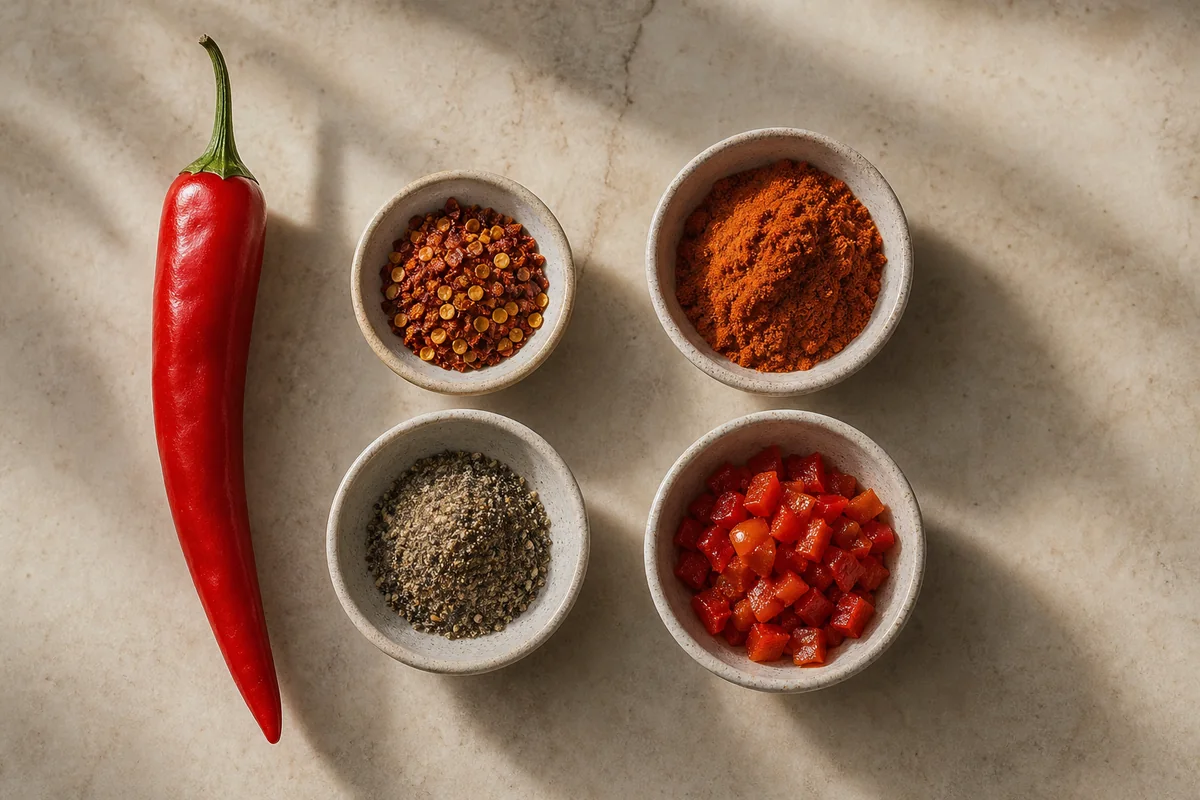
5 Best Red Chili Pepper Substitutes in Every Recipe
Ingredients
Equipment
Method
- Identify how the chili is used: fresh slices/chunks, dried flakes, ground heat, or a smoky chili flavor.
- Choose the closest substitute from the table/process below, then apply the listed ratio (use the lower end for delicate dishes).
- For dried powders or flakes, bloom in a teaspoon of oil for 20–30 seconds before adding other ingredients.
- Adjust heat and balance: add a pinch of sugar for harshness, or add more chili substitute for depth; re-check after simmering.
- If using a liquid substitute (like hot sauce), reduce added liquids and taste after the first simmer.
Notes
- If your recipe calls for fresh red chili pepper (sliced), flakes/powders won’t add the same bulk—use more by texture need, not just heat.
- When replacing in baking, bloom spices briefly in fat (butter/oil) to reduce bitterness.
Tried this recipe?
Let us know how it was!
Carrie is a food writer and editor with more than 15 years of experience. She has worked for some of the biggest names in the food industry, including Bon Appétit, Food & Wine, and Martha Stewart Living.
As the Editor in Chief of EpicureDelight, Carrie oversees all of the content on the site. She also manages the team of contributing writers and editors, who help to create delicious recipes, helpful tips, and informative articles that you’ll find on the site.
A native of the Chicago area, Carrie is passionate about all things food. She loves trying new restaurants and experimenting with new recipes in her kitchen. She’s also a graduate of the Culinary Institute of America, so she knows a thing or two about food!



