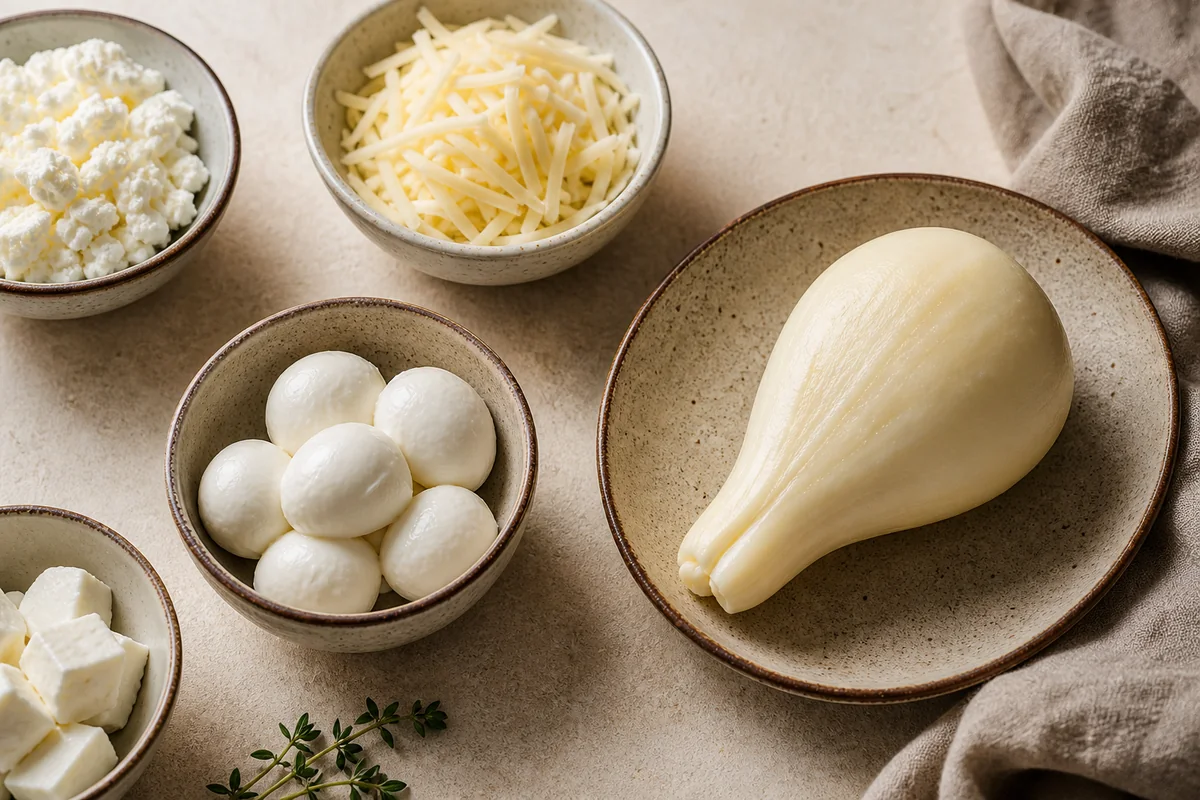
Sulguni pulls apart in sheets. That elastic, almost rubbery stretch is what makes it so satisfying inside khachapuri or melted over bread, and it's exactly what makes finding a sulguni cheese substitute genuinely frustrating.
Most soft white cheeses crumble or turn soupy where sulguni would have stretched.
The good news: a handful of cheeses share enough of its melt behavior to work in most recipes. The picks below are ranked by how closely they match sulguni's stretch and melt, not just its color or salt level.
Sulguni is prized for its elastic stretch and quick melt. Your best replacements are low-moisture mozzarella (closest stretch), provolone (good chew and melt), and halloumi (browning with a bite). Feta and string cheese cover emergencies when stretch is less critical.
5 Best Sulguni Cheese Replacements Ranked by Melt and Stretch
Here's a fast reference before you pick your swap. Stretch and melt come first; salt is easier to adjust.
| # | Substitute | Best For | Ratio | Key Note |
|---|---|---|---|---|
| 1 | Mozzarella (part-skim, low-moisture) | ★ Both | 1:1 | Shred for even melt |
| 2 | Provolone (mild) | ★ Both | 1:1 | Firmer chew than sulguni |
| 3 | Halloumi | 🔥 Cooking | 1:1 | Won't fully melt |
| 4 | Feta (crumbled, warmed) | 🧁 Baking | ¾:1 | Very salty-use less |
| 5 | String cheese / mozzarella sticks | ★ Both | 1:1 | Shred before baking |
1. Mozzarella (Low-Moisture)
Low-moisture, part-skim mozzarella is the closest texture match. It pulls apart in strands, melts quickly, and doesn't turn greasy the way full-fat versions can in a hot oven.
Shred it rather than slice it before adding to any baked dish. Thinner pieces melt faster and give you the layered, elastic pull that sulguni delivers.
Low-Moisture Mozzarella
Works for: khachapuri-style breads, pizza-adjacent bakes, stuffed pastries, any dish needing elastic melt
Skip if: your recipe needs a briny, salty flavor hit-mozzarella is mild and won't replicate that
- Prep: Shred on the large holes of a box grater; avoid pre-shredded bags (they contain anti-caking agents that slow melting)
- Ratio: 1:1 by weight or volume
- Salt fix: Add a small pinch of flaky salt on top before baking to compensate for mozzarella's mild flavor
- Baking tip: Pull the dish when the cheese is glossy and just starting to bubble; overcooking turns it rubbery
2. Provolone (Mild)
Mild provolone has a chew that sits close to sulguni's, and it melts in layers rather than pools. It won't be quite as elastic, but in a stuffed bread or a cheese-heavy flatbread, most people won't spot the difference.
If you're weighing this against other options, choosing provolone over sharper cheeses keeps the flavor close to neutral. That matters when sulguni is supposed to be a background note, not the main flavor.
- Texture: Firmer chew than sulguni; slice thin or shred to improve melt evenness
- Best dishes: Baked stuffed breads, open-face melts, layered pastries
- Ratio: 1:1; no adjustment needed for most recipes
- Salt: Provolone is milder than sulguni-add a touch of salt to the dough or filling if the recipe depends on briny flavor
*Skip if: you need a salty, briny finish. Provolone is consistently mild and won't carry that note.*
3. Halloumi
Halloumi behaves differently from sulguni in one important way: it softens and browns instead of melting into a stretchy pool. That makes it genuinely good for dishes where you want a caramelized, lightly chewy exterior on the cheese.
Pat halloumi dry before it hits the pan or oven. Moisture on the surface slows browning and can leave it rubbery.
If you plan to stock up, checking storing halloumi correctly is worth a minute of your time.
- Slice thickness: Go thin, about 5mm, for the most tender result
- Heat: High pan heat or a hot oven (425°F+) gives the best color
- Timing: 2-3 minutes per side in a dry pan; don't move it until it releases naturally
- Moisture control: Pat dry with paper towels before cooking every time
*Skip if: your dish needs the cheese to melt into the filling or sauce-halloumi holds its shape.*
4. Feta (Crumbled, Warmed)
Feta won't stretch, but it delivers the salty, creamy element that sulguni brings to baked fillings. Think spanakopita-style situations: you want a savory, slightly tangy cheese presence, not a pull-apart strand.
Understanding creamy white cheese options helps here, because feta varies a lot in saltiness by brand and origin. Taste before you add, and hold back on any other salt in the dish.
- Ratio: Use ¾ the amount called for in the recipe; add back only if flavor needs it
- Moisture: Press crumbled feta lightly in a paper towel to remove brine before baking
- Heat: Warm briefly to soften; long bakes dry it out and make it grainy
- Boost: Mix with a small amount of shredded mozzarella (1 part feta, 2 parts mozz) if some melt is still needed
*Skip if: your recipe depends on elastic pull-apart texture-feta stays crumbly and will not stretch.*
5. String Cheese / Mozzarella Sticks
String cheese is the fastest emergency swap when you need stretch and pull right now. It's essentially low-moisture mozzarella in stick form, so the melt behavior is almost identical if you prep it properly.
Shred or tear it into thin strips before using. Whole sticks create thick melt pockets that don't distribute evenly. If you're curious about how long an open pack keeps, storing string cheese after opening has the answer.
String Cheese
Works for: quick bread melts, emergency stuffed pastry fills, any bake where mozzarella-style stretch is acceptable
Skip if: you need a fine, even melt across a large surface-whole pieces create uneven pockets
Making Your Sulguni Substitute Work (Texture + Salt Checks)
The biggest mistake is choosing a substitute based on salt or color and ignoring melt behavior. Fix stretch and melt first, then taste and adjust salt at the end.
When swapping in stretchy Mexican cheeses like Oaxaca, the same rule applies: prep for melt, season after.
- Stretch check: If the melted cheese isn't pulling, the pieces are too thick; shred finer and try again
- Salt check: Taste the cheese raw before it goes in, then reduce added salt in the recipe by half if it's already briny
- Moisture check: Pat wet cheeses (halloumi, fresh mozzarella, feta from brine) dry before baking to prevent a soggy base
Frequently Asked Questions
Low-moisture mozzarella is the closest match. Shred it before baking and it pulls apart in layers almost exactly like sulguni does in khachapuri or stuffed breads.
Yes, but use only three-quarters the amount the recipe calls for. Press out excess brine and hold back on any added salt in the dough or filling.
It softens and browns rather than melting into stretchy strands. Halloumi holds its shape under heat, so it won't replicate sulguni's pull-apart behavior.
Use 1:1 for mozzarella, provolone, halloumi, and string cheese. Drop to ¾:1 for feta, which is saltier and more intense than sulguni.
Shred it fresh on a box grater rather than using pre-shredded bags. Anti-caking coatings on packaged shreds slow melting and reduce stretch.
5 Best Sulguni Cheese Substitutes (Honest Picks)
Ingredients
Equipment
Method
- Decide your goal: stretch-and-pull (choose mozzarella/provolone) or browning-then-soften (choose halloumi).
- Match the ratio from the table: start with 1:1, and drop to ¾:1 if your substitute is very salty (feta).
- Prep for faster melting: shred harder cheeses and slice halloumi thin before heating.
- Adjust in the moment—if the dish tastes too salty, add an unsalted base (neutral bread dough/neutral pasta) or reduce added salt.
- Bake or heat until glossy and elastic; if it looks dry, cover briefly or add a teaspoon of water to the pan.
Notes
- For best “sulguni-like” results, prioritize melt quality and elasticity over pure flavor similarity.
- Use lower-moisture mozzarella for better structure; use full-fat if you need extra creaminess.
Tried this recipe?
Let us know how it was!
Carrie is a food writer and editor with more than 15 years of experience. She has worked for some of the biggest names in the food industry, including Bon Appétit, Food & Wine, and Martha Stewart Living.
As the Editor in Chief of EpicureDelight, Carrie oversees all of the content on the site. She also manages the team of contributing writers and editors, who help to create delicious recipes, helpful tips, and informative articles that you’ll find on the site.
A native of the Chicago area, Carrie is passionate about all things food. She loves trying new restaurants and experimenting with new recipes in her kitchen. She’s also a graduate of the Culinary Institute of America, so she knows a thing or two about food!