
That salty-red concentrate from a jar or cube is doing two jobs at once: delivering tomato depth and standing in as your broth base. When you run out, any single ingredient you grab is likely to cover only one of those jobs.
The best tomato bouillon substitute strategy is to pair a tomato source with a salty body builder so nothing falls flat.
Tomato bouillon has a fairly specific flavor. It is tangy, lightly savory, and slightly sweet all at once.
Knowing that target helps you avoid under-seasoned swaps.
Replacing tomato bouillon means matching tomato depth, savory salt, and broth body in one mix. The fastest route is tomato paste plus bouillon powder. Thicker swaps like tomato sauce or ketchup need diluting. Always taste for salt before the pot goes on the heat.
5 Best Tomato Bouillon Substitutes (Pick the Closest Match)
| # | Substitute | Best For | Ratio | Key Note |
|---|---|---|---|---|
| 1 | Vegetable bouillon + tomato paste | Both | 1:1 | Closest tomato-broth balance |
| 2 | Chicken bouillon + tomato paste | Both | 1:1 | Richer, darker base |
| 3 | Roasted red pepper purée + broth + salt | Savory | ¾:1 | Adds smoke, needs acid |
| 4 | Tomato sauce + water + salt | Savory | 1:1 | Thin to bouillon body |
| 5 | Miso paste + tomato paste + water | Both | 1:1 | Umami lift, fermented note |
Each row targets the same flavor profile: tomato tang plus salty broth body. If you want to understand the full flavor breakdown before mixing, that context helps you calibrate.
Swaps that skew thicker, like tomato sauce or roasted pepper purée, need thinning with warm water until they pour freely. For dried tomato swaps in other contexts, the logic is similar but the ratios shift.
1. Vegetable Bouillon + Tomato Paste
Start here: dissolve 1 teaspoon of vegetable bouillon powder in 1 cup of warm water, then whisk in 1 tablespoon of tomato paste until fully smooth. That sequence matters because paste clumps if you add it to cold water before the bouillon is mixed in.
The taste lands tomato-forward and savory with almost no sweetness, which is the closest profile to the real thing. If you are making a better bouillon pick for soups or stews, this combo holds up in both.
- Taste profile: Tangy, lightly savory, low sweetness
- Mix ratio: 1 teaspoon bouillon powder + 1 tablespoon tomato paste per 1 cup water
- Texture fix: Whisk paste into the warm bouillon water before adding to the pot
- Salt check: Taste before adding extra salt-bouillon powder already has plenty
Skip if your recipe needs a very mild tomato background. Pull back the paste by half and lean heavier on the bouillon-water ratio.
2. Chicken Bouillon + Tomato Paste
Chicken bouillon delivers a slightly darker, rounder base than vegetable bouillon does. Pair it with tomato paste and you get a swap that works especially well in braises and heartier soups where a meatier underpinning helps.
This is our go-to when we want the substitute to disappear into the dish rather than sit on top of it. For a deeper look at bouillon vs. broth differences, the ratios there apply here too.
- Taste profile: Savory, slightly meaty, tangy from the paste
- Mix ratio: 1 teaspoon chicken bouillon + 1 tablespoon tomato paste per 1 cup warm water
- Texture fix: Dissolve bouillon first, then whisk in paste gradually
- Depth trick: Add a small pinch of smoked paprika if you want extra complexity
Skip if you are keeping the dish vegetarian. Swap back to vegetable bouillon or use a plain salt base instead.
3. Roasted Red Pepper Purée + Broth + Salt
Roasted peppers taste sweet and faintly smoky, so this substitute reads differently than tomato bouillon from the first sip. It works when you want a tomato-adjacent flavor with a bit more character.
Blend the purée until fully smooth, then thin it with warm vegetable broth or water until it pours like a loose concentrate. When following fermented flavor swaps in similar applications, the same thin-to-pourable rule applies.
- Taste profile: Sweet, smoky, mild tomato echo
- Mix ratio: 3 tablespoon purée + ¾ cup warm broth or water + ¼ teaspoon salt
- Acid fix: A few drops of red wine vinegar cuts excess sweetness quickly
- Salt fix: Add salt in small pinches and taste between additions
- Texture fix: Blend until fully smooth before thinning or you will get chunks
Skip if your recipe cannot handle smoky undertones. Use the vegetable bouillon and tomato paste combo instead.
4. Tomato Sauce + Water + Salt
Tomato sauce already has body and acidity, so you mostly need to thin it and check the salt. Start with equal parts sauce and warm water, stir in a small pinch of salt, then taste before it hits the pot.
Crushed tomatoes work here too, but they need either a quick blend or a longer simmer to smooth out. Different brands of tangy tomato swaps vary a lot in sodium, and the same is true for canned sauce, so taste first every time.
- Mix ratio: ½ cup tomato sauce + ½ cup warm water + salt to taste
- Texture fix: Thin with water 1 tablespoon at a time until it pours like bouillon concentrate
- Salt check: Some jarred sauces are already very salty-skip added salt until you taste
- Crushed tomatoes tip: Blend before using and reduce liquid slightly to concentrate flavor
Skip if you need a clear, broth-like base. This swap reads thick and tomato-forward, which shows in lighter dishes.
5. Miso Paste + Tomato Paste + Warm Water
Miso brings salty fermented depth where bouillon powder would normally go. Tomato paste pulls the flavor back toward the red, tangy identity you need.
Together they produce a surprisingly close match.
Stir both pastes into warm (not boiling) water so the miso fermented flavor profile dissolves evenly without breaking. Use white or yellow miso for a milder result.
| Use | Ratio | Notes |
|---|---|---|
| Soup base | 1 teaspoon miso + 1 tablespoon tomato paste per 1 cup water | White miso for mildest result |
| Braise liquid | 2 teaspoon miso + 2 tablespoon tomato paste per 2 cups water | Add toward end to preserve miso character |
| Sauce thinned | ½ teaspoon miso + 2 teaspoon tomato paste per ½ cup water | Stir until no lumps before adding to pan |
- Taste profile: Savory, tangy, slightly fermented in the background
- Mix order: Whisk miso into warm water first, then stir in tomato paste
- Miso choice: White miso stays mild; red miso pushes the fermented note harder
- Amount check: Start with half the amount and taste-miso salt adds up fast
Skip if your dish is delicate or the fermented note would clash. A plain vegetable bouillon and tomato paste mix is the safer call.
Making Tomato Bouillon Substitutes Taste Like the Real Thing
Every substitute above needs a small adjustment pass before it is ready. The goal is the same each time: land on a tangy, salty, pourable concentrate.
If you are storing leftover concentrate, mix only what you need for that session so freshness does not become an issue.
- Too thick: Add warm water 1 tablespoon at a time, stirring after each addition, until it pours freely
- Too flat: Add acid in tiny increments-a few drops of red wine vinegar or a small squeeze of lemon lifts the flavor quickly
- Too salty: Dilute with plain water and, if needed, add a small amount of unsalted tomato paste to keep the tomato body without adding more sodium
Frequently Asked Questions
Use 1 teaspoon of your paste-plus-bouillon mix per cup of water called for. Taste before adding to confirm salt level matches your recipe's needs.
Vegetable bouillon powder plus tomato paste is the cleanest choice. It gives light, clear broth body without overpowering noodle dishes.
Add a small pinch of salt and 3-4 drops of red wine vinegar, then stir and taste again. That acid-salt balance usually corrects sweetness in under a minute.
Yes, but thin it with warm water first and taste for salt. Without bouillon, you lose the savory broth character, so season more carefully.
Use vegetable bouillon powder dissolved in water with just half a teaspoon of tomato paste. Strain through a fine-mesh sieve if any cloudiness remains.
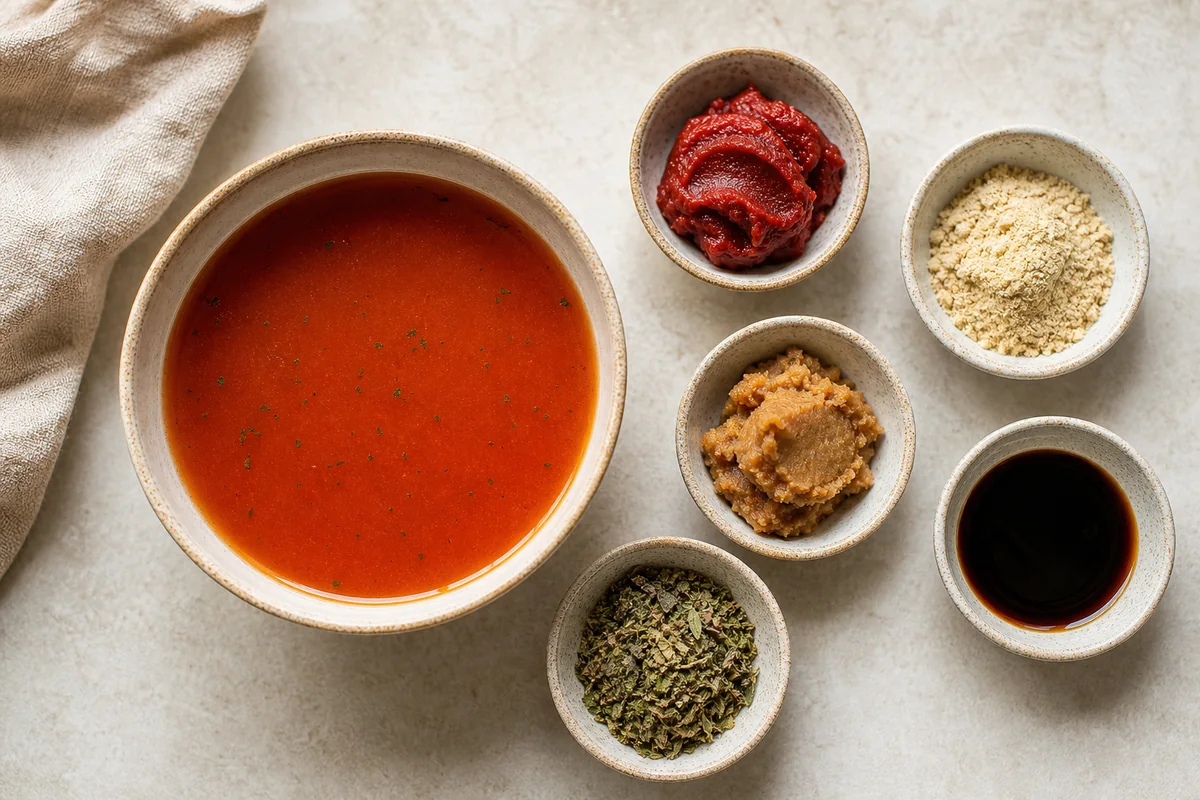
5 Best Tomato Bouillon Substitutes That Taste Right
Ingredients
Equipment
Method
- Choose your substitute based on what you have: tomato paste for depth, bouillon for saltiness, and a thin-to-soup texture adjustment for body.
- Mix using the listed ratio, starting with less liquid if your substitute is thick (sauce/peppers/ketchup), then add water to match broth thickness.
- Taste and correct: add a pinch of salt for saltiness, and a tiny splash of vinegar/lemon if the tomato tastes flat or overly sweet.
- Let it sit 2–3 minutes before using so paste/powders fully dissolve and flavors meld.
Notes
- If your substitute is thicker than bouillon, dilute with water a tablespoon at a time until it pours like broth.
- If your dish tastes sweet, add a pinch of salt or a few drops of vinegar to sharpen tomato flavor.
Tried this recipe?
Let us know how it was!
Carrie is a food writer and editor with more than 15 years of experience. She has worked for some of the biggest names in the food industry, including Bon Appétit, Food & Wine, and Martha Stewart Living.
As the Editor in Chief of EpicureDelight, Carrie oversees all of the content on the site. She also manages the team of contributing writers and editors, who help to create delicious recipes, helpful tips, and informative articles that you’ll find on the site.
A native of the Chicago area, Carrie is passionate about all things food. She loves trying new restaurants and experimenting with new recipes in her kitchen. She’s also a graduate of the Culinary Institute of America, so she knows a thing or two about food!



