
That crackly, amber-brown sugar on top of a scone is not an accident. It comes from coarse crystals that hold shape under heat, and replacing them takes more thought than a quick 1:1 scoop.
The right turbinado sugar substitute depends on what you need most: sparkle and crunch, or warm caramel depth in the batter.
Turbinado is coarse, partially refined cane sugar. It keeps a light molasses coating, which gives it that faint butterscotch tone.
Not every substitute replicates both traits at once.
Wetter swaps like honey work in baked goods but need a small liquid reduction. Dry swaps like demerara match the crunch nearly grain for grain.
Choose your priority before you measure anything.
Demerara sugar is the closest match for coarse, sparkly toppings. Light brown sugar is the easiest 1:1 swap for baking where caramel flavor matters more than crunch. For pantry emergencies, granulated sugar with a drop of molasses covers both color and warmth without overcomplicating the swap.
5 Best Turbinado Sugar Substitutes That Actually Work
Finding the right swap is faster when you can scan ratios at a glance. The table below lists each substitute by use, ratio, and the one thing it changes most in your recipe.
| # | Substitute | Best For | Ratio | Key Note |
|---|---|---|---|---|
| 1 | Light Brown Sugar | Baking | 1:1 | Softer crumb, caramel tone |
| 2 | Demerara Sugar | Topping | 1:1 | Closest crystal crunch |
| 3 | Granulated + Molasses | Both | 1:1 | Whisk well, avoid streaks |
| 4 | Coconut Sugar | Baking | 1:1 | Toffee tone, less sparkle |
| 5 | Maple Sugar | Baking | 1:1 | Dissolves fast, maple note |
Honey is listed in the process section as a wet-swap option. It needs its own ratio adjustment (¾:1) and a liquid reduction, so it sits outside the dry-swap table above.
1. Light Brown Sugar
Light brown sugar is the most reliable baking swap, matching turbinado's caramel warmth without requiring any formula changes. It dissolves evenly into batters and doughs, which is exactly what you want when the recipe needs sweetness and color rather than a crunchy exterior. If you need guidance on choosing brown sugar alternatives, that page covers the full range of options by flavor and moisture.
- Best for: Cookies, banana bread, muffins, streusel mixed into batter
- How to measure: Pack it the same way you would for a standard brown sugar measurement
- What changes: Crumb is slightly softer and more moist than turbinado-based bakes
- Tuning tip: If you want a hint more texture, stir in 1 teaspoon of coarse raw sugar per cup to restore some grain
Skip if: Your recipe needs a coarse, crackly topping that stays crunchy after baking. Brown sugar softens under heat and loses any surface sparkle.
2. Demerara Sugar
Demerara is the substitute that most closely matches turbinado's crystal size and crunch. Both are coarse, partially refined cane sugars, and the visual difference on a baked scone or muffin top is almost zero.
If you want to understand how its flavor compares up close, this look at coarse sugar flavor profiles is worth a quick read before you bake.
Demerara as a Topping
Works for: Muffins, scones, cookies, crumbles where visible crunch is the goal
Skip if: You need a subtle flavor - demerara reads distinctly caramel-brown
Demerara in Batter
Works for: Recipes that call for turbinado stirred into the mix, not just sprinkled on top
Skip if: You want clean, neutral sweetness - the coarse grain can feel gritty if not fully dissolved
- Ratio: 1:1 by volume or weight, no adjustments needed
- For toppings: Sprinkle just before baking so crystals don't absorb moisture and collapse
- For batter: Dissolve in warm liquid first if graininess is a concern
- Flavor note: Slightly more pronounced caramel than turbinado - use a touch less if the recipe already has molasses
3. Granulated Sugar + Molasses
Granulated sugar supplies clean sweetness, and molasses brings turbinado's warm brown tone back into the mix. Together, they make a solid emergency substitute using ingredients most kitchens already have.
The key is knowing how much molasses to use. For a deeper look at dark syrup options, that page covers swaps when molasses itself is also running low.
Too much molasses tips the flavor toward bitter and darkens the crumb more than turbinado would. Start with 1 teaspoon of molasses per cup of granulated sugar, then add more in half-teaspoon increments until the color looks right.
- Ratio: 1:1 by total volume (granulated sugar + molasses combined)
- Mixing step: Whisk to a completely uniform color before adding to batter - no dark streaks
- Rest tip: Let the mixture sit for 2 minutes after whisking so the molasses fully coats each grain
- Molasses ceiling: Stop at 1 tablespoon per cup to avoid bitter or overly dark results
- Best for: Cookies, quick breads, spice cakes, and any bake where warm brown color matters
Skip if: You are using turbinado specifically for crunchy topping sparkle. This mix looks less crystalline and won't hold a crackly surface under heat.
4. Coconut Sugar
Coconut sugar has a toffee-caramel flavor that works naturally in most baked goods, though it reads slightly darker and earthier than turbinado. It is a straightforward 1:1 swap for cookies, granola bars, and quick breads where that warm depth is welcome.
Before committing, the coconut vs. brown sugar tradeoff is a useful reference if you are deciding between the two.
- Best for: Cookies, granola, oat bars, sauces, and spice-forward quick breads
- Flavor note: Expect a toffee tone that is deeper than turbinado - reduce by 1 tablespoon per cup if you want a lighter result
- Texture in baking: Produces a slightly denser crumb than turbinado or light brown sugar
- Moisture tip: If your batter looks wetter than usual, add 1 tablespoon of flour to compensate
Skip if: Your recipe requires a coarse, sparkling crystal topping. Coconut sugar is finer and won't produce the same visible crunch on a muffin top.
5. Maple Sugar
Maple sugar is a good pick when the recipe already leans toward warm, nutty flavors, like oatmeal cookies or autumn spice cakes. It dissolves faster than turbinado crystals, so the crumb is smooth and even.
Expect a subtle but noticeable maple note in the finished bake.
Maple Flavor Impact
Works for: Oat cookies, spice muffins, granola, brown butter cakes where maple fits naturally
Skip if: The recipe has neutral or citrus-forward flavor - maple can clash or feel out of place
Browning and Texture
Works for: Recipes needing even browning - maple sugar caramelizes predictably and evenly
Skip if: You want turbinado's caramel-brown flavor without any maple taste coming through
- Ratio: 1:1 by volume; no liquid adjustment needed
- Dissolving speed: Dissolves more readily than turbinado, so expect a slightly smoother batter
- Best for: Oat-based bakes, spiced cookies, granola, and warm-spice quick breads
Skip if: You need turbinado's coarse crystal crunch for toppings. Maple sugar dissolves too quickly to hold a sparkly surface.
Making Turbinado Sugar Substitutes Work
The main decision is simple: pick a coarse-crystal substitute for toppings and a flavor-matched substitute for baking. Demerara handles the first job.
Light brown sugar and coconut sugar handle the second. When you reach for a wet substitute like honey, reduce the recipe's added liquid by about 2 tablespoons per ¾ cup of honey to prevent a gummy crumb.
For situations where you are also reconsidering your base sweetener, the cane sugar versus brown sugar choice covers the bigger-picture swap logic well.
- Match texture first: Coarse grain for toppings, fine-dissolving for batters - the flavor difference matters less than grain size when crunch is the goal
- Adjust for moisture: Wet substitutes (honey) need a 2 tablespoon liquid reduction per cup; dry ones (granulated + molasses) need thorough whisking to avoid clumps
- Do a taste test: Before committing to a full batch, mix a small amount of your substitute into a tablespoon of batter and taste for sweetness and any off-bitter notes
Frequently Asked Questions
Demerara sugar is the nearest match. Its coarse crystals hold shape under heat and produce the same sparkly, crackly surface that turbinado gives muffins and scones.
Yes, light brown sugar works at a true 1:1 swap by volume or weight. The crumb will be slightly softer and the surface won't crackle, but flavor stays close.
Use ¾ cup honey per 1 cup turbinado and reduce any added liquid in the recipe by 2 tablespoons. Let the batter rest 5 minutes before baking so it hydrates evenly.
Yes, slightly. Coconut sugar has a deeper toffee note compared to turbinado's lighter caramel tone, and the crumb tends to be a little denser.
Mix 1 cup granulated sugar with 1 teaspoon molasses and whisk until uniform. It approximates turbinado's warm color and flavor well enough for most baked goods.
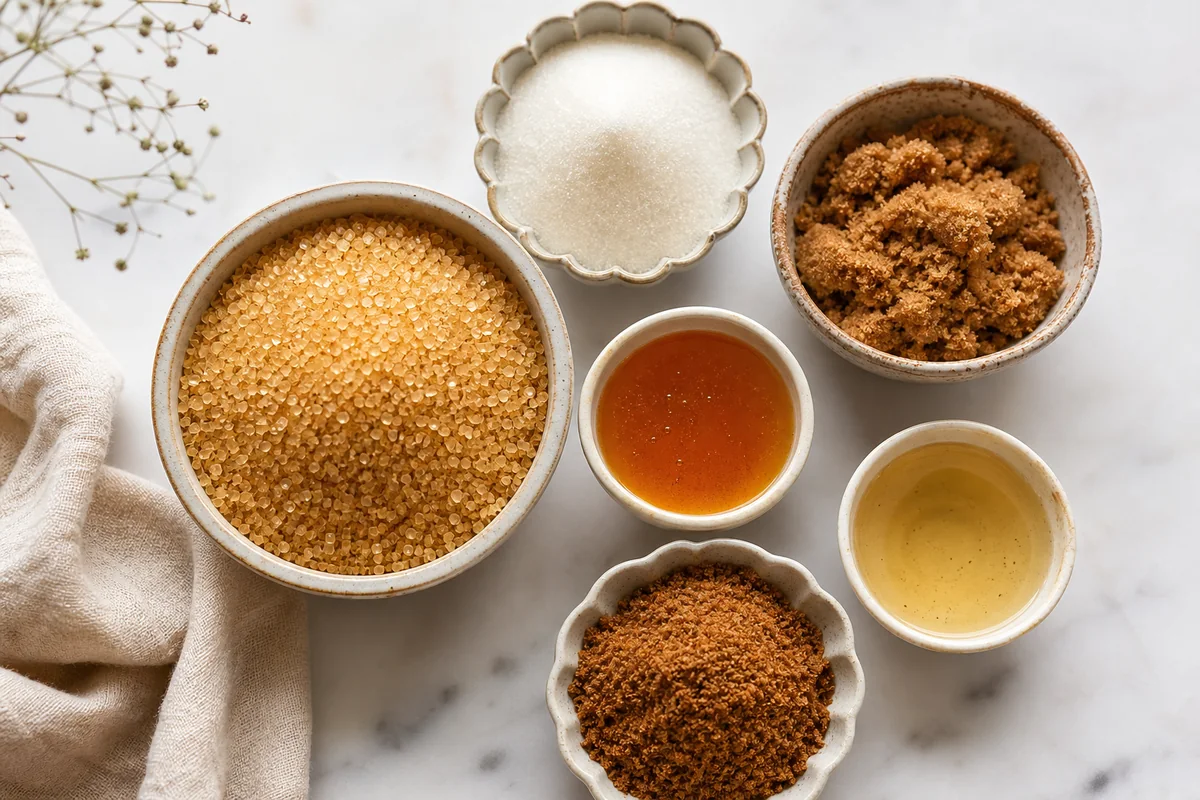
5 Best Turbinado Sugar Substitutes (That Actually Work)
Ingredients
Equipment
Method
- Decide what you need: crackly crunch (toppings) or caramel-brown flavor (baking/crumbs).
- Match the closest option from the table using the listed ratio, then measure again if your recipe uses packable sugar.
- If your substitute is wetter (honey), reduce any added liquid by a small amount and let batter rest 5 minutes to hydrate.
- If your substitute is drier (granulated+molasses), whisk thoroughly so the molasses doesn’t clump into dark streaks.
- Taste and adjust: add a pinch more brown character with extra molasses (1–2 drops) or sweetness with a tiny amount of sugar.
Notes
- Turbinado’s key traits are coarse crystals + warm caramel notes; choose based on which matters most in your recipe.
- For toppings, prioritize coarse sugars (demerara) to keep visible crunch after baking.
Tried this recipe?
Let us know how it was!
Carrie is a food writer and editor with more than 15 years of experience. She has worked for some of the biggest names in the food industry, including Bon Appétit, Food & Wine, and Martha Stewart Living.
As the Editor in Chief of EpicureDelight, Carrie oversees all of the content on the site. She also manages the team of contributing writers and editors, who help to create delicious recipes, helpful tips, and informative articles that you’ll find on the site.
A native of the Chicago area, Carrie is passionate about all things food. She loves trying new restaurants and experimenting with new recipes in her kitchen. She’s also a graduate of the Culinary Institute of America, so she knows a thing or two about food!



