
That glossy, sweet-salty coat on a piece of grilled chicken or a bowl of stir-fried vegetables? That's exactly what teriyaki sauce does, and it's hard to fake without a plan.
But most pantries already have what it takes. Each good teriyaki sauce substitute starts with two building blocks: a salty base and a sweetener, then clings to food once it simmers down even slightly.
Most swaps require zero specialty ingredients. Soy sauce is the backbone of nearly every option here, and your sweetener can be anything from brown sugar to maple syrup to honey.
Bottled teriyaki does have a specific, slightly caramelized depth, but a short simmer brings any homemade version very close.
If you know how long your stored sauce keeps and you've already run out, one of these five swaps will get you through dinner without a trip to the store.
The best teriyaki sauce substitutes combine a salty base (soy or tamari) with a sweetener (brown sugar, maple syrup, or honey). A short simmer helps any of them thicken and cling like a real glaze. Most swap in at a 1:1 ratio, though hoisin-based blends start at ¾ to avoid overpowering the dish.
5 Best Teriyaki Sauce Substitutes Ranked by Flavor Match
Every option below works in marinades, stir-fries, or as a brush-on glaze. The table gives you a fast scan, and the sections below it explain how to actually use each one.
| # | Substitute | Best For | Ratio | Key Note |
|---|---|---|---|---|
| 1 | Soy + Brown Sugar | Both | 1:1 | Simmer to dissolve |
| 2 | Tamari + Maple Syrup | Both | 1:1 | Rounder, deeper flavor |
| 3 | Mirin + Honey | Both | 1:1 | Best gloss and sheen |
| 4 | Hoisin + Soy | Both | ¾:1 | Bold, use sparingly |
| 5 | Pineapple Juice + Soy + Sugar | Both | 1:1 | Tangy; watch heat |
Thin any of these with a tablespoon of water if you need a looser sauce for noodles or a lighter stir-fry coating.
1. Soy Sauce + Brown Sugar
This is the fastest path to something that genuinely tastes like teriyaki. Mix soy sauce and brown sugar at a 1:1 ratio and you have the sweet-salty foundation right there.
It won't be quite as glossy as bottled teriyaki straight from the jar, but a 30-60 second simmer fixes that by dissolving the sugar and concentrating the flavor.
We find this swap works best when you treat it like a real sauce rather than a quick stir-in. If swapping out brown sugar is also necessary, coconut sugar or dark muscovado both dissolve cleanly and keep the caramel note intact.
Soy + Brown Sugar
Works for: marinades, stir-fry glazes, brush-on chicken or salmon, noodle bowls
Skip if: you don't have brown sugar or a caramel-style sweetener on hand
- Ratio: 1:1 soy to brown sugar; add a few drops of sesame oil if you have it
- For a glaze: Simmer 45-60 seconds until slightly syrupy, then brush onto protein
- For a marinade: Stir until sugar dissolves; no heat required, but cold sugar takes longer
- To thicken: Add a small cornstarch slurry (1 teaspoon starch to 1 tablespoon cold water) and stir over low heat
2. Tamari + Maple Syrup
Tamari is rounder and less sharp than standard soy sauce, and that softness actually helps this swap coat food without tasting harsh. Pair it with maple syrup at a 1:1 ratio and you get a slightly thicker, darker glaze that works especially well on chicken thighs or grilled tofu.
The flavor is caramel-leaning rather than bright and clean, so expect a richer result than classic bottled teriyaki.
This is also the most reliable gluten-free sauce option on this list. If maple feels too heavy for your dish, reduce the amount by 1 teaspoon and balance with a tiny splash of rice vinegar.
For anyone choosing a honey alternative over maple syrup, mild raw honey works here without changing much.
- Ratio: 1:1 tamari to maple syrup; cut maple by 1 teaspoon for lighter sweetness
- Best use: Brushing onto chicken or salmon for oven roasting or grilling
- Texture note: Already thicker than basic soy; you may not need cornstarch
- Skip if: You want a clean, bright teriyaki flavor - maple can read heavy in delicate dishes
3. Mirin + Honey
Mirin brings a malty, faintly sweet quality that is closer to restaurant-style teriyaki than almost any other pantry ingredient. Combined with honey, it produces a smooth glaze with real sheen.
Combine them at a 1:1 ratio and warm gently before brushing. Don't over-reduce - honey darkens fast and can turn bitter if the pan gets too hot.
Add honey off heat or in the last 30 seconds of simmering for the smoothest result.
- Ratio: 1:1 mirin to honey; add a splash of soy sauce (about 1 teaspoon per 2 tbsp) for saltiness
- For stir-fry: Add at the end so honey doesn't scorch on a high-heat pan
- For a brush-on glaze: Warm slightly first to thin the honey, then apply in layers
- Skip if: You avoid alcohol-based ingredients - mirin has a mild fermented, malty note even after simmering
4. Hoisin + Soy Sauce
Hoisin is bold in a way that teriyaki is not. It carries fermented bean notes and warm spice, so this swap leans more "teriyaki-ish" than teriyaki-identical.
That said, it is genuinely good. Understanding hoisin's savory-sweet profile helps you calibrate how much to use.
Start at ¾ of the amount your recipe calls for and add more after tasting.
The soy sauce here is not just a filler. It thins the hoisin, adds clean salt, and keeps the mix from reading like a pure stir-fry sauce.
A small splash of rice vinegar - about ½ teaspoon per 2 tablespoon of hoisin - also pulls the flavor into better balance.
- Ratio: ¾ hoisin to 1 part soy sauce; increase soy if the hoisin is too thick
- Add vinegar: ½ teaspoon rice vinegar per 2 tablespoon hoisin to brighten the flavor
- Best use: Beef stir-fry, pork tenderloin, or any dish that can handle bold flavor
- Skip if: Your dish is mild or delicate - hoisin will dominate
5. Pineapple Juice + Soy + Brown Sugar
This swap adds a tangy, tropical edge that changes the sauce noticeably. It is not a neutral swap, but for chicken, pork, or shrimp it can be genuinely better than plain teriyaki.
| Use | Ratio | Notes |
|---|---|---|
| Marinade | 2:1:½ juice/soy/sugar | Soak 30 min max; acid breaks down protein fast |
| Stir-fry glaze | 1:1:½ juice/soy/sugar | Simmer until reduced by a third before adding protein |
| Brush-on grill glaze | 1:1:½ juice/soy/sugar | Add cornstarch slurry first; fruit sugar burns at high heat |
Fruit sugar caramelizes faster than plain white sugar, so use moderate heat. A quick sauté base works well here because you control the temperature more easily than on an open flame.
- Thickening: Whisk 1 teaspoon cornstarch into 1 tablespoon cold water, stir into the simmering sauce
- Grill caution: Apply glaze only in the last 2-3 minutes of cooking to prevent burning
- Skip if: You want a classic, non-fruity teriyaki flavor - pineapple changes the character clearly
Making Any Teriyaki Sauce Substitute Work
Every one of these swaps shares the same goal: a sauce that is sweet, salty, and thick enough to coat without sliding off. The ratio of sweetener to salt is the main lever.
Start equal, then taste and adjust before the sauce hits your protein. For a salty fermented base like soy or tamari, you often need less than you think.
The key is building the glaze in the pan, not just pouring sauce over finished food.
- Simmer first: Give any sugar-based swap 30-60 seconds over medium heat so it dissolves and clings properly
- Fix thin sauce: Add a cornstarch slurry (1 teaspoon cornstarch dissolved in 1 tablespoon cold water) and stir over low heat for 30 seconds
- Fix thick sauce: Add water 1 tablespoon at a time until you reach a consistency that coats a spoon without pooling
Knowing how long soy sauce stays fresh also matters here - an old bottle can taste flat and dull, which will undercut even a well-balanced substitute.
Frequently Asked Questions
Soy sauce and brown sugar at a 1:1 ratio, simmered 30-60 seconds, is the closest match. It delivers the same sweet-salty base and clings like a glaze once slightly reduced.
Yes. Mix them 1:1 and simmer briefly to dissolve the sugar. Brown sugar works better than white because it adds a light caramel depth closer to bottled teriyaki.
Stir 1 teaspoon of cornstarch into 1 tablespoon of cold water, then add the slurry to your simmering sauce. It thickens within 30 seconds over medium-low heat.
Dry sherry or rice wine vinegar (reduced by half) are the closest mirin swaps. A small amount of honey added to plain soy sauce also replicates mirin's smooth sweetness.
You can, but it will taste smokier and less bright. Stir in a splash of soy sauce to add saltiness, and thin with a tablespoon of water if the BBQ sauce is too thick.
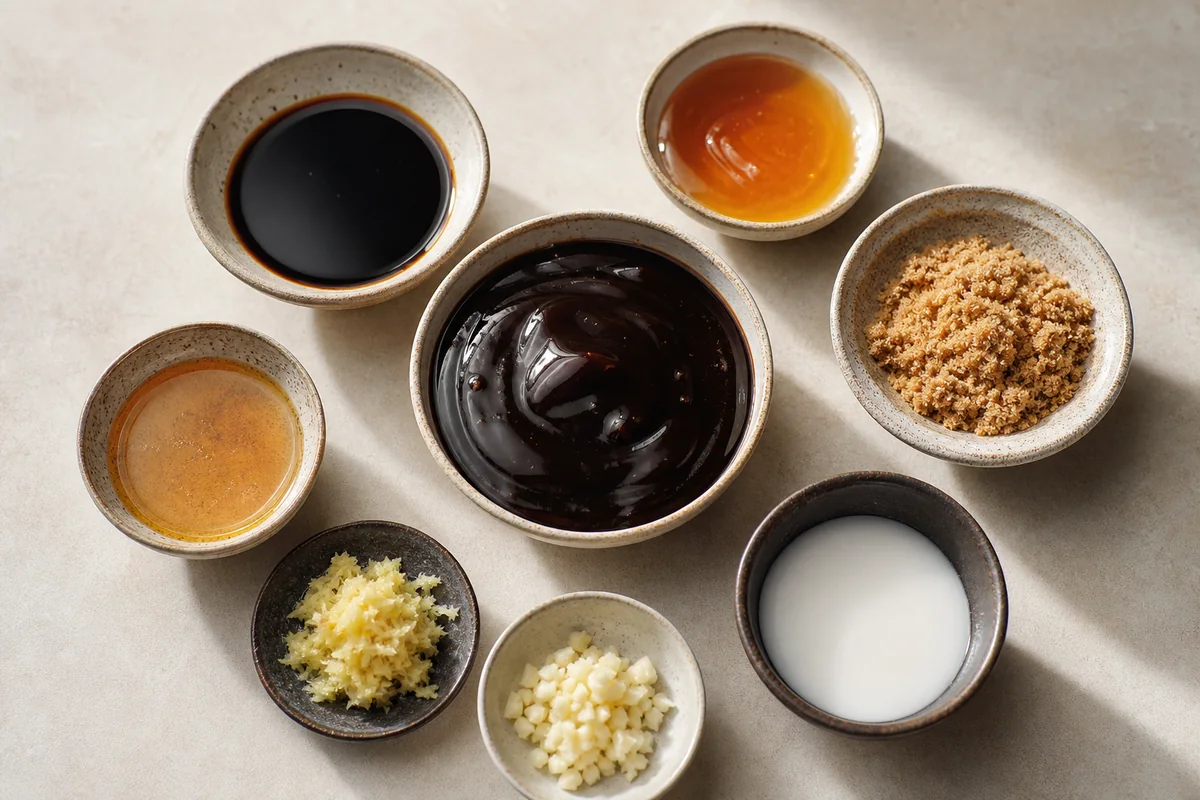
5 Best Teriyaki Sauce Substitutes (Tested Swaps)
Ingredients
Equipment
Method
- Choose the closest swap based on what you have: soy+brown sugar, mirin+honey, tamari+maple, hoisin+soy, or a ready-made stir-fry glaze.
- Swap 1:1 for most bottled options; for thicker/smokier substitutes, start at ¾ and add more as needed.
- Simmer 30–60 seconds if your base is runny so the sugar dissolves and the sauce clings like teriyaki.
- Match the glaze level: thin with water for stir-fries or thicken with a tiny cornstarch slurry if it won’t coat.
- Final adjust: add a pinch of sugar for sharper saltiness, or add a splash of soy/rice vinegar to brighten and balance.
Notes
- Teriyaki’s signature is sweet + salty + glossy. If your swap is too sharp, add a touch more sweetness; if too sweet, add more soy or a splash of rice vinegar.
Tried this recipe?
Let us know how it was!
Carrie is a food writer and editor with more than 15 years of experience. She has worked for some of the biggest names in the food industry, including Bon Appétit, Food & Wine, and Martha Stewart Living.
As the Editor in Chief of EpicureDelight, Carrie oversees all of the content on the site. She also manages the team of contributing writers and editors, who help to create delicious recipes, helpful tips, and informative articles that you’ll find on the site.
A native of the Chicago area, Carrie is passionate about all things food. She loves trying new restaurants and experimenting with new recipes in her kitchen. She’s also a graduate of the Culinary Institute of America, so she knows a thing or two about food!



