
That sharp, clean bite in your salad dressing or quick pickle brine almost always comes from white vinegar. When the bottle is empty, the right white vinegar substitute keeps your recipe on track without turning it sweet, cloudy, or flat.
Most vinegar swaps are simpler than you'd expect. The key is matching acidity level first, then adjusting for any flavor difference.
The closest swaps for white vinegar are apple cider vinegar and white wine vinegar, both at 1:1. For pickling, distilled malt vinegar holds up well. Champagne vinegar is gentler. Rice vinegar is milder. Lemon juice mixed with water works as a last resort when no vinegar is on hand.
5 Best White Vinegar Substitutes Ranked by Flavor Match
All five options below swap in at roughly 1:1, but flavor strength varies a lot by vinegar type. The pale, wine-forward finish of champagne vinegar behaves very differently from the sharper bite of malt or cider.
If your recipe depends on vinegar for a chemical reaction in baking, choose the closest acidic swap and taste after mixing before adding more.
| # | Substitute | Best For | Ratio | Key Note |
|---|---|---|---|---|
| 1 | Apple Cider Vinegar | Both | 1:1 | Slight fruity note |
| 2 | Distilled Malt Vinegar | Both | 1:1 | Good pickling bite |
| 3 | White Wine Vinegar | Both | 1:1 | Clean, light flavor |
| 4 | Champagne Vinegar | Both | 1:1 | Gentle, slightly sweet |
| 5 | Rice Vinegar (Unseasoned) | Both | 1:1 | Mild, needs more |
1. Apple Cider Vinegar
Apple cider vinegar is the most common swap people reach for, and it earns that spot. It has a strong enough acidity to match white vinegar in sauces, dressings, and marinades, with only a faint fruity background that most savory recipes absorb easily.
Use it at 1:1 and taste before adding more.
The tangy, slightly earthy profile works especially well in BBQ sauces, coleslaw dressings, and vinaigrettes. Make sure you're using unflavored, unseasoned cider vinegar.
- Ratio: 1:1 for sauces, dressings, and marinades
- Taste check: If you detect a sweet edge, reduce by 1 teaspoon per 2 tablespoon used
- Best dishes: Coleslaw, BBQ sauce, salad dressings, most marinades
- Skip if: Your recipe is a pale, delicate sauce where fruitiness would stand out
2. Distilled Malt Vinegar
Distilled malt vinegar sits closer to white vinegar in sharpness than most other swaps. It has a slightly grainy, earthy edge, but that largely disappears in brines and hot sauces.
Use it for quick pickles or any recipe where the vinegar is simmered or diluted with salt. For pickling with malt, start at 1:1 and add a small extra splash after chilling if the brine tastes flat.
Distilled Malt Vinegar vs. White Vinegar
Works for: quick pickles, fry sauces, vinegar-based brines, chip dips
Skip if: the recipe is a delicate vinaigrette or you need a totally neutral acid flavor
- Ratio: 1:1 for pickling and savory sauces
- Adjust: Add an extra ½ teaspoon if the result tastes less sharp after chilling
- Color note: Distilled malt is clear, so it won't discolor pale pickles
- Skip if: You need a vinegar with zero malt character for very clean dressings
3. White Wine Vinegar
White wine vinegar is the cleanest vinegar swap on this list. It brings bright acidity without the fruitiness of cider or the grain note of malt, which makes it ideal for marinades, quick-pickled onions, and pan sauces where a harsh punch would stand out.
Use it at 1:1 for marinades and sauté sauces. The softer acid alternatives like champagne vinegar are close cousins, but white wine vinegar holds slightly more sharpness.
If the tang feels muted after tasting, nudge the amount up by ½ teaspoon at a time rather than a full extra tablespoon.
*Skip if:* your recipe genuinely needs that sharp, almost clinical bite of straight white vinegar, like some aggressive hot sauce reductions. Start 1:1 and increase slowly only if the dish tastes flat.
4. Champagne Vinegar
Champagne vinegar is the pick when harshness is the thing you're trying to avoid. It's notably gentler than white vinegar, with a mild acidity that suits vinaigrettes and light cream sauces where you want brightness without any edge.
For recipes using cider-based acid options, champagne vinegar is often the cleaner alternative.
- Ratio: Start 1:1, then increase to 1.1x if the tang tastes too mild
- Best for: Vinaigrettes, light pan sauces, poached fish, delicate slaws
- Taste check: It reads sweeter than white vinegar, so taste early
- Skip if: You need strong pickling acidity, use distilled malt or cider vinegar instead
5. Rice Vinegar (Unseasoned)
Rice vinegar has a softer bite than white vinegar, so the swap works best in cold dishes where acidity is a supporting note rather than the main event. Use it in dressings and noodle salads at 1:1 and then taste.
If you want choosing a stronger swap for sharper results, cider or malt vinegar are better bets for pickling.
- Ratio: 1:1 in dressings and cold mixes; increase to 1.1x for more punch
- Baking note: It works at 1:1 in baked goods where vinegar activates baking soda, though the flavor is milder
- Best for: Asian-style noodle salads, slaws, light vinaigrettes
- Skip if: Your recipe needs sharp, white-vinegar acidity, like aggressive pickles or strong reductions
Making a White Vinegar Substitute Work (Quick Adjustment Rules)
Getting the substitute right is mostly about starting conservatively and tasting as you go. Most swaps behave well at 1:1, but this mild stored vinegar and champagne vinegar both need a small upward nudge in quantity to hit the same brightness.
For quick pickles, always taste the brine after 10 to 15 minutes of chilling, not just right after mixing, since the acid flavor mellows as it absorbs into the vegetables.
- Start ratio: Use 1:1 for every substitute on this list; adjust only after tasting
- Swap strength: If the substitute is milder (rice, champagne, lemon mix), increase by ¼ to ½ teaspoon per 2 tablespoon and taste again
- Quick-pickle timing: Chill for 10-15 minutes before the final taste check, then add more acid if the brine still seems flat
Skip this approach if your substitute is sweetened or pre-seasoned, like seasoned rice vinegar or flavored cider. Those add salt and sugar that can shift the whole balance of the dish.
Use a plain, unseasoned vinegar instead.
Frequently Asked Questions
Apple cider vinegar (unflavored) is the most reliable swap at 1:1. It matches acidity closely and the faint fruity note disappears in most cooked dishes.
Yes. Use it at exactly 1:1. If the dish is very flavor-sensitive, taste after mixing and reduce by 1 teaspoon if it tastes slightly sweet.
Distilled malt vinegar or apple cider vinegar both work at 1:1. Taste the brine after chilling for 15 minutes and add a small splash if the acid seems weak.
It works well in dressings at 1:1, but it's milder. Use unseasoned rice vinegar and increase by ½ teaspoon if the dressing tastes flat.
Mix 1 part lemon juice with 1 part water and use at 1:1. The citrus note is noticeable, so bright citrus swaps are better for savory dishes than desserts.
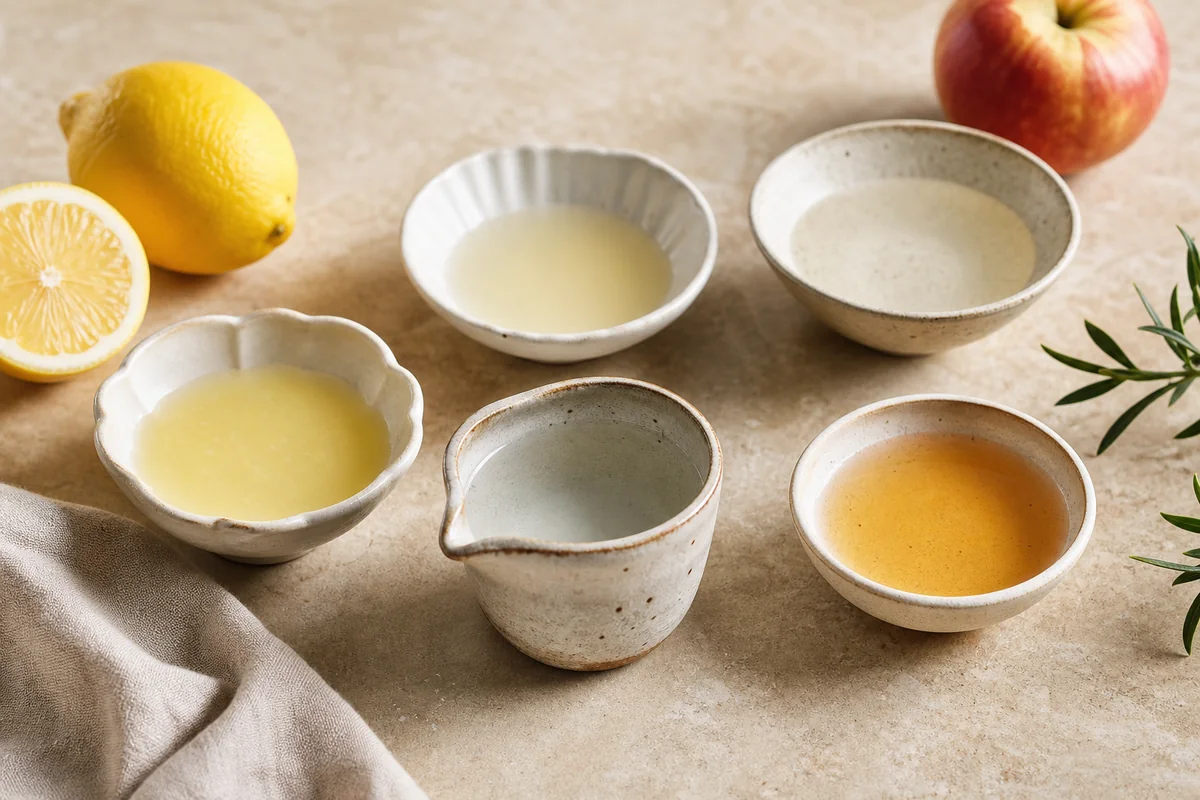
5 Best White Vinegar Substitutes Worth Trying
Ingredients
Equipment
Method
- Identify what vinegar is doing in your recipe: leavening/acid in baking, tang in sauces, or acid strength in pickling.
- Start with a 1:1 swap ratio for most non-bread recipes (dressings, marinades, cooking).
- If the substitute is sweeter or milder (champagne, rice, lemon), use 1.1x and taste; if it’s sharper (some malt/cider), use 0.9x.
- For quick pickles, make sure you’re using unseasoned vinegar (or plain lemon mix) and taste after 10–15 minutes of chilling.
- Taste again at the end—vinegar flavor shows up quickly, so small adjustments are safer than big changes.
Notes
- For best results, choose unseasoned vinegars; flavored vinegars can change sweetness and aroma.
- If your recipe depends on a specific acidity level (ferments/pickling beyond quick pickles), follow a tested recipe ratio instead of guessing.
Tried this recipe?
Let us know how it was!
Carrie is a food writer and editor with more than 15 years of experience. She has worked for some of the biggest names in the food industry, including Bon Appétit, Food & Wine, and Martha Stewart Living.
As the Editor in Chief of EpicureDelight, Carrie oversees all of the content on the site. She also manages the team of contributing writers and editors, who help to create delicious recipes, helpful tips, and informative articles that you’ll find on the site.
A native of the Chicago area, Carrie is passionate about all things food. She loves trying new restaurants and experimenting with new recipes in her kitchen. She’s also a graduate of the Culinary Institute of America, so she knows a thing or two about food!



