
That small bottle in the back of your fridge does a surprising amount of work. Worcestershire sauce brings umami, tang from vinegar, a faint bitter edge, and just enough sweetness to keep everything balanced. Pull it out and your stew, marinade, or savory bake gets darker and more complex in seconds.
The challenge is that no single ingredient copies all of that at once. The best worcestershire sauce substitute depends on your dish.
Baked recipes are more sensitive to sugar (which browns fast) and salt, while stovetop sauces and marinades can handle bolder, more acidic swaps.
A worcestershire sauce substitute needs to cover three things: salty umami, tangy acidity, and a small amount of sweetness. The best all-purpose swap is soy sauce + vinegar + a pinch of sugar at a 1:1 ratio. For deeper savory dishes, mushroom-worcestershire or anchovy paste works better.
5 Best Worcestershire Sauce Substitutes (That Actually Work)
Each substitute below starts at a ratio close to 1:1. Adjust acidity with a splash more vinegar or lemon, and balance sweetness with a pinch of sugar after tasting.
| # | Substitute | Best For | Ratio | Key Note |
|---|---|---|---|---|
| 1 | Soy + vinegar + sugar | Both | 1:1 | Best all-purpose DIY |
| 2 | Mushroom-worcestershire / mushroom stock + soy | Both | 1:1 | Closest savory depth |
| 3 | Anchovy paste + lemon juice | Cooking | ¾:1 | Use slightly less |
| 4 | Maggi seasoning + vinegar | Cooking | 1:1 | Watch the sodium |
| 5 | Teriyaki (less sweet) + lemon/vinegar | Both | 1:1 | Add acid to balance |
1. Soy Sauce + Vinegar + Sugar
This is the DIY swap most cooks already have ingredients for. Soy sauce handles the umami and salt, apple cider or distilled white vinegar brings the tang, and a small pinch of sugar softens the bitter edge that worcestershire naturally has.
Mix 1 tablespoon soy sauce with 1 teaspoon vinegar and a small pinch of sugar for every tablespoon of worcestershire you need. When storing soy sauce long-term, keep it sealed and cool so the flavor stays sharp for this kind of blend.
Soy + Vinegar + Sugar
Works for: warm sauces, stews, marinades, meat glazes, and most stovetop recipes where flavors meld
Skip if: your dish is already high-acid or you need a no-vinegar option, in which case a pure soy-umami base works better
- Flavor recreation: Soy = umami/salt; vinegar = tang; sugar = counters bitterness and rounds it out
- Ratio: 1 tablespoon soy + 1 teaspoon vinegar + small pinch of sugar = 1 tablespoon worcestershire
- Adjusting: Add vinegar in ¼-tsp increments if it tastes flat; add sugar in tiny pinches if it tastes sharp
2. Mushroom-Style Worcestershire
Mushroom-based worcestershire (store-bought) is the closest single-bottle replacement you'll find. Mushrooms supply layered savory depth without any fishiness, and when combined with soy sauce they hit nearly the same umami frequency as the original.
Swap it in at 1:1. If you're using reduced mushroom stock instead, cut the stock down by half before measuring so it's concentrated enough.
If you're weighing your stock options, picking a stock alternative with good umami base makes this swap more effective.
- When it works best: Stews, gravies, slow-cooked meat, and baked savory dishes where browning depth matters
- Ratio: 1:1 store-bought mushroom worcestershire; or 2 tablespoon reduced mushroom stock + 1 teaspoon soy sauce per 1 tablespoon worcestershire
- Prevent earthy overload: Add ¼ teaspoon apple cider vinegar to lift the flavor and stop the mushroom note from going flat
Skip if you or your guests are sensitive to earthy flavors. In that case, the soy-vinegar-sugar mix is cleaner.
3. Anchovy Paste + Lemon Juice
Anchovy paste is intensely savory in a way few ingredients match. A small amount dissolved into a warm sauce gives you the same umami punch worcestershire does, and knowing anchovy flavor characteristics helps you use it without overdoing it.
Because anchovy paste is concentrated, use about ¾ the amount you'd use of worcestershire. Lemon juice does the work vinegar would normally do, and it softens the sharp, briny edge.
- Starting ratio: ¾ teaspoon anchovy paste + ¼ teaspoon lemon juice per 1 tablespoon worcestershire
- Dissolve first: Stir paste into the warm pan or sauce liquid before adding other ingredients so it spreads evenly
- Lemon amount: Start with a small squeeze; too much lemon tips the balance toward sour rather than tangy
Skip if you can't use seafood ingredients. The soy-vinegar-sugar blend is the best vegetarian alternative.
4. Maggi Seasoning + Vinegar
Maggi seasoning is a salty, fermented liquid with mild bitter notes that land close to worcestershire's savory backbone. It's a faster route than mixing a DIY blend, and most supermarkets carry it in the international aisle.
Add a small splash of white or apple cider vinegar to restore the tang that worcestershire provides naturally. Understanding soy-based flavor profiles helps you judge how much acid Maggi needs before it tastes balanced.
- Ratio: 1 tablespoon Maggi + ½ teaspoon vinegar = 1 tablespoon worcestershire
- Best use cases: Sauces, gravies, soups, and slow-cooked meat dishes where it blends in early
- Dilution tip: If your Maggi brand is very salty, reduce by ¼ teaspoon and add a splash of water or broth to compensate
Skip if you're watching sodium closely. The soy-vinegar-sugar DIY blend diluted with a little water gives you more control.
5. Teriyaki Sauce + Lemon or Vinegar
Teriyaki sauce already carries soy's umami and a sweet-savory depth, which gets it partway to worcestershire's profile. The problem is sugar: teriyaki has more of it, and that extra sweetness can make a glaze over-brown or a sauce taste flat without acid to cut it.
Pick a lower-sugar teriyaki when you can, and check out teriyaki's sweet-soy balance to know which brands lean less sweet before buying.
Teriyaki + Acid
Works for: glazes, marinades, stir-fry sauces, and dishes where a slightly sweet depth is welcome
Skip if: your recipe needs to stay low-sugar or you're baking at high heat, where the extra sugar accelerates browning
- Ratio: 1:1 teriyaki to worcestershire, then add ½ teaspoon lemon juice or vinegar per tablespoon
- Acid amount: Start with ½ tsp; add more in small increments if the sweet note still dominates
- Timing: For glazes, add near the end of cooking so the sugar doesn't scorch before the dish is done
Making Worcestershire Sauce Substitutes Work
Getting the flavor right after swapping comes down to three levers: salt and umami (soy, anchovy, Maggi), acidity (vinegar or lemon), and sweetness and bitter balance (a pinch of sugar or a small reduction). Taste your dish at a point where you can still adjust, ideally before the sauce fully reduces or before the oven finishes its work.
For baking, understanding how sweet sauces age and concentrate helps you predict how fast browning happens when sugar content rises.
- If it tastes flat: Add ¼ teaspoon more vinegar or lemon juice, stir in, and taste again before adding more
- If it tastes harsh or sharp: Stir in a pinch of sugar or a small amount of honey to soften the edge without dulling the umami
- For baking specifically: Use less of any sweet-heavy substitute (like teriyaki or ketchup blend) to avoid burning before the dish is cooked through
Frequently Asked Questions
Mushroom-style worcestershire sauce is the closest single swap at 1:1. For a DIY option, mix 1 tablespoon soy sauce with 1 teaspoon vinegar and a pinch of sugar.
Yes, but choose a lower-sugar substitute like soy-vinegar-sugar and reduce the amount slightly. Sweetness concentrates during baking and can darken faster than expected.
Too sweet: add ¼ teaspoon vinegar at a time until balanced. Too tangy: stir in a small pinch of sugar or a drop of honey to soften the edge.
Yes, when dissolved into a warm sauce it loses its fishy edge and reads as deep umami. Use ¾ the amount and add lemon juice to brighten it.
Anchovy paste plus lemon juice or soy sauce plus vinegar plus sugar both work well. They deliver the umami-tang that helps tenderize and flavor the meat.
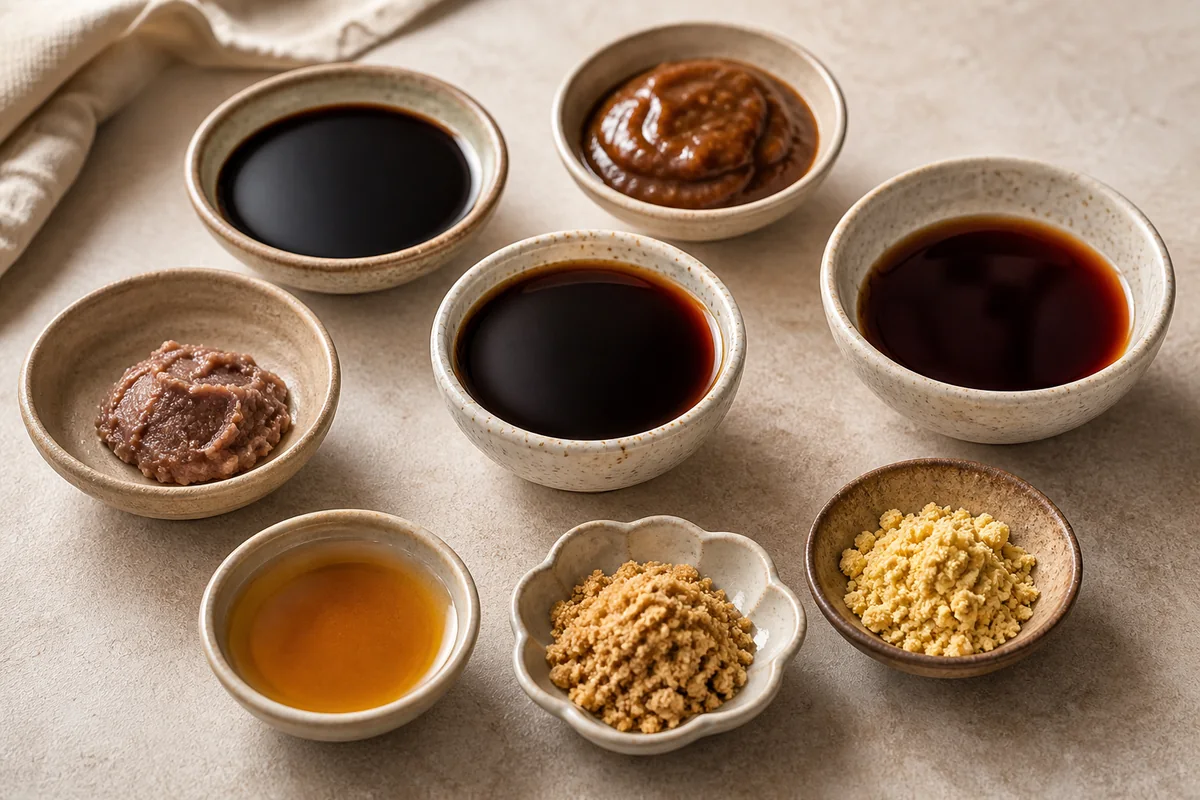
5 Best Worcestershire Sauce Substitutes (That Actually Work)
Ingredients
Method
- Pick the closest substitute based on your dish: DIY soy+vinegar+sugar for general cooking, anchovy+lemon for maximum umami, or ketchup+soy+vinegar for stews.
- Use the listed ratio as your starting point, then add small adjustments: more vinegar for tang, a pinch more sugar for balance, or a tiny splash of water to thin.
- Taste at the stage your recipe can still adapt (before baking finishes or before the sauce reduces too far).
- If the substitute is saltier than worcestershire, reduce the amount slightly and compensate with water or broth to keep the texture.
- For baking, start with the substitute and keep an eye on browning—more sugar can darken faster.
Notes
- Ratios are starting points; taste and adjust salt/tang/sweet once your sauce is warmed.
Tried this recipe?
Let us know how it was!
Carrie is a food writer and editor with more than 15 years of experience. She has worked for some of the biggest names in the food industry, including Bon Appétit, Food & Wine, and Martha Stewart Living.
As the Editor in Chief of EpicureDelight, Carrie oversees all of the content on the site. She also manages the team of contributing writers and editors, who help to create delicious recipes, helpful tips, and informative articles that you’ll find on the site.
A native of the Chicago area, Carrie is passionate about all things food. She loves trying new restaurants and experimenting with new recipes in her kitchen. She’s also a graduate of the Culinary Institute of America, so she knows a thing or two about food!



