Whole nutmeg keeps good aroma for about four years, while ground nutmeg is usually best within two to three years. Both need a sealed container in a cool, dark, dry cupboard.
Nutmeg normally becomes flat and dusty before it becomes unsafe. Moisture changes that decision, so discard spice with mold, damp clumps, insects, or a musty odor.

The date predicts flavor quality, while condition decides whether nutmeg is still sound. Whole seeds last longer because the interior oils stay protected until grating.
How Long Do Whole and Ground Nutmeg Last?
A whole seed acts like its own package. The hard surface slows air from reaching the aromatic oils inside, while grinding exposes thousands of tiny surfaces at once.
| Nutmeg form | Expected best quality | First change | Decision |
|---|---|---|---|
| Whole seed | About 4 years | Weaker aroma after grating | Scrape a fresh area and smell it |
| Ground nutmeg | About 2 to 3 years | Warm fragrance becomes faint | Rub a pinch and test a small dish |
| Freshly grated | Use soon | Released aroma escapes quickly | Grate only what the dish needs |
| Bulk refill | Depends on seal and opening | Whole supply fades together | Keep most sealed away from the working jar |
These ranges describe expected flavor, not an automatic safety deadline. A best-by date tells you when the maker expects the spice to perform well under normal storage.
Write the opening month on a jar that will stay in the cupboard for several seasons. The note helps explain a weak aroma, but a clean older jar can still be tested rather than discarded by date alone.
Why Does Whole Nutmeg Keep Its Aroma Longer?
Nutmeg's warm, woody, sweet aroma comes from volatile compounds that leave more easily after grinding. Like stored almonds and pistachios, it also contains oils, but lost fragrance usually appears before a rancid flavor.
Whole nutmeg releases aroma on demand
A seed may smell faint on the outside after years in storage. The first scrape should expose a brighter interior and release a much clearer fragrance within seconds.
That fresh release is why whole nutmeg suits cooks who use it only a few times each month. One seed can season many dishes without leaving all of its aroma exposed between uses.
Ground nutmeg loses aroma across the whole jar
Powder has far more surface area, and every opening replaces some of the air in the jar. A wide container with a thin layer of spice also holds more headspace than a small close-fitting jar.
The powder can stay dry and reddish brown long after it stops contributing much flavor. Adding a large amount may bring dustiness or bitterness without recreating the fresh aroma that has already escaped.
How Can You Tell Whether Nutmeg Is Still Fresh?
Use aroma before color as the main quality test. Origin and processing can make sound nutmeg lighter or darker, while a freshly disturbed surface gives more useful evidence.

Check a whole seed
Look for a hard dry surface with no holes, webbing, or damp patches. Grate one small area, then smell the shavings instead of judging the old outer surface.
A warm woody scent means the seed can still flavor food. A newly exposed interior that remains nearly odorless will add little to custard, sauce, or baking.
Check ground nutmeg
Tap the jar and confirm that the powder moves freely. Rub a clean dry pinch between your fingers, then smell it immediately.
Flat but clean powder is stale rather than spoiled. Mustiness, dampness, or visible growth belongs to the discard check, not a taste test.
Confirm with a small warm sample
When the aroma is weak but clean, stir a pinch into a spoonful of warm milk, sound almond milk, oatmeal, or plain sauce. Heat can release the remaining fragrance without risking a full batch.
Where Should You Store Nutmeg?
A shaker beside the stove meets heat and steam every time you cook. Heat speeds aroma loss, while steam can enter the jar and create the moisture problem that dry spice storage should prevent.
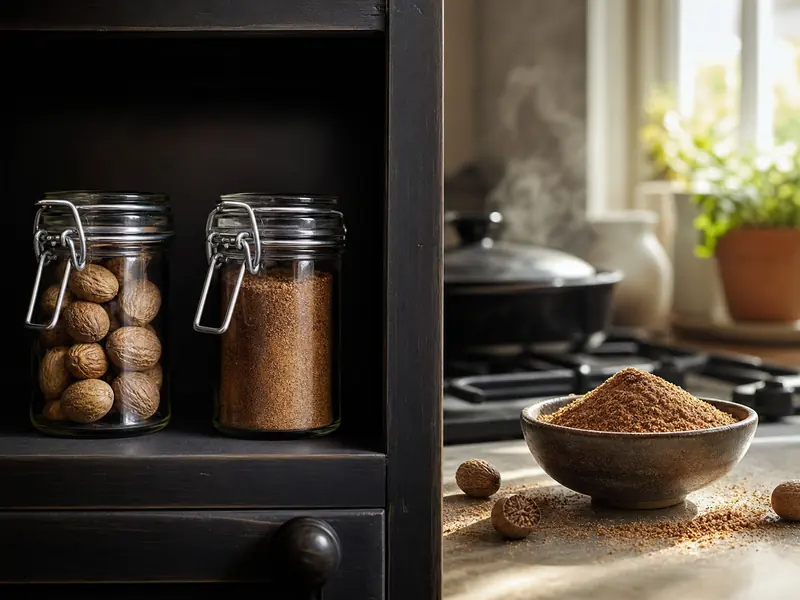
Choose an interior cupboard
Keep nutmeg away from the oven, dishwasher, sunny window, and an outside wall that heats each afternoon. Stable room temperature protects it better than repeated moves between warm and cold locations.
Keep the lid and tools dry
Measure with a dry spoon on the counter instead of holding the jar over a steaming pan. Fine powder trapped in a jar thread can also stop the lid from sealing, so wipe the rim before closing it.
Split a bulk refill
Transfer only a working amount to the jar you open often and leave the backup sealed. This reduces air exposure across the full supply and makes a spill or damp spoon less costly.
Clean the grater before use. Old coffee, pepper, garlic, or soap residue can make fresh nutmeg smell wrong even when the seed is sound.
When Should You Throw Nutmeg Away?
Faded aroma is a quality problem. Moisture, visible growth, pantry pests, and foreign odors show that storage failed in a different way.
- Damp hard clumps: Discard powder when clumps follow steam, a wet spoon, or condensation and do not break into dry grains. Do not treat damp spice like hardened brown sugar that can be softened.
- Fuzzy growth or colored spots: Discard the entire jar instead of removing the visible area.
- Holes, webbing, larvae, or insects: Remove the container and inspect nearby dry goods for pantry pests.
- Musty, sour, or chemical odor: Do not taste the spice to investigate further.
- Soft or damp whole seed: Replace it because an intact nutmeg should remain hard and dry.
Dry powder can pack into a firm shape through pressure alone. It is usable only when it breaks apart normally, smells clean, and shows no moisture or pest evidence.
The same humidity that makes peppermint candy sticky creates a safety concern once nutmeg becomes damp.
Do not scrape mold from one side of a whole seed and grate the other side. Nutmeg costs less than the food and time lost by gambling on contamination you cannot see.
Can You Freeze Nutmeg?
Nutmeg stores well at room temperature, so a working jar does not need a refrigerator or freezer. Moving it between cold storage and a warm kitchen adds temperature swings and humid air.
A cold jar can collect condensation when opened. The droplets introduce water to powder that would otherwise remain dry for years.
Freeze only sealed small portions when a large backup supply has no better location. Let one portion reach room temperature while still sealed before opening it.
Never scoop from a cold open container and return it to the freezer. Each trip brings more warm air into the jar, and moisture can condense when it cools again.
Refrigerators also hold food odors and humidity. A poor seal can make nutmeg smell like onion, sauce, or leftovers before age becomes the main issue.
How Can You Use Nutmeg That Has Lost Some Aroma?
Sound but weak nutmeg can still add background warmth when several other flavors support it. Test the spice in a small portion and increase it in small pinches rather than doubling the measure at once.
Fresh aroma matters in finishes and drinks
Eggnog, custard, cream sauce, and a grated dessert finish expose nutmeg directly to the nose. Use a fresh seed or lively powder alongside vanilla when that fragrance is part of the point.
Faded spice can hide in a strong baked mixture
Fruit bread with sound stored raisins, spice cake, and a blend with cinnamon or clove may still benefit from clean older powder. The other aromas carry the mixture, while nutmeg contributes a softer background.
A pumpkin spice blend can hide a weak pinch more easily than a plain custard.
If the jar is empty rather than faded, use a balanced warm spice blend or a measured mace replacement instead of trying to force flavor from stale powder.
Long cooking removes more aroma
Add nutmeg late when the dish allows it. A weak spice simmered for a long time may disappear completely, while a fresh small grating near the end stays easier to smell.
Replace the jar when repeated tests show no clear aroma. Increasing flat powder cannot bring back volatile compounds that already left the container.
Sources
- Oregon State University Extension guidance for herbs and spices
- Pacific Northwest Extension cupboard storage guide
Frequently Asked Questions
Does nutmeg expire after the best-by date?
The date estimates peak quality. Dry nutmeg may remain usable later when it smells clean and shows no moisture, mold, pests, or foreign odor.
Should whole nutmeg feel very hard?
Yes. A whole seed should be hard enough to grate. A soft or damp seed points to poor storage and should be discarded.
Can nutmeg stay in a clear spice rack?
A clear jar is fine inside a dark cupboard. A rack on a sunny or hot counter exposes the spice to more light and heat.
Why does fresh nutmeg taste stronger than ground nutmeg?
Grating breaks the seed at the moment of use and releases aromatic compounds before air has time to carry them away.
Can I use nutmeg that has no smell?
It is unlikely to improve the dish even when it remains dry and clean. Replace it instead of adding a large amount of flat powder.

Carrie is a food writer and editor with more than 15 years of experience. She has worked for some of the biggest names in the food industry, including Bon Appétit, Food & Wine, and Martha Stewart Living.
As the Editor in Chief of EpicureDelight, Carrie oversees all of the content on the site. She also manages the team of contributing writers and editors, who help to create delicious recipes, helpful tips, and informative articles that you’ll find on the site.
A native of the Chicago area, Carrie is passionate about all things food. She loves trying new restaurants and experimenting with new recipes in her kitchen. She’s also a graduate of the Culinary Institute of America, so she knows a thing or two about food!