Raisins keep their best quality for about 6 to 12 months in a cool pantry after opening. A tight seal and refrigeration can preserve them longer, while heat, humidity, and repeated exposure make them harden, darken, or absorb enough moisture to support mold.
A printed date is a quality guide, not a switch that makes dry fruit unsafe overnight. Check the package condition, storage history, smell, surface, and signs of insects before deciding.

Keep raisins cool, dark, dry, and tightly sealed. Hard or sugared raisins may still be usable, but wet clumps, fuzzy growth, insect webbing, or a fermented odor mean the package should go.
Start the Clock When Air Reaches the Fruit
Drying gives raisins a long life, but packaging still matters. An unopened factory seal limits oxygen, humidity, odors, and insects. Opening begins a new quality clock because the fruit meets the room each time the bag moves.
| Raisin state | Practical quality window | Best storage | Main check |
|---|---|---|---|
| Unopened commercial package | Through the printed date and often beyond if sound | Cool, dark, dry pantry | Seal, holes, swelling, or pests |
| Opened package | About 6 to 12 months | Airtight pantry container | Hardening and moisture pickup |
| Refrigerated | About 12 months or longer for quality | Tightly sealed container | Condensation and odor pickup |
| Frozen | About 18 months for best quality | Moisture-proof freezer bag | Freezer burn and a poor seal |
| Home-dried | Several months to about 1 year | Conditioned, dry, airtight batch | Uneven moisture inside the fruit |
These windows describe eating quality, not a promise that every package changes on the same day. Utah State University Extension reports that storage temperature has a major effect. Its guidance lists shorter quality life as the room becomes warmer.
The printed best-by date assumes an unopened package stored as directed. A torn bag in a humid cabinet can fail earlier. A sound sealed package kept cool and dry may remain acceptable after the date, though flavor and softness can decline.
Home-dried raisins need extra care because pieces may hold different amounts of water. Conditioning allows moisture to equalize before final packing. If condensation appears in the container, the batch needs more drying rather than a longer storage estimate.
Moisture Is the Real Turning Point
Raisins resist many microbes because most of the fresh grape's water has been removed. USDA standards allow no more than about 18 percent moisture in most seedless raisin grades. That dryness helps explain the long pantry life.
Dry fruit still exchanges moisture with the air. A loose clip or thin torn bag lets humid air enter. Raisins can turn tacky and clump together as they absorb it.
Heat speeds quality loss. Warm raisins darken, lose fresh fruit aroma, and become firmer. A cabinet beside the oven or dishwasher can be much warmer than the room, especially during long cooking sessions.
Oxygen and light also dull flavor and color. Golden raisins may darken over time even when they stay dry. Darkening alone is a quality change, so combine it with smell, texture, and package evidence.
Repeated opening adds several small exposures. A large bulk bag kept for months is better divided into smaller clean containers. The working jar can open often while the reserve stays sealed.
Choose the Storage Place by Your Kitchen
The best location depends on room temperature, humidity, and how quickly the raisins will be used.
Use the Pantry for Regular Use
A pantry works when it stays cool, dry, and away from the stove. Move an opened bag into a glass or food-safe plastic container with a tight lid.
Label the container with the opening month. Keep it above the floor and inspect nearby flour, cereal, and nuts if pantry moths have appeared elsewhere.
Use the Refrigerator for Heat or Humidity
Refrigeration can slow hardening and color loss in a hot home. It also protects a package that would otherwise sit through a humid season.
The container must remain airtight because refrigerators carry moisture and strong odors. Raisins easily pick up onion, cheese, or leftover aromas when the lid leaks.
Let the closed container warm before opening it. Warm room air can condense on cold fruit, so opening the lid immediately may add the moisture you were trying to avoid.
Use the Freezer for a Long Reserve
Portion raisins into freezer bags, press out excess air, and seal them flat. Freezing protects quality and also keeps pantry insects from spreading through a stored batch.
Thaw the portion while it remains sealed. Raisins contain little free water, so they often stay separate and usable in baking soon after warming.
Freezing is optional for commercial raisins. It helps a large reserve, but a small package used every week gains little from repeated trips between freezer and counter.
Hard Raisins Can Be Fixed. Damp or Moldy Ones Cannot
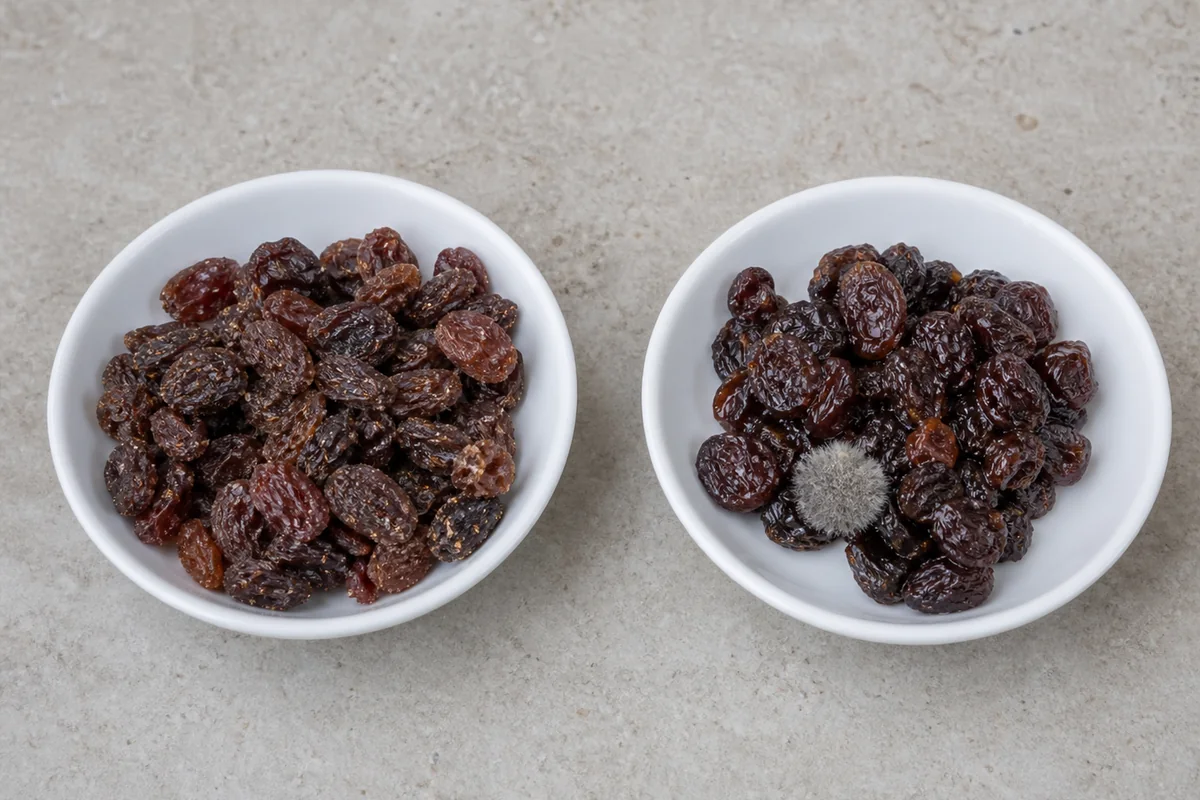
Hard raisins have usually lost moisture. Pale crystals may be sugar that moved to the surface during storage. Both conditions can reduce eating quality without proving spoilage.
Check that the fruit smells sweet and clean, stays free from fuzz, and has no wet clumps or insects. Only then should you restore it.
- Measure what you need. Keep the remaining dry package away from steam.
- Cover with warm liquid. Use water, juice, tea, or recipe liquid for 10 to 15 minutes.
- Drain well. Remove surface liquid before adding the fruit to dough or salad.
- Use promptly. Rehydrated raisins no longer have the same dry pantry stability.
For baking, warm recipe liquid can soften raisins while adding flavor. Pat them dry when excess water would loosen a dough or make chocolate seize.
Do not soak raisins to remove a musty smell or wash away visible mold. Fungal growth can extend beyond the small patch you see, and adding water does not make contaminated fruit safe.
Wet clumps tell a different story from firm dry clusters. If the fruit feels damp, the inside of the lid shows droplets, or the bag contains fuzzy growth, discard the full package.
Discard the Package When the Evidence Converges
Use several signs together and stop before tasting suspicious fruit.
- Fuzzy growth. White, green, gray, or dark patches point to mold.
- Wet or slimy clumps. Moisture entered the package and changed its stability.
- Fermented or musty odor. Wine-like, sour, basement, or rotten smells are not normal pantry aging.
- Insects or webbing. Larvae, moths, beetles, fine threads, or powder require disposal and a pantry inspection.
- Package damage. Holes, broken seals, stains, or condensation make the history unreliable.
Golden raisins are often treated with sulfur dioxide to protect color. A faint sulfur note may be part of the product, especially just after opening. A new harsh rotten-egg odor, wetness, or swelling still deserves caution.
Dark raisins can develop harmless surface sugar, while golden raisins may brown. Those changes remain quality issues when the fruit is dry, clean-smelling, and free from pests.
When mold appears, do not sort out the affected pieces. Raisins touch each other closely, and their wrinkled surfaces make contamination difficult to isolate.
Clean the shelf after a pest problem and inspect nearby dry goods. Move sound products into hard-sided airtight containers because moth larvae can enter thin packaging through small openings.
Sources
- USDA FSIS guidance for storing shelf-stable dry goods
- Utah State University Extension dried-fruit packaging guidance
- Utah State University Extension raisin storage times and grape preservation guidance
- USDA raisin grades and moisture standards
No. A cool dry pantry and an airtight container work for regular use. Refrigeration helps in hot, humid homes or when a large package will sit for many months.
Hardness usually means moisture loss. If the raisins smell clean and show no mold, dampness, or pests, soften the portion you need in warm liquid.
A dry pale coating may be crystallized natural sugar. Fuzzy, irregular growth paired with dampness or a musty smell should be treated as mold.
Properly dried raisins stay stable, but moisture can allow fermentation or mold. A wine-like odor, gas, wetness, or swelling means the package should be discarded.
Yes. Seal them in a moisture-proof freezer bag and thaw the portion while closed. Their low moisture means they usually remain easy to separate.

Carrie is a food writer and editor with more than 15 years of experience. She has worked for some of the biggest names in the food industry, including Bon Appétit, Food & Wine, and Martha Stewart Living.
As the Editor in Chief of EpicureDelight, Carrie oversees all of the content on the site. She also manages the team of contributing writers and editors, who help to create delicious recipes, helpful tips, and informative articles that you’ll find on the site.
A native of the Chicago area, Carrie is passionate about all things food. She loves trying new restaurants and experimenting with new recipes in her kitchen. She’s also a graduate of the Culinary Institute of America, so she knows a thing or two about food!