Unopened soy sauce keeps its best quality through the date printed on the bottle.
After opening, regular soy sauce stays usable for months, but refrigeration slows oxidation and protects its aroma, lighter color, and clean fermented taste.
For peak flavor, aim to finish a standard opened bottle within about 1 month or follow the maker's shorter guidance. A darker color alone usually means oxidation, while mold, foreign material, or an abnormal odor means the bottle should go.

Soy sauce stays safe for a long time when sealed, but opened soy sauce slowly loses aroma and color quality. Refrigeration helps flavor after opening, and mold, gas, sour smell, or cloudy growth means discard.
How Long Does Soy Sauce Last?
| Bottle state | Storage | Quality guide | What to check |
|---|---|---|---|
| Unopened regular soy sauce | Cool, dark cupboard | Through the printed best-before date | Seal and bottle condition |
| Opened regular bottle | Refrigerator | Best flavor within about 1 month, with usable life often longer | Aroma, color, cap, and maker guidance |
| Airtight dispenser bottle | As the label directs | Often longer than a standard open bottle | Container-specific date |
| Reduced-sodium or specialty sauce | Refrigerator unless the label says otherwise | Follow the product label | Salt level and pasteurization vary |
The useful answer depends on the bottle and the kind of soy sauce. A best-before date covers the sealed product, while an opened-bottle recommendation covers flavor after air reaches the sauce.
The 1-month figure is a quality target, not an automatic danger date.
Kikkoman says its naturally brewed sauce keeps for several months and recommends refrigeration to preserve flavor.
Container design can extend freshness because less air enters after each pour. Trust the instructions on an airtight squeeze bottle instead of applying a timing chart made for a regular plastic bottle.
Glass slows outside air transfer better than a thin plastic wall, but the open neck still admits oxygen. A large restaurant bottle used at home may lose its brightest aroma long before the liquid runs out.
Why Does Soy Sauce Darken After Opening?
Oxygen begins changing soy sauce as soon as the bottle opens.
The color deepens first, then delicate roasted and fermented aromas fade.
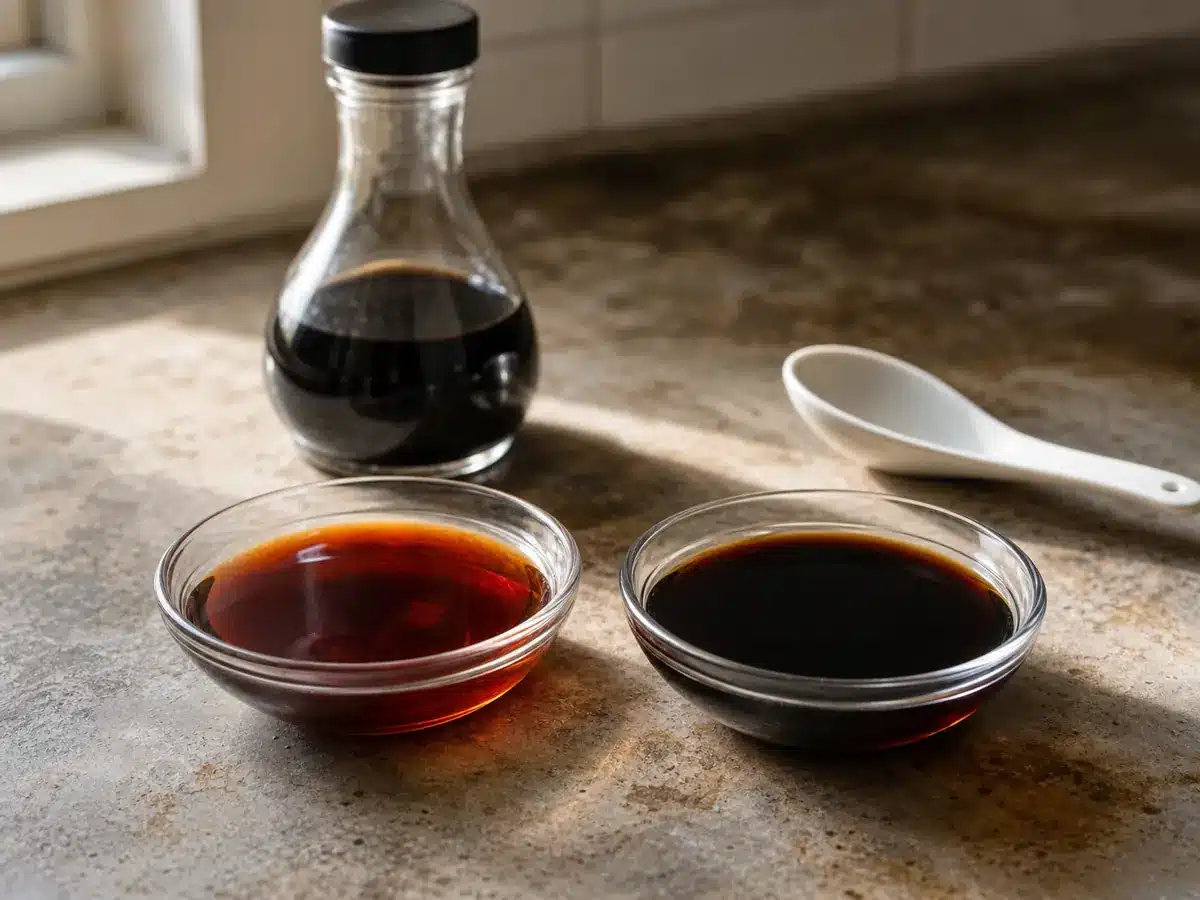
Salt, fermentation, and low available moisture make regular soy sauce a difficult place for many microbes to grow. Those barriers explain its long life, but they do not make contamination impossible.
Light-colored soy sauce shows oxidation sooner because the color shift is easier to see. Tamari and dark soy sauce may already look deep brown, so aroma and bottle history carry more weight.
Headspace changes the sauce a little at a time
Every pour replaces liquid with air. A nearly empty bottle therefore has more oxygen above the sauce, and a loose cap lets that air exchange continue between uses.
Color and flavor do not fade at the same speed
A bottle can look darker while it still smells clean and tastes balanced. Use aroma and a small clean sample to judge quality only after the cap and liquid pass the contamination check.
Should You Refrigerate Opened Soy Sauce?
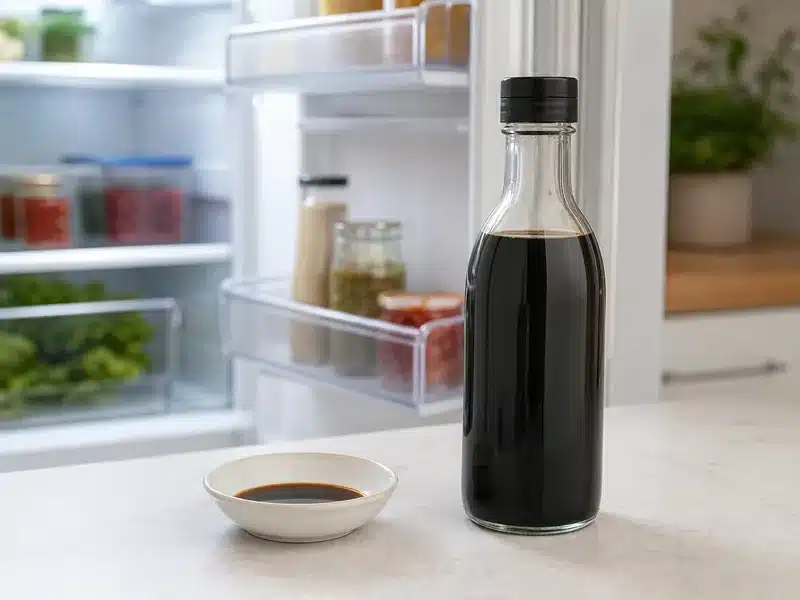
Refrigerate opened soy sauce when flavor quality matters or when one bottle lasts your household for months.
Cold storage slows the oxidation that darkens the liquid and thins its aroma.
Refrigerate slow-use and premium bottles
Cold storage matters most when the sauce is used for dipping or finishing, where its aroma stands alone. It also protects a large bottle that may take several months to empty.
A fast-use standard bottle may follow its pantry label
A household that empties regular soy sauce quickly may keep it in a cool cupboard when the maker allows that storage. Keep every bottle away from the stove, sun, and a warm countertop.
Reduced-sodium sauce deserves closer attention
Lower salt removes part of the product's usual barrier. Refrigerate reduced-sodium, raw, or specialty sauce unless its own label gives a different direction.
Wipe sauce from the neck before closing the bottle. A crusted cap traps food particles and gives contamination a place to start.
Pour the sauce into a spoon or small dish instead of touching the bottle to raw food. A clean pour protects the long storage advantage that fermentation and salt provide.
Do not top up a partly used bottle from a new one. The older container can carry residue into the fresh sauce and makes the opening date impossible to track.
How Can You Tell Whether Residue Around the Cap Is Mold?
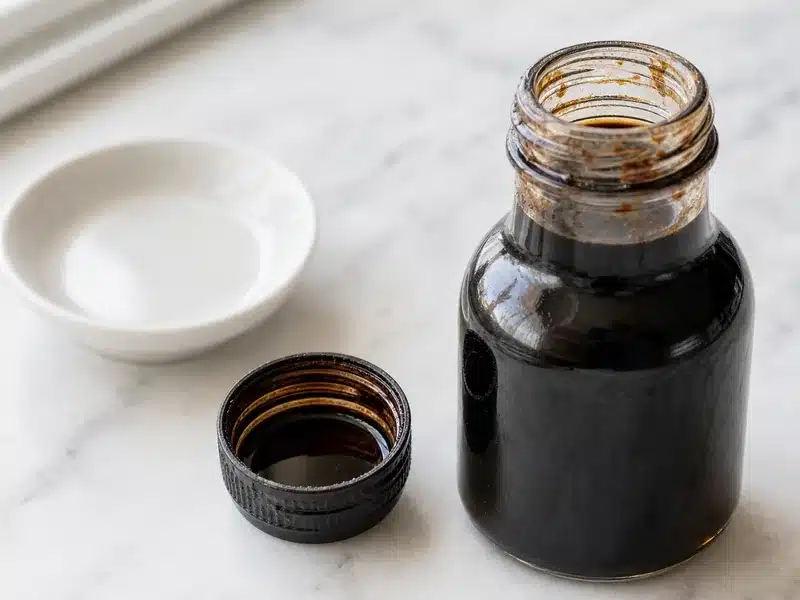
Look for evidence that something entered or grew in the sauce. Normal darkening is gradual, while a fuzzy patch or an unexpected floating mass is a direct discard signal.
Normal quality change
Gradual darkening or normal sediment can come from oxidation or brewing. Check the label and aroma before deciding.
Clean the bottle
Hard salt crystals and dried drips around the cap need cleaning, but they are not fuzzy growth.
Discard the sauce
Mold, foreign material, gas, slime, a sharply abnormal odor, or a damaged seal means the bottle should go.
Salt crystals around the cap can look alarming but are not mold. They feel hard and dissolve in water, while mold looks fuzzy or filmy and should not be scraped away for continued use.
Sediment can be normal in naturally brewed or unfiltered products. Compare it with the label and the bottle's usual appearance, then discard the sauce if the change arrived with gas, slime, or an off odor.
If the bottle fails the check while you are cooking, use the ranked soy sauce swaps and adjust salt slowly. A substitute is safer than trying to cover an abnormal smell.
How Do Bottle Type and Pouring Habits Affect Soy Sauce?
A narrow glass neck limits splashes but still admits air
Glass protects the sauce from outside odors and does not flex during a pour. The open neck still replaces each serving with air, so a large glass bottle can oxidize slowly when it sits half empty for months.
Squeeze bottles pull air back after every use
An airtight dispenser can limit exposure when its valve works as designed. A basic soft plastic bottle may draw air into the headspace after squeezing, so follow the container's own date and storage instructions.
Refilling a dirty bottle carries old residue forward
Wash and dry a dispenser fully before adding fresh sauce. Topping up a crusted bottle mixes the new sauce with old cap residue and makes the opening date impossible to track.
Do not borrow the storage rule from another dark condiment. An opened Worcestershire sauce bottle has a different acid, sugar, and seasoning formula even when both bottles sit beside each other.
Can You Freeze Soy Sauce?
Freezing is unnecessary for soy sauce.
Its dissolved salt lowers the freezing point, so a home freezer may leave it slushy rather than solid.
The refrigerator already slows oxidation without creating a hard bottle or a long thaw. Keep the cap tight and use the freezer space for food that truly needs it.
Portioning soy sauce into ice trays also adds exposed surface and kitchen contact. A clean refrigerated bottle protects quality with less handling.
For other condiments with different salt and moisture levels, use the broader food shelf-life rules. Soy sauce should not lend its long quality window to every sauce in the refrigerator.
Soy sauce's salt-heavy formula does not set the clock for opened oyster bottle, which needs its own label and refrigeration check.
How Can You Use Soy Sauce That Has Lost Some Flavor?
Dipping and finishing expose every lost aroma
Open a fresher bottle for sushi, dumpling dip, or a simple finish over rice. Those uses put the sauce on the tongue without ginger, garlic, browning, or cooking aromas to support it.
Braises and marinades can carry a clean darker sauce
Darkened sauce that smells normal can still season a braise, a teriyaki beef stir-fry, or a ginger-soy glaze. Onion, sugar, and browned food supply aromas that a faded bottle has lost.
Sweet soy pork chops also build flavor from searing and ginger. Measure the older sauce because the dish can become salty before the soy aroma feels strong.
More faded sauce adds salt faster than flavor
The sweet and savory balance described in teriyaki flavor can absorb a darker sauce, but measure before adding a second pour.
If the bottle fails its smell or cap check, choose a clean glaze alternative or one of the savory oyster-sauce replacements instead.
Sources
- Kikkoman storage guidance on refrigeration, oxidation, and several months of opened quality.
- Japan Soy Sauce Information Center storage advice on bottle types, oxidation, and best-flavor timing.
- Kikkoman Corporation soy sauce glossary on ingredients and refrigeration after opening.
Frequently Asked Questions
Some regular products allow it, but heat and air flatten the flavor faster. Follow the bottle and refrigerate when use is slow.
Do not assume it does. Lower salt changes one of the sauce's barriers, so refrigerate it and follow its own label.
They are often dried salt left after a drip evaporates. Clean the cap, but discard the bottle if the growth looks fuzzy or the sauce smells abnormal.
The date describes expected quality in the sealed bottle. Check the label, seal, storage history, aroma, and appearance before deciding.

Carrie is a food writer and editor with more than 15 years of experience. She has worked for some of the biggest names in the food industry, including Bon Appétit, Food & Wine, and Martha Stewart Living.
As the Editor in Chief of EpicureDelight, Carrie oversees all of the content on the site. She also manages the team of contributing writers and editors, who help to create delicious recipes, helpful tips, and informative articles that you’ll find on the site.
A native of the Chicago area, Carrie is passionate about all things food. She loves trying new restaurants and experimenting with new recipes in her kitchen. She’s also a graduate of the Culinary Institute of America, so she knows a thing or two about food!