Fresh rosemary usually keeps about 10 to 14 days in the refrigerator when the sprigs stay cold, lightly humid, and free of standing water. A bunch that was already dry or bruised at purchase may fade sooner.
Dried rosemary remains usable far longer, though its piney aroma weakens before the leaves look spoiled. Frozen rosemary can hold useful flavor for months, but thawed needles work best in cooked food.

Fresh rosemary lasts about 10 to 14 days with a loose refrigerator wrap. Dried leaves keep much longer, while frozen sprigs trade fresh texture for a longer flavor window.
How Long Does Rosemary Last?
| Form | Useful window | Best setup |
|---|---|---|
| Fresh whole sprigs | About 10 to 14 days | Loose bag with a barely damp towel in the refrigerator |
| Washed or chopped fresh leaves | About 3 to 5 days | Dry sealed container in the refrigerator |
| Dried rosemary | Best flavor within about 6 to 12 months | Airtight jar in a cool dark cupboard |
| Frozen rosemary | Best flavor within about 6 to 12 months | Dry airtight freezer container |
These ranges describe useful quality, not a timer that makes the herb fail on one exact day. Rosemary cut from a garden that morning has more life left than a supermarket bunch that spent several days in transport.
Cold slows water loss and decay in fresh herbs. UC Davis reports that many fresh herbs can reach about two weeks at 41°F under controlled high-humidity storage, which supports the shorter home range above.
A home refrigerator is less stable than a produce facility. Warm door storage, a wet package, or bruised needles can pull the usable window below 10 days.
Chopping shortens the clock because it breaks cells and exposes more surface to oxygen and moisture. Store chopped leaves only after they are fully dry, then use them while the aroma still lifts from the container.
Dried and frozen rosemary follow quality clocks rather than short fresh-produce clocks. Oregon State University Extension gives dried herbs a broad storage life, yet the strongest flavor usually belongs to the earlier part of that range.
Aroma often fades before a clean dry sprig looks spoiled. Judge flavor strength separately from mold, slime, or rotten odor.
Rosemary's useful flavor comes from volatile oils held in its narrow leaves. Those oils escape during cutting, drying, warm storage, and repeated opening of a jar.
A clean sprig can look green after much of its aroma has faded. The herb may be safe to handle and still add little beyond stiff needles to a dish.
Crush a dried leaf between clean fingers and smell it at once. A clear piney, resinous aroma means the jar still has useful strength.
A faint dusty smell points to flavor loss. Adding a large handful of weak rosemary rarely fixes the problem because it also adds more woody texture.
Replace the jar when rubbing several leaves produces almost no rosemary scent. A new batch will season the food with less plant material and a cleaner finish.
Bend a fresh tip without crushing the whole bunch. It should release a bright evergreen aroma rather than a stale cellar or rotten plant smell.
Slightly dry needles can still flavor a stew or roast. Brittle gray leaves with no scent have reached the end of their useful life even when no mold is visible.
How Should You Store Fresh Rosemary?
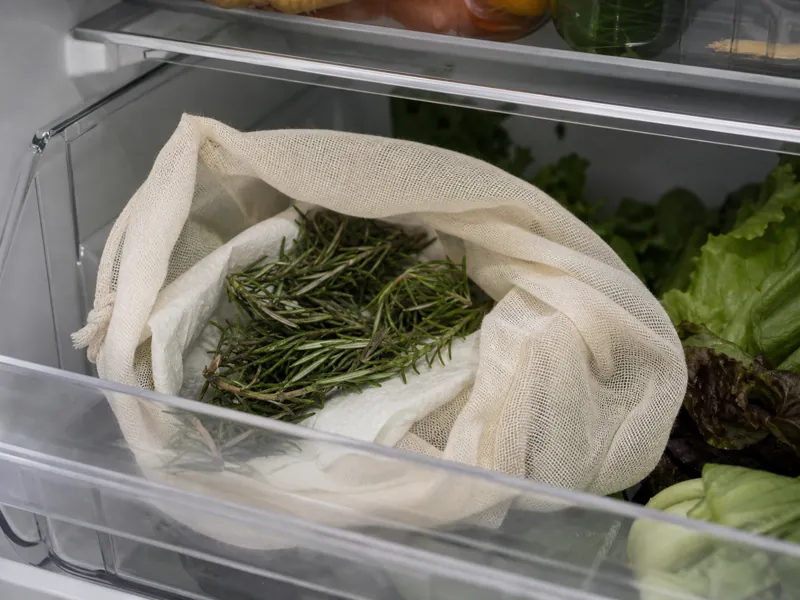
A barely damp paper towel slows water loss from the needles. The bag around it should stay loose enough for a little air exchange rather than holding beads of water against every stem.
Remove crushed, yellow, or wet leaves before wrapping the bunch. One damaged patch can stay wetter than the firm sprigs around it and become the first place decay starts.
Freshly cut woody stems often arrive firm and well hydrated. Wrap them in a towel that feels cool and slightly damp, then slide the bundle into an open produce bag.
Check the towel after two or three days. Replace it when it becomes soaked, slimy, or marked by decaying leaves.
A soft supermarket bunch may already hold moisture inside its package. Pat the surface dry before adding any new towel, and use a dry towel when condensation is visible.
Keep the bundle in the main refrigerator or crisper instead of the door. The door warms with every opening and gives delicate leaves a less steady environment.
Wash rosemary close to use rather than before storage. If you must wash the whole bunch, spin or blot it until no droplets remain between the needles.
Do not seal wet rosemary in a rigid container with no absorbent layer. Trapped water supports soft breakdown even while the cold air slows it.
When Should You Throw Rosemary Away?
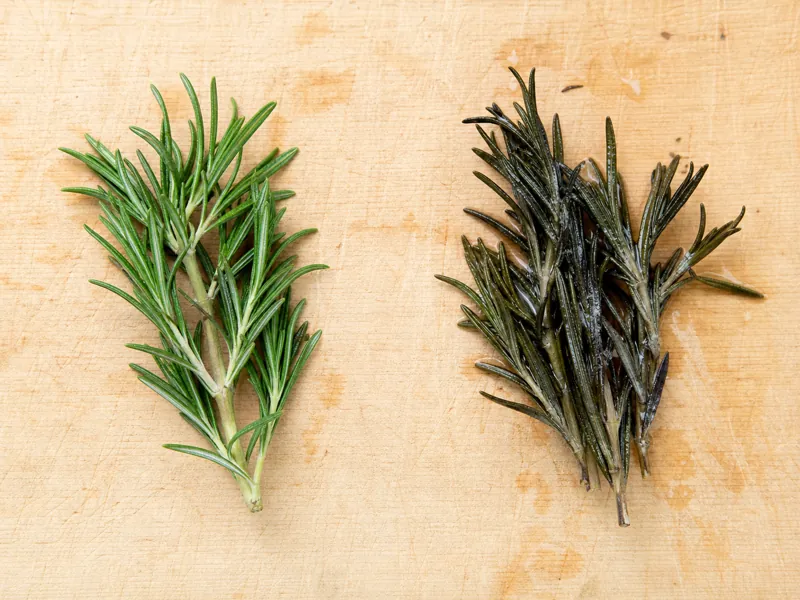
Dry leaves and spoiled leaves can both look dark, so touch and smell matter. A dry old sprig feels brittle and smells weak, while decaying rosemary often feels wet, sticky, or unusually soft.
UC Davis describes bacterial soft rot in herbs as a slimy breakdown of the tissue. Fungal decay may add visible spores or a watery collapsed patch.
- Keep and use soon when the sprigs are slightly wilted but still dry, clean-smelling, and free of growth.
- Use for cooking when a few needles are dry but the central stem remains sound and aromatic.
- Discard the bunch when leaves feel slimy, show fuzzy mold, or smell rotten.
- Discard freeze-damaged sprigs when dark translucent tissue turns wet and breaks down after thawing.
- Never taste-test rosemary that already has mold, slime, or an off odor.
A blackened patch caused by accidental freezing may start as a quality defect, then deteriorate quickly after the herb warms. Separate and use unaffected sprigs only when they remain dry and clean.
Mold threads can reach beyond the small patch you see on a moist herb bundle. Throw away the affected bunch instead of rinsing the visible growth from a few needles.
A strong pine smell is normal. A sour, fermented, or rotten-vegetable odor is a different signal and should end the inspection.
Should You Freeze or Dry Rosemary?
Choose the preservation method from the food you expect to cook. Frozen leaves keep more of their fresh aroma, while dried rosemary becomes concentrated and remains easy to measure from a cupboard.
Strip sound leaves from the stems, rinse only when needed, and dry them well. Freeze the leaves on a tray before moving them to a small airtight container so they do not become one wet block.
You can also freeze chopped rosemary in water or broth cubes for soups and braises. Oil cubes require careful cold handling and should remain frozen until they go into a hot dish.
Use frozen rosemary in cooked food. Ice damages the cells, so thawed leaves do not regain the firm texture of a fresh garnish.
Rosemary is sturdy enough for air drying in small bundles with good circulation. Keep the bundles away from direct sunlight, which pulls color and aroma from the leaves.
The stems are ready when they snap and the leaves crumble easily. Store the dried leaves whole, then crush only the amount needed for the current dish.
Dried rosemary tastes stronger by volume than fresh rosemary. Start with roughly one teaspoon dried for one tablespoon fresh, then adjust after the herb has had time to soften in the food.
Do not dry a bunch that already carries mold or slime. Preservation keeps sound food useful, but it does not repair decay.
Use clean older rosemary where texture matters less. A whole sprig can perfume broth and come out before serving, while weak dry needles do not work as a fresh garnish.
A whole older sprig can still work in broth because you remove the woody stem before serving. The liquid pulls out the remaining aroma without leaving every stiff needle in the bowl.
Long-cooked tomato sauce, beans, and braised meat also give dry leaves time to soften. Chop the leaves finely so one faded sprig does not leave sharp fragments in each bite.
- Whole sprig works in broth, beans, or a braise when you can lift it out.
- Finely chopped leaves fit a sauce or slow roast where time softens the texture.
- Frozen leaves suit soup, gravy, and cooked filling that already contains moisture.
- Fresh tender tips belong on finished food where color and texture remain visible.
Weak dried rosemary cannot copy a fresh garnish. When the dish depends on the herb's bright aroma at the table, replace the old supply rather than doubling it.
A rosemary substitute may solve a missing-herb problem, but it will bring a different aroma. Thyme is earthier and softer, while sage is warmer and more savory.
Use up sound fading rosemary before opening a new jar. Keeping two half-used containers exposes both to air and makes it harder to know which one still has strength.
Sources
- UC Davis Postharvest Research and Extension Center, fresh herb storage and quality guidance
- Oregon State University Extension Service, preserving and drying fresh herbs
- FoodSafety.gov, home refrigeration and produce handling guidance
A sound unwashed bunch left out for one cool night may only lose some moisture. Refrigerate it promptly, and discard it if the sprigs became wet, hot, or slimy.
Yes, short sturdy stems can stand in a small amount of clean water in the refrigerator. Keep leaves above the water line and change cloudy water before it develops an odor.
Contact with a freezing spot can darken leaves and make them translucent. Bruising and trapped moisture can also cause black wet patches, so judge the texture and odor with the color.
No, a cool dark cupboard protects a sealed jar from condensation. Refrigeration can add moisture each time a cold container is opened in warm air.
Refreezing is possible only when the herb stayed safely cold, but repeated thawing damages texture and aroma. Freeze small portions so one meal does not warm the full supply.

Carrie is a food writer and editor with more than 15 years of experience. She has worked for some of the biggest names in the food industry, including Bon Appétit, Food & Wine, and Martha Stewart Living.
As the Editor in Chief of EpicureDelight, Carrie oversees all of the content on the site. She also manages the team of contributing writers and editors, who help to create delicious recipes, helpful tips, and informative articles that you’ll find on the site.
A native of the Chicago area, Carrie is passionate about all things food. She loves trying new restaurants and experimenting with new recipes in her kitchen. She’s also a graduate of the Culinary Institute of America, so she knows a thing or two about food!