
Running out of parchment paper mid-cook is frustrating, especially when your air fryer is already preheating. The good news is that several substitutes handle the same job without sacrificing food texture or airflow.

Typical air fryer cooking temps range from 360 to 400°F (182 to 204°C), so whatever you line the basket with needs to hold up under real heat.
Parchment paper does two things: it stops food from sticking, and it keeps cleanup fast. Any substitute worth using needs to do at least one of those reliably.
Most substitutes work best with a light spray or brush of oil to prevent sticking, even when the material itself is nonstick.
The five substitutes covered here are aluminum foil, silicone baking mats, reusable parchment sheets, compostable plant-based sheets, and perforated parchment. Each one handles different food types and cleanup priorities.
Sunflower oil substitutes follow similar logic: the best swap depends on what the ingredient is actually doing in the recipe.
Some swaps are nearly identical to parchment in performance. Others require minor adjustments, like punching holes for airflow or skipping high-moisture foods entirely.
This guide gives you the ratio, the best use, and the tradeoff for each so you can decide in under a minute.
The five best air fryer parchment paper substitutes are aluminum foil, silicone baking mats, reusable parchment sheets, compostable plant-based sheets, and perforated parchment. Each works at air fryer temps when used correctly, with a light oil coating and proper sizing to preserve convection airflow.
| # | Substitute | Ratio | Best For | Taste Match |
|---|---|---|---|---|
| 1 | Aluminum Foil (perforated) | 1:1 cut to basket size | Proteins, firm vegetables | Close |
| 2 | Silicone Baking Mat | 1:1 trimmed to fit | Delicate fish, sticky items | Close |
| 3 | Reusable Parchment Sheets | 1:1 direct swap | General air frying, easy cleanup | Close |
| 4 | Compostable Plant-Based Sheets | 1:1 for light items only | Veggies, small bites | Mild |
| 5 | Perforated Parchment | 1:1 direct swap | All-purpose, crispiest results | Close |
1. Aluminum Foil (Perforated for Best Airflow)
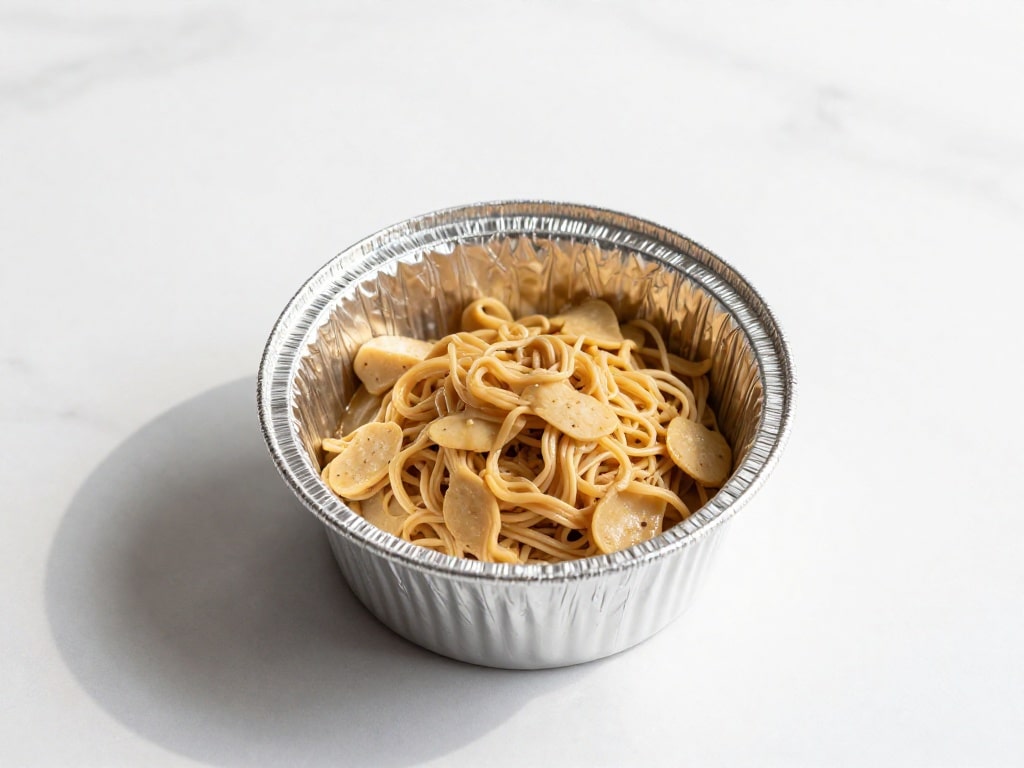
Aluminum foil is the most accessible parchment substitute in any kitchen. Cut it to fit your basket at a 1:1 size ratio, then perforate it every 1 inch using a skewer or fork to allow convection airflow.
Without those holes, hot air cannot circulate properly and food steams instead of crisps.
Press the foil lightly against the basket floor without letting it ride up the sides too high. High sides block airflow at the edges, which is where browning starts.
A quick spray of oil on the foil's surface keeps food from bonding to the metal during cooking.
Foil handles high-heat cooking well. It does not smoke at normal air fryer temps and stays rigid enough to support heavier items like chicken thighs or thick-cut potatoes.
Acidic foods like tomatoes or citrus-marinated proteins can react slightly with the foil surface, so this works best for savory, neutral-flavored ingredients where minimal flavor transfer matters.
One limitation: foil is not nonstick on its own. Oil is not optional here.
For delicate items like flaky fish, the foil surface can still tear the food on release if you skip that step. Foil is also single-use, which increases waste compared to reusable options.
- Ratio: Cut foil to match basket dimensions exactly, then perforate every 1 inch across the surface.
- Oil requirement: Always coat the foil with a light spray or brush before placing food on top.
- Avoid with: Acidic marinades, very delicate fish, or anything you want fully nonstick without oil.
- Cleanup: Discard after each use; do not reuse foil that has food residue baked into it.
Aluminum foil is best for robust proteins and vegetables that benefit from quick crisping. Perforate it every inch and add oil, and it performs close to parchment for high-heat cooking.
Save This for Later
Pin this gourmet hacks: 5 best air fryer parchment paper substitutes guide so you always have it when you need it.
Pin This Guide2. Silicone Baking Mats (Reusable Liners)
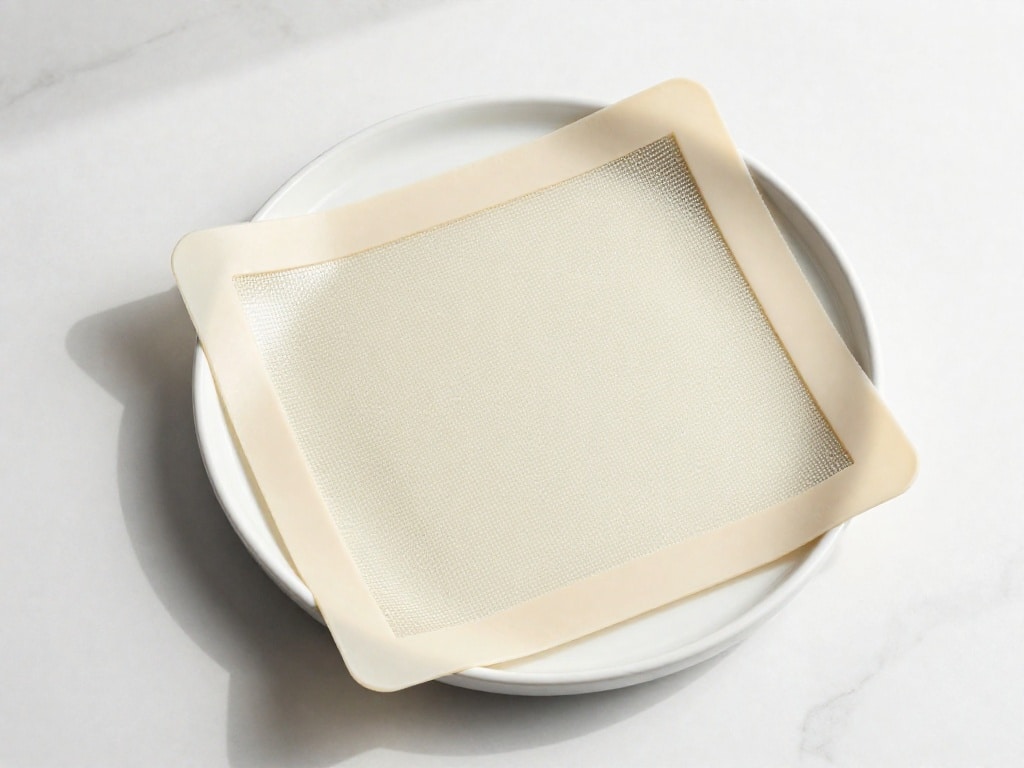
Silicone baking mats are a 1:1 replacement by area, trimmed or sized to fit your specific basket. They are oven-safe up to approximately 450°F (232°C), which puts them well above the upper range of most air fryer settings.
Heat safety is not a concern with properly rated silicone mats.
The main tradeoff is airflow. A solid silicone mat without perforations can reduce the convection effect slightly, leading to softer bottoms on foods that need a crisp underside.
For foods where crispness comes from the top rather than the bottom, like roasted vegetables or reheated pastries, this is not a problem.
Silicone is genuinely nonstick without much oil. A very light spray is enough for most foods, and sticky glazed items release cleanly after cooking.
That makes silicone mats excellent for cheese-topped or coated foods where baked-on residue is hardest to remove from bare metal.
The reusability is the standout advantage. A single silicone mat replaces hundreds of parchment sheets over its lifespan.
Wash it with warm soapy water after each use and it is ready for the next batch. Trim it with kitchen scissors if it does not fit your basket model precisely.
- Ratio: Trim mat to basket dimensions; use the same placement as parchment paper.
- Nonstick quality: Releases most foods cleanly with just a light oil spray.
- Browning note: May slightly reduce bottom crisping on foods that need high-contact heat.
- Cleaning: Dishwasher-safe in most cases; check manufacturer guidance.
Silicone mats are excellent for delicate items like fish fillets that you do not want sticking. The nonstick surface releases fragile foods without tearing, and cleanup takes under a minute.
3. Reusable Parchment Sheets (Air Fryer-Specific)
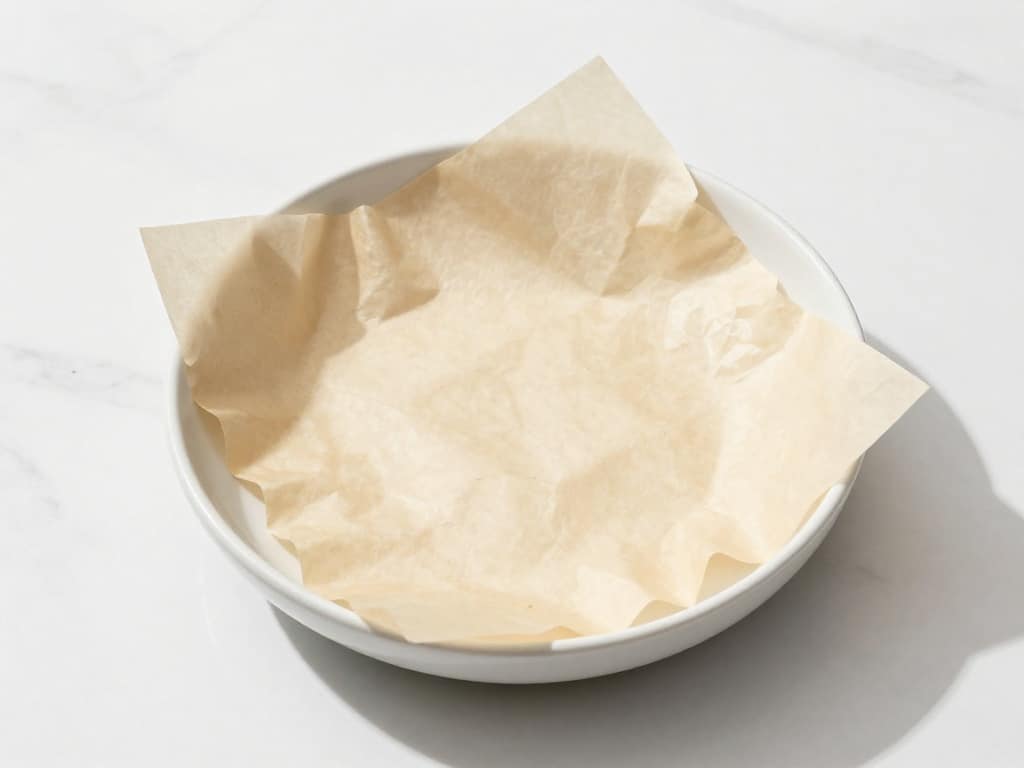
Reusable parchment sheets are designed specifically for air fryer use, making them the most straightforward 1:1 direct swap for standard parchment paper. They are built to resist scorching at typical air fryer temps and usually come pre-cut or perforated to match common basket sizes.
There is minimal adjustment needed when switching from disposable parchment.
Unlike regular parchment, these sheets are coated or treated to survive multiple cooking cycles. The surface behaves nearly identically to standard parchment: food does not stick readily, browning patterns stay consistent, and there is no noticeable flavor transfer between batches.
For everyday air fryer cooking, functional substitutes that perform identically to the original are always the lowest-friction option.
The biggest practical consideration is following the manufacturer's heat limit. Most reusable parchment sheets cap out at a rated temperature, and exceeding it can cause scorching at the sheet's edges, especially when the basket is lightly loaded and hot air concentrates in one spot.
Do not overlap two sheets in a single basket to cover a larger area; this blocks airflow and reduces cooking performance.
Lifespan varies by brand. Some sheets last 30 to 50 uses; others hold up longer with gentle washing.
Hand-washing extends the sheet's useful life more than machine washing, which can weaken the coating over repeated cycles.
- Ratio: Direct 1:1 replacement; use exactly as you would standard parchment paper.
- Heat limit: Check the manufacturer's max temp before use; stay below it by at least 25°F.
- Cleanup: Rinse under warm water after each use; hand-wash for longest lifespan.
- Avoid: Do not layer or overlap sheets inside the same basket.
Follow the manufacturer's heat limit and avoid overlapping sheets. Overlapping creates dead air pockets that slow cooking and can scorch the sheet edges prematurely.
4. Compostable Plant-Based Sheets (Light Duty)
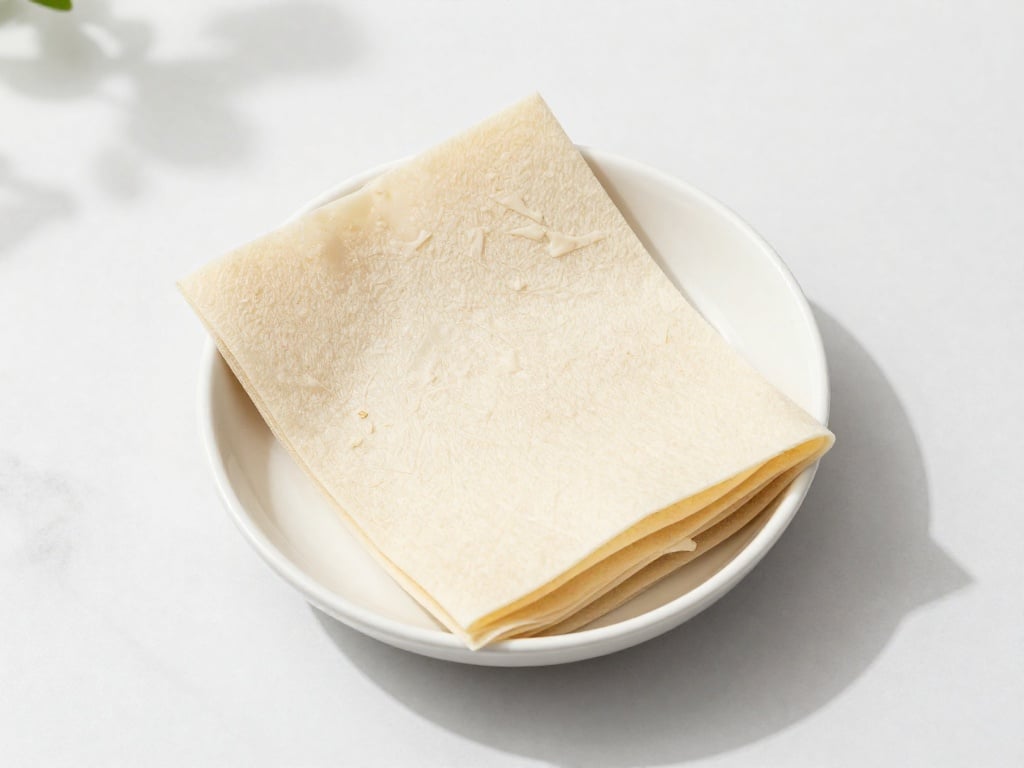
Compostable plant-based sheets are made from materials like bamboo fiber or sugarcane pulp. They work as a 1:1 replacement by size for light air fryer tasks, specifically vegetables, small appetizers, and dry-rub coated items.
They handle moderate heat adequately but are not engineered for sustained high-heat cooking the way parchment is.
Plant-based sheets may degrade if moisture is heavy. A juicy protein or a sauce-coated item will soften the sheet quickly, which can cause it to collapse against the basket floor and block airflow.
Stick to drier foods when using these, and avoid any recipe that produces significant drippings during cooking.
The environmental appeal is real. These sheets are fully compostable after use, making them a lower-waste option for home cooks who already run a compost system.
Sustainable swaps like this often come with performance tradeoffs worth understanding upfront. For light vegetable batches, the tradeoff is minor.
Oil the sheet surface lightly even for dry foods. The plant-fiber surface is more porous than standard parchment, so without oil, foods can bond to the sheet as the fibers absorb surface moisture during cooking.
Keep cooking temps at or below 375°F when possible to preserve the sheet's structural integrity through the full cook time.
- Ratio: 1:1 by size, for light foods only; not suitable for heavy proteins or saucy items.
- Moisture sensitivity: High-moisture foods degrade the sheet and collapse airflow.
- Oil requirement: Always oil the surface; the porous fiber absorbs moisture and sticks.
- Temp limit: Use at 375°F or below for best structural performance.
Compostable sheets are not ideal for high-fat, high-moisture foods that require strong barrier integrity. Heavy drippings will soften and collapse the sheet before cooking finishes.
5. Perforated Parchment (Closest to Paper Performance)
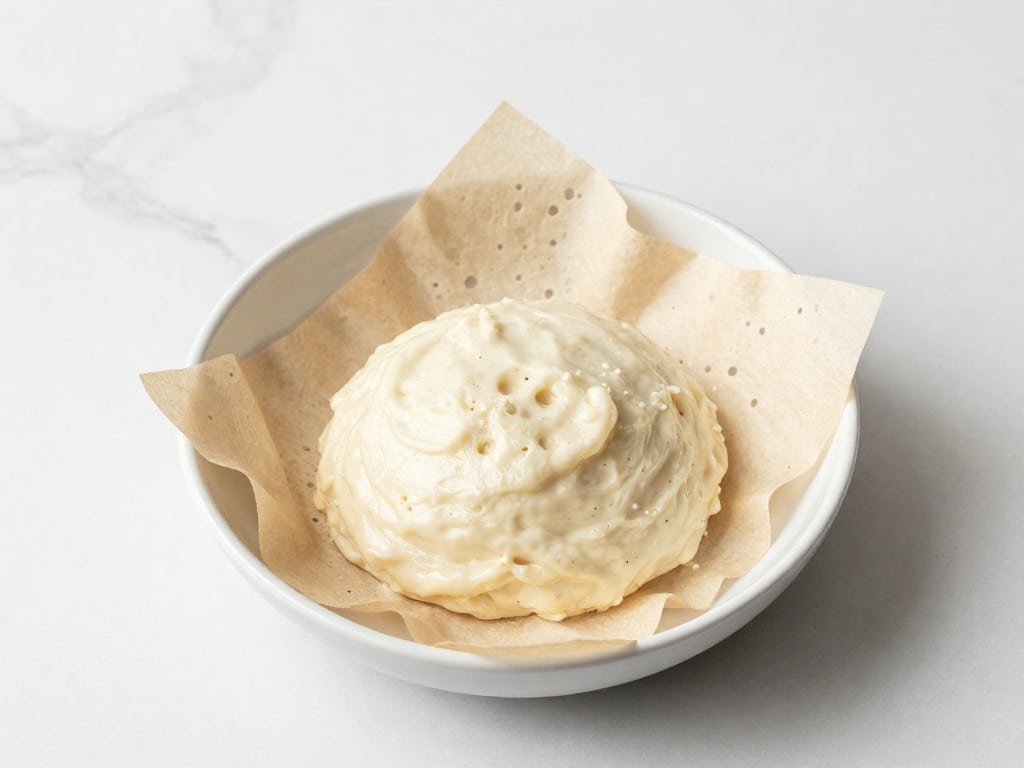
Perforated parchment is the most direct substitute for standard parchment paper in an air fryer. It is the same material with pre-punched holes, designed specifically to allow convection airflow while providing the same nonstick surface and heat tolerance.
Use it as a 1:1 replacement with no modifications required.
Because it shares the same base material as regular parchment, browning patterns are nearly identical. Perforated parchment reduces sticking while preserving airflow, which means the food's underside crisps at the same rate as it would without any liner at all.
This is the key performance advantage over solid liners like silicone mats.
Most perforated parchment is sold pre-cut to common basket sizes, so fitting is rarely an issue. For recipes where texture outcomes need to match exactly, perforated parchment is the right starting point because it introduces the fewest variables.
The holes are typically spaced about 1 inch apart, which matches the convection pattern of most air fryer models.
The only real limitation is cost. Pre-perforated parchment sheets cost more per use than plain parchment.
If you already have plain parchment on hand, you can perforate it yourself with a skewer and get nearly the same result. DIY prep steps like this add a minute of work but eliminate the need for a specialty product.
- Ratio: Direct 1:1 replacement; no cutting, trimming, or modification needed.
- Performance: Identical browning and crisping behavior to standard parchment.
- DIY option: Punch holes in plain parchment every 1 inch as a lower-cost alternative.
- Best for: Any food where you want minimal texture or flavor change from the liner.
Perforated parchment is the closest substitute to standard parchment in performance, ideal when you want minimal texture change. It is the best default choice for any food type.
Decision Guide: Quick Pick Chart
Choosing the right substitute comes down to three factors: the food you are cooking, how crispy you want the result, and how much cleanup effort you are willing to do. Crispness preference drives the foil or silicone choice more than any other variable.
Foil with perforations delivers the crispiest result; silicone trades some crispness for easier release and reusability.
Use the table below to find your match in under 30 seconds based on food type. For foods that fall between categories, default to perforated parchment, which performs well across all types.
Matching a substitute to its exact use case is always more reliable than using one substitute for everything.




