
Light corn syrup does three jobs at once: it keeps baked goods soft, adds a glassy finish to glazes, and stops sugar from crystallizing mid-cook. Finding a good light corn syrup substitute means matching whichever of those jobs matters most in your recipe.
The best swap depends on context. Honey nails softness.
Agave handles gloss. Brown rice syrup mimics candy behavior almost exactly.
Each one changes the flavor slightly, so knowing what your recipe really needs helps you pick fast.
Light corn syrup keeps baked goods moist, adds a glossy finish, and slows crystallization. The closest all-around swap is honey (1:1). For neutral flavor, use agave nectar. For candy or chewy cookies, brown rice syrup is the most functional match.
5 Best Light Corn Syrup Substitutes (Closest Match)
Each substitute below handles a different aspect of what light corn syrup does. Scan the table first, then read the H3 detail for whichever substitute matches your recipe type.
| # | Substitute | Best For | Ratio | Key Note |
|---|---|---|---|---|
| 1 | Honey (light) | Both | 1:1 | Adds mild honey flavor |
| 2 | Agave Nectar | Both | 1:1 | Very neutral, slightly thin |
| 3 | Brown Rice Syrup | Baking | 1:1 | Best candy/cookie chew |
| 4 | Maple Syrup | Both | ¾:1 | Reduce 25% for sweetness |
| 5 | Molasses (light) | Baking | ½:1 | Strong flavor, use sparingly |
1. Honey (light)
Honey is the easiest 1:1 swap because its invert-sugar structure behaves almost exactly like corn syrup in baked goods. It holds moisture, slows crystallization, and adds a gentle stickiness that keeps cookies soft for days.
The flavor is mild with light honey varieties, but it will be detectable in very simple recipes.
To get the best results, knowing more about honey's flavor profile before you swap helps avoid surprises.
- Ratio: Use 1:1. No adjustment needed for most cookies, brownies, or glazes.
- Texture fix: If honey is thick and cold, warm it in a bowl of hot water for 2 minutes before measuring.
- Browning note: Honey promotes faster browning. Drop oven temperature by 10-15°F and check early.
- Best recipes: Soft cookies, no-bake bars, caramel-style glazes, and granola.
Skip if: the recipe is a delicate vanilla-only cookie or pale sugar glaze where any honey flavor will stand out.
2. Agave Nectar
Agave is arguably the most neutral-tasting swap in this list. It has a mild sweetness that doesn't compete with other flavors, so it works well in glazes and quick syrups where light corn syrup's main job is smoothness.
One issue: agave can be slightly thinner than corn syrup. In most baking recipes this is fine, but in candy work it may need a short simmer.
If you need alternatives for agave itself, choosing a similar syrup is straightforward.
- Ratio: Use 1:1 for baking and glazes.
- Candy use: Simmer agave 1-2 minutes to concentrate before using in hard-candy or caramel recipes.
- Color: Agave stays pale, which preserves the final color of white or blond glazes.
- Sweetness: Agave is sweeter per gram than corn syrup. For large quantities, reduce by about 10%.
Skip if: you need a thick, viscous syrup straight from the bottle without any simmering step.
3. Brown Rice Syrup (or Maltose Syrup)
Brown rice syrup is the most functional match for recipes that depend on candy-like consistency and chew. It behaves like an invert sugar, resisting crystallization the way light corn syrup does.
The flavor is faintly malty, not sweet in the same way as honey or maple.
If brown rice syrup is hard to find, malt-based syrup options cover much of the same ground. Maltose syrup is the closer relative and performs nearly identically in candy or chewy cookies.
Brown Rice Syrup
Works for: soft cookies, chewiness, candy pulling, and glazes where malt flavor is acceptable
Skip if: you can't source it locally, or the recipe needs a clean sweet flavor without any grain note
- Ratio: Use 1:1. Maltose syrup can also be used 1:1.
- Candy use: Works well in nougat, soft caramels, and pulled candy due to low crystallization tendency.
- Texture tip: Warm the syrup briefly before measuring-it is very thick and scoops unevenly when cold.
4. Maple Syrup
Maple syrup adds good moisture retention and works nicely in glazes and baked goods, but it is sweeter than light corn syrup, so you need to reduce the amount. It also promotes browning faster, which changes the look of pale recipes.
| Use | Ratio | Notes |
|---|---|---|
| Baking (cookies/bars) | ¾:1 | Maple syrup; reduce to match sweetness |
| Glazes | 1:1 | Maple syrup; expect a darker, amber glaze |
| Candy/soft caramels | ¾:1 | Maple syrup; watch for faster browning |
Grade A maple syrup in a medium or light style keeps the flavor cleaner. If you're still deciding whether maple is the right call, understanding when to choose another syrup can save you from overcommitting.
- Browning: Reduce oven temperature by 10°F and watch the last 5 minutes of bake time.
- Best recipes: Oat bars, ginger cookies, quick glazes, and pancake-style syrups.
- Flavor note: Grade A light or amber has the mildest maple taste; Grade B is too strong for neutral recipes.
Skip if: the recipe must stay pale in color or mild in flavor-maple will dominate both.
5. Molasses (light / mild)
Light molasses is an emergency swap, not a first choice. It is concentrated, strongly flavored, and will darken any recipe significantly.
Where it does work is in brownies, gingerbread, dark glazes, and any bake where caramel depth is a welcome addition.
Light Molasses
Works for: brownies, gingerbread, dark caramel glazes, and recipes where bold flavor is the goal
Skip if: the recipe needs a pale color, mild sweetness, or clean flavor-molasses will overpower it
For recipes that call for molasses as a primary flavor, swapping molasses out follows its own logic and is worth a separate look.
- Ratio: Use ½:1. Start with half the amount and taste before adding more.
- Warm first: Molasses is thick. Warm it 30 seconds in the microwave before measuring to avoid sticky clumps.
- Best recipes: Brownies, gingerbread cookies, dark caramel sauce, and baked beans.
- Sweetness: Light molasses is less bitter than blackstrap. Never substitute blackstrap in this role-it is far too strong.
Making Light Corn Syrup Substitutes Work
The key to a successful swap is knowing which property you're replacing. Gloss comes from viscosity, so thinner substitutes like agave may need a brief simmer to concentrate.
Softness comes from the humectant and invert-sugar effect, which honey and brown rice syrup replicate well. Crystallization control, the job that matters most in candy work, is best covered by brown rice syrup or maltose syrup.
Before you commit to checking your corn syrup supply, run a quick texture test with your chosen substitute. If the batter feels looser than expected, a tablespoon of flour brings it back.
If it's too stiff, 1-2 teaspoons of extra syrup in the next batch corrects the ratio. You can also explore swapping in grain-based syrups if none of the above feel right for your recipe.
- For gloss: Use agave or light honey, warm and stir smooth before applying to glazes.
- For softness/chew: Use brown rice syrup or honey at 1:1 and check for browning early.
- For crystallization control in candy: Use brown rice syrup or maltose syrup-simmer briefly if the texture needs thickening.
Frequently Asked Questions
Light honey is the closest 1:1 swap for most baking. It matches the moisture-retention and invert-sugar behavior of corn syrup with minimal adjustment needed.
Yes, in most recipes. Use the same amount and reduce your oven temperature by 10-15°F to account for honey's faster browning.
Mostly, but agave is thinner. Simmer it for 1-2 minutes before using in hard candy or caramel to build the right viscosity.
Use ¾ cup maple syrup for every 1 cup of corn syrup called for. This 25% reduction brings sweetness closer to what corn syrup delivers.
Avoid it when the recipe needs a pale color or mild flavor. Molasses darkens baked goods significantly and adds a strong, caramel-bitter note.
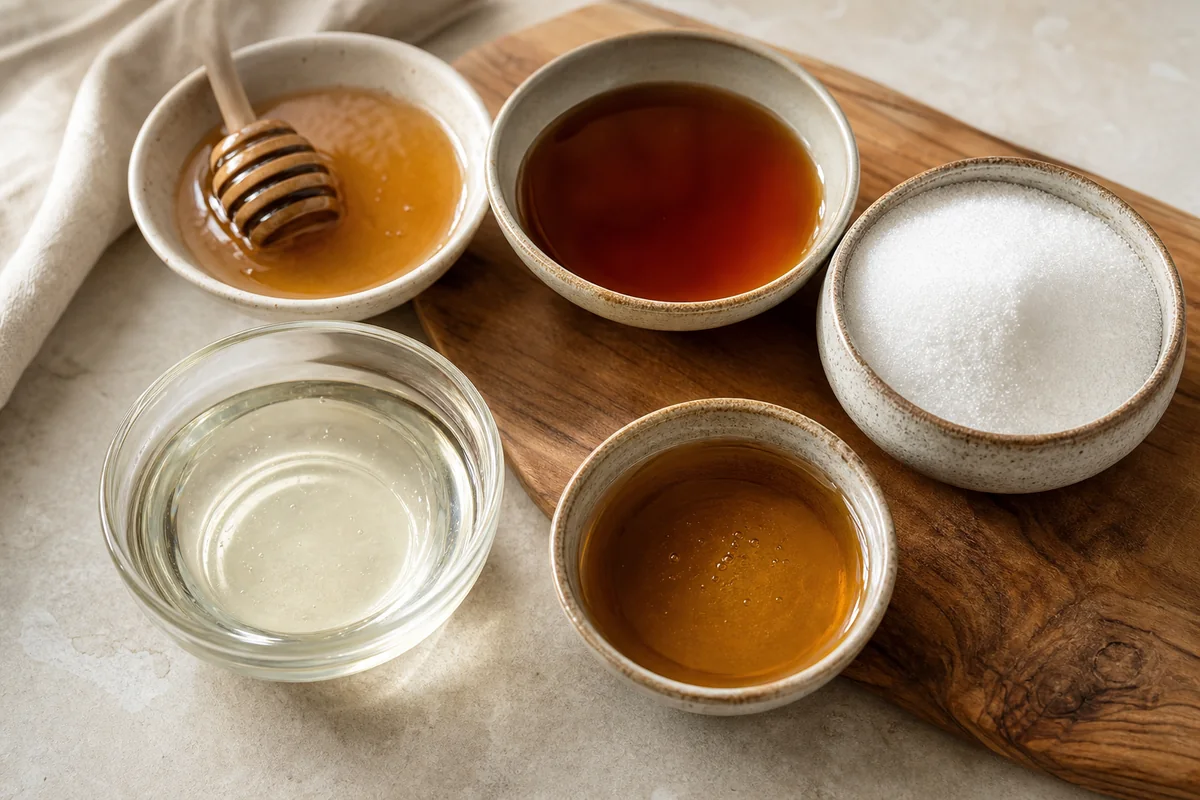
5 Best Light Corn Syrup Substitutes (Closest Match)
Ingredients
Equipment
Method
- Identify the job light corn syrup is doing in your recipe: gloss (glazing), softness (cookie/brownie texture), or candy syrup consistency.
- Pick the closest match from the table using the sweetness-strength guidance (start with the listed ratio).
- If your substitute is thicker (like honey) use it as-is; if it’s thinner (like agave) reduce slightly or simmer 1–2 minutes to concentrate.
- Blend for texture: stir honey or syrup until fully uniform before measuring; if using molasses, warm briefly for easier measuring.
- Adjust after mixing: if the batter/dough feels too loose, add a small amount of flour; if too dry, add 1–2 teaspoons more syrup next batch.
Notes
- For candy or thick glazes, prioritize honey, agave, or rice syrup over molasses.
- For cookie softness, you want invert-sugar behavior—honey, agave, and rice syrup work best.
Tried this recipe?
Let us know how it was!
Carrie is a food writer and editor with more than 15 years of experience. She has worked for some of the biggest names in the food industry, including Bon Appétit, Food & Wine, and Martha Stewart Living.
As the Editor in Chief of EpicureDelight, Carrie oversees all of the content on the site. She also manages the team of contributing writers and editors, who help to create delicious recipes, helpful tips, and informative articles that you’ll find on the site.
A native of the Chicago area, Carrie is passionate about all things food. She loves trying new restaurants and experimenting with new recipes in her kitchen. She’s also a graduate of the Culinary Institute of America, so she knows a thing or two about food!



