
Orange bitters have a very particular job. They bring concentrated peel bitterness plus a sharp citrus snap-not sweetness, not juice, just that dry, aromatic edge.
Most common swaps miss that balance by leaning too sweet or too flat.
The fix is choosing a substitute based on what your recipe actually needs. A cocktail that wants bitterness needs a different answer than a glaze that just wants orange character.
That difference is what the list below maps out.
The best orange bitters substitute depends on whether your recipe needs bitterness, aroma, or both. For cocktails, a dry bitter orange liqueur or Angostura plus orange extract is closest. For cooking, orange zest syrup or thinned marmalade works well. Always taste after dilution before committing.
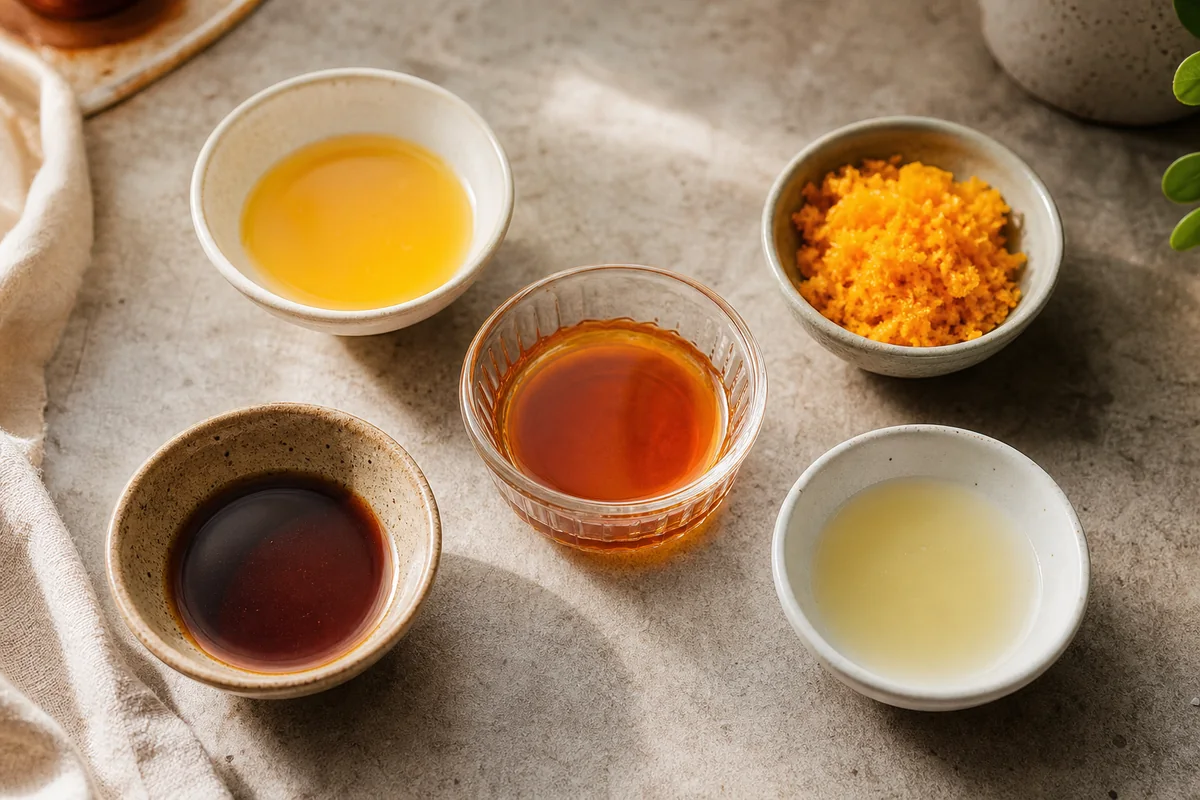
5 Best Orange Bitters Substitutes Ranked by Flavor Role
Each option below targets a specific gap: bitterness, aroma, or sweetness correction. Use the table to scan ratios fast, then read the detail for whichever option fits your situation.
| # | Substitute | Best For | Ratio | Key Note |
|---|---|---|---|---|
| 1 | Bitter Orange Liqueur | Both | 1:1 | Choose a dry, less-sweet style |
| 2 | Angostura + Orange Extract | Both | 2:1 + drops | Start extract very small |
| 3 | Orange Zest Syrup | Cooking | ¾:1 | Aroma-forward, reduce sugar |
| 4 | Thinned Orange Marmalade | Cooking | ½:1 | Blend smooth, strain well |
| 5 | Grand Marnier | Cocktails | ¾:1 | Sweeter-add Angostura drops |
1. Bitter Orange Liqueur
A dry Curaçao-style liqueur is the most direct swap for orange bitters in a cocktail. It carries real orange peel oil character and enough edge to stand in without overwhelming sweetness.
This works best when your recipe needs both aroma and some bitterness, like in an Old Fashioned variation or a Negroni riff. If your liqueur is clearly syrupy sweet, reduce any added sugar in the recipe by about 1 teaspoon.
- Flavor profile: Orange peel oil, slight bitterness, minimal sweetness on the finish
- Best for: Stirred cocktails and citrus-forward spritz drinks
- Start ratio: 1:1; taste before adding more
- Sweetness fix: Reduce simple syrup or juice by 1 teaspoon if the liqueur feels sweet
If you want to understand that peel-forward bite in more depth before choosing, it helps to know exactly what you're trying to match.
Skip if the recipe depends on sharp gentian-style bitterness. No liqueur fully replaces that edge.
2. Angostura Bitters + Orange Extract
Angostura is all bitterness with warm spice behind it. Adding just a drop or two of orange extract gives you the peel aroma that Angostura alone can't provide.
Together, they cover both roles orange bitters play.
The spiced, bark-forward flavor of Angostura does shift the profile slightly. That's fine in most cocktails, but keep the orange extract tiny-candy orange is the enemy here.
- When to use: Any cocktail where bitterness is more important than a clean citrus note
- Start ratio: 2 parts Angostura to approximately 1 part extract, but begin with a single drop of extract
- Extract warning: Add extract in single drops, then taste; a little goes very far
- Sweetness correction: If the drink tastes flat, add a half-teaspoon of fresh lemon juice to sharpen it
Skip if you don't have orange extract and can't find it. Angostura alone misses the citrus aroma entirely.
3. Orange Zest Syrup
Orange zest syrup is an aroma substitute, not a bitterness substitute. It captures the volatile oils from orange peel but adds body and sugar, so it behaves differently in the glass.
For choosing an extract-free option in softer recipes-glazes, marinades, lightly sweetened cocktails-syrup is a solid middle ground. Skip it if the recipe really needs that dry, sharp bitterness.
- Best for: Glazes, lightly sweetened spritz drinks, dessert sauces
- Start ratio: ¾:1; use less than you think you need
- Sugar correction: Reduce any other sweeteners in the recipe before adding syrup
- Bitterness fix: Add 2-3 drops of Angostura after tasting if the drink feels too flat
Skip if the recipe needs crisp bitterness. Syrup softens rather than sharpens, so switch to a bitters-style option instead.
4. Thinned Orange Marmalade
Orange Flavor
Works for: glazes, slow-cooked sauces, stirred drinks where orange jamminess is welcome
Skip if: you need a clear, clean cocktail with no body or sweetness addition
Bitterness/Clarity
Works for: recipes where you'll add Angostura or another bitter to compensate
Skip if: your marmalade has chunky peel that won't blend or strain out properly
Marmalade has orange peel bitterness built in, which makes it more interesting than plain orange jam for this swap. The problem is texture.
Blend it smooth and thin with water or fresh citrus juice, then strain through a fine mesh before mixing. Understanding the full flavor spread of this preserve helps you decide how much to thin it.
- Start ratio: ½:1, then correct bitterness with 2-3 drops of Angostura
- Texture step: Blend, thin with 1 tablespoon water per 2 teaspoon marmalade, strain
- Best for: Marinades, pan sauces, and slow cocktails like a hot toddy variation
Skip if you can't blend and strain the marmalade smooth. Chunks ruin a cocktail's finish completely.
5. Grand Marnier
Grand Marnier is the emergency-pantry swap. Most people have it, and it delivers orange cognac flavor with real peel notes underneath.
The issue is sweetness-it runs sweeter than any bitters product.
Use it at ¾ of the called-for amount, then correct with a few drops of Angostura. Knowing the full orange cognac flavor profile helps you predict where it will push the drink.
- Start ratio: ¾:1; don't go full measure first
- Sweetness: Reduce any other sugar in the recipe before tasting
- Bitterness fix: 2-4 drops of Angostura bitters after initial taste
- Best for: Whiskey cocktails, dessert glazes, and drinks that can absorb cognac warmth
Skip if your recipe is already sweet. Adding Grand Marnier to a sweet cocktail tips it past the point of correction.
Making Your Orange Bitters Substitute Taste Right
The core adjustment logic is simple: bitterness and sweetness pull against each other, so fixing one usually means nudging the other. Bitter-forward options need less sugar compensation; sweet ones need a drop of Angostura and sometimes a squeeze of citrus to sharpen the finish. Taste your drink or sauce after dilution-ice in a cocktail or cooling in a glaze changes how both sweetness and bitterness register, so a correct that tastes right warm may land perfectly cold.
- For sweet substitutes: Reduce simple syrup or juice by 1 tsp, add 2-3 Angostura drops, then taste before adding more of either
- For flat or low-aroma results: Add a fresh strip of orange zest to the drink or sauce and let it sit for 30 seconds before tasting again
- For bitter-forward substitutes: If the result is too sharp, add ¼ teaspoon honey or a small sugar cube to round the edge without dulling it
Taste your substitute after dilution, not before. Ice and cooling shift how bitterness and sweetness land. Correct sweetness with Angostura drops; correct bitterness with a small sugar addition or fresh orange zest.
Frequently Asked Questions
A dry bitter orange liqueur like Curaçao is the closest 1:1 swap for most cocktails. It carries real orange peel oils and a mild bitter edge without excessive sweetness.
Add 2-4 drops of Angostura bitters and a small squeeze of fresh lemon juice. Taste after each addition-both go a long way in small amounts.
Yes, at a ¾:1 ratio for glazes and sauces. Reduce any other sugar in the recipe first, since syrup adds noticeable sweetness and body.
Steep dried orange peel in strong black tea, strain well, and use it 1:1. It adds peel bitterness and aroma without any alcohol.
Start with half the called-for volume, taste, then add more in single drops. Small-measure recipes are very sensitive to over-correction.
5 Best Orange Bitters Substitutes for Better Results
Ingredients
Equipment
Method
- Identify what you’re making (cocktail, spritz, or a glaze/marinade) and whether the recipe depends on bitterness vs aroma.
- Start with the substitute ratio from the table above, then taste immediately and adjust: add a touch more if you need orange aroma, or add more bitterness with Angostura if you need sharper lift.
- If your substitute is sweet (marmalade, sweet liqueur), reduce added sugar/juice in the recipe and thin it with a splash of water so it disperses evenly.
- For non-alcohol swaps (tea concentrate), steep longer for bitterness and strain very fine before mixing.
- Re-taste after dilution (ice in cocktails or cooling in glazes), because sweetness and bitterness perception changes as it chills.
Notes
- If the substitute is sweeter than orange bitters, use less and compensate with extra Angostura bitters to restore bitterness.
- For best results in cocktails, mix the swap first, then top up with remaining ingredients so you can taste and correct quickly.
Tried this recipe?
Let us know how it was!
Carrie is a food writer and editor with more than 15 years of experience. She has worked for some of the biggest names in the food industry, including Bon Appétit, Food & Wine, and Martha Stewart Living.
As the Editor in Chief of EpicureDelight, Carrie oversees all of the content on the site. She also manages the team of contributing writers and editors, who help to create delicious recipes, helpful tips, and informative articles that you’ll find on the site.
A native of the Chicago area, Carrie is passionate about all things food. She loves trying new restaurants and experimenting with new recipes in her kitchen. She’s also a graduate of the Culinary Institute of America, so she knows a thing or two about food!



