
That warm orange-gold oil drizzled into rice or rubbed across chicken skin is annatto oil doing its quiet work.
When a jar runs out mid-recipe, you need an annatto oil substitute that matches two things: color and a gentle, savory warmth.
Getting both right is easier than most people expect.
The best swap depends on your priority. Color-first cooks do well with turmeric or saffron.
Flavor-first cooks should lean on homemade infused oil or achiote paste. Convenience-first cooks can grab paprika and neutral oil from the pantry and be done in two minutes.
Annatto oil is prized for its orange-gold color and mild, nutty warmth. The closest substitute is homemade annatto seed-infused oil. For color only, use turmeric or orange food coloring. For pantry ease, sweet paprika mixed into neutral oil works at a 1:1 ratio and takes under two minutes to prepare.
5 Best Annatto Oil Substitutes (Easy Swaps)
Every substitute below targets the orange-gold color annatto oil delivers, and most bring some flavor alongside it. Before picking, know whether your recipe is color-sensitive (sauces, rice, chicken skin) or flavor-sensitive (delicate fish, pale batters).
Some substitutes tint darker faster than annatto does, so always start low.
| # | Substitute | Best For | Ratio | Key Note |
|---|---|---|---|---|
| 1 | Annatto seed-infused oil | Both | 1:1 | Use low heat; strain seeds |
| 2 | Saffron-infused oil | Color | ¾:1 | Can turn perfumey fast |
| 3 | Sweet paprika + neutral oil | Both | 1:1 | Avoid smoked variety |
| 4 | Turmeric + neutral oil | Color | ½:1 | Earthy note; use sparingly |
| 5 | Achiote/annatto paste thinned | Both | 1:1 | Thin with neutral oil first |
1. Homemade Annatto Seed-Infused Oil
Making it yourself is the straightforward path when you have annatto seeds on hand. The color and flavor compounds are identical to store-bought; the only variable is how carefully you control heat.
- Heat: Warm neutral oil over low heat (around 250°F); never let it smoke.
- Time: Simmer seeds 5-7 minutes until oil turns deep orange, then cut heat.
- Strain: Remove seeds immediately; leaving them in causes bitterness.
- Ratio: Use 1:1 in place of store-bought annatto oil.
- Rest: Let the oil cool 10 minutes; color deepens slightly as it settles.
If you want to go deeper on what annatto seed tastes like before you start, read about what annatto seed tastes like so you know exactly what you're chasing.
Skip if: you can't apply heat or need a no-cook solution right now.
2. Saffron-Infused Oil
Saffron is an excellent color stand-in for annatto in recipes where the golden hue matters most. It tints oil a brilliant yellow-orange and keeps flavor delicate enough for rice dishes and light seafood.
The risk is concentration. Saffron is potent and can veer into floral-perfume territory if you use too much, especially in dishes that already carry aromatics.
Start at three-quarters of the annatto oil amount and taste before adding more.
- Infuse: Steep a small pinch of saffron threads in warm (not hot) oil for 10 minutes.
- Ratio: Begin at ¾ the amount of annatto oil called for.
- Color check: Oil should be golden-orange; if it looks pale, add 2-3 more threads.
- Add timing: Stir into warm base, not cold batter, for even color dispersion.
For dishes where saffron still isn't working, check out saffron alternatives that won't overwhelm a delicate sauce.
Skip if: your dish already has garlic, onion, or cumin and you only want color without added aroma.
3. Sweet Paprika + Neutral Oil
Sweet paprika mixed into a neutral oil is the pantry swap most cooks reach for first-and it genuinely works. It gives a warm orange tone and a mild backdrop that reads as savory without stealing attention from other flavors.
Sweet Paprika Oil
Works for: rice, chicken, sauces, marinades where mild warmth fits
Skip if: you need zero spice note and purely neutral color
Smoked Paprika Oil
Works for: grilled meats, smoky stews where campfire depth is welcome
Skip if: recipe flavor profile is light, sweet, or tropical
- Mix: Whisk 1 teaspoon sweet paprika into 1 tablespoon neutral oil until fully dissolved.
- Ratio: Use 1:1 in place of annatto oil; reduce to ¾ if your recipe is lightly seasoned.
- Prevent grit: Strain through a fine mesh after mixing if you want a smooth, clear oil.
- Heat first: Briefly warm the mix in the pan before adding other ingredients so paprika blooms evenly.
Understanding paprika in cooking helps you decide whether sweet or smoked fits your specific dish before you commit.
Skip if: any paprika spice note, even mild sweet paprika, clashes with your dish.
4. Turmeric + Neutral Oil
Turmeric is the strongest colorant on this list. A small amount produces an intense yellow-orange that can actually out-tint annatto oil, so the goal is restraint.
The flavor risk is real. Turmeric has an earthy, slightly bitter edge that is invisible in small amounts but obvious when overdone.
In rice and savory stews it blends in well; in pale batters or cream-based dishes, it announces itself.
- Start low: Use half the annatto oil amount called for, then taste and adjust.
- Mix: Whisk ¼ teaspoon turmeric per tablespoon of neutral oil before adding to the dish.
- Simmer test: Stir into the warm base and wait 2 minutes; color stabilizes as it heats.
- Correct bitterness: Add a small pinch of salt or a squeeze of citrus to balance earthy notes.
If turmeric isn't right for your recipe, annatto seed alternatives cover other color-forward options worth considering.
Skip if: you're making a dessert, cream sauce, or pale batter where turmeric's earthy note will be obvious.
5. Achiote Paste Thinned with Oil
Achiote paste is essentially concentrated annatto with added spices, which makes it the substitute with the most complete flavor profile. The catch is texture: paste is thick and won't disperse through a recipe the way oil does unless you thin it first.
The thinning step is simple and takes under a minute. Once loosened, it behaves close to annatto oil and brings color plus that familiar earthy-savory warmth.
Read more about achiote paste in cooking to understand the exact flavor you're working with before thinning.
Achiote Paste (thinned)
Works for: savory sauces, rice, stews, marinades where bold flavor is welcome
Skip if: paste contains salt or extra spices that will shift the dish
Straight Annatto Oil
Works for: any recipe needing color without added spice complexity
Skip if: you've run out and paste is your only option
- Thin ratio: Mix 1 teaspoon paste with 1 tablespoon neutral oil; whisk until smooth.
- Volume swap: Use the thinned mixture at roughly 1:1 for annatto oil by volume.
- Strain if needed: Press through a fine sieve if small seed fragments remain after mixing.
- Taste first: If the paste is salty or contains cumin or oregano, reduce other seasonings in the recipe by 25%.
For situations where paste isn't available either, look at alternatives to achiote paste that cover the full range of options.
Skip if: your paste is pre-seasoned heavily and the dish is delicate or low-sodium.
Making Annatto Oil Substitutes Work (Without Overdoing It)
The most common mistake is adding a substitute all at once. Annatto oil disperses in warm fat, and most substitutes behave the same way-they look lighter in the pan than they will in the finished dish.
Add in stages and give it heat before judging.
For savory dishes where paprika in cooking or turmeric is the swap, warming the oil-spice mix in the pan for 60 seconds before adding other ingredients makes color more even and reduces any raw, powdery quality. And if you make a batch of homemade annatto-infused oil, knowing about used oil shelf life will help you store it safely for the next use.
- Dose and adjust: Start at the lower end of the ratio, stir into a warm base, wait 2 minutes, then add a small amount more if color is too pale.
- Timing matters: Add color substitutes early in cooking (with the aromatics) for the deepest, most even color; adding at the end gives a brighter but less integrated look.
- Fix common problems: Bitter swap? Dilute with 1-2 teaspoons of neutral oil and a pinch of sugar. Too dark? Add a small amount of broth or water and stir over low heat. Gritty paprika? Strain the oil through a fine mesh before using.
Frequently Asked Questions
Sweet paprika oil at a 1:1 ratio works well for most baked goods needing orange color. Avoid turmeric in baking; its earthy note becomes more obvious in neutral batters.
Yes, but start at half the annatto oil amount because turmeric tints much more strongly. It adds a slight earthy flavor, so use it in savory dishes only.
Simmer annatto seeds in neutral oil over low heat for 5-7 minutes, then strain and cool. The oil keeps refrigerated for up to two weeks.
Paste is thicker and more concentrated, so thin it with neutral oil before using. Flavor is bolder than annatto oil, so reduce other spices slightly.
No. Oil-based orange food coloring only matches the color, not the mild savory warmth. Use it only when flavor is already covered by other ingredients.
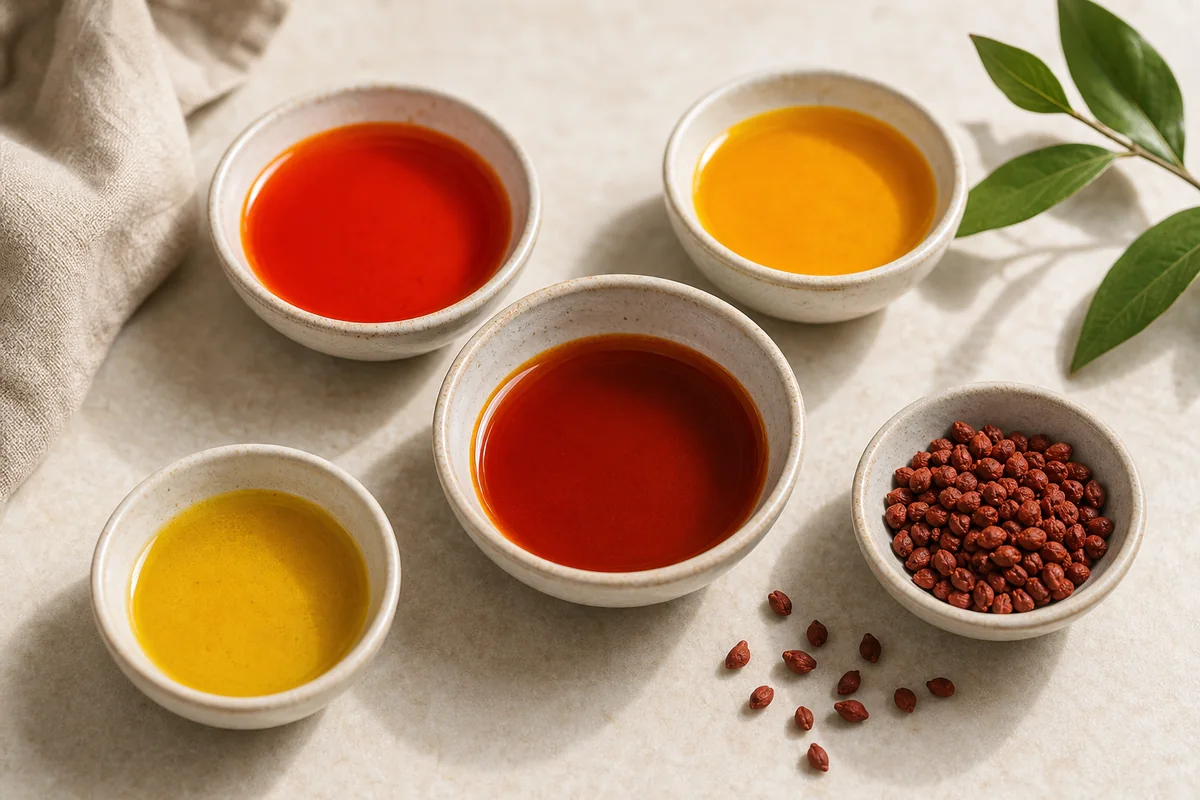
5 Best Annatto Oil Substitutes (Easy Swaps)
Ingredients
Equipment
Method
- Decide what matters most: closest color, closest mild flavor, or no-fuss convenience.
- Use the ratio from the list: for color-first swaps, start slightly low so you can adjust without over-darkening.
- Stir the substitute into your warm base (or whisk into a marinade) so the color disperses evenly.
- Taste after 1-2 minutes of simmer (if cooking) or after resting for 5 minutes (if no-cook), then fine-tune with a tiny amount more.
- If the swap tastes bitter or too smoky, dilute with a neutral oil or water/broth to bring flavors back into balance.
Notes
- Annatto oil contributes both orange color and mild nutty warmth-your swap should match both as closely as possible.
- For seeds-based substitutes, low heat prevents bitterness and keeps the orange tone clean.
Tried this recipe?
Let us know how it was!
Carrie is a food writer and editor with more than 15 years of experience. She has worked for some of the biggest names in the food industry, including Bon Appétit, Food & Wine, and Martha Stewart Living.
As the Editor in Chief of EpicureDelight, Carrie oversees all of the content on the site. She also manages the team of contributing writers and editors, who help to create delicious recipes, helpful tips, and informative articles that you’ll find on the site.
A native of the Chicago area, Carrie is passionate about all things food. She loves trying new restaurants and experimenting with new recipes in her kitchen. She’s also a graduate of the Culinary Institute of America, so she knows a thing or two about food!



