
Saffron is the spice that makes a recipe specific. That golden thread in paella, the almost floral warmth in a Persian rice dish - no single substitute perfectly replaces all of it at once.
But the right saffron substitute does exist for your situation, once you decide what the recipe actually needs most: color, aroma, or a workable balance of both.
Most swaps fail because cooks use too much, too fast. Bloom any powdered substitute in 2-3 tablespoon of warm water or warm milk before adding it.
That step alone closes most of the gap.
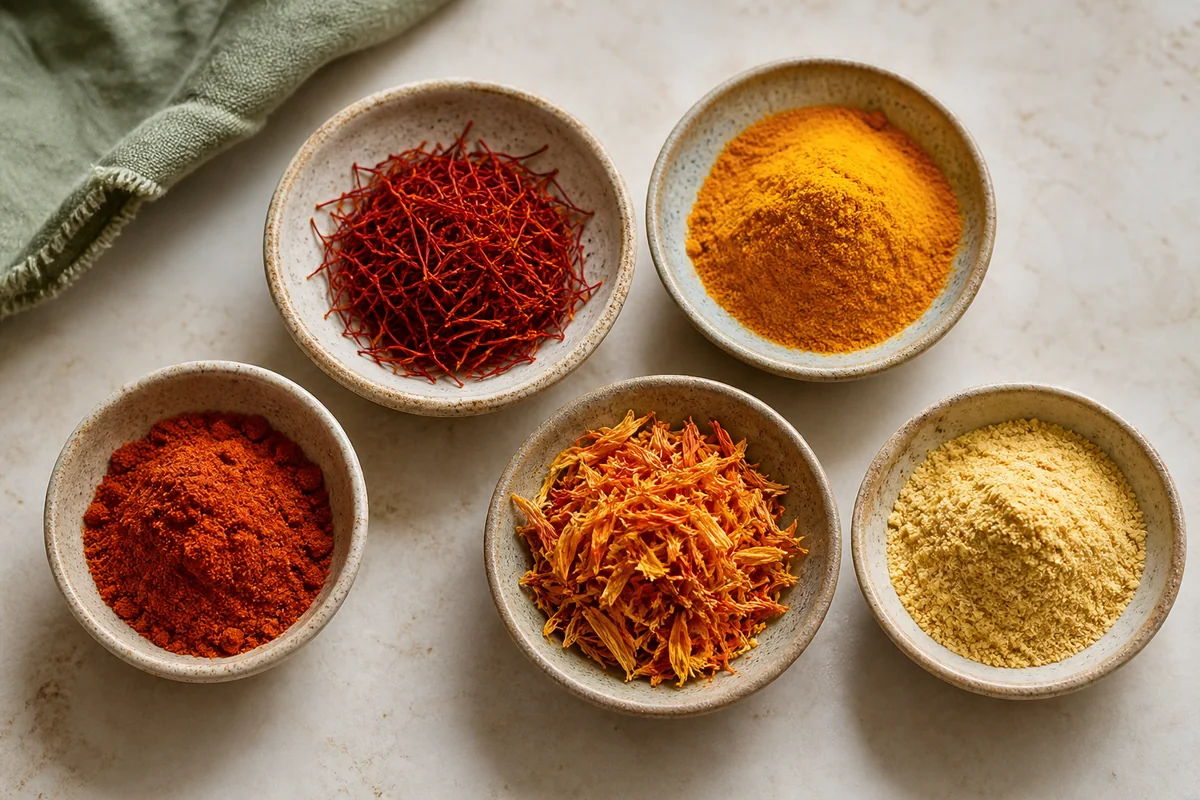
The best saffron replacement depends on your goal. Turmeric wins for color and is easiest to find. Safflower threads give a visual tint without flavor drift. Annatto delivers intense golden color fast. Ginger + orange zest helps in baking. Mild curry powder is the emergency fallback - use very little.
5 Best Saffron Substitute Options Ranked for Baking and Cooking
These five options cover most recipes calling for saffron, whether the dish is a savory rice or a delicate dessert. Turmeric and safflower handle color-first jobs well.
Annatto is the strongest pigment of the group. Ginger with orange zest fills the aroma gap in baking.
Mild curry powder is strictly a last resort - it works, but it takes over quickly if you're not careful.
Blooming powdered substitutes in warm liquid for 5-10 minutes distributes tint more evenly and cuts down on clumping. If you're working with a sauce or batter, that small step is worth the extra wait.
For recipes where liquid swaps are already in play, bloom your saffron substitute in the replacement liquid rather than plain water.
| # | Substitute | Best For | Ratio | Key Note |
|---|---|---|---|---|
| 1 | Turmeric (fine powder) | Both | ¾:1 | Bloom; earthy not floral |
| 2 | Safflower threads | Both | 1:1 | Color yes, aroma no |
| 3 | Annatto (achiote) | Both | ½:1 | Strong pigment, mild smoky |
| 4 | Ginger + orange zest | Baking | 1:1 | Aroma only, no color |
| 5 | Mild curry powder | Both | ¼:1 | Use sparingly or it dominates |
1. Turmeric
Turmeric is the go-to saffron substitute in cooking when color is the main goal. It blooms into a clear, bright yellow and is easy to measure.
The downside is flavor: turmeric reads earthy and mildly bitter, not floral, so it won't replicate saffron's signature aroma.
- Best for: Paella, risotto, rice pilafs, savory braises, and yellow-tinted breads
- How to bloom: Stir ¾ teaspoon into 2-3 tablespoon warm water or warm milk; wait 5-10 minutes before adding to the pot
- Flavor adjustment: Reduce other earthy spices (cumin, coriander) by about 25% so turmeric doesn't push the dish too far in one direction
- Color payoff: Strong and even - one of the best color results of any substitute here
Skip if your recipe depends on saffron's delicate floral note. Turmeric won't supply that, and in a recipe built around subtle aromatics - like a saffron milk cake - the earthy edge will be noticeable. For those dishes, the warming spice alternatives in section 4 serve better.
2. Safflower Threads
Safflower looks like saffron. The threads are thin and orange-red, and they bloom into a yellow-gold liquid that's nearly indistinguishable from saffron-tinted broth in a rice dish.
The similarity ends at aroma - safflower is nearly neutral in flavor, which is either a plus or a limitation depending on the recipe.
- Best for: Paella, Persian-style rice, risotto, any dish where golden color is the priority
- Bloom method: Steep threads in 2-3 tablespoon warm water for 5-10 minutes, then add the full liquid to your dish during the cooking stage
- Bitterness note: High-heat blooming can pull slight bitterness; keep the water just warm, not simmering
- In savory rice: Add the bloomed safflower liquid when you add your cooking broth so the tint distributes before the rice absorbs liquid
Skip if the recipe is saffron-forward in aroma, like a saffron-cardamom custard or a heavily spiced Persian stew. Safflower won't fill that fragrant role.
3. Annatto (Achiote)
Annatto gives the most aggressive color payoff of any substitute here. A small amount goes far - use half as much annatto as you would saffron.
The pigment is deeply orange-yellow and holds well through cooking. Flavor-wise, it has a mild earthiness with a very faint peppery note, not the floral warmth of saffron.
Annatto vs. Saffron
Works for: Dishes needing intense golden color - sauces, batters, braised meats, arroz con pollo
Skip if: The recipe is a delicate dessert or light custard where smoky-earthy notes will stand out against sweet flavors
- Bloom method: Stir ½ teaspoon annatto powder into 2 tablespoon warm water, or melt a small pinch into 1 tablespoon warm butter before adding to the pan
- Fat-bloom option: Blooming in butter or oil intensifies color distribution and works well for rice dishes and pan sauces
- Flavor balance: If the dish starts tasting smoky, reduce annatto by 25% and add a small squeeze of lemon to brighten
If you're exploring warm spice blends for other dishes, annatto pairs well there too, though it's purely a color driver in those contexts.
4. Ginger + Orange Zest
This combo targets aroma, not color. It won't make your dish yellow.
What it does is recreate something close to saffron's warm, slightly citrusy fragrance - especially in baked goods like saffron buns, sweet breads, or spiced cookies.
Use equal parts ground ginger and fresh orange zest as your total "booster blend," starting at a 1:1 ratio to the saffron the recipe calls for. If your recipe is ginger-sensitive (like a mild rice pudding), cut that in half and taste before adding more.
The fresh vs. dried zest difference matters here: fresh zest carries more essential oil and gives a brighter result, so use it when you can.
Add the blend into your wet ingredients or into the warm bloomed liquid so the zest oils disperse before baking. Stirring it into dry flour tends to concentrate the flavor unevenly. Skip if your recipe needs yellow color - this swap is aroma-only, and it won't tint anything.
5. Mild Curry Powder
Mild curry powder is the emergency pick - the one you reach for when nothing else is available. It has turmeric in it, so it does deliver some yellow color.
The problem is that curry powder also carries cumin, coriander, and other spices that assert their own flavor immediately.
- Start amount: Use ¼ teaspoon mild curry powder per 1 teaspoon saffron - no more to start
- Bloom method: Stir into 2 tablespoon warm water or broth for 3-5 minutes to form a slurry before mixing in
- If it tastes too curry-like: Add a small pinch of sugar and a squeeze of lemon to offset the spice identity, then taste again before adjusting further
- Avoid hot curry powder: Even a small amount of hot variety overwhelms most saffron recipes
Skip if your dish is specifically saffron-flavored - a Persian rice or a saffron-infused custard will taste wrong with curry powder underneath it. For baking, check whether vanilla-based aromatic options fit better before defaulting to this one.
Making a Saffron Substitute Taste (and Look) Right
The workflow is straightforward. Decide first whether your recipe needs color, aroma, or both - that choice determines which substitute you reach for.
Then bloom it. Stir your chosen substitute into 2-3 tablespoon of warm liquid (water, milk, or broth) and let it sit for 5-10 minutes before it goes into the dish.
When you factor in how fragrant ingredients age in storage, fresher substitutes bloom more vividly and need less adjustment.
- Adjust in small steps: Add 25% more if color or aroma is weak; never double the amount in one go
- Layer if needed: Combine a color substitute (turmeric) with an aroma note (pinch of ginger) for dishes that need both dimensions
- Taste before the final simmer: Most substitute flavors intensify as the dish cooks down, so check early and pull back if needed
Frequently Asked Questions
Turmeric starts at ¾:1, safflower threads use 1:1, and annatto uses ½:1. Curry powder needs the smallest amount - ¼:1 - because it carries strong competing flavors.
Yes - bloom powdered substitutes in warm liquid for 5-10 minutes before adding them. This step distributes color evenly and prevents clumping in the finished dish.
Annatto gives the strongest golden pigment, followed closely by turmeric. Both work well in rice dishes and sauces when bloomed first in warm water or fat.
Ground ginger plus fresh orange zest is the closest aroma match for saffron baked goods. It won't add color, but it recreates the warm, slightly citrusy fragrance saffron brings to sweet breads.
Avoid curry powder in any recipe where saffron's delicate flavor is the centerpiece. Even a small excess amount shifts the dish toward curry territory with no easy fix.
5 Best Saffron Substitutes (Honest Picks)
Ingredients
Equipment
Method
- Decide what you’re missing: saffron aroma (blooming) or saffron color (yellow payoff).
- Choose the substitute closest to your goal and use the ratio above as your starting point.
- Bloom your substitute: stir it into 2–3 tablespoon warm water (or warm milk/broth) for 5–10 minutes, then add to your recipe.
- Adjust intensity in small steps: if the dish tastes off, reduce by 25–50% next time; if color is weak, add a tiny pinch.
- For baked goods, mix the bloomed substitute into the wet ingredients so the color and aroma distribute evenly.
Notes
- Color-focused substitutes (turmeric/annatto/safflower) can overpower—start small and bloom first.
- Aroma-focused substitutes are harder to match—your best bet is blooming plus careful adjustment.
Tried this recipe?
Let us know how it was!
Carrie is a food writer and editor with more than 15 years of experience. She has worked for some of the biggest names in the food industry, including Bon Appétit, Food & Wine, and Martha Stewart Living.
As the Editor in Chief of EpicureDelight, Carrie oversees all of the content on the site. She also manages the team of contributing writers and editors, who help to create delicious recipes, helpful tips, and informative articles that you’ll find on the site.
A native of the Chicago area, Carrie is passionate about all things food. She loves trying new restaurants and experimenting with new recipes in her kitchen. She’s also a graduate of the Culinary Institute of America, so she knows a thing or two about food!



