
Aperol sits in a sweet spot most liqueurs don't: bitter enough to feel like a real aperitif, yet bright and orange-forward enough that almost anyone will drink it.
When the bottle runs out mid-party, or a recipe calls for a splash you don't have, the right aperol substitute depends less on what's in your cabinet and more on what flavor you're trying to keep.
Pick toward bitterness if your recipe leans savory or the drink needs backbone. Pick toward orange brightness if you're building a spritz and want that easy, sunny finish.
Understanding how orange bitters and angostura bitters taste can help you rebuild Aperol's two-part character when you're working from scratch.
The best Aperol substitute depends on your flavor goal. Want more bitterness? Go Campari or Cynar. Need orange-forward brightness? Red vermouth with orange bitters or Cointreau works. Keeping it alcohol-free? Orange juice with zest and a pinch of salt gets you surprisingly close. Match the goal, then adjust sweetness.
Aperol Substitute: Quick Swaps That Still Taste Like a Spritz
The table below maps each substitute to its best application, its dominant flavor angle, and one adjustment you'll likely need to make. Use it to pick before you read the detail sections.
Looking for best orange juice alternatives can also help if you're rebuilding the citrus layer from scratch without any liqueur on hand.
| # | Substitute | Best For | Ratio | Key Note |
|---|---|---|---|---|
| 1 | Campari + orange sweetener | Both | 1:1 | Dilute, then sweeten |
| 2 | Red vermouth + orange bitters | Both | 1:1 | Add 1-2 dashes bitters |
| 3 | Cynar + orange soda | Both | 1:1 | Brighten with soda |
| 4 | Chinotto + orange liqueur | Cocktails | 1:1 | Drinks only, not baking |
| 5 | Orange liqueur + bitters | Both | ¾:1 | Rebuild bitterness with dashes |
5 Aperol Substitutes That Still Taste Like a Spritz
1. Campari + Orange Sweetener
Campari is the most structurally similar bitter liqueur you're likely to already own. It has the same Italian amaro roots as Aperol and an overlapping orange note, but the bitterness hits harder and the color runs darker red. The fix is dilution: cut your Campari measure with equal parts soda water, then add a small splash of fresh orange juice or a half-teaspoon of simple syrup to ease the edge.
For more ideas on working around this swap, the campari substitutes page covers cases where even Campari isn't available.
Campari + Orange Sweetener
Works for: spritz, Negroni riffs, cooking glazes, any recipe needing bitter backbone
Skip if: you want a lighter bitterness-Campari will always feel sharper than Aperol, even diluted
- Ratio: 1:1 with Aperol, but immediately dilute with an equal splash of soda or water
- Sweetener adjustment: Add 1 teaspoon orange juice or a small pour of simple syrup per 1 oz Campari
- For cooking: Use straight (no dilution), but reduce the measure by about 20% since Campari's bitterness concentrates when heated
2. Red Vermouth + Orange Bitters
Sweet vermouth brings a wine-based sweetness and herbal complexity that sits closer to Aperol's gentle body than most spirit-based swaps. On its own it lacks the orange punch, which is where orange bitters come in.
Two dashes per serving closes most of that gap.
- Ratio: 1:1 for Aperol in a spritz
- Bitters amount: Start with 2 dashes orange bitters per 1.5 oz vermouth; go to 3 if the drink still tastes too sweet
- For cooking: Works well in pan sauces and glazes-add late so the wine notes stay bright
- Skip if: wine-forward flavors don't belong in the recipe; vermouth reads more vinous than Aperol
3. Cynar + Orange Soda
Cynar is an artichoke-based amaro with a distinctly earthy, herbal bitterness that shares Aperol's low-to-medium sweetness level but swings away from orange and toward dark herbs. The workaround is orange soda, which pulls the flavor back toward citrus-bright without adding more alcohol.
For a spritz, use equal parts Cynar and orange soda before you even add the Prosecco.
For a deeper look at replacing Cynar in other drinks, that guide covers the full amaro family.
- Spritz build: 1 oz Cynar + 1 oz orange soda, then top with 3 oz Prosecco and ice
- Cooking glaze: Use Cynar straight at a 1:1 ratio; add a strip of orange zest during the simmer to restore citrus lift
- Brightness tip: A small splash of fresh orange juice works better than bottled for aroma
- Skip if: you need an unmistakably orange profile-Cynar will always read more herbal than fruity
4. Chinotto + Orange Liqueur
Chinotto is a bitter Italian soda made from myrtle-leaved orange, so the bitterness is genuine and the citrus underpinning is already there. What it lacks is alcohol and a bit of the bright orange sweetness Aperol carries. A small measure of Cointreau or Triple Sec fixes both gaps at once.
Chinotto Only
Works for: quick spritz base when you want bitter fizz without building a drink from scratch
Skip if: you need an alcoholic substitute or you're baking-chinotto doesn't hold up under heat
- Ratio: 3 oz chinotto + 0.5 oz orange liqueur as the Aperol stand-in before adding Prosecco
- Orange liqueur amount: Keep it small-0.5 oz is usually enough; more and it tips sweet
- Best use: Drinks only; skip for glazes or sauces since the soda base goes flat in a pan
- Skip if: you want something you can bake with or simmer in a sauce
5. Orange Liqueur + Bitters
When Cointreau or Triple Sec is all you have, you can rebuild Aperol's bitterness with a few well-placed dashes. Orange liqueur covers the citrus brightness; bitters add the bitter structure Aperol carries.
The result won't be identical, but in a spritz with good Prosecco and an orange slice, it comes close.
If you're not sure which bitters to reach for, swapping orange bitters for other types changes the flavor direction significantly, so it's worth a quick read.
- Ratio: Use ¾ the amount of orange liqueur vs the Aperol your recipe calls for (it's sweeter and stronger)
- Bitters to use: Orange bitters keeps it citrus-forward; Angostura adds spice and depth
- Bitterness control: Add dashes one at a time-you can always increase, but you can't remove bitterness once it's in
- Skip if: you only have sweet orange syrup with no bitters-the result will be too sugary to work as Aperol
Making an Aperol Substitute Work (Spritz + Cooking Rules)
Every substitute above has one thing in common: the balance between bitterness and sweetness is what you're really managing, not just the ingredient swap. Taste the base before you build.
That's the single habit that prevents a lopsided drink or an over-bittered sauce.
- Balance first: If the substitute tastes sharp on its own, add a small amount of simple syrup or orange juice before you build the full drink-don't wait to correct it after you've poured Prosecco.
- Dilution for cocktails: Ice and soda will mellow bitterness as you drink, so build slightly sharper than you think you want; the drink will soften in the glass over 3-4 minutes.
- Cooking rule: Add your substitute in the last few minutes of cooking; long simmering concentrates bitter compounds and can flatten the orange top-notes you're relying on for the Aperol character.
Frequently Asked Questions
Red vermouth with 2 dashes orange bitters is the closest single swap. It matches Aperol's sweet-bitter balance without the harshness of Campari.
Yes, but dilute it first. Mix Campari with equal parts soda water, then add a small splash of orange juice to soften the sharper bitterness.
Cointreau or Triple Sec works at a ¾:1 ratio. Add 3-4 dashes of orange bitters to rebuild the bitter structure Aperol provides.
Add your substitute in the final 2-3 minutes of cooking. Long heat concentrates bitterness; adding it late keeps the orange brightness intact.
Fresh orange juice with orange zest, a sweet-sour syrup, and a pinch of salt comes closest. The salt mimics Aperol's savory bitterness better than extra sugar.
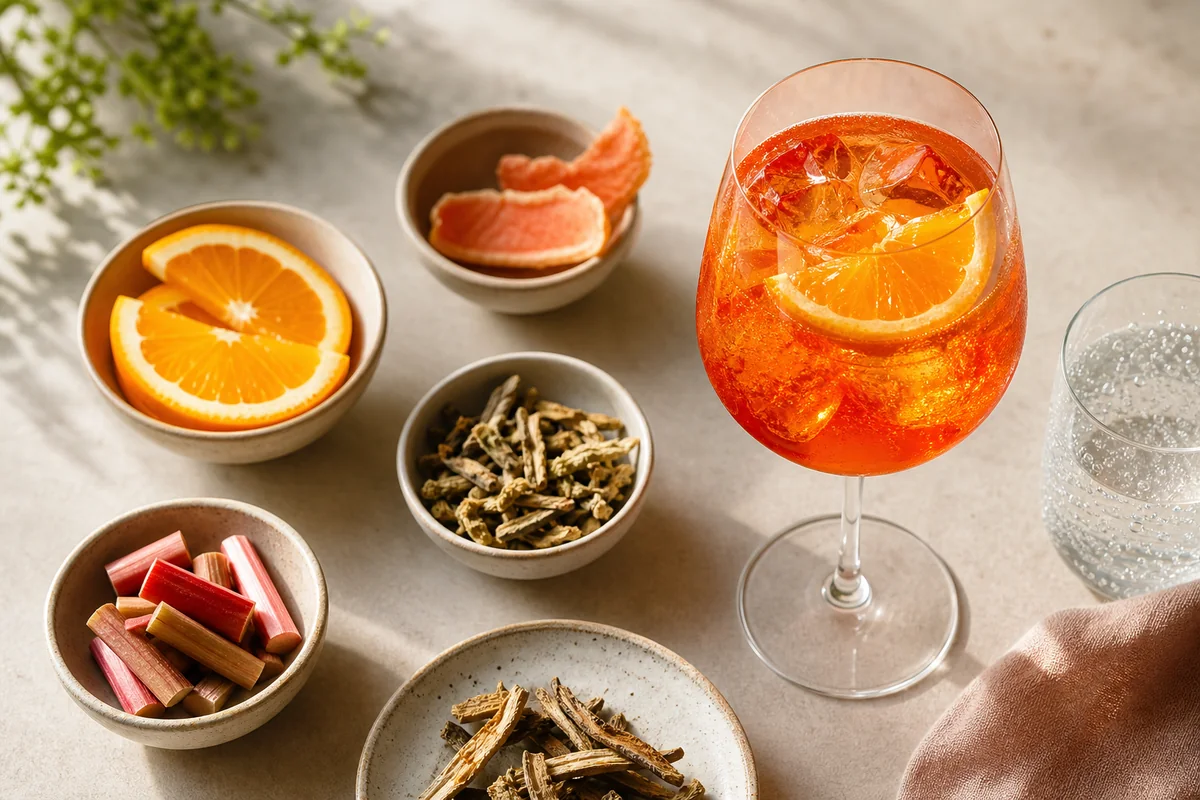
5 Best Aperol Substitutes (Quick Swaps)
Ingredients
Equipment
Method
- Start with the closest flavor goal: more bitterness (Campari/Cynar) or more orange-bright sweetness (red vermouth/orange liqueur).
- Use the listed ratio in place of Aperol; if the substitute is darker or sharper, dilute slightly (water/soda) instead of adding more sweetener.
- For cocktails, taste the liquid base before building the spritz; adjust with a small splash of orange juice or simple syrup to match Aperol's gentle sweetness.
- For cooking, stir the substitute in during the final minutes so the bitterness and orange notes stay lively.
- If your result tastes flat, add acidity (a few drops citrus or a tiny pinch of salt) rather than more sugar.
Notes
- Aperol is best replaced by pairing orange sweetness with gentle bitterness-rarely "just one bottle" nails it.
- Dark, intense amari usually need brightening (orange soda/juice) to avoid an overly heavy drink.
Tried this recipe?
Let us know how it was!
Carrie is a food writer and editor with more than 15 years of experience. She has worked for some of the biggest names in the food industry, including Bon Appétit, Food & Wine, and Martha Stewart Living.
As the Editor in Chief of EpicureDelight, Carrie oversees all of the content on the site. She also manages the team of contributing writers and editors, who help to create delicious recipes, helpful tips, and informative articles that you’ll find on the site.
A native of the Chicago area, Carrie is passionate about all things food. She loves trying new restaurants and experimenting with new recipes in her kitchen. She’s also a graduate of the Culinary Institute of America, so she knows a thing or two about food!



