
That sharp, washed-rind bite of Appenzeller cheese is hard to fake - it's tangy, nutty, and melts with a satisfying smoothness that makes gratins and toasted sandwiches genuinely hard to stop eating.
Finding a good appenzeller cheese substitute means matching two things at once: that distinct flavor punch and the reliable melt behavior you count on in hot dishes.
The good news is several aged and semi-firm cheeses come close enough that most recipes won't notice the swap. A few need a small acidity adjustment, but the ratio stays 1:1 by weight in nearly every case.
Gruyère is the closest overall swap for Appenzeller - nutty, savory, and melts cleanly in hot dishes. Comté adds fruity depth and browns beautifully in gratins. For pure melt, reach for Raclette. Milder picks like Emmental or Butterkäse need a small tang boost to match Appenzeller's edge.
5 Best Appenzeller Cheese Substitutes (Quick Reference)
Each swap below is rated on two axes: flavor intensity (how closely it mirrors Appenzeller's tangy, nutty character) and melt behavior (how it handles heat).
The table uses a badge system - "Both" means the swap handles cooked and uncooked applications reasonably well, while specific badges call out where it shines or falls short.
If you want to understand the full appenzeller cheese taste before picking your swap, that helps narrow which column matters most for your dish. For broader Swiss-style swaps, our guide on swiss cheese substitutes covers the wider family.
| # | Substitute | Best For | Ratio | Key Note |
|---|---|---|---|---|
| 1 | Gruyère | ★ Both | 1:1 | Nutty, savory, melts clean |
| 2 | Comté | Cooked | 1:1 | Fruity-nutty, great browning |
| 3 | Raclette | Cooked | 1:1 | Stretchy melt, mild tang |
| 4 | Emmental | ★ Both | 1:1 | Mild; add tang booster |
| 5 | Butterkäse | Cooked | 1:1 | Buttery melt, softer flavor |
1. Gruyère
Gruyère is the most reliable stand-in for Appenzeller in almost any recipe that uses heat. Its flavor is nutty and savory with a depth that fills the gap well - you lose a little of Appenzeller's washed-rind tang, but the overall character stays close enough that most eaters won't flag the difference. Grated Gruyère melts evenly and browns cleanly under a broiler, which makes it a natural fit for gratins, fondue-style sauces, and toasted open-face sandwiches. If you're curious how gruyere cheese behaves across recipes, its consistency under heat is one of its strongest traits.
- Ratio: 1:1 by weight; grate rather than slice for fastest, most even melt
- Tang gap: Add a few drops of white wine vinegar or a pinch of mustard powder to cooked sauces if the dish feels flat
- Best uses: Gratins, quiche, fondue, toasted sandwiches, burger melts
- Avoid: Don't over-melt it - sustained low heat makes it grainy, so finish on high heat briefly
Gruyère as Appenzeller Swap
Works for: gratins, fondue, quiche, hot sandwiches - any dish where nutty savoriness and clean melt matter most
Skip if: the washed-rind tang is the centerpiece flavor and you don't want to add a booster
2. Comté
Comté is the swap to reach for when the dish relies on baked or broiled top-color and complex flavor under heat. Its fruity-nutty profile sits a half-step more complex than Gruyère, with a slightly sweet finish that makes it exceptional in gratins and roasted vegetable dishes where Appenzeller would normally shine.
If you ever find yourself needing to go the other direction, our guide on replacing Comté cheese runs through the same logic in reverse. Understanding the flavor of Comté cheese makes it easier to judge how much acidity adjustment, if any, your recipe needs.
- Ratio: 1:1 by weight; grate for sauces, slice thin for layered gratins
- Browning: Comté develops a deeper, more golden crust than most Swiss-style cheeses - ideal for finishing under the broiler
- Tang gap: Add a small squeeze of lemon juice to cheese sauces if the dish tastes too sweet-forward
- Best uses: Potato gratin, onion soup, pasta bake, roasted cauliflower dishes
Skip if: you need Appenzeller's tangy punch in a room-temperature application - Comté's sweetness reads differently when it's cold.
3. Raclette
When the priority is stretchy, creamy melt rather than flavor identity, Raclette is the right call. It is a washed-rind cheese like Appenzeller, so it shares some of the same savory character, but the tang is noticeably softer and the melt is faster and more elastic.
That makes it ideal for any dish where you want the cheese to flow and pull rather than stay in place - think pan-melted over potatoes, layered into a croque monsieur, or draped over roasted vegetables. For a deeper look at how raclette behaves under heat, that profile explains why it outperforms most Swiss-style options on pure melt quality.
If you run out of Raclette itself, the raclette cheese swaps guide is a useful next stop.
- Ratio: 1:1 by weight; slice thin for fastest melt, or grate for sauces
- Flavor gap: Add a small pinch of mustard powder or a splash of dry white wine to cooked sauces to boost savory depth
- Best uses: Melted over potatoes, croque monsieur, fondue blends, panini
- Avoid: Cold cheese boards - Raclette's flavor is better warm than at room temperature
Skip if: you want the nutty-tang flavor identity in a cold dish or a charcuterie spread.
4. Emmental
Emmental is the safest texture swap for Appenzeller - it grates and melts almost identically, holds together in layered dishes, and is easy to find anywhere. The catch is flavor: Emmental is noticeably milder, with a soft nuttiness and very little of Appenzeller's tang. For a related option in the broader Swiss-style family, gruyere cheese alternatives can fill in when both Appenzeller and Emmental are unavailable. On its own, Emmental works well when the cheese is one ingredient among many, but it needs a small adjustment when it has to carry the dish.
- Ratio: 1:1 by weight; grate for even distribution in baked dishes
- Tang fix: Stir in ½ teaspoon mustard powder or 1 teaspoon white wine vinegar per cup of grated cheese in cooked applications
- Best uses: Quiche, lasagna, toasted sandwiches, croque madame
| Use | Ratio | Notes |
|---|---|---|
| Gratin or sauce | 1:1 | Emmental + ½ teaspoon mustard powder per cup |
| Cold application | 1:1 | Acceptable texture; flavor will taste milder than Appenzeller |
| Fondue blend | 1:1 | Mix with a sharper cheese (e.g., aged Gruyère) to restore punch |
Skip if: you want Appenzeller's bold edge front and center without any seasoning help.
5. Butterkäse
Butterkäse is the emergency option - it melts beautifully, is easy to find at most grocery stores, and slides into grilled cheese or quick-melt recipes without protest. The flavor trade-off is real: it's buttery and mild, with almost none of Appenzeller's tang or washed-rind character. Think of it as prioritizing texture over taste. It earns its place when you need a reliable melt tonight and a trip to a specialty cheese shop isn't happening.
- Ratio: 1:1 by weight; slice for sandwiches, grate for sauces
- Flavor boost: Add mustard powder, a splash of hot sauce, or pair with something acidic (pickles, caramelized onion) to compensate for the mild profile
- Best uses: Grilled cheese, quesadillas, quick pasta bakes, burgers
- Avoid: Dishes where the cheese flavor drives the entire recipe
Butterkäse: Closest Match for Melt
Works for: grilled cheese, pan-melted applications, fast weeknight dishes where smooth melt is the main goal
Skip if: you need a pronounced tangy, washed-rind flavor - this swap needs a booster or pairing to get there
Making Appenzeller Substitutes Taste Right
The real goal when swapping out Appenzeller is to preserve two things at once: that nutty, tangy flavor punch and the smooth melt that makes it so useful in cooked dishes. Understanding the appenzeller cheese taste - specifically how sharp and assertive it is compared to milder Swiss-style options - helps you decide how much adjustment each substitute actually needs.
Most mild swaps need one targeted fix rather than a wholesale change to the recipe, and that fix is almost always a small acidity or sharpness booster added near the end of cooking.
- Grate harder cheeses first: Gruyère and Comté melt far more evenly when grated than when sliced - this alone fixes most lumpy sauce problems.
- Add tang at the end: Stir in ½ teaspoon mustard powder or 1 teaspoon white wine vinegar per cup of mild substitute cheese after the sauce comes together; adding it earlier can make the dish taste sharp rather than nuanced.
- Finish under high heat: Broil the top layer for 2-3 minutes or use a hot dry pan to develop the browned, slightly crusty surface that Appenzeller dishes are known for.
Frequently Asked Questions
Gruyère is the closest overall match - nutty, savory, and reliably melty. Comté comes in second when the dish is baked and you want complex, slightly fruity depth alongside that nuttiness.
Raclette melts most like Appenzeller - stretchy, creamy, and quick under heat. Butterkäse is a solid backup when Raclette isn't available and melt is your only priority.
Yes, at a 1:1 ratio. Emmental is milder, so stir in a pinch of mustard powder or a few drops of white wine vinegar to cooked dishes to restore some of Appenzeller's sharpness.
Stir in ½ teaspoon mustard powder or 1 teaspoon white wine vinegar per cup of melted cheese near the end of cooking. Add it too early and the sharpness turns harsh rather than tangy.
Grate harder cheeses like Gruyère and Comté for even, lump-free melting in sauces and gratins. Slices work better for sandwiches and any dish where you want a visible melt layer.
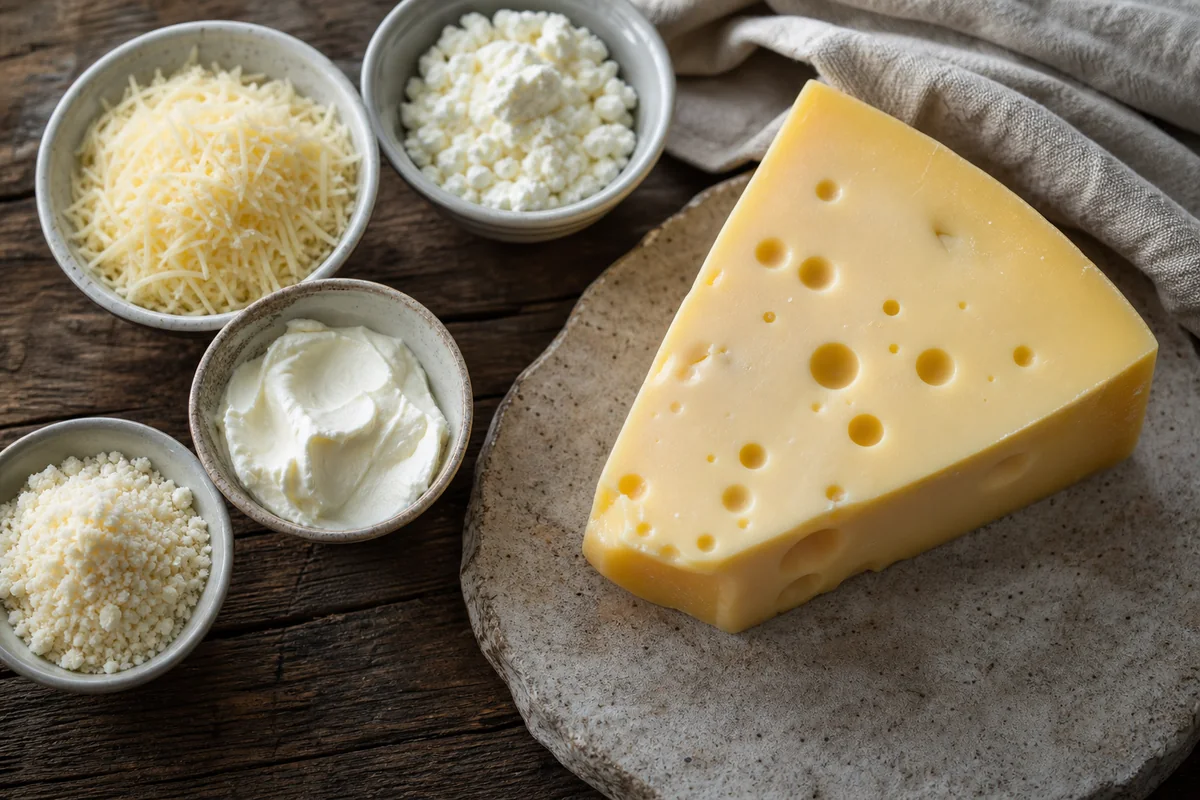
5 Best Appenzeller Cheese Substitutes for Better Results
Ingredients
Equipment
Method
- Pick your swap based on what you need most: closest taste (Gruyère/Comté) or best melt (Raclette).
- Use a 1:1 ratio by weight; grate harder cheeses first so they melt smoothly.
- If the substitute tastes too mild, add a small tang booster in the dish (mustard powder or a few drops of vinegar) rather than adding more cheese.
- For browning, cook in a hot, dry environment (broiler or hot pan) so the top layer develops flavor like Appenzeller.
- Taste near the end of cooking; Appenzeller's punch may require slight adjustment, especially in sauces or quiches.
Notes
- Appenzeller is a semi-firm, washed-rind style cheese with nutty, tangy flavor; aim for similar aging and rind character when possible.
- Melt performance improves when you use grated cheese and give it direct heat at the end (broil/hot pan).
Tried this recipe?
Let us know how it was!
Carrie is a food writer and editor with more than 15 years of experience. She has worked for some of the biggest names in the food industry, including Bon Appétit, Food & Wine, and Martha Stewart Living.
As the Editor in Chief of EpicureDelight, Carrie oversees all of the content on the site. She also manages the team of contributing writers and editors, who help to create delicious recipes, helpful tips, and informative articles that you’ll find on the site.
A native of the Chicago area, Carrie is passionate about all things food. She loves trying new restaurants and experimenting with new recipes in her kitchen. She’s also a graduate of the Culinary Institute of America, so she knows a thing or two about food!



