
Berbere is one of those blends that's hard to fake precisely because it does three things at once: it brings heat, earthy warmth, and a faint tang that lifts the whole dish. When your jar runs empty mid-stew, the right berbere spice substitute depends on which of those three jobs your recipe needs most.
Some swaps are almost seamless. Others need a bit of adjusting as the pot simmers.
The closest berbere spice substitute is an Ethiopian-style spice mix (1:1). For earthy warmth, blend garam masala + chili powder. For smoky depth, use smoked paprika + cumin + pepper. For brightness, a chili-lime blend works well. In a pinch, cayenne + cumin covers the basics.
5 Berbere Spice Substitutes Ranked by Flavor Need
This table matches each substitute to what it does best in a dish. Use it to pick by flavor function, not just by what's in your pantry.
If you're also sorting out other heat-level questions, browsing chili powder alternatives can fill in more gaps.
The ratio column assumes your substitute blend has a similar spice balance. If it runs milder or hotter, adjust in ¼-teaspoon steps.
| # | Substitute | Best For | Ratio | Key Note |
|---|---|---|---|---|
| 1 | Ethiopian-style spice mix | Both | 1:1 | Closest overall match |
| 2 | Garam masala + chili powder | Cooking | 1:1 | Earthy backbone, add heat |
| 3 | Smoked paprika + cumin + pepper | Cooking | ¾:1 | Smoky, savory depth |
| 4 | Chili-lime blend | Both | ¾:1 | Brightness over heat |
| 5 | Cayenne + cumin | Cooking | ½:1 | Emergency pantry fix |
- Go with #1 or #2 when the recipe is a slow-cooked stew and needs full aromatic depth.
- Use #3 when you want a smoky, savory tone and your stew base is tomato or onion-heavy.
- Reach for #4 when berbere's job in your dish is to provide brightness alongside heat.
- Save #5 for emergencies only. It works, but it won't replicate the full spice profile.
1. Ethiopian-Style Spice Mix
A good store-bought Ethiopian-style blend is the cleanest swap you'll find. Look for one that lists paprika or chili first, then warm spices like cumin and fenugreek in the ingredients.
That combination is what gives authentic berbere spice its layered warmth and heat.
Use it at a 1:1 ratio in stews, sauces, or dry rubs without second-guessing. Taste after the first 10 minutes of simmering and adjust from there.
- For stews: Add at the same point you'd add berbere, usually with the onion base before liquids go in.
- For rubs: Apply the same weight and rub time as you would with berbere.
- If the heat reads mild: Add a small pinch of cayenne, not more of the blend.
Skip if: Your dish is delicate. Start at ¾ of the amount and taste first.
2. Garam Masala + Chili Powder
Garam masala handles the aromatic depth. Chili powder handles the heat.
Together, they cover much of what berbere does in a stew without requiring any specialty shopping. Understanding garam masala taste helps here.
It's warmer and sweeter than berbere, so the chili powder is not optional.
Blend them in a 2:1 ratio (two parts garam masala, one part chili powder) before adding to the dish. If you're also considering swapping garam masala itself, that changes the approach.
- Starting ratio: 2 teaspoon garam masala to 1 teaspoon chili powder equals roughly 1 tablespoon berbere.
- Too flat after simmering: Add a pinch of salt first, then more chili powder if heat is still low.
- Too sweet: A small squeeze of lemon juice at the end will pull it back into balance.
- For dry rubs: Mix the two spices dry and apply as normal, then taste on a small portion first.
Skip if: You can't adjust heat mid-cook. This blend often needs more chili powder than expected.
3. Smoked Paprika + Cumin + Pepper
This combo shines in tomato-based stews, braised meat, and hearty vegetable dishes. Smoked paprika brings that roasted warmth that makes berbere feel so grounding in a long-cooked dish. Cumin adds the earthy spine, and black pepper supplies the bite.
Use this mix at ¾ of the called-for berbere amount to avoid letting the smoke run too loud. You can always add more after tasting.
Smoked Paprika + Cumin + Pepper
Works for: tomato stews, braised meat, vegetable roasts, spice rubs on beef or lamb
Skip if: your dish already has chipotle, bacon, or heavy smoked paprika in the base
- Custom mix: 1 teaspoon smoked paprika, ½ teaspoon cumin, ¼ teaspoon black pepper equals roughly 1.5 teaspoon berbere.
- Missing tang: Add a small splash of apple cider vinegar or lemon juice at the end of cooking.
- For rubs: Bloom this blend in a dry pan for 20 seconds before applying.
4. Chili-Lime Blend
Berbere has a faint lifted quality that most substitutes miss. A chili-lime approach, built from chili powder, cumin, and a small amount of lemon zest, is the one that gets closest to that brightness.
If you're working with a dish that typically uses cayenne pepper alternatives, this blend is a smarter base than straight cayenne.
Use it at ¾ of the berbere amount, then taste before adding more. The acid is easy to overdo.
- Base blend: 1 teaspoon chili powder, ½ teaspoon cumin, then ¼ teaspoon lemon zest stirred in off-heat.
- For sauces: Add the zest after removing from heat to preserve the bright note.
- For rubs: Skip the zest and use a small squeeze of lemon juice right before serving instead.
- Heat too low: Add a pinch of cayenne, but keep the zest amount the same.
Skip if: Your dish already has lots of citrus. Extra zest will push it sharp.
5. Cayenne + Cumin
When the pantry is down to basics, this pair is your fastest path to something close. Cayenne delivers heat quickly.
Cumin is what makes it feel like a spice blend rather than just pepper. Worth knowing the flavor before you reach for it: tasting cumin explains why it reads earthy and slightly bitter rather than sharp.
Start at half the berbere amount. This combination concentrates fast, especially in small-batch dishes.
- Safe starting point: ¼ teaspoon cayenne plus ½ teaspoon cumin for every 1 teaspoon of berbere called for.
- After first simmer: Taste, then add more cumin first, cayenne second, in separate pinches.
- Missing depth: A small amount of smoked paprika (¼ tsp) added here makes a real difference.
- For rubs: Increase cumin slightly and cut cayenne back to avoid burning on high-heat cooking.
Skip if: You need a complex spice aroma. This swap covers heat and earth, but not berbere's full layered character.
Making a Berbere Substitute Work
The swap is only half the job. How and when you add the substitute determines whether the dish finishes balanced or one-note.
Bloom your spice blend in a small amount of oil for 15 to 30 seconds before adding any liquid. That step alone closes much of the flavor gap between a substitute and the real thing.
For a deeper look at how the smoked element interacts with heat in a dish, it's worth a read before you finalize your blend.
- Bloom first: Heat the substitute in oil over medium for 15-30 seconds until fragrant, then build the dish around it.
- Simmer check: Taste at the halfway point and adjust heat (cayenne or chili powder) before adding salt or acid.
- Final balance: If the dish reads hot but flat, add salt first; if it reads dull overall, add a small squeeze of lemon juice off-heat.
Frequently Asked Questions
A store-bought Ethiopian-style spice mix is the closest 1:1 swap. Look for one that includes paprika, cumin, and fenugreek on the label.
Start at ¾ of the called-for amount, then add heat in small pinches after the first simmer. Adjust cayenne or chili powder separately from the main blend.
Add lemon zest or acid in the final 5 minutes of cooking, or off-heat entirely. Early acid turns bitter under prolonged heat.
Yes, but blend it with chili powder first. Garam masala alone is too sweet and lacks berbere's chili heat and earthy edge.
Reduce to ¾ of the berbere amount and taste after simmering. Smoky blends intensify with heat and can easily dominate the dish.
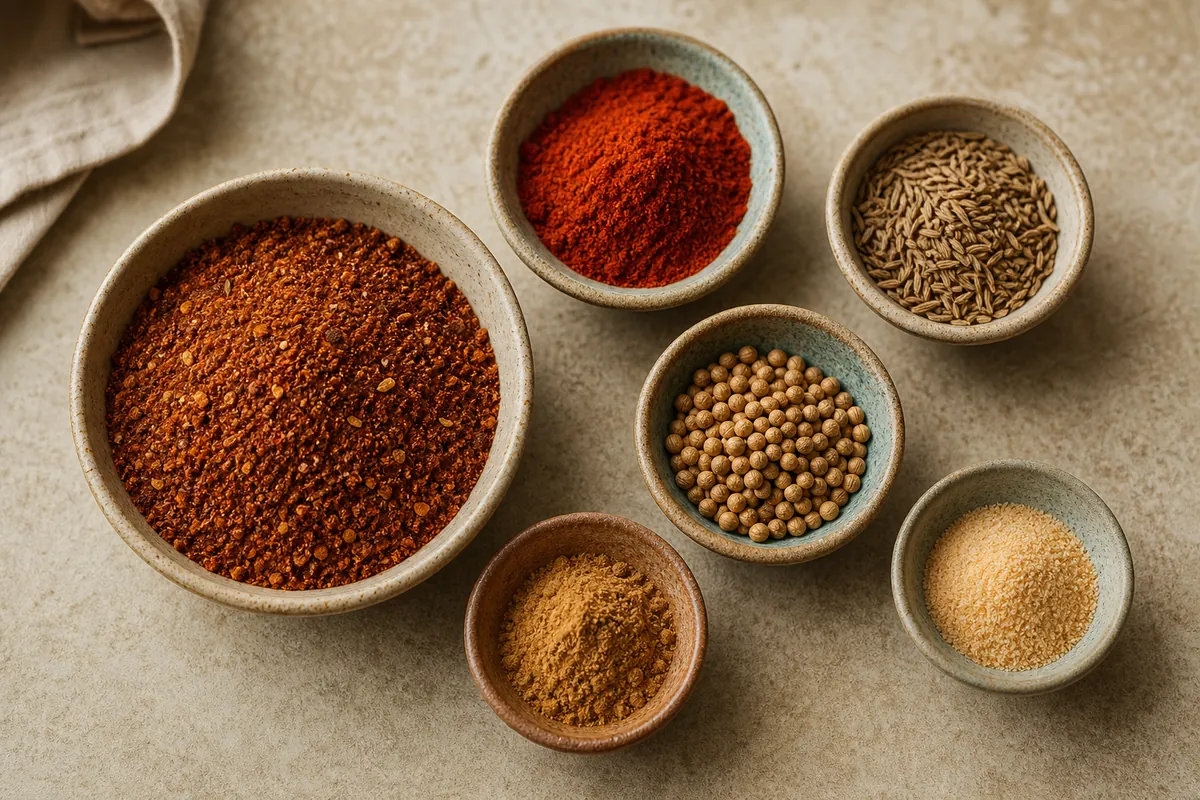
5 Best Berbere Spice Substitutes (That Actually Work)
Ingredients
Equipment
Method
- Identify what’s missing: earthy warmth (use garam masala), smoky depth (use smoked paprika), or tang (add lemon zest/acid).
- Substitute using the listed ratio; for blends, stir spices together dry before adding to the dish.
- Taste after the first simmer or stir-in, then adjust in small pinches (heat first, then salt/acid for balance).
- For rubs, bloom the substitute briefly in oil or dry-pan heat (15–30 seconds) before mixing into your marinade.
Notes
- Most berbere substitutes need heat + depth; when in doubt, prioritize cumin/paprika-like warmth first, then add tang (lemon zest or vinegar) at the end.
Tried this recipe?
Let us know how it was!
Carrie is a food writer and editor with more than 15 years of experience. She has worked for some of the biggest names in the food industry, including Bon Appétit, Food & Wine, and Martha Stewart Living.
As the Editor in Chief of EpicureDelight, Carrie oversees all of the content on the site. She also manages the team of contributing writers and editors, who help to create delicious recipes, helpful tips, and informative articles that you’ll find on the site.
A native of the Chicago area, Carrie is passionate about all things food. She loves trying new restaurants and experimenting with new recipes in her kitchen. She’s also a graduate of the Culinary Institute of America, so she knows a thing or two about food!



