
Bisquick does a lot of quiet work in one bag: flour, leavening, fat, and salt all pre-measured so you can go from pantry to griddle in minutes. When it's gone, you can still get fluffy pancakes and tender biscuits.
You just need to match those same four components in whatever you reach for next.
The bisquick substitute that works best depends on one thing: does your replacement include leavening? A swap with no baking powder will give you flat, dense results every time.
The closest overall swap is a homemade mix of all-purpose flour, baking powder, salt, and cold butter-it replicates Bisquick's structure ingredient by ingredient. For a fast shortcut, self-rising flour plus melted butter covers leavening and fat in two steps. Pancake mix works in a pinch for griddle recipes only.
Bisquick Substitute Reference Table (Closest Match by Result)
Every substitute below differs in one key area: whether fat and leavening are already built in. Check that column before you mix anything.
| # | Substitute | Best For | Ratio | Key Note |
|---|---|---|---|---|
| 1 | Homemade Bisquick-style mix | Both | 1:1 | Most accurate structure |
| 2 | Self-rising flour + butter | Both | 1:1 | Watch sodium levels |
| 3 | All-purpose flour + baking powder + oil | Baking | 1:1 | DIY leavening required |
| 4 | Pancake mix | Griddle | 1:1 | Too sweet for biscuits |
| 5 | Store-bought biscuit/baking mix | Both | 1:1 | Check label for leavening |
5 Best Bisquick Substitutes Ranked by Reliability
1. Homemade Bisquick-Style Mix
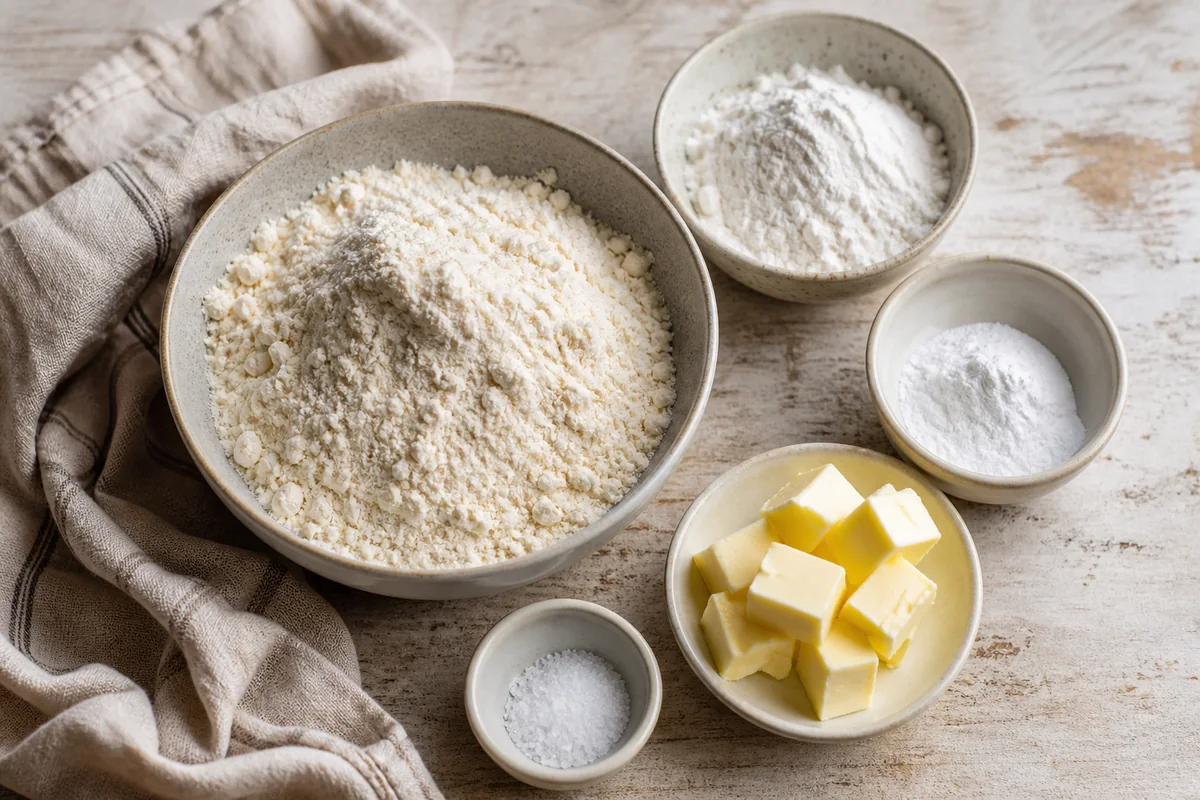
Making your own mix is the most controllable option because you decide exactly how much leavening and fat goes in. For every cup of Bisquick, combine 1 cup all-purpose flour, 1½ teaspoons baking powder, ¼ teaspoon salt, and 1 tablespoon cold butter or shortening cut in until crumbly.
This approach replicates everything Bisquick does:
- Leavening: Baking powder matches Bisquick's rise almost exactly
- Fat: Cold butter adds the tenderness that oil alone won't give you
- Salt: Measured precisely, so your result doesn't skew salty or bland
- Flour base: Standard all-purpose gives structure for biscuits and pancakes both
All-purpose flour is the default here, but a 50/50 blend with cake flour softens the crumb nicely for drop biscuits.
Skip if: You need something truly instant from a single jar. This mix takes 5 minutes to assemble, which is fast but not zero-effort.
2. Self-Rising Flour + Melted Butter
Self-rising flour already has baking powder and salt folded in, which means the leavening work is done before you open the bag. Add 1 tablespoon of melted butter per cup of flour and you've covered the fat component too.
- Pancakes: Nearly identical texture to Bisquick; batter spreads and sets cleanly
- Biscuits: Tender and light, though slightly less flaky than butter-cut versions
- Liquid adjustment: Start with 2 tablespoon less liquid than the recipe calls for, then add back as needed
Skip if: Your self-rising flour already tastes sharp or salty on its own. Also skip if you need a dairy-free result and can't swap the butter.
3. All-Purpose Flour + Baking Powder + Oil
This is the true pantry-scrape version. Combine 1 cup all-purpose flour with 1½ teaspoons baking powder, ¼ teaspoon salt, and 1 tablespoon neutral oil.
The oil replaces Bisquick's shortening and keeps the crumb from going dry and tough.
Common reasons this swap underperforms:
- Flat batter: Not enough baking powder, or the powder is expired-use 1½ teaspoon per cup minimum
- Dense crumb: Overmixing develops gluten and kills the lift before it starts
- Dry texture: Oil hydrates less than butter; add liquid 1 tablespoon at a time if batter looks tight
- Off flavor: Strong oils like olive or sesame change the taste-stick with canola or vegetable
Skip if: You're out of baking powder. Without it, this mix has no lift and won't mimic Bisquick at all.
4. Pancake Mix
Pancake mix is the fastest single-bag swap when you're making pancakes or waffles. Most brands include flour, leavening, and some fat, so the structure is close to Bisquick's.
The difference is sweetness. Pancake mixes are formulated for griddle batters, so they often carry extra sugar and sometimes vanilla.
That's fine for a stack of pancakes but wrong for a savory sausage biscuit. Use it at a 1:1 ratio and taste the dry mix before adding salt or sugar from your recipe.
Skip if: You're making cut biscuits or quick bread with a savory profile. Pancake mix will push those recipes sweeter than you want.
5. Store-Bought Biscuit or Baking Mix
A branded biscuit or baking mix is the closest commercial stand-in. The key is reading the label: it must list baking powder (not just baking soda) in the ingredients, or your results will be dense.
Baking Mix WITH Baking Powder
Works for: pancakes, waffles, drop biscuits, quick breads-direct 1:1 swap
Skip if: sodium is very high and recipe already calls for added salt
Plain Flour Blend (No Leavening)
Works for: pastry and pasta where leavening isn't needed
Skip if: you need rise-without baking powder, this produces flat, heavy bakes
- Salt check: Taste the dry mix-if it's salty, reduce added salt in the recipe by ¼ tsp
- Liquid: Some mixes are thirstier than Bisquick; start with the recipe amount and add 1 tablespoon more if the batter looks stiff
Most store-bought baking mixes use similar leavening levels to Bisquick, so the swap is usually straightforward.
Skip if: The label lists sweeteners or spices prominently and your recipe is savory.
Making a Bisquick Substitute Work (Rise, Tenderness, and Consistency)
The biggest mistake with any swap is treating it as a perfect 1:1 and never adjusting. Every substitute has a slightly different absorption rate and fat content, so the batter or dough will sometimes need a small correction.
Check your baking powder's freshness before you start-expired leavening is the single most common reason a substitute result comes out flat even when you did everything else right.
- Liquid: Add it gradually-start 2 tablespoon below the recipe amount and work up until batter ribbons off a spoon
- Leavening: Use 1½ teaspoon baking powder per cup of flour minimum; less than that and rise will be weak
- Fat: Cold butter gives flakier biscuits; melted butter or oil gives softer, more cake-like crumbs-choose based on the result you want
Frequently Asked Questions
Yes, but add 1 tablespoon of melted butter per cup to replace Bisquick's fat. Skip any extra salt the recipe calls for, since self-rising flour is already salted.
No. Adding more baking powder on top of a mix that already contains it can make baked goods taste bitter and metallic. Check the label first.
The homemade mix with cold butter cut in gives the most tender, flaky biscuits. Self-rising flour plus melted butter is the fastest alternative with similar results.
Most substitutes absorb liquid differently than Bisquick. Add liquid 1 tablespoon at a time until the batter reaches the right consistency.
Flat results almost always mean insufficient or expired leavening. Next batch, increase baking powder to 1½ teaspoons per cup of flour and verify the powder is still active.
5 Best Bisquick Substitutes (Closest Match)
Ingredients
Equipment
Method
- Choose the closest match to your goal: pancakes/waffles, biscuits, or a general quick bread.
- Measure by the ratio (use 1:1 for the substitute dry mix), then start with the recipe’s original liquid amounts.
- If the batter/dough looks too thick or crumbly, add liquid 1 tablespoon at a time; if it’s loose, add more dry mix 1–2 tablespoons.
- Bake and check rise: if the result tastes flat or doesn’t lift, the substitute likely has less leavening—go DIY with baking powder next time.
Notes
- Bisquick’s biggest job is leavening + tenderness: match both to avoid dense, chewy, or flat results.
Tried this recipe?
Let us know how it was!
Carrie is a food writer and editor with more than 15 years of experience. She has worked for some of the biggest names in the food industry, including Bon Appétit, Food & Wine, and Martha Stewart Living.
As the Editor in Chief of EpicureDelight, Carrie oversees all of the content on the site. She also manages the team of contributing writers and editors, who help to create delicious recipes, helpful tips, and informative articles that you’ll find on the site.
A native of the Chicago area, Carrie is passionate about all things food. She loves trying new restaurants and experimenting with new recipes in her kitchen. She’s also a graduate of the Culinary Institute of America, so she knows a thing or two about food!



