
If you need brie's creamy, mild flavor but don't have it on hand, the right substitute for brie cheese depends entirely on how you're using it.
Spreading it on a cracker is a very different job from baking it until gooey inside puff pastry. A few swaps handle both; most do one better than the other.
- For spreading and cheese boards: Camembert, triple-cream, or Neufchâtel work without any adjustment.
- For baking: Camembert and triple-cream melt closest to brie; cream cheese melts fast but loses the rind aroma.
- For dips and blended spreads: Mascarpone and soft goat cheese are reliable, especially if you blend briefly.
Camembert is the closest overall swap for brie - same bloomy rind, similar melt. For spreading, triple-cream or mascarpone give maximum creaminess. For baking, avoid mascarpone and plain cream cheese; they won't give you brie's gooey, aromatic center. Use a 1:1 ratio for most swaps.
7 Brie Cheese Substitutes That Match Creaminess and Melt
Not all soft cheeses behave the same way under heat or on a board. This table gives you a fast read on which swap fits your situation, so you're not guessing at the last minute.
| # | Substitute | Best For | Texture Match | Flavor Match | Ratio |
|---|---|---|---|---|---|
| 1 | Camembert | Both | High | Mild (slight edge) | 1:1 |
| 2 | Triple-Cream Brie-Style | Both | High | Mild/Buttery | 1:1 |
| 3 | Soft Ripened Goat Cheese | Spread | Medium | Tangy | 1:1 |
| 4 | Neufchâtel | Board | Medium | Mild | 1:1 |
| 5 | Cream Cheese | Spread | Medium | Tangy | ¾:1 |
| 6 | Mascarpone | Spread | High | Mild/Neutral | 1:1 |
| 7 | Boursin-Style Herb Cheese | Board | Medium | Herb-Forward | 1:1 |
If your recipe specifically needs a true bloomy rind, the only real options are other soft ripened cheeses - camembert at the top of that list.
Camembert
Camembert is the most direct brie swap you'll find, full stop. Both are soft ripened cow's milk cheeses with a bloomy white rind, and both melt into a warm, gooey pool when baked inside pastry.
The texture match is essentially identical - soft, creamy paste that spreads cleanly at room temperature. Knowing how camembert in dairy recipes behaves over time also helps you judge when it's at peak ripeness for swapping.
- Ratio: Use 1:1 with no adjustments needed.
- For baking: Swap the whole wheel directly; bake times stay the same.
- For boards: Serve at room temperature just like brie - the rind is edible.
- Flavor note: Camembert can run slightly earthier and more pungent than a young brie, especially as it ripens.
Skip if: You need a very mild, non-tangy flavor - a well-aged camembert is noticeably stronger than standard brie.
Triple-Cream Brie-Style Cheese
Triple-cream cheeses like Saint André or Brillat-Savarin are made with extra cream added to the curd, which pushes butterfat well above brie's standard level. The result is softer, richer, and even more melt-prone.
If you're making a baked appetizer and want an indulgent result, this is the swap to reach for. You can find good triple-cream options at most specialty grocery stores, and using cream cheese for creaminess as a secondary blend is worth knowing if triple-cream isn't available.
- Ratio: 1:1 - it's slightly softer, so handle cold for easier cutting.
- For baking: Melts faster than brie; check the oven 3-4 minutes early.
- For boards: Pairs beautifully with honey, fruit, and crackers - a step up from plain brie.
- Watch the richness: If your dish already includes butter-heavy pastry or cream sauce, the extra fat can feel heavy.
Skip if: Your dish already carries strong richness - the extra butterfat in triple-cream can overwhelm a sauce or delicate pastry balance.
Soft Ripened Goat Cheese
A soft, ripened goat cheese log (not the dry, crumbly kind) has a creamy interior that reads closer to brie than plain fresh chèvre does. It's still tangier, but the texture is genuinely close.
Understanding goat cheese's flavor and uses before committing to this swap is worth a minute - the acidic note is real, and it shifts a dish perceptibly.
- Ratio: 1:1, but blend briefly to smooth the texture for spreads.
- Flavor fix: Add a small pinch of salt and a teaspoon of honey to pull back the tang.
- Best use: Dips, crostini spreads, and blended sauces - the tang actually works here.
- Less ideal for: Classic baked brie texture; it won't pool the same way under pastry.
Skip if: You can't tolerate tang - this swap reads noticeably more acidic than brie in direct comparisons.
Neufchâtel
Neufchâtel is a soft cow's milk cheese with a mild, clean flavor that sits close to brie's neutral profile. It's slightly firmer and lower in fat than brie, but at room temperature it spreads with almost no resistance.
It's also widely available at standard grocery stores, which makes it a practical everyday option. If Neufchâtel itself becomes unavailable to you, there are solid replacements for neufchatel cheese worth knowing.
Neufchâtel
Works for: Cheese boards, sandwiches, and dips where brie's mild creaminess is the main goal
Skip if: You need a dramatic, gooey baked-brie center - Neufchâtel stays creamy but won't melt into the same stretchy, flowing pool
- Ratio: 1:1 with no adjustments for spreading or cold applications.
- For baking: It softens but doesn't pool; add 1-2 teaspoon cream before baking to help it loosen.
- Flavor note: Very mild and clean - no tang, no earthy rind character.
Cream Cheese
Full-fat cream cheese, softened to room temperature, is the most reliable pantry-ready brie alternative. It's denser and tangier than brie, but a quick fix gets it much closer.
For recipes that need a smooth, spreadable base, how long cream cheese keeps in the fridge is worth checking before you commit to it as your swap.
- Ratio: Use ¾ of the amount called for - cream cheese is denser and more filling.
- Reduce the tang: Blend in 1 teaspoon honey or a small splash of heavy cream to soften the acidic edge.
- For baking: It melts faster than brie and won't develop any rind aroma - the texture goes soft but not gooey-pooling.
- Best applications: Dips, blended sauces, crostini toppings, and stuffed pastry where mild creaminess matters more than rind character.
Skip if: Your recipe depends on brie's earthy, bloomy-rind flavor - cream cheese is clean and neutral, not funky.
Mascarpone
Mascarpone is silky, almost whipped in feel, with a buttery neutrality that makes it one of the best texture matches for brie in cold applications. It has essentially no tang and no rind character.
If your dish ever calls for something between brie and mascarpone and you run short of both, knowing alternatives to mascarpone keeps you covered for future swaps.
- Ratio: 1:1 at room temperature.
- Best use: Spreads, dips, whipped appetizers, and cold cheese boards where silky texture is the priority.
- For baking: It softens and becomes very loose - usable, but the result is saucy rather than gooey.
- Flavor note: Neutral and buttery; no earth, no tang - closest to brie's mildness of all the non-ripened options.
Skip if: You want brie's bloomy-rind character or a classic baked-brie center - mascarpone can't replicate either of those qualities.
Boursin-Style Herb Cheese
Boursin and similar herb-and-garlic cream cheeses are genuinely convenient substitutes - creamy, soft, and easy to spread straight from the package. The texture is close to brie at room temperature.
The flavor, though, is a different conversation. You can read more about swapping out goat cheese as a related angle when you need a swap that's still creamy but with a different flavor profile.
Boursin-Style Herb Cheese
Works for: Cheese boards, crackers, stuffed pastry bites, and any application where herb flavor complements the dish
Skip if: The dish relies on brie's clean, neutral mildness - garlic and herbs will noticeably dominate the flavor profile
- Ratio: 1:1 with no adjustments needed for texture.
- For boards: Excellent alongside fruit and honey; herb-forward flavors pair well with sweet accompaniments.
- For baking: Softens nicely in pastry; just expect the herb aroma to intensify with heat.
Making Your Brie Substitute Taste Right (and Not Go Wrong)
Getting the swap right is mostly about managing two things: moisture level and flavor balance. Most soft cheese substitutes are either wetter or denser than brie, and a small adjustment before cooking fixes most problems.
- Adjust moisture first: If your substitute is wet (goat cheese, ricotta-style blends), blot it briefly on paper towels or drain 5-10 minutes before using. If it's too firm (Neufchâtel, cream cheese), blend in 1-2 teaspoon heavy cream to loosen it to a brie-like consistency.
- Balance the flavor: A pinch of fine salt sharpens mild swaps like mascarpone. A teaspoon of honey tones down tang in cream cheese or goat cheese blends. Taste before serving - small adjustments make a big difference.
- Heat expectations: Ripened soft cheeses (camembert, triple-cream) melt in roughly the same time as brie; cream-cheese-based swaps melt faster and can turn runny. Check 3 minutes early and pull from the oven when it just begins to soften.
Frequently Asked Questions
Camembert is the closest match - same bloomy rind, same creamy texture, similar mild flavor. Serve it at room temperature just like brie; the rind is edible and the swap is nearly invisible.
Camembert or triple-cream brie-style cheese are the best options. Both melt into the same gooey center brie produces; use a 1:1 swap and check the oven 3-4 minutes early with triple-cream.
Yes, but the result won't be identical - cream cheese melts faster and lacks brie's earthy, bloomy-rind aroma. Use ¾ of the amount called for and blend in a teaspoon of cream to loosen the texture.
Blend the goat cheese briefly and stir in a teaspoon of honey or a small splash of heavy cream. This softens the acidity and brings it closer to brie's neutral, mild profile.
Most substitutes work at 1:1. The exception is cream cheese - use ¾ of the amount called for, since it's denser and richer than brie's soft, lightly whipped curd.
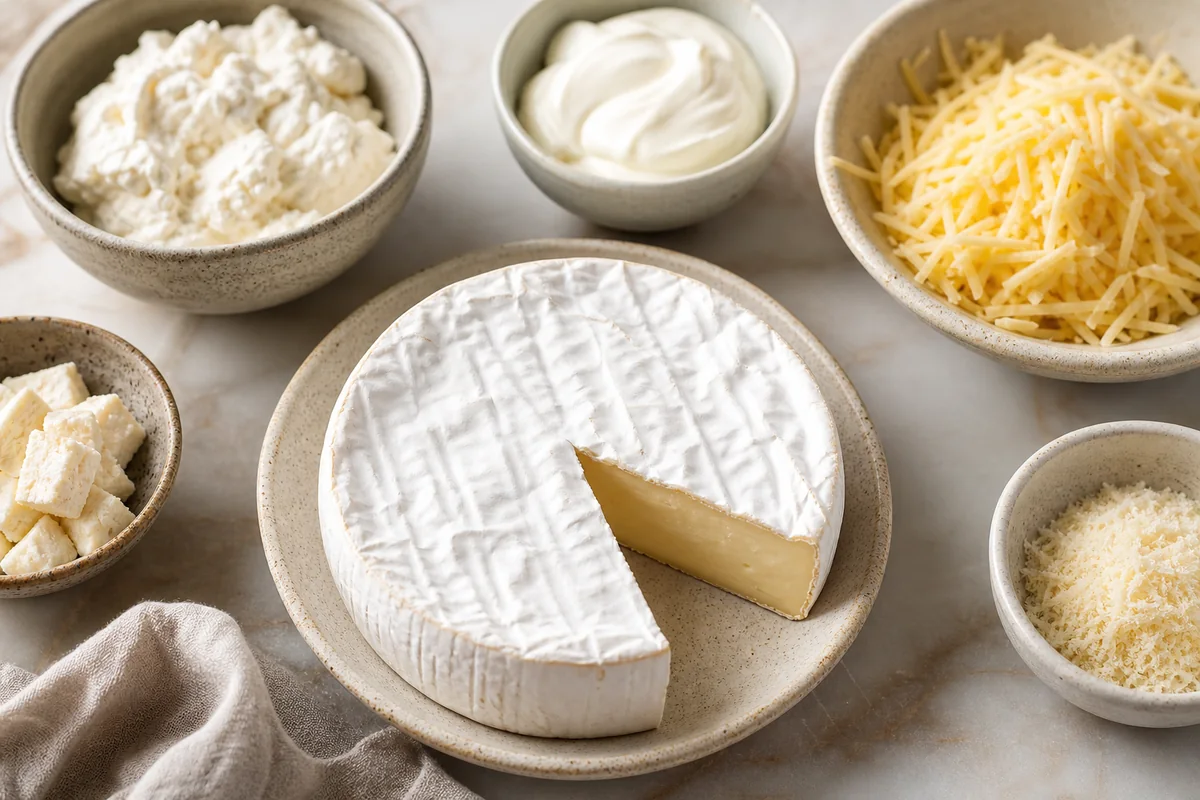
5 Best Brie Cheese Substitutes (Tested Swaps)
Ingredients
Equipment
Method
- Identify how you're using brie (spread, bake until gooey, or cheese-board pairing).
- Choose the substitute closest to that use: ripened soft cheeses for boards/baking, creamy spreads for sandwiches/dips.
- Apply the listed ratio. If the substitute is softer-wetter than brie (e.g., goat cheese), drain or blot briefly; if it's firmer, blend until spreadable.
- Taste and adjust: add a tiny pinch of salt to improve savory depth, or balance tang with a teaspoon of honey/cream if needed for dips.
- If baking, give the swap a few minutes longer only when it resists melting (cream cheeses melt fastest than ripened bloomy-rind cheeses).
Notes
- Closest results come from other soft ripened bloomy-rind cheeses.
- Mild tang differences matter most in raw applications (spreads/boards).
Tried this recipe?
Let us know how it was!
Carrie is a food writer and editor with more than 15 years of experience. She has worked for some of the biggest names in the food industry, including Bon Appétit, Food & Wine, and Martha Stewart Living.
As the Editor in Chief of EpicureDelight, Carrie oversees all of the content on the site. She also manages the team of contributing writers and editors, who help to create delicious recipes, helpful tips, and informative articles that you’ll find on the site.
A native of the Chicago area, Carrie is passionate about all things food. She loves trying new restaurants and experimenting with new recipes in her kitchen. She’s also a graduate of the Culinary Institute of America, so she knows a thing or two about food!



