
Soft, pillowy, and faintly sweet, brioche is the kind of bread that makes French toast feel indulgent and stuffing taste like something from a restaurant. That buttery enriched crumb is the reason recipes specify it by name.
When you can't find it, though, you need a swap that holds up under a custard soak, browns evenly, and stays tender after baking.
The key traits to match are moisture absorption, a slight sweetness, and a soft open crumb. Most plain white breads fall flat here.
The five substitutes below are ranked by how closely they hit all three marks, with notes on when to use them and when to skip them.
The best brioche bread substitute is challah, which matches brioche's enriched, eggy crumb almost exactly. Milk bread and egg bread are strong runners-up for softness and browning. Croissant adds extra butter flavor. Panettone works for sweet bakes with a sugar reduction.
5 Best Brioche Bread Substitutes (Ranked)
A quick scan of the table below shows how each substitute compares on richness and use case. Pick your match, then read the full section for swap adjustments.
| # | Substitute | Best For | Ratio | Key Note |
|---|---|---|---|---|
| 1 | Challah | Both | 1:1 | Closest crumb match |
| 2 | Milk Bread | Baking | 1:1 | Very soft, soaks fast |
| 3 | Egg Bread | Both | 1:1 | Watch sweetness level |
| 4 | Croissant | Baking | 1:1 | Buttery, uneven cubes |
| 5 | Panettone | Sweet Bakes | ¾:1 | Reduce added sugar |
1. Challah
Challah is the single closest swap for brioche in almost every situation. Both breads are enriched with eggs, both have a golden crust, and both absorb custard at a similar rate.
The main difference is that challah uses oil instead of butter, so the flavor is slightly less rich but the texture stays nearly identical.
For French toast and bread pudding, the swap is truly 1:1. Challah's open crumb soaks evenly without turning to mush, and it browns at the same rate as brioche in a hot pan or oven.
- Best recipes: French toast, bread pudding, stuffing, pulled-pork sandwiches
- Texture outcome: Soft, custardy interior with a golden, slightly crisp exterior
- Soak tip: Same soak time as brioche; no adjustments needed
- Cutting: Slice thick (1 to 1.5 inches) so it holds its shape in baked dishes
If you find yourself reaching for challah often, swapping away from challah follows similar logic and the same ranked approach.
Skip if: your recipe specifically depends on brioche's butter flavor-challah's oil base won't replicate that exact richness.
2. Milk Bread
Milk bread, sometimes called shokupan, is exceptionally soft. Its crumb is finer and tighter than challah's, which means it soaks quickly and holds moisture well in baked custard applications.
The slight sweetness is a natural match for brioche recipes that lean sweet.
- Best recipes: French toast, baked custard, soft sandwich rolls
- Texture outcome: Slightly denser than brioche but still very tender; less open crumb
- Soak tip: Keep soak time short for sandwiches (30 seconds per side). For baked custard, a longer soak works fine since the oven sets it before it goes soggy.
- Adjustment: If you want more browning, brush the top with a little melted butter before baking.
When planning what to serve alongside, toast pairing ideas work just as well with milk bread as with brioche.
Skip if: your recipe needs firm, cube-holding structure-milk bread is too soft to hold shape in chunky stuffing cubes.
3. Egg Bread
Egg bread is a good middle-ground option. It has a higher egg content than standard sandwich bread, which gives it a mild richness that reads close to brioche.
The crumb is slightly firmer than challah but still tender, and it browns reliably in a skillet or oven.
Brioche vs Egg Bread
Works for: custard soaks, French toast, lightly sweet sandwich applications where you need even browning and a soft bite
Skip if: the recipe is savory, or when the egg bread brand is heavily sweetened and you can't reduce other sugars
Sweetness varies noticeably by brand. Taste a slice before you bake.
If it's sweeter than expected, cut added sugar in the recipe by about 2 tablespoons.
- Best recipes: French toast, bread pudding, soft-crumb sandwiches
- Texture outcome: Slightly denser than brioche, with a good chew and even browning
- Adjustment: If the loaf feels dry, brush slices lightly with melted butter before soaking in custard
For a deeper look at how challah's flavor profile compares, eggy bread flavor notes cover the same taste territory as egg bread.
Skip if: the dish is savory and you can't control added sweetness from the bread itself.
4. Croissant
Croissant is a niche swap. It delivers more buttery flavor than any other option on this list, and that makes it genuinely excellent for certain applications.
Torn or sliced for French toast, a day-old croissant soaks custard into its layers and produces a top that is crisp and flaky while the interior stays custardy.
The problem is uniformity. Croissant layers separate and compress unevenly, so cube-based recipes like stuffing or bread pudding can end up patchy. Day-old flaky pastry actually works better here than fresh, because it's firmer and absorbs custard without collapsing immediately.
Skip if: you need even cubes for consistent baking, or if the dish is savory where butter-forward sweetness would feel out of place.
5. Panettone
Panettone is sweeter and more aromatic than brioche, with notes of citrus peel and vanilla baked in. That makes it a natural fit for holiday bread pudding, French toast casseroles, and any bake that already leans warm and sweet.
| Use | Ratio | Notes |
|---|---|---|
| French toast | 1:1 | Reduce custard sugar by 2 tbsp; pairs well with orange zest |
| Bread pudding | ¾:1 | Use slightly less panettone; cut added sugar by 25% |
| Sweet stuffing | 1:1 | Omit any added sugar entirely; balance with a pinch of salt |
The aroma can dominate lighter recipes, so pair it with complementary flavors rather than fighting it.
- Best pairings: Vanilla custard, cinnamon, citrus zest, dried cranberries
- Texture outcome: Slightly more open and airy than brioche; soaks quickly and softens fast
- Key adjustment: Always taste the bread first and reduce recipe sugar before adding any mix-ins
For a side-by-side look at panettone versus other sweet enriched loaves, the sweeter loaf comparison breaks down their differences in flavor and texture.
Skip if: your recipe is savory-panettone's citrus and vanilla will overwhelm anything that isn't already sweet.
Making Any Brioche Substitute Work
No matter which bread you pick, the swap works best when you treat the substitute as a starting point and adjust from there. Slightly stale enriched bread actually performs better than fresh in soaked or baked applications, because it absorbs custard without falling apart. If your substitute is fresh out of the bag, leave slices uncovered on a rack for an hour before using them.
- Match enrichment first: If your substitute feels drier or plainer than brioche, brush slices with melted butter before soaking to restore fat content and tenderness.
- Cut consistently: Uniform slices or cubes mean even soaking and even browning-uneven cuts lead to some pieces turning soggy while others stay dry.
- Adjust soak and bake time: Softer breads (milk bread, panettone) need shorter soak times; firmer breads (egg bread, day-old challah) can handle longer soaks. Add 3 to 5 minutes of bake time if the substitute is denser than brioche.
Frequently Asked Questions
Challah is the closest match. It soaks custard evenly, browns well, and has a tender enriched crumb that behaves almost identically to brioche in a hot skillet.
You can, but milk bread is very soft and may not hold cube shape well. Use day-old milk bread and cube it larger than usual to keep it from turning mushy.
Reduce added sugar by 25 to 33 percent. Panettone is already sweetened with citrus and vanilla, so cutting back prevents the final dish from tasting cloying.
Day-old croissant works well-it's firm enough to soak without collapsing. Fresh croissant is too delicate and may turn soggy before the custard sets.
Soak each slice for 45 to 60 seconds per side in a butter-enriched custard. Longer soaking risks sogginess since white bread has less structure than enriched loaves.
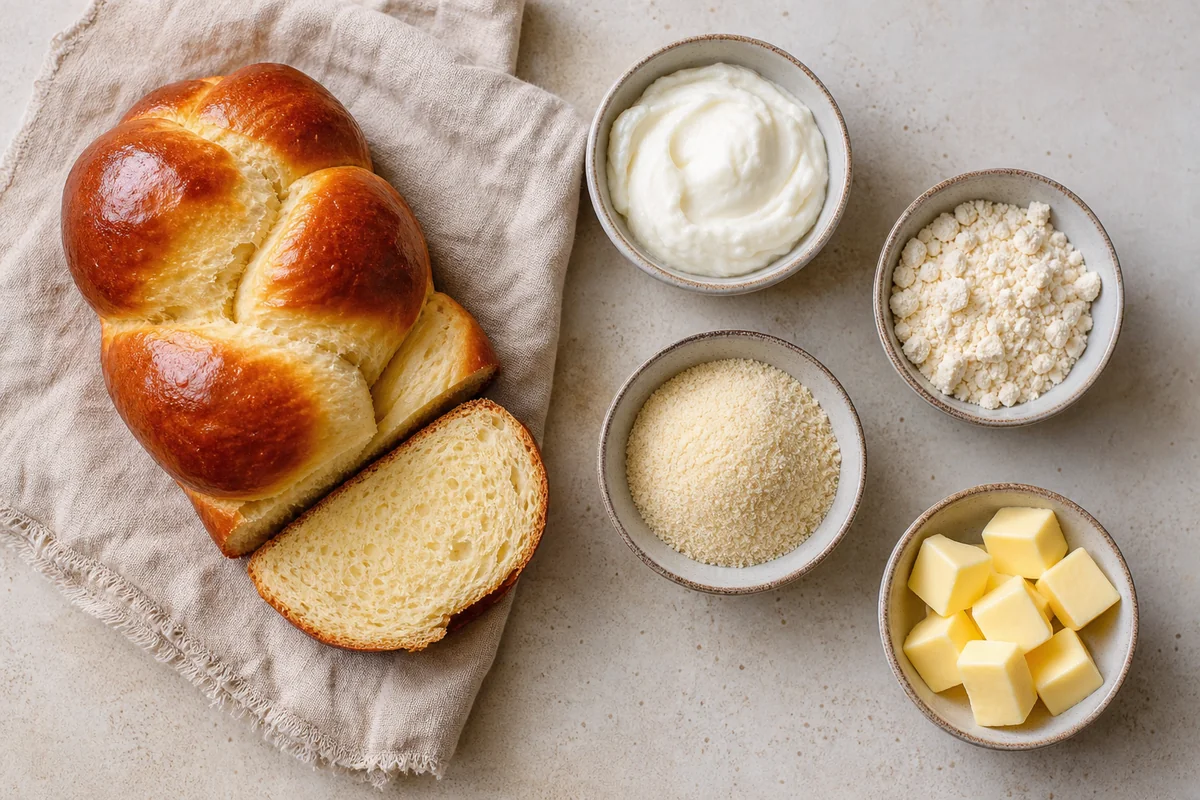
5 Best Brioche Bread Substitutes (Ranked)
Ingredients
Method
- Identify your use: toast/French toast (soak-friendly) vs stuffing/cubes (even texture) vs sandwiches (slice and spread).
- Choose the closest ranked bread: Challah for general purpose, milk bread for the softest crumb, or egg bread for similar richness.
- If the substitute is sweeter (panettone), reduce added sugar by about 25–33%; if it’s drier/denser (white sandwich bread), increase soak time.
- Cut consistently: cubes or slices of similar size so the substitute soaks and browns evenly.
- Taste and adjust after baking: add a small pinch of salt or a tiny splash of dairy to rebalance sweetness and richness.
Notes
- Brioche’s payoff comes from enrichment (butter/eggs) and soft, tender crumb—match richness first, then adjust sweetness and soak.
Tried this recipe?
Let us know how it was!
Carrie is a food writer and editor with more than 15 years of experience. She has worked for some of the biggest names in the food industry, including Bon Appétit, Food & Wine, and Martha Stewart Living.
As the Editor in Chief of EpicureDelight, Carrie oversees all of the content on the site. She also manages the team of contributing writers and editors, who help to create delicious recipes, helpful tips, and informative articles that you’ll find on the site.
A native of the Chicago area, Carrie is passionate about all things food. She loves trying new restaurants and experimenting with new recipes in her kitchen. She’s also a graduate of the Culinary Institute of America, so she knows a thing or two about food!



