
Burgundy wine in a recipe is not just a wine instruction. It's a flavor instruction.
The bottle is telling you to add dry, red-fruit character with gentle earthiness and just enough acidity to brighten the dish without overpowering it. A good burgundy wine substitute matches that profile, not just the color.
Most recipes that call for Burgundy are braises, pan sauces, or slow reductions. Those methods concentrate whatever you pour in.
That's why a jammy, high-alcohol red is a bad swap. You need something lean, dry, and bright.
Non-alcohol swaps work, too, but they need one extra step: an acidity boost. Wine carries its own tartness naturally.
Juice does not.
Pinot Noir is the closest match to Burgundy's light-bodied, dry red-fruit profile. Beaujolais works well for lighter sauces. A dry red + red wine vinegar is a solid budget fix. For alcohol-free cooking, use pomegranate juice + red wine vinegar or unsweetened cranberry juice + balsamic vinegar.
5 Best Burgundy Wine Substitutes, Ranked by Flavor Match
Use the table below to find your swap fast. Each substitute has a full breakdown in the H3 sections below, with ratios, reduction notes, and when to skip it.
| # | Substitute | Best For | Ratio | Key Note |
|---|---|---|---|---|
| 1 | Pinot Noir (dry) | Both | 1:1 | Closest profile match |
| 2 | Beaujolais / Gamay | Both | 1:1 | Lighter, fruitier body |
| 3 | Dry red + vinegar | Both | 1:1 | Add vinegar gradually |
| 4 | Dry red vermouth | Sauces | 1:1 | Herbal, reduce longer |
| 5 | Pomegranate + vinegar | Both | ¾:1 | Simmer before adding |
1. Pinot Noir
Burgundy is made from Pinot Noir grapes. So a dry, unoaked bottle of this light-bodied red is the most direct swap you can make.
The tannins are gentle, the red-fruit character is restrained, and the acidity lands in exactly the right range for sauces and braises.
Spend under $15 and choose a bottle labeled "dry." Skip anything marketed as "smooth" or "mellow," which often means residual sugar.
- Ratio: Use 1:1 with no adjustment needed.
- Reduction tip: Reduce by about one-third before adding stock or butter; this concentrates the fruit without sharpening the tannin.
- Flavor expectation: Cherry, a faint earthiness, and clean finish. Almost indistinguishable from Burgundy in a finished sauce.
- Baking note: Works 1:1 in red wine cake or braised short rib pastry fillings without any extra acid.
Skip if: your dish relies on herbal or oxidized wine notes. In that case, dry red vermouth fits better.
2. Beaujolais / Gamay
Beaujolais is Gamay, not Pinot Noir, but it shares Burgundy's lighter body and fresh red-fruit personality. It's a touch more floral and a touch less earthy, which is barely noticeable once the wine reduces into a sauce.
For pan sauces where you want brightness without weight, Beaujolais may actually work better than Burgundy itself.
When swapping lighter reds in a recipe, the key rule is to avoid adding a wine that's heavier than what's called for. Beaujolais passes that test easily.
- When to use: Pan sauces, mushroom cream sauces, and any dish finished in under 20 minutes of cooking time.
- Flavor shift vs Burgundy: Slightly more fruit-forward, less earthy. Most people can't detect the difference in a finished dish.
- Acidity adjustment: Taste before serving. If it reads flat, add a small splash of red wine vinegar (about ½ teaspoon per cup of sauce).
- Ratio: 1:1 with no dilution needed.
Skip if: your recipe needs firmer tannin structure, like a long braise that needs grip. Pinot Noir holds up better there.
3. Dry Red Wine + Vinegar
You have a bottle of generic dry red. It's not Pinot Noir.
It's not Beaujolais. It's just "red wine."
That's fine, because Burgundy's defining quality beyond grape variety is its acidity, and you can add that back manually.
The fix is simple: for every ½ cup of dry red, stir in 1 teaspoon of a sharp vinegar alternative before adding it to the pot. Red wine vinegar is the cleanest choice.
Apple cider vinegar works too, but adds faint fruitiness.
- Ratio: 1:1 with Burgundy, then add 1 teaspoon red wine vinegar per ½ cup.
- For braises and deglazing: Add the mixture cold to deglaze, then let it reduce by half before adding your stock. The heat mellows the vinegar's sharpness.
- Taste first: If your dry red already tastes high-acid, skip or halve the vinegar. Over-acidifying a braise is hard to fix.
- Best applications: Beef stew, red wine pan sauce, and short rib braises all benefit from this method.
Skip if: your dry red is already sharp or tannic. Taste a sip before adding vinegar.
4. Dry Red Vermouth
Vermouth is a fortified wine, which means it's more concentrated than table wine. It also carries botanical notes: herbs, spices, sometimes a faint bitterness.
That sounds like a problem, but in a reduction it behaves well. The botanicals mellow quickly over heat, and what remains is a dry, complex depth that reads close to Burgundy.
It's a useful pantry substitute for herbal wine alternatives when you're out of table wine entirely. Use it in sauces that will cook for at least 10 minutes so the alcohol and botanicals have time to integrate.
Dry Red Vermouth
Works for: reductions, glaze bases, pan sauces, and any dish that cooks for 10+ minutes
Skip if: you need a clean, neutral wine flavor with no herbal character (choose Pinot Noir instead)
- Ratio: 1:1 with Burgundy. No dilution needed.
- Reduction time: Reduce 10-15% longer than you would with Burgundy to let the botanical notes fully mellow.
- Sweetness check: Some dry vermouths have faint residual sweetness. Add a small splash of vinegar at the end if the sauce tastes rounded rather than bright.
- Balancing tip: A pinch of salt after reduction sharpens the flavor and brings it closer to a clean wine finish.
Skip if: the dish is delicate and the cooking time is under 8 minutes. Botanicals won't mellow that fast.
5. Pomegranate Juice + Vinegar
This is the strongest alcohol-free option. This dark, tart juice has natural depth and a red-fruit character that mirrors Burgundy's fruit profile more closely than grape juice does. On its own, though, it's sweet.
The fix is pairing it with red wine vinegar to restore the acidity that wine carries naturally.
Simmer the mixture for 2-3 minutes before adding it to the pan. That brief heat rounds out the raw fruit edge and makes the swap taste far less like juice and more like a sauce ingredient.
- Ratio: Use ¾ cup pomegranate juice + 1 tablespoon red wine vinegar for every 1 cup of Burgundy called for.
- Simmer step: Always pre-simmer 2-3 minutes. Skipping this leaves a raw, sweet fruit flavor in the finished dish.
- Taste-up: After adding to the sauce, taste and add vinegar in ¼ teaspoon increments if sweetness is too prominent.
- Best for: Braises, slow-cooked gravies, and red wine cakes where Burgundy's color and fruit depth matter.
Skip if: you're making a delicate sauce where fruitiness must be nearly invisible. Dry red vermouth is a better alcohol-free choice for those dishes.
Making Burgundy Wine Substitutes Taste Right
The biggest mistake with any substitute is adding it and walking away. Burgundy works in recipes because it reduces, concentrates, and blends into the other flavors.
Your swap needs the same time. A substitute that tastes sharp or sweet raw will often taste fine after 10 minutes of simmering.
Taste at each stage, not just at the end. If you're working with a dish that pairs well with specific sides, our guide to Pinot Noir-friendly pairings can help you plan the full plate.
- Reduce for harmony: Let the substitute simmer uncovered for a few extra minutes before adding stock or cream. This blends its raw edges into the dish's base.
- Fix acidity with vinegar: If the sauce tastes flat after reducing, add red wine vinegar in ¼ teaspoon increments. Taste between each addition. Stop as soon as brightness returns.
- Balance sweetness with salt: A pinch of kosher salt after reduction deepens the overall flavor and masks any residual sweetness from juice-based swaps or mild vermouths.
Also keep the profile of this dry earthy red in mind as your benchmark. You're not replicating a sip of wine.
You're matching the background flavor it contributes once it's cooked down and absorbed into a sauce or braise.
Frequently Asked Questions
Dry Pinot Noir is the closest match. It shares Burgundy's light-to-medium body, dry red-fruit character, and gentle tannin, and works at a direct 1:1 ratio in sauces and braises.
Yes. Pomegranate juice with red wine vinegar or unsweetened cranberry juice with balsamic both work well. Pre-simmer the mixture for 2-3 minutes before adding it to the braise.
Yes, especially for juice-based swaps. Reducing concentrates flavor and removes raw fruit edges that would otherwise make the dish taste like a beverage rather than a sauce.
Dry Pinot Noir works at 1:1 in most baking recipes. For alcohol-free baking, pomegranate juice with a small amount of red wine vinegar gives the closest color and tartness.
Too sour: simmer longer and add a pinch of sugar. Too sweet: add red wine vinegar in ¼ teaspoon increments until the brightness returns. Always adjust after the sauce reduces.
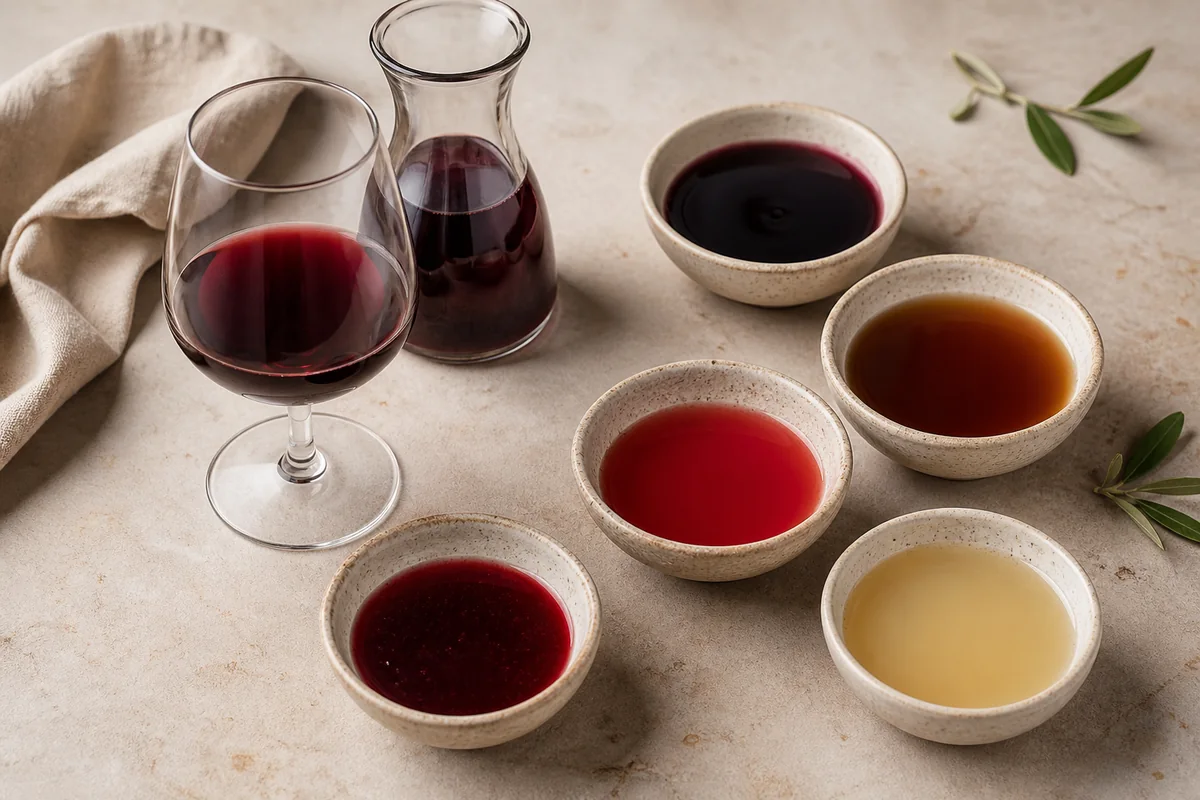
5 Best Burgundy Wine Substitutes (Flavor-Matched)
Ingredients
Method
- Identify your use: deglazing/braising (needs body) or baking (needs acidity and color).
- Start with the substitute ratio from the list (many swaps work 1:1; non-alcohol options start at ¾:1).
- If the substitute tastes too sweet, add a small splash of vinegar to sharpen the flavor; if too sharp, simmer longer to round it.
- For alcohol-free swaps, simmer 2–5 minutes before adding to the dish so harsh fruit notes blend in.
- Taste the sauce/batter at the end and adjust: tiny pinches of salt deepen, and a final vinegar touch restores “wine” brightness.
Notes
- When a recipe says “Burgundy,” treat it as a dry, light-to-medium red wine with red-fruit and earthy depth.
- For best results in sauces, reduce the substitute slightly so its flavor concentrates and tastes less “standalone.”
Tried this recipe?
Let us know how it was!
Carrie is a food writer and editor with more than 15 years of experience. She has worked for some of the biggest names in the food industry, including Bon Appétit, Food & Wine, and Martha Stewart Living.
As the Editor in Chief of EpicureDelight, Carrie oversees all of the content on the site. She also manages the team of contributing writers and editors, who help to create delicious recipes, helpful tips, and informative articles that you’ll find on the site.
A native of the Chicago area, Carrie is passionate about all things food. She loves trying new restaurants and experimenting with new recipes in her kitchen. She’s also a graduate of the Culinary Institute of America, so she knows a thing or two about food!



