
That briny, garlicky heat is hard to fake. Calabrian chili brings a specific combination: fruity spice, a slightly smoky edge, and a salty tang that regular hot sauce just doesn't copy.
When the jar is empty, picking the right calabrian chili substitute means matching all three of those notes, not just reaching for whatever is hottest.
The good news is that several pantry items get close. Some nail the texture.
Others hit the flavor first. A couple work better in sauces than in dry seasoning situations.
Calabrian chili brings spicy heat, garlicky depth, and a briny tang. The best substitute depends on your recipe's texture needs. Use jarred calabrian paste for the closest match in sauces and pizzas. Use flakes for dry seasoning control. Add a splash of vinegar or lemon juice whenever your swap tastes flat.
5 Best Calabrian Chili Substitutes Ranked by Flavor Match
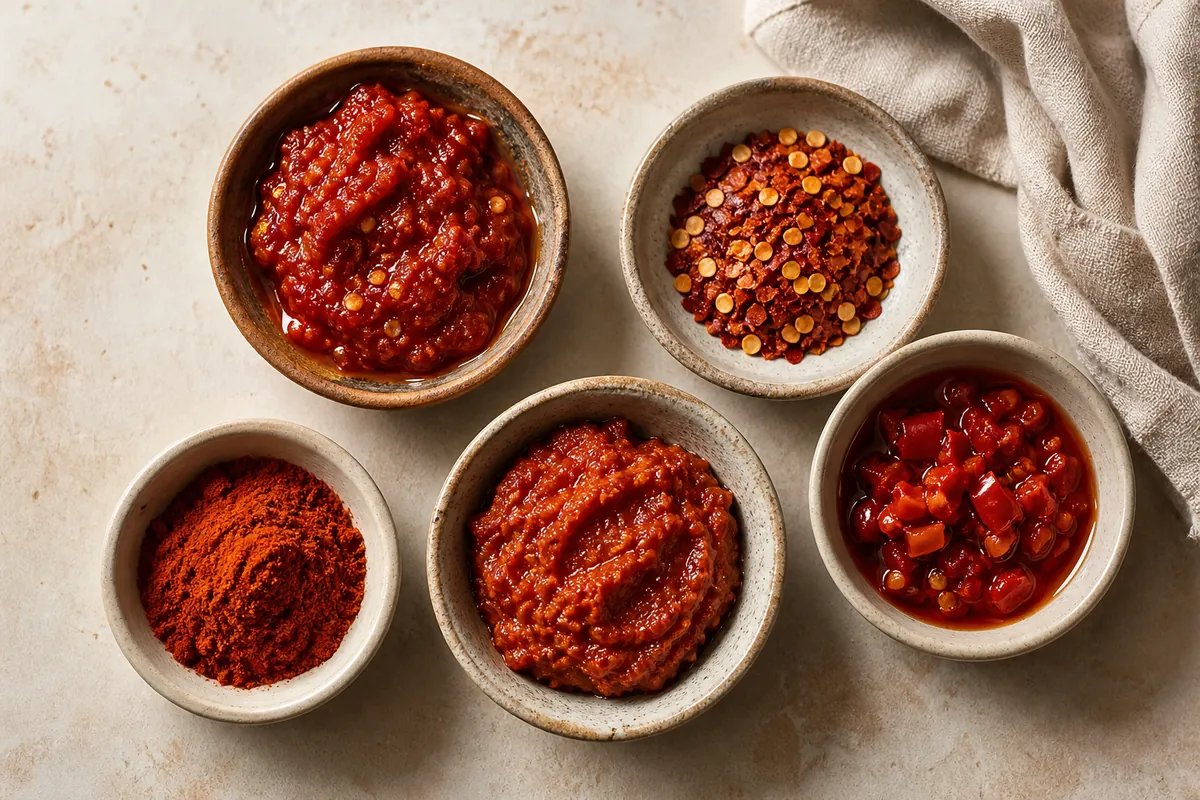
Choosing the right swap comes down to four factors: heat level, garlic presence, briny tang, and texture (paste vs. dry flakes). The table below maps each substitute to its strengths so you can jump straight to the one that fits your dish.
| # | Substitute | Best For | Ratio | Key Note |
|---|---|---|---|---|
| 1 | Calabrian Chili Paste (jarred) | Both | 1:1 | Closest flavor match |
| 2 | Calabrian Chili Flakes | Dry | ¾:1 | Less sauce body |
| 3 | Sicilian-Style Chili Flakes | Both | 1:1 | Add acid for tang |
| 4 | Pepperoncini + Garlic Powder | Mild | 1:1 | Milder, pepper-forward |
| 5 | Chili Crisp + Oregano | Both | 1:2 | Oil-forward; use less |
1. Calabrian Chili Paste (Jarred)
This is the easiest win. Jarred calabrian-style paste already has the three things you're trying to replicate: fruity heat, garlic body, and that preserved briny tang.
It comes from the same pepper base, just processed into a spreadable form. If your original recipe called for whole calabrian chilies or chopped chilies in oil, paste fills that role cleanly.
Use it at a 1:1 ratio as a starting point. It can run slightly saltier than whole chilies, so taste before adding any extra salt.
If the paste feels too thick for a sauce, loosen it with a teaspoon of olive oil or a spoon of the pasta cooking water.
Calabrian Chili Paste
Works for: pizza bases, pasta sauces, emulsified dressings, marinades
Skip if: your recipe needs dry seasoning control or you're avoiding oil-heavy additions in baking
- Best for: Pasta sauces, pizza sauce, and any dish where sauce-body matters
- Starting ratio: 1:1 - then adjust by ¼ teaspoon increments
- Tang check: If paste tastes flat, stir in ½ teaspoon white wine vinegar per tablespoon used
- Salt watch: Taste before seasoning; jarred paste often adds 15-20% more sodium
If you want to know more about the spicy brined character that makes calabrian chili distinctive, that context helps when deciding how hard to push the tang adjustment.
2. Calabrian Chili Flakes
Flakes give you the heat and the fruity spice. What they don't give you is body.
A sauce built on flakes alone will taste thinner than one made with paste. The fix is simple: bloom the flakes in a teaspoon of olive oil for 30 seconds before adding any liquid, or stir in a spoonful of the original jar's oil if you have any left.
Start at ¾ of the original amount and build from there. Flakes intensify as they cook, so resist the temptation to keep adding before the dish finishes.
- Best for: Dry rubs, pizza finishing, pasta tossed off-heat, and bread doughs
- Starting ratio: ¾:1, then add in ¼ teaspoon increments after tasting
- Texture fix: Bloom in 1 teaspoon olive oil before adding to sauce, or use jar liquid if available
- Common mistake: Adding dry flakes directly to a hot dry pan without fat - they scorch and turn bitter fast
If you're also considering swapping out the flakes themselves for something milder, check the heat-level options before scaling up.
Skip if: your recipe needs a paste-like texture, like an emulsified dressing or a smooth spread.
3. Sicilian-Style Chili Flakes
Sicilian chili flakes run hotter and carry a smokier edge than standard red pepper flakes. That smokiness is actually useful here because calabrian chili has a subtle depth that plain crushed red pepper skips entirely.
The one thing missing is the briny tang, which you add back with acid.
- Best for: Pizza finishing, tomato-based pasta sauces, and roasted vegetable dressings
- Starting ratio: 1:1 - these flakes are hot, so don't overshoot early
- Brightness add: Stir in ½ teaspoon lemon juice or red wine vinegar per tablespoon of flakes used
- Garlic note: Sicilian flakes don't have garlic built in; add a small pinch of garlic powder alternatives if garlic is part of the original flavor
Skip if: your recipe already has strong vinegar or lemon - adding more acid will turn the dish sharp before you notice.
4. Pepperoncini + Garlic Powder
Pepperoncini is milder than calabrian by a significant margin. It brings a gentle pepper-forward warmth and plenty of vinegar brine, but it lacks the punchy heat and garlic depth of calabrian.
The fix is a pinch of garlic powder added alongside, which closes that gap quickly.
Drain the pepperoncini well before chopping, then chop finely enough that the pieces blend into the dish rather than announce themselves as a separate ingredient. Understanding the mild tangy flavor profile of pepperoncini helps set expectations before you commit to this swap.
| Target Heat | Ratio | Notes |
|---|---|---|
| Mild | 1:1 pepperoncini | Add ¼ teaspoon garlic powder; skip extra acid |
| Medium | 1:1 + pinch red pepper flakes | Garlic powder + ¼ teaspoon flakes for more bite |
- Best for: Sandwiches, mild pasta dishes, pizza where you want pepper flavor without heavy heat
- Tang adjustment: Pepperoncini brine is already vinegary - use the chopped pepper and a few drops of its brine together
- Garlic must: Without garlic powder, this swap tastes like mild pickled pepper, not calabrian chili
Skip if: you need serious heat - pepperoncini tops out at about 500 Scoville, while calabrian runs 25,000-40,000.
5. Chili Crisp + Oregano
Chili crisp is oil-packed, crunchy, and complex. It already brings garlic, shallot, and layered heat from the frying process, which makes it a fast shortcut when you need big flavor without building from scratch.
A small pinch of dried oregano nudges it toward the Italian profile that calabrian chili lives in.
The catch is that chili crisp is much more oil-forward than calabrian paste. Start at half the amount the recipe calls for, taste, and go from there.
Chili Crisp + Oregano
Works for: stir-fry finishes, noodle dishes, pizza drizzling, and quick pan sauces
Skip if: you need uniform dry seasoning or a low-oil result - chili crisp adds grease visibly
- Best for: Finishing oils, stir-fry sauces, noodle bowls, and drizzling over pizza
- Starting ratio: 1:2 (half the original calabrian amount) - build slowly
- Greasiness fix: Add chili crisp off-heat or in the last 60 seconds of cooking to control oil absorption
- Oregano amount: A small pinch - about ⅛ teaspoon per tablespoon of chili crisp - is enough
For dishes where you want the choosing a paste-based swap instead, chili crisp may run too oily. Paste gives better emulsification in tomato sauces.
Making Calabrian Chili Substitutes Work
Every substitute above starts with the right ratio, but the adjustment order matters as much as the amount. Heat first, tang second, texture third. Taste after the first stir-in, then decide which element is missing before adding more of anything.
- Paste vs. flakes decision: If your dish is a sauce or spread, use paste or bloom flakes in oil first. For baking or dry rubs, use flakes and skip added fat.
- Bitterness prevention: Never toast flakes in a dry hot pan without fat. They scorch in under 30 seconds and turn acrid. Use medium heat with oil, or add flakes directly to a wet sauce.
- Scaling by application: In stovetop sauces, you can adjust in real time. In baked recipes like focaccia or quick breads, cut the initial amount by 25% and taste the raw batter before committing.
Knowing how to keep your jar in good shape also affects which substitute you reach for. Checking storing opened jars properly can save you from needing a substitute next time.
Frequently Asked Questions
Jarred calabrian-style paste is the closest match. It keeps the same heat, garlic body, and briny tang, and it integrates into tomato and cream sauces without extra adjustment.
Use flakes mixed into the batter, not toasted dry beforehand. Start at ¾ the original amount and taste the raw mix before baking.
Yes, but red pepper flakes are hotter and have no garlic or tang. Use ½ the amount, then add a pinch of garlic powder and a small splash of vinegar.
Add ½ teaspoon white wine vinegar or fresh lemon juice per tablespoon of substitute. Stir in and taste before adding more.
Finely chopped pepperoncini plus a pinch of garlic powder. It's much milder than calabrian but keeps the garlic-pepper character without heavy heat.
5 Best Calabrian Chili Substitutes in Every Recipe
Ingredients
Equipment
Method
- Choose the swap based on texture: paste for sauce-body, flakes for seasoning intensity, and chili oil blends for fast heat.
- Start with the listed ratio, then taste after stirring in for 30–60 seconds (or after baking batter is mixed).
- Adjust heat first: add more by small pinches if you’re short on spice.
- Adjust tang second: if the dish tastes flat, add ½–1 teaspoon lemon juice or a splash of vinegar per jarful scale.
- Adjust texture last: if you need more sauce-like body, add a teaspoon of olive oil or a spoon of the jarred chili liquid.
Notes
- Use paste for the closest overall impact in sauces; use flakes for seasoning where you want controlled heat.
- For mild replacements, add garlic + a small acid boost to mimic calabrian’s sharper profile.
Tried this recipe?
Let us know how it was!
Carrie is a food writer and editor with more than 15 years of experience. She has worked for some of the biggest names in the food industry, including Bon Appétit, Food & Wine, and Martha Stewart Living.
As the Editor in Chief of EpicureDelight, Carrie oversees all of the content on the site. She also manages the team of contributing writers and editors, who help to create delicious recipes, helpful tips, and informative articles that you’ll find on the site.
A native of the Chicago area, Carrie is passionate about all things food. She loves trying new restaurants and experimenting with new recipes in her kitchen. She’s also a graduate of the Culinary Institute of America, so she knows a thing or two about food!



