
Cambozola is quietly doing two jobs at once. It has a buttery, soft-rind base that spreads like cream cheese, and a blue-mold layer that delivers quiet funk without slapping you in the face.
Finding a cambozola cheese substitute means covering both jobs, not just one.
The creamy base is easy to replace. The blue tang is trickier, because most blue cheeses skew either too sharp or too crumbly to mimic cambozola's smooth, spreadable texture.
The smart move is to match your substitute to your dish first, then adjust the tang second.
Cambozola combines a creamy soft-rind base with mild blue-mold tang. The best substitutes either replicate both (blue Brie, Gorgonzola dolce) or cover one job very well (Taleggio for melt, cream cheese blended with mild blue for spread). Match your pick to heat level and texture need first.
5 Best Cambozola Cheese Substitutes Worth Trying
The table below ranks each option by its primary strength. For spreads, look at texture and blue intensity.
For baking or sauces, focus on melt behavior and how the flavor holds under heat. Understanding how blue flavor develops helps you decide how much punch to dial in with each substitute.
| # | Substitute | Best For | Ratio | Key Note |
|---|---|---|---|---|
| 1 | Blue Brie (blended) | Both | 1:1 | Blend for even texture |
| 2 | Gorgonzola dolce | Both | 1:1 | Warm gently to emulsify |
| 3 | Taleggio | Hot | 1:1 | Add acid to lift tang |
| 4 | Roquefort | Both | ¾:1 | Use less; dilute with cream |
| 5 | Cream cheese + mild blue | Spread | 1:1 | Blend smooth for spreads |
1. Blue Brie (Blended Smooth)
Blue Brie is the closest thing to cambozola on a cheese board, because it is essentially the same idea: a creamy, white-rind exterior wrapped around a center with blue-mold character. Blending it smooth before use eliminates uneven blue pockets, which is important for both spreading and other mild blue swaps in warm dishes.
- Best for: Cold spreads on bread or crackers, baked appetizers, and cream sauces where mild funk is the goal
- Texture behavior: Spreads easily at room temperature; melts smoothly under moderate heat without separating
- Flavor tip: If you want slightly more edge, add a small pinch of crumbled Gorgonzola before blending
- Ratio: Use 1:1 with no other adjustments needed
Skip if: you need a strongly sharp, salty blue punch. Blue Brie stays mild to medium, so it won't satisfy a recipe that needs real bite.
2. Gorgonzola Dolce
Gorgonzola dolce is creamier and gentler than regular Gorgonzola, which puts it much closer to cambozola's flavor range. It has a soft, almost spreadable body and a blue tang that stays in the background rather than dominating.
- Best use cases: Risotto, warm pasta sauces, baked puff pastry, and flatbread toppings
- Melt behavior: Emulsifies well when warmed gently over low heat; avoid boiling or it may turn grainy
- Keeping it mild: Stir in 1-2 tablespoon of heavy cream to soften the blue edge if the batch tastes sharper than expected
- Ratio: 1:1 for most recipes; reduce by 2 tablespoon per cup if the flavor tests strong
If you need to explore the tangy aged profile of blue cheeses before committing, that context helps you judge whether dolce-style is the right call.
Skip if: your recipe specifically needs a bright, tangy bite. Dolce is mild by design; a small squeeze of lemon is the fastest fix if you want lift.
3. Taleggio
Taleggio does not taste like cambozola. That is worth saying upfront.
It is buttery and funky in a washed-rind way, not a blue-mold way. But its melt behavior is nearly identical, and that matters enormously in baking or sauces.
When swapping washed-rind cheese into a warm recipe, the texture carries the dish even when the flavor shifts slightly.
- Where it shines: Baked pasta, pizza, fonduta, and any recipe where a creamy, elastic melt is the primary goal
- Flavor correction: Add 3-4 drops of fresh lemon juice per ounce of Taleggio to introduce a tang that gestures toward blue-mold character
- Texture warning: Taleggio can turn runny at high oven temperatures; bake at 375°F or lower and watch the timing closely
Skip if: you are sensitive to strong washed-rind aromas. Smell the cheese before you buy it; some wheels are significantly more pungent than others.
4. Roquefort
Roquefort is a serious blue. It is saltier, sharper, and more intensely funky than cambozola, so walking in without a ratio adjustment is a fast path to an overwhelming dish.
The good news is that sharper blue options like this one become workable once you reduce the quantity and blend in something creamy.
Roquefort vs. Cambozola
Works for: recipes that need real blue-mold depth, steak sauces, strong salad dressings, and dishes with bold competing flavors
Skip if: your dish is delicate (mild cream sauces, cold spreads) or you want approachable funk for guests who don't love blue cheese
- Ratio approach: Start at ¾ of the cambozola quantity called for; taste before adding more
- Preventing overpowering: Blend with 1-2 tablespoon of cream cheese or crème fraîche per ounce to cut intensity and restore creaminess
- Best dish types: Steak butter, bold pasta sauces, fig-and-blue tarts, and any recipe that can handle assertive flavor
Skip if: you are making a cold spread for a crowd. Strong blue cheeses taste harsher when cold and unblended, and guests who are not blue-cheese fans will notice immediately.
5. Cream Cheese + Mild Blue Cheese
This is the workaround for when you cannot find a soft-blue cheese and need cambozola's texture most. Blend full-fat cream cheese with an equal volume of crumbled mild blue (such as young Gorgonzola or a mild Danish blue) until smooth.
The result is spreadable, lightly tangy, and holds together well. If you are considering choosing a creamier base, full-fat cream cheese is the one to use here since lower-fat versions can turn watery when mixed.
- How to blend: Soften cream cheese to room temperature, add crumbled blue in small amounts, and mash with a fork or mix with a hand mixer until streak-free
- Flavor tuning: Add a pinch of salt carefully (blue cheese is already salty), plus a few drops of lemon juice to brighten the finish
- Baking behavior: Holds reasonably well on top of crostini or inside pastry; for sauces, thin with 1 tablespoon warm cream before adding to the pan to prevent lumping
Skip if: your dish relies on genuine blue-mold complexity. This blend is a texture solution first, not a flavor replacement. It works best in spreads and simple baked appetizers.
Making Cambozola Substitutes Work (Without a Flavor or Texture Fail)
The core logic is simple: match the creamy base, then layer in the tang. For spreads, blend your substitute until smooth so you don't get uneven pockets of sharp blue.
For baking or sauces, warm gently and use low-to-moderate heat so the cheese emulsifies rather than splits. Understanding your broader blue cheese options also gives you more flexibility when adjusting intensity mid-recipe.
- For spreads: Always blend or mash your substitute to room temperature before serving; uneven blue streaks taste sharp in one bite and bland in the next
- For baking or sauces: Cut the cheese into small pieces and stir it into warm (not boiling) liquid; remove from heat as soon as it melts to keep the texture silky
- Adjusting tang: Too strong, add a tablespoon of cream cheese or heavy cream; too mild, add 3-4 drops of lemon juice or a tiny crumble of a sharper blue on top
Frequently Asked Questions
Blue Brie blended smooth is the closest match for cold spreads. It has cambozola's creamy body and mild blue tang without any crumbly texture that could create uneven flavor.
Yes, but reduce the quantity to about ¾ of the amount called for and blend with cream to prevent bitterness. Roquefort is significantly saltier and sharper than cambozola.
Gorgonzola dolce and Taleggio both melt smoothly when warmed gently. Gorgonzola dolce keeps mild blue flavor; Taleggio is creamier but without the blue-mold character.
Too strong: stir in a tablespoon of cream cheese or heavy cream to soften the intensity. Too bland: add 3-4 drops of fresh lemon juice or a small crumble of sharper blue cheese.
Taleggio is your best pick. It melts like cambozola and has a buttery funk, but none of the blue-mold sharpness that puts some people off.
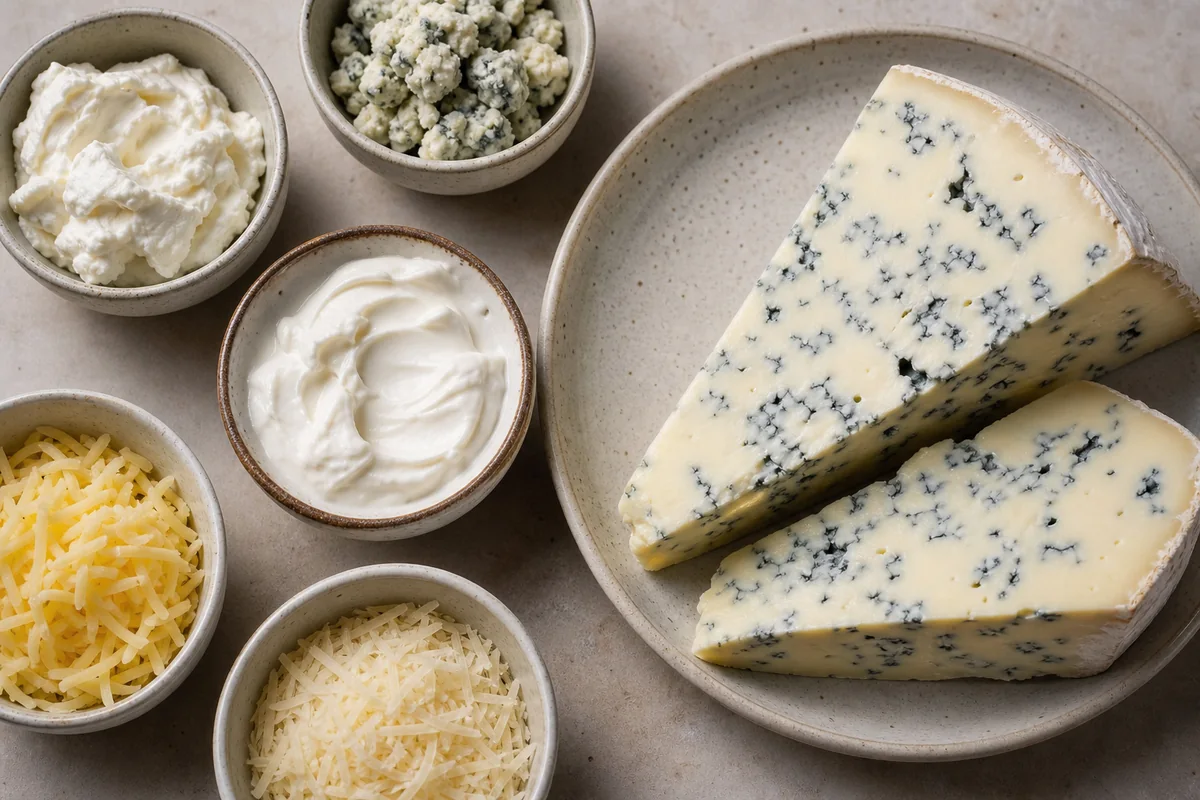
5 Best Cambozola Cheese Substitutes Worth Trying
Ingredients
Equipment
Method
- Identify your use: spread (no baking), bake/melt, or sauce—then pick the substitute with the closest melt/creamy texture match.
- Start with the listed ratio; if your substitute is stronger (like Roquefort), reduce first and add more only after tasting.
- If the substitute looks grainy or uneven (common with strong blues), blend/smash until smooth for a cambozola-like spread.
- For baking, cut the cheese into small pieces so it melts evenly; for sauces, warm gently to avoid separating.
- Taste and correct: add a few drops of lemon for lift or a pinch of salt for roundness—then adjust heat/time to keep texture silky.
Notes
- Cambozola is creamy and tangy; the best substitutes either match blue-mold flavor directly or mimic the creaminess while using a smaller amount of blue for punch.
- If you’re substituting in baking, prioritize melt behavior and smaller cuts over flavor intensity.
Tried this recipe?
Let us know how it was!
Carrie is a food writer and editor with more than 15 years of experience. She has worked for some of the biggest names in the food industry, including Bon Appétit, Food & Wine, and Martha Stewart Living.
As the Editor in Chief of EpicureDelight, Carrie oversees all of the content on the site. She also manages the team of contributing writers and editors, who help to create delicious recipes, helpful tips, and informative articles that you’ll find on the site.
A native of the Chicago area, Carrie is passionate about all things food. She loves trying new restaurants and experimenting with new recipes in her kitchen. She’s also a graduate of the Culinary Institute of America, so she knows a thing or two about food!



