
Cantaloupe has a very specific thing going on: mild, honeyed sweetness paired with a soft, drinkable bite that doesn't assert itself the way a sharp berry or acidic citrus does. That combination is what makes it hard to replace without thinking first.
The good news is that several fruits match one or both of those qualities closely enough to work in most recipes.
When you're picking a cantaloupe substitute, the first question isn't "what's sweet?" It's "what role is the cantaloupe playing?"
A fruit salad needs chunkable softness. A smoothie needs juicy volume.
A fruit bowl needs both. Match the texture to the job first, then adjust sweetness from there.
Cantaloupe brings mild sweetness and soft, juicy texture to recipes. The closest swaps are honeydew and ripe peach, both 1:1. For smoothies, watermelon works well drained. Mango and pineapple add more intensity, so use slightly less. Match the texture role first, then fine-tune sweetness.
5 Best Cantaloupe Substitutes Ranked by Texture and Sweetness
Every substitute below was chosen because it matches at least one of cantaloupe's two core traits: soft flesh and mild sweetness. Some nail both.
Others lean one way and need a small adjustment. The table below gives you the fast version; the sections after go deeper.
| # | Substitute | Best For | Ratio | Key Note |
|---|---|---|---|---|
| 1 | Honeydew Melon | Both | 1:1 | Mildest, closest texture |
| 2 | Ripe Peach | Both | 1:1 | Slightly sweeter, soft flesh |
| 3 | Watermelon | Smoothies/Salads | 1:1 | Drain excess liquid first |
| 4 | Nectarine | Both | 1:1 | Firmer bite, similar aroma |
| 5 | Mango | Bowls/Toppings | ¾:1 | Thicker, sweeter than melon |
1. Honeydew Melon
Honeydew is the most direct swap here. It is a melon, so the texture and water content are nearly identical to cantaloupe.
The only real difference is flavor: honeydew is slightly more neutral, with less of that musky aroma cantaloupe has.
Use it 1:1 in any application. When storing cut honeydew, keep it covered and refrigerated so it doesn't lose moisture before you use it.
- Salads: Cube the same size as you would cantaloupe; no draining needed
- Smoothies: Swap directly, same volume
- Fruit bowls: Works best chilled; room-temp honeydew can taste flat
Skip if your recipe specifically needs that orange-flesh musky aroma. Honeydew is milder and won't replicate cantaloupe's signature scent.
2. Ripe Peach
A ripe peach is soft, juicy, and sweet in a way that sits very close to cantaloupe on the mildness scale. The flesh breaks down similarly when diced, which makes it a natural fit for fruit salads and bowls.
These sun-ripened stone fruits are best used the day they're fully ripe for maximum juice.
Peach vs. Cantaloupe
Works for: fruit salads, smoothies, yogurt toppings, fresh salsas
Skip if: your recipe adds extra sugar already; peach runs sweeter than cantaloupe
Peaches bring a floral note that cantaloupe doesn't have. It doesn't clash, but it does shift the flavor profile slightly.
Reduce any added sugar in the recipe by about half a teaspoon per cup of fruit to compensate.
3. Watermelon
Watermelon matches cantaloupe's juiciness better than almost anything else, and the sweetness level is comparable. The texture is a touch more watery and less dense, which matters in some uses.
The crisp red flesh is great for smoothies and chopped salads but can make a dense fruit mixture go thin fast.
- Smoothies: Use 1:1 but expect a thinner result; reduce any added liquid by 2 tbsp
- Fruit salads: Dice, then blot lightly with a paper towel before tossing
- Salsas: Drain diced watermelon in a strainer for 5 minutes before mixing
Skip if your dish needs the fruit to hold its shape over time. Watermelon softens and weeps liquid quickly, especially once cut and dressed.
4. Nectarine
Nectarines are close cousins of peaches but with a slightly firmer flesh and a skin you don't need to peel. That firmer texture is actually useful when cantaloupe is playing a structural role, like in a layered fruit platter or a chilled fruit cup that needs to hold for an hour before serving.
The flavor is stone-fruit forward, not melon, but the sweetness level tracks well. Swap 1:1 in fresh fruit bowls or as a salad component.
They don't blend as smoothly as peach in smoothies, so if you're blending, go with peach instead.
Skip if you need a smooth blend or a very neutral flavor. Nectarine has more character than cantaloupe and will show up in a simple fruit mixture.
5. Mango
Mango is thicker and more intensely sweet than cantaloupe, which means it doesn't swap 1:1 without some adjustment. Use about ¾ cup of mango for every 1 cup of cantaloupe, and taste before adding any sweetener the recipe calls for.
When picking ripe mango for fresh use, press gently near the stem; it should give slightly.
- Fruit bowls: Dice small so the stronger flavor distributes evenly among other fruit
- Smoothies: Use frozen mango for a thicker, colder blend without extra ice
- Salsas: Great match; the tropical sweetness pairs well with lime and chili
Skip if your recipe needs a neutral, melon-forward flavor. Mango has a very distinct tropical note that cantaloupe doesn't carry.
Making a Cantaloupe Substitute Taste Like the Real Thing
The decision is simpler than it looks if you go in order: sweetness first, then juiciness, then aroma. Honeydew and peach cover sweetness and juice well.
Watermelon nails juiciness but may need draining. Mango and pineapple (a bright, tart option worth knowing, especially when checking tropical flavor profiles) both need a ratio reduction to avoid overpowering the dish.
Once the fruit is chosen, two small adjustments usually close the gap completely.
- Manage moisture first: If your substitute is wetter than cantaloupe (watermelon, pineapple), spread the diced fruit on paper towels for 3-5 minutes before using. This one step prevents runny salads and thin smoothies without changing the flavor.
- Tune sweetness with citrus or salt: A small squeeze of lime brightens mango and pineapple swaps. A small pinch of salt on honeydew or watermelon pulls forward the natural melon sweetness. Neither takes more than a few seconds and both make a noticeable difference.
- Adjust ratio before adding other sweeteners: If your recipe calls for honey or sugar alongside the fruit, taste after adding the substitute and before adding any sweetener. Most ripe substitutes won't need the full amount; start with half and add from there.
Frequently Asked Questions
Honeydew melon is the closest match for fruit salads. It has the same soft, juicy texture and mild sweetness, and it holds its shape well once diced and tossed with other fruit.
Yes, but reduce any added liquid in the recipe by 2 tablespoons per cup. Watermelon releases more liquid than cantaloupe, so cutting back keeps the smoothie from going thin.
Both run slightly sweeter than cantaloupe when ripe. Cut any added sugar or honey in the recipe by about half a teaspoon per cup of fruit and taste before adjusting further.
Pineapple works well in salsas and savory applications, but use ¾ of the amount called for. Its tartness is stronger than cantaloupe, so a smaller portion keeps the balance right.
Cucumber is the best emergency option for crunch. When swapping in sliced cucumber, add a light drizzle of honey to approximate the sweetness cantaloupe would bring.
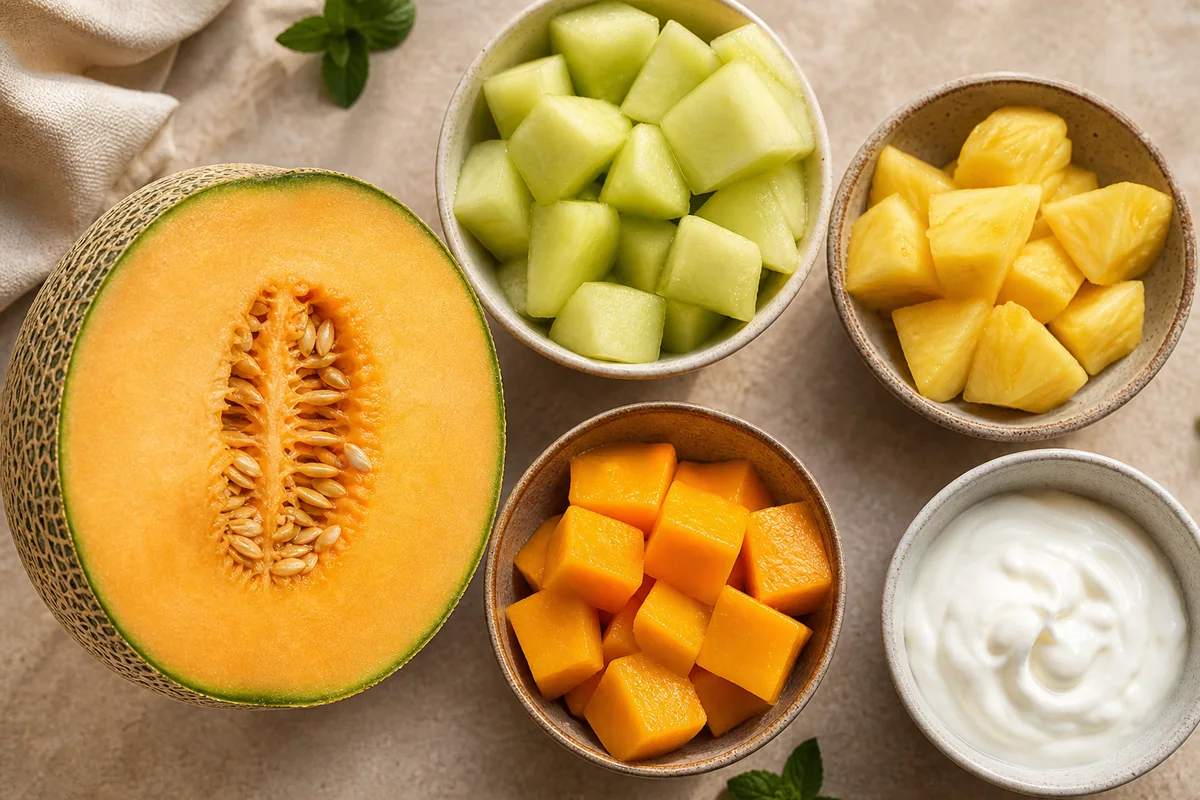
5 Best Cantaloupe Substitutes (Tested)
Ingredients
Equipment
Method
- Identify what you’re making: fresh bowl, salad, smoothie, or a fruit topping (that determines how much texture you need to match).
- Choose the substitute using the reference table’s “closest” notes (sweetness + softness + juiciness).
- Use the ratio in the WPRM: start with the listed amount, then adjust after tasting for sweetness or wateriness.
- If the substitute is wetter than cantaloupe (watermelon/pineapple), drain or blot briefly so your mixture doesn’t get runny.
- Taste and fine-tune: add a small squeeze of citrus for pineapple/mango swaps, or add a pinch of salt to boost melon flavors.
Notes
- Best matches aim for similar mild sweetness + soft, juicy texture.
- Emergency swaps can work, but you’ll likely need a small ratio adjustment and/or moisture control.
Tried this recipe?
Let us know how it was!
Carrie is a food writer and editor with more than 15 years of experience. She has worked for some of the biggest names in the food industry, including Bon Appétit, Food & Wine, and Martha Stewart Living.
As the Editor in Chief of EpicureDelight, Carrie oversees all of the content on the site. She also manages the team of contributing writers and editors, who help to create delicious recipes, helpful tips, and informative articles that you’ll find on the site.
A native of the Chicago area, Carrie is passionate about all things food. She loves trying new restaurants and experimenting with new recipes in her kitchen. She’s also a graduate of the Culinary Institute of America, so she knows a thing or two about food!



