
That woodsy, slightly fruity scent rising from a hot pan of chanterelles is hard to fake. But fresh chanterelles are expensive, seasonal, and sometimes just gone from the shelf when you need them.
The right chanterelle mushroom substitute depends on what your dish actually needs: the aroma, the tender bite, or both.
Chanterelles bring a fruity-woodsy smell, a lightly peppery finish, and a texture that stays tender without going rubbery. Pick the wrong swap and you lose that nuance fast.
Pick the right one and most guests won't notice.
Porcini (dried, rehydrated) is the closest match for deep aroma. Shiitake wins for meaty, quick-cooked texture. King oyster holds up best in sauces. Maitake mimics chanterelles' frilly shape. Cremini is the reliable pantry fallback when nothing else is available.
5 Best Chanterelle Mushroom Substitutes Ranked by Flavor and Texture
The table below gives you a fast reference before you start cooking. Each ratio assumes your pieces are cut to roughly the same size as the chanterelles they replace.
| # | Substitute | Best For | Ratio | Key Note |
|---|---|---|---|---|
| 1 | Porcini (dried) | * Both | 1:1 | Rehydrate, squeeze, chop |
| 2 | Shiitake | * Both | 1:1 | Remove stems, slice thin |
| 3 | King Oyster | * Both | ¾:1 | Sear thick slices hard |
| 4 | Maitake | * Both | 1:1 | Cook in batches, hot pan |
| 5 | Cremini | * Both | 1:1 | Brown hard, finish with acid |
1. Porcini (Dried, Rehydrated)
Dried porcini packs more concentrated aroma per gram than almost any other mushroom you'll find at a grocery store. That deep, woodsy intensity is the closest thing to chanterelles' earthy-fruity profile, especially when a dish needs that aroma to carry through a sauce or pasta.
If you're weighing whether switching to dried porcini is the right call, the flavor payoff usually justifies the extra prep step.
- Rehydrate method: Soak in warm (not boiling) water for 20-25 minutes, then squeeze gently and chop into bite-size pieces.
- Use the soaking liquid: Strain it through a fine sieve and add 2-3 tablespoon to your sauce for extra depth.
- Pan temperature: Use a very hot, dry skillet so the chopped porcini browns rather than steams immediately on contact.
- Chop size: Match the size of chanterelle pieces your recipe calls for, usually 1.5-2 cm chunks.
- Finishing: Add a small knob of butter at the end to round off the deeper, woodier notes.
Skip if: your recipe depends on a bright, delicate mushroom flavor. Porcini reads woodier and heavier than chanterelles, so it can overwhelm lighter dishes.
2. Shiitake
Shiitake has a firm, meaty bite and strong umami that fills the same structural role chanterelles play in a sauté. The flavor is less fruity and more savory, but it browns beautifully and holds its shape at high heat.
Understanding shiitake flavor notes before you cook helps you decide whether to add a splash of white wine at the end to brighten things up.
- Remove the stems: Shiitake stems are fibrous and stay tough no matter how long you cook them. Slice caps only, about 5 mm thick.
- Pan heat: Use high heat and a wide pan so caps sear, not steam. Leave them undisturbed for 2-3 minutes per side.
- Tender bite: Pull them from the heat while the centers are still just slightly soft, not fully collapsed.
- Flavor lift: A small splash of white wine (about 2 tbsp) deglazed into the pan mimics chanterelles' lighter finish.
Skip if: you only have pre-sliced shiitake or very thin pieces. Thin cuts overcook in seconds and turn rubbery.
3. King Oyster
King oyster mushrooms are built for sauce applications. Their dense, cylindrical stems hold structure through long simmers, and when you sear them hard first, they develop a satisfying chew that feels deliberate rather than chewy-by-accident.
If you're curious about other oyster-style swaps that work in cream sauces, there are a few worth knowing.
Thick-Sliced and Seared
Works for: cream sauces, pasta, risotto, anywhere the mushroom simmers briefly after browning
Skip if: you want the frilly, delicate look of chanterelles - king oyster is uniform and dense by comparison
- Slice thickness: Cut rounds at least 1 cm thick so they don't disappear into the sauce during cooking.
- Sear first: Get the pan very hot with a thin layer of oil. Press slices flat and sear 3-4 minutes per side until deeply golden.
- Add to sauce last: Stir seared slices into sauce for the final 5 minutes only. Longer and the texture turns spongy.
- Ratio adjustment: Use about ¾ the volume of chanterelles called for. King oyster is denser and fills the plate more.
Skip if: you're trying to replicate the frilly, gathered texture of chanterelles. King oyster looks and feels more substantial.
4. Maitake
Maitake's irregular, fan-like clusters are the best visual stand-in for chanterelles' uneven, gathered shape. Tear them by hand into bite-size pieces rather than cutting, which preserves those natural edges that brown and crisp at the tips.
When choosing maitake as your swap, the single most important thing to remember is batch-cooking.
Crowding maitake in the pan causes instant steaming, and once they steam instead of sear, you lose both the texture and the aroma. Cook in two or three small batches over high heat, then combine at the end.
Each batch needs only 3-4 minutes total, so the whole process is still fast.
Skip if: you don't have time to cook in multiple rounds. Rushed maitake turns soft and water-logged, which is the opposite of what you want.
5. Morel
Morels have a honeyed, earthy aroma that sits closer to chanterelles' delicate profile than most other mushrooms do. They work best in quick sautés, 4-5 minutes total over medium-high heat, where you keep their tenderness intact.
For a reference on what that mild woodland aroma should smell like when a mushroom is cooked right, trust your nose.
- Cleaning: Halve lengthwise, soak in cold salted water for 5 minutes, then rinse and pat completely dry before cooking.
- Sauté timing: 2-3 minutes per side over medium-high heat. They are done when the edges just start to color.
- Butter is better: Morels respond well to butter rather than oil. The fat carries their delicate aroma further into the dish.
- Pairing: Fresh thyme or a tiny squeeze of lemon at the end complements morels' natural sweetness without overpowering it.
Skip if: your recipe involves long simmering. Morels break down quickly and lose both texture and aroma if cooked past their window.
Making Your Chanterelle Substitute Taste Right
The biggest difference between any mushroom substitute and a real chanterelle comes down to two things: how well it browns and how much water it releases. Browning creates the savory depth that makes a mushroom taste like something rather than just a filler.
Understanding the full chanterelle flavor profile helps you calibrate how much lifting a substitute needs to do.
Most substitutes need a small finishing touch to close the gap. A squeeze of lemon, a splash of white wine, or even a pinch of fresh thyme in the last minute of cooking can shift a flat mushroom toward something brighter and more complex.
If you're weighing a deeper, earthier option for a slow-cooked dish, porcini is usually the right direction.
- Brown first, always: Pat mushrooms dry, use a hot pan, and resist stirring for the first 2-3 minutes so a crust forms.
- Manage moisture: For dried mushrooms, squeeze firmly after soaking. For fresh, never rinse right before cooking - wipe with a damp cloth instead.
- Finish with acid: A 1 teaspoon squeeze of lemon or 2 tablespoon of white wine stirred in at the end mimics chanterelles' lighter, brighter finish.
Frequently Asked Questions
Shiitake is the top pick for sautéing. Slice the caps thin, use high heat, and leave them undisturbed for 2-3 minutes so they brown rather than steam.
Yes. Rehydrate in warm water for 20-25 minutes, squeeze out excess liquid, then chop and sear. The flavor is woodier but works well in sauces and pasta.
Pat fresh mushrooms dry before cooking and never crowd the pan. Cook in batches over high heat so moisture evaporates fast instead of pooling.
King oyster holds up better. Its dense texture survives simmering without turning soft, while shiitake can become slightly limp in a long cream sauce.
Both matter, but texture is usually more noticeable in the finished dish. Choose a substitute with similar density, then use acid or herbs to close the flavor gap.
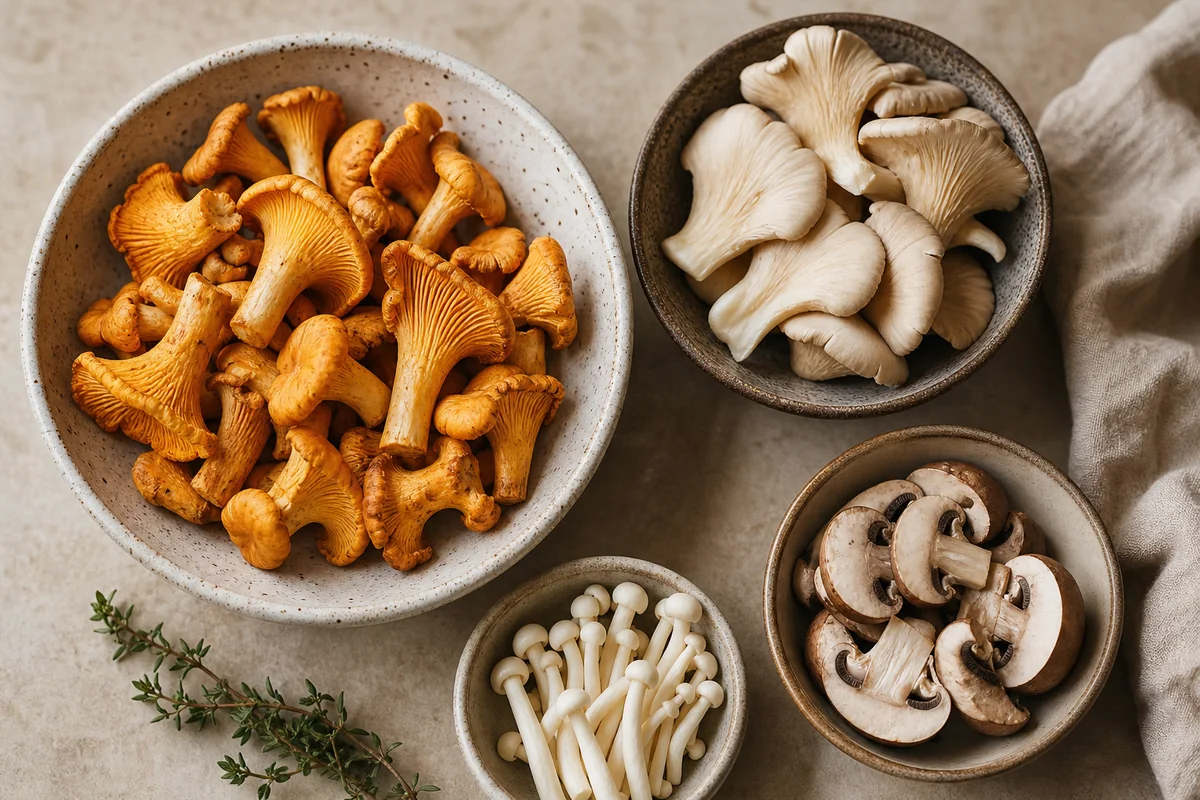
5 Best Chanterelle Mushroom Substitutes in Every Recipe
Ingredients
Equipment
Method
- Choose your substitute based on the dish: sauté (meaty + quick browning) vs sauce/stew (deep flavor that simmers well).
- Use the table/ratios: swap by the listed ratio, then chop so pieces are similar size to chanterelles (bite-size).
- Control moisture: if using dried mushrooms, rehydrate and squeeze; if using fresh mushrooms, pat dry and brown in a hot pan without crowding.
- Adjust cook time: thicker or tougher substitutes (king oyster) need longer searing; watery ones (some store mushrooms) need shorter, hotter cooking.
- Finish with flavor boosters: a final pinch of salt, a squeeze of lemon, or a splash of white wine can mimic chanterelles’ lift.
Notes
- If your substitute releases a lot of liquid, cook longer at higher heat to evaporate before adding butter/cream.
- For best aroma, avoid over-stirring and give the mushrooms space in the pan.
Tried this recipe?
Let us know how it was!
Carrie is a food writer and editor with more than 15 years of experience. She has worked for some of the biggest names in the food industry, including Bon Appétit, Food & Wine, and Martha Stewart Living.
As the Editor in Chief of EpicureDelight, Carrie oversees all of the content on the site. She also manages the team of contributing writers and editors, who help to create delicious recipes, helpful tips, and informative articles that you’ll find on the site.
A native of the Chicago area, Carrie is passionate about all things food. She loves trying new restaurants and experimenting with new recipes in her kitchen. She’s also a graduate of the Culinary Institute of America, so she knows a thing or two about food!



