
Cheese curds do two very different jobs in the kitchen. Fried, they go golden outside and turn chewy-squeaky inside.
Melted into a sauce or gravy, they pull apart in long, creamy threads.
That difference matters when you're picking a cheese curds substitute. A swap that fries beautifully may turn watery when melted.
One that melts perfectly may collapse in a hot pan. Matching the substitute to the job, then controlling moisture, is the whole game.
Fresh curds also lose their squeak fast, so knowing how these fresh dairy pieces age helps you plan ahead.
The best cheese curds substitutes depend on what you need them to do. Halloumi and paneer hold shape and brown well for frying. Mozzarella gives you a stretchy melt. Queso fresco works for gentle warm-up or toppings. Cottage cheese (drained and blended) handles creamy sauces and binding.
5 Best Cheese Curds Substitutes Ranked by Texture
The table below gives you ratios at a glance. Scroll through each H3 for texture notes, prep steps, and the "Skip if" situations where that swap falls short.
| # | Substitute | Best For | Ratio | Key Note |
|---|---|---|---|---|
| 1 | Halloumi | Frying | 1:1 | Pat very dry first |
| 2 | Paneer | Frying/Sauté | 1:1 | Sear hot for browning |
| 3 | Queso Fresco | Toppings | ¾:1 | Gentle heat only |
| 4 | Mozzarella | Melting/Pull | 1:1 | Low-moisture only |
| 5 | Cottage Cheese | Creamy/Binding | 1:1 | Drain then blend |
1. Halloumi
Halloumi is the closest thing to a fried curd's chewy, golden bite. It holds its shape at high heat, browns without melting into a puddle, and has a firm density that feels right in your mouth.
Before you know how long to store this firm cheese, use what's fresh for the best texture.
- Cut size: Slice into roughly 1-inch cubes to mimic curd portions. Smaller pieces brown faster and stay chewy through.
- Coating: Dip in seasoned flour or a light batter just before frying; halloumi's surface dries quickly so work fast.
- Heat: Use oil at 350-375°F. Halloumi turns rubbery if you fry it low and slow.
- Salt watch: Halloumi is saltier than most curds. Taste your batter or seasoning and dial back added salt by half.
Skip if: you need a very mild, lightly tangy flavor. Halloumi is noticeably assertive, and that comes through even after frying.
2. Paneer
Paneer is pressed, firm, and nearly flavor-neutral, which makes it one of the most adaptable curd swaps for searing and frying. It browns well when the surface is dry and the pan is genuinely hot.
If you want to know how paneer compares across protein and fat content, the firm cheese side-by-side breakdown is worth a quick read before you buy.
- Prep: Press the block under a heavy pan for 10 minutes, then pat dry with paper towels before cutting.
- Sear hot: Get your oil shimmering before the paneer goes in. Contact with a cold or lukewarm pan turns the outside gummy.
- Best use: Anywhere you'd use fried curds as a topping or side, paneer steps in cleanly at a 1:1 ratio.
- Coating optional: Paneer can be fried naked or lightly dusted with flour. Both work well.
Skip if: your recipe depends on a stretchy, melted pull. Paneer softens when heated but won't stretch like mozzarella or young cheddar curds.
3. Queso Fresco
Queso fresco is softer and more crumbly than cheese curds, so it works best when you're warming it gently rather than frying it hard. Think of it as a mild-crumble swap for toppings, soft tacos, or a simple warm sauce.
Its lightly tangy, milky flavor is close to a fresh curd's mildness, which helps it fit in without standing out.
Block-Style Queso Fresco
Works for: gentle pan-warm, soft crumble over warm dishes, mild melt in a sauce
Skip if: you need a crisp, fry-holding structure for battered frying
Pre-Crumbled Queso Fresco
Works for: quick toppers, warm grain bowls, or stirring into a warm sauce at the end
Skip if: you need uniform pieces that hold shape in a hot pan for more than 60 seconds
- Best cooking method: Add over medium-low heat and give it 45-60 seconds max. It softens without fully melting.
- Ratio: Use ¾ the amount called for since crumbled queso fresco spreads more coverage per gram than a curd cube.
- Avoid: Long bake times or deep frying. The structure breaks down and you get a greasy mess.
4. Mozzarella
When your recipe needs that stretchy, stringy pull of melted curds, low-moisture mozzarella is the right call. Fresh mozzarella has too much water and turns slippery fast. Properly stored low-moisture mozzarella has a tighter texture that browns and stretches without flooding the pan.
- Form matters: Shred the block yourself, then press the shreds into small packed portions before cooking. Pre-shredded bags have anti-caking coatings that prevent smooth melting.
- Temperature: Mozzarella melts fast. Use medium heat and watch it closely. Thirty seconds too long and you lose the stretch.
- Best use: Poutine-style dishes, mac and cheese, or any recipe where a creamy melt is the goal at a 1:1 swap.
Skip if: you're after a squeaky-chewy fried bite. Mozzarella gives you pull, not crunch.
5. Cottage Cheese
Cottage cheese isn't a frying swap, but it is the easiest route to a creamy, curd-textured layer in mac, sauces, or casseroles. The catch is moisture.
Undrained cottage cheese turns a dish watery fast. When you're deciding on the right creamy base, draining and blending first makes the difference between silky and soupy.
| Use | Ratio | Notes |
|---|---|---|
| Mac and cheese base | 1:1 | Drain 15 min, blend smooth, stir in off heat |
| Creamy sauce binding | 1:1 | Drain well, blend, thin with a splash of pasta water |
| Warm topping | ¾:1 | Drain only; leave small curds for texture contrast |
- Drain method: Set a fine-mesh strainer over a bowl, add the cottage cheese, and let it drain for at least 15 minutes. Press lightly with a spoon to speed it up.
- Blend smooth: For sauces or mac, blend until completely smooth before adding. Lumps are jarring in a creamy dish.
- Flavor gap: Cottage cheese is milder and slightly tangier than curds. A pinch of cream cheese stirred in helps bridge the gap.
Skip if: you need firm, fryable pieces with crisp edges. Cottage cheese has no structure for that job.
Making Cheese Curds Substitutes Work
Every swap in this list comes down to two decisions: matching the texture job and cutting the moisture. For fry-hold cheeses like halloumi and paneer, the squeaky-firm bite you're chasing depends on a dry surface and hot oil.
For melt-and-bind swaps like mozzarella and cottage cheese, excess water is the only thing standing between you and a creamy result.
- Fry swaps (halloumi, paneer): Pat completely dry, use oil at 350-375°F, and don't crowd the pan. Space lets steam escape so the outside crisps.
- Melt swaps (mozzarella): Use low-moisture only, shape into small packs, and melt over medium heat. Pull off the heat the moment it stretches.
- Creamy swaps (cottage cheese): Drain 15 minutes minimum, blend fully, and stir in off heat to keep it smooth. Also worth knowing: if you're working with swapping mild soft cheese for queso fresco elsewhere in the same meal, the same drain-first rule applies.
Frequently Asked Questions
Halloumi is the top pick for frying. It holds shape at high heat, browns well, and gives a chewy bite that's close to fried curds. Pat it dry and fry at 350-375°F.
Yes, at a 1:1 ratio for melting applications. Use low-moisture mozzarella only. Fresh mozzarella releases too much water and won't give you a clean melt or stretch.
You skipped the moisture-removal step. Pat frying cheeses dry with paper towels and drain creamy cheeses in a strainer for at least 15 minutes before cooking.
Drained and blended cottage cheese works well. It's mild, turns silky when blended smooth, and integrates into a sauce without clumping. Add a spoonful of cream cheese for extra richness.
Halloumi and paneer both hold together reliably under heat. Queso fresco is the most fragile option and is best kept to gentle warm-up situations or cold toppings.
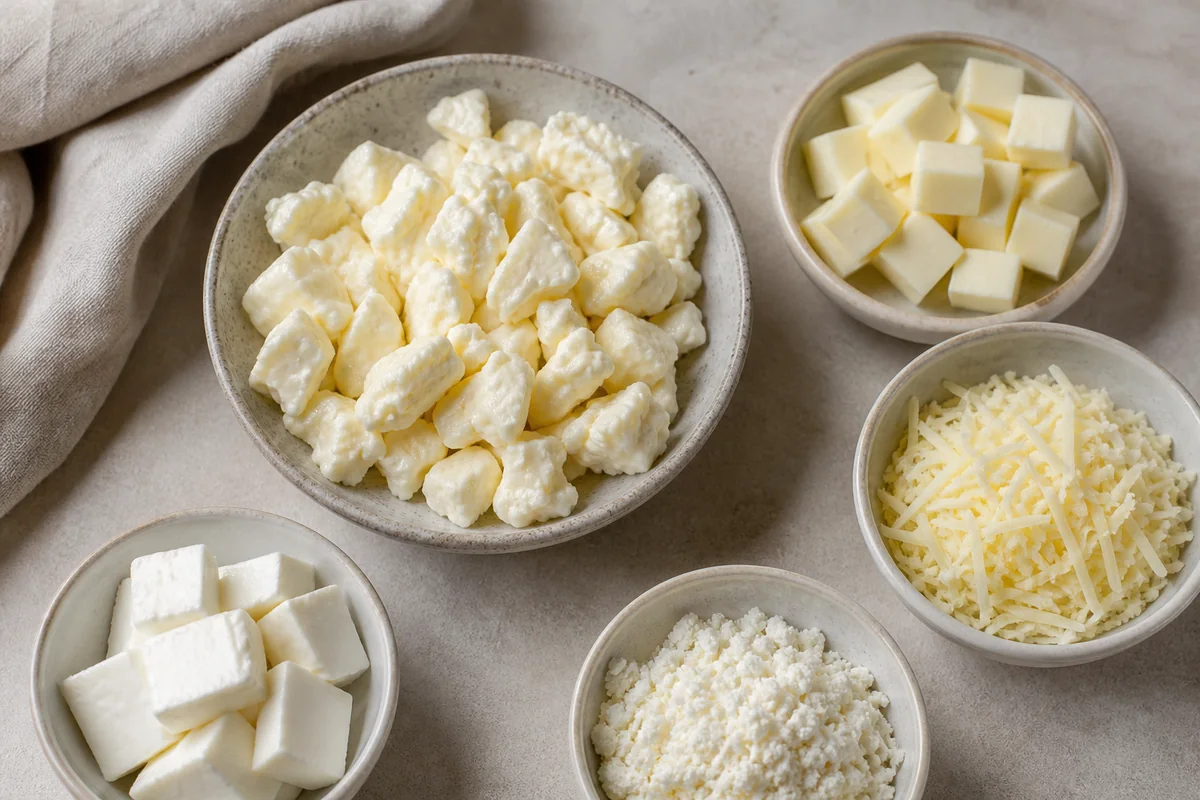
5 Best Cheese Curds Substitutes (Easy Swaps)
Ingredients
Equipment
Method
- Identify how you’re using cheese curds (fried/chewy vs. melted/pulled vs. creamy).
- Pick the closest texture substitute from the list and use the listed ratio to start.
- For frying swaps (halloumi/paneer), pat dry and cook hot so the outside browns before the cheese softens.
- For melt/cream swaps (mozzarella/cottage cheese), reduce moisture by pressing/draining so the swap doesn’t turn watery.
- Taste/texture-check: if it’s too soft, cook a little longer or add a quick binding step (pressing, draining, or re-packing).
Notes
- Moisture level matters: drier cheese browns better and holds shape longer.
- If your curds are meant to be squeaky, prioritize halloumi or paneer.
Tried this recipe?
Let us know how it was!
Carrie is a food writer and editor with more than 15 years of experience. She has worked for some of the biggest names in the food industry, including Bon Appétit, Food & Wine, and Martha Stewart Living.
As the Editor in Chief of EpicureDelight, Carrie oversees all of the content on the site. She also manages the team of contributing writers and editors, who help to create delicious recipes, helpful tips, and informative articles that you’ll find on the site.
A native of the Chicago area, Carrie is passionate about all things food. She loves trying new restaurants and experimenting with new recipes in her kitchen. She’s also a graduate of the Culinary Institute of America, so she knows a thing or two about food!



