
That thick, brick-red spoonful does a lot of work. Chili bean sauce brings fermented bean savoriness, sticky body, and chili heat all at once, which is why a single swap rarely covers all three roles by itself.
The good news: most kitchens already have something that handles two of those three roles well. A good chili bean sauce substitute either matches the fermented depth first, then adds heat, or matches the body first, then adds flavor.
Knowing which role matters most in your dish tells you which swap to reach for.
Chili bean sauce is salty, savory, spicy, and thick. The best substitutes match those roles in order: fermented bean depth first, then chili heat, then sticky body. Doubanjiang is the closest overall. Gochujang + soy and miso + chili crisp work well when bean pastes aren't available.
5 Best Chili Bean Sauce Substitutes Ranked by Flavor Match
| # | Substitute | Best For | Ratio | Key Note |
|---|---|---|---|---|
| 1 | Doubanjiang | Both | 1:1 | Closest fermented bean flavor |
| 2 | Toban Djan | Both | 1:1 | Sweeter; reduce sugar in dish |
| 3 | Miso + Chili Crisp | Both | 1:1 | Mix until paste-like; may be oily |
| 4 | Gochujang + Soy Sauce | Both | ¾:1 | Sweeter; soy restores salt depth |
| 5 | Tomato Paste + Chili + Soy | Both | 1:1 | Body and color; no bean flavor |
Each substitute below includes notes on heat, sweetness, and thickness. Ratios are starting points; taste after heating and adjust from there.
Before you commit to any swap, make sure your stored soy sauce is still good, since several of these swaps lean on it for salty depth.
1. Doubanjiang
Doubanjiang is the most direct swap. It is also a fermented broad bean paste with chili, so it shares the same salty-funky base as chili bean sauce and holds the same spoonable paste structure.
Use it 1:1. It may taste slightly more pungent and less oily than some chili bean sauces, so a quick taste before adding is worthwhile.
If you want a full picture of its flavor profile, the page covering doubanjiang's taste characteristics is useful before you adjust.
- Works best in: Mapo tofu, stir-fried noodles, braises, and any dish where fermented bean flavor is the point
- Watch heat: Some doubanjiang brands run hotter than others; start with ¾ of the called amount and scale up
- Too thick: Stir in 1 teaspoon of water or stock to loosen it before adding to the pan
- Skip if: You need a milder, less funky flavor; doubanjiang is more pungent and can overpower delicate sauces
2. Toban Djan
Toban djan looks nearly identical to chili bean sauce in the jar, but it is typically formulated with more sweetness. That extra sugar shifts the balance of a stir-fry sauce noticeably if you don't account for it.
It still works well at a 1:1 ratio in most dishes. The trick is cutting sugar elsewhere in the recipe by about half a teaspoon per tablespoon of toban djan used.
For anyone exploring picking the right chili paste more broadly, this is a solid everyday option.
Sweeter Toban Djan
Works for: Mild stir-fries, noodle dishes, dishes where a touch of sweetness is welcome
Skip if: The recipe is savory-only and you cannot reduce sugar elsewhere
Less Sweet Chili Bean Sauce
Works for: Braises, bold sauces, dishes needing sharp fermented bite
Skip if: Your dish already has high salt or soy and needs sweetness to balance
- Best dishes: Stir-fried vegetables, mild noodle sauces, quick fried rice
- Reduce sweetness: Cut any added sugar or hoisin in the recipe by half a teaspoon
- Heat adjustment: Add a small pinch of chili flakes if the brand you have runs mild
Skip if your recipe depends on a sharp, savory-only fermented flavor and there's no way to reduce sugar in the rest of the dish.
3. Chili Crisp + Miso
This is the "build the missing roles" swap. Miso handles the fermented bean savoriness, and chili crisp supplies the chili heat plus an oil-based slip that keeps the paste moving in the pan.
Together they cover three of the four main roles of chili bean sauce. For a deeper comparison of miso's flavor range, the miso versus shoyu contrast is worth a quick scan.
- Mixing: Mash miso and chili crisp together with a fork until the oil is mostly absorbed; it should look thick and spreadable
- For noodles: Thin the paste with 1 teaspoon of water or sesame oil so it coats strands evenly
- For stir-fry: Use it straight from the mash; the residual oil helps it bloom in the hot pan
- Watch oiliness: Chili crisp is oil-heavy; if the dish looks greasy, reduce chili crisp by 1 teaspoon and compensate with a pinch of chili flakes
- Skip if: You need a true bean-paste texture; this mix stays slightly looser unless pressed into a very stiff paste
4. Gochujang + Soy Sauce
Gochujang is fermented, but it ferments from chili and rice, not beans, so it brings heat and tang without the bean-savory baseline. Adding soy sauce fills that gap fast.
Use ¾ tablespoon gochujang plus about 1 teaspoon soy for every tablespoon of chili bean sauce called for. Anyone also considering swapping out gochujang in the same recipe should note that the fermented base here is what's doing the heavy lifting.
- Mixing order: Stir soy sauce into gochujang first, then add to the pan; this prevents soy from burning before the paste incorporates
- Too sweet: Add an extra ½ teaspoon soy and a small pinch of salt to push savory notes forward
- Delicate sauces: Use ½ tablespoon instead of ¾ to avoid gochujang's tang overpowering mild broths or light glazes
- Skip if: The dish is a baked good and can't handle gochujang's noticeable tang and sweetness in the finished flavor
5. Tomato Paste + Chili Powder + Soy
This swap is mostly about body and color. Tomato paste creates the thick, sticky texture that coats noodles and proteins.
Chili powder adds heat, and soy sauce compensates for the missing fermented savory depth. It won't taste like bean paste, but it will behave like one in the pan.
For dishes where heat level is the biggest variable, reviewing picking the right heat source first saves a lot of seasoning rounds.
| Use | Ratio | Notes |
|---|---|---|
| 2 servings | 1 tablespoon tomato paste + ½ teaspoon chili powder + 1 teaspoon soy | Mix before adding; thin with 1 teaspoon water if too stiff |
| 4 servings | 2 tablespoon tomato paste + 1 teaspoon chili powder + 2 teaspoon soy | Simmer 30-60 sec to mellow raw chili powder flavor |
- Simmer first: Cook the paste in the pan for 30-60 seconds before adding other liquids to round the chili powder's raw edge
- Fix bitterness: Add ½ teaspoon sugar or a small splash of rice vinegar to balance if the chili powder tastes sharp
- Too thick: Add water 1 teaspoon at a time; too thin, stir in a small spoon more tomato paste rather than reducing the dish
- Skip if: Your dish depends on fermented bean flavor; tomato paste gives body but no bean savoriness at all
Chili Bean Sauce in Baking: Miso-Chili or Gochujang Swaps
Baking changes the math. Heat concentrates sweetness, and chili heat sharpens as moisture bakes off.
A swap that tastes balanced in a stir-fry can turn uncomfortably hot or sweet inside a baked glaze or a stuffed bun. The page on fermented bean paste options covers which pastes stay stable under dry heat if you need a deeper reference.
- Best swap choice: White miso + chili crisp (the miso's sweetness is mild and stays mellow after baking)
- Second choice: Gochujang at half the quantity called for, then balance with an extra pinch of salt in the batter or dough
- Reduce sweetness: Cut any recipe sugar by 1 teaspoon for every tablespoon of gochujang used; toban djan needs the same cut
- Prevent heat dominance: Mix the swap into wet ingredients first and taste the batter before baking; heat amplifies and can't be corrected after
- Skip if: The original recipe uses chili bean sauce only as a stir-fry finishing sauce; in that case, none of these baking notes apply
Making Your Substitute Work: Heat, Sweetness, and Thickness
The fastest way to ruin a substitute swap is to add it cold and never taste again. Every fermented paste changes character once heat hits it: sharpness softens, salt deepens, and oil separates if the pan is too hot.
The workflow is simple: add the substitute, let it cook for 30-60 seconds over medium heat, then taste and correct. If you're also adjusting the dish's soy component, a look at replacing soy sauce helps keep the salt balance from doubling up.
- Simmer 30-60 seconds to mellow raw chili and round fermented edges
- Thin with water 1 teaspoon at a time until the paste coats a spoon without clumping
- Fix sweetness with a pinch of salt or soy rather than adding more paste
Frequently Asked Questions
Doubanjiang is the closest match for stir-fry. It shares the same fermented bean base and chili paste texture, and works at a 1:1 ratio with no adjustments needed beyond a quick taste for heat level.
Use ¾ tablespoon gochujang per tablespoon of chili bean sauce, not a full 1:1, because gochujang is sweeter and tangier. Add 1 teaspoon soy sauce alongside it to restore the missing savory depth.
Add a small pinch of salt or an extra ½ teaspoon of soy sauce, then simmer for 30 seconds. Avoid adding more paste to fix sweetness; extra salt corrects it faster without thickening the sauce further.
Doubanjiang or tomato paste blended with chili powder and soy both give a thick, spoonable body. Tomato paste is thicker straight from the can; thin it with 1 teaspoon water to match chili bean sauce consistency.
Not exactly. Heat and sweetness concentrate during baking, so use white miso plus a small amount of chili crisp for the most stable result. Reduce any recipe sugar by 1 teaspoon to compensate for the swap's residual sweetness.
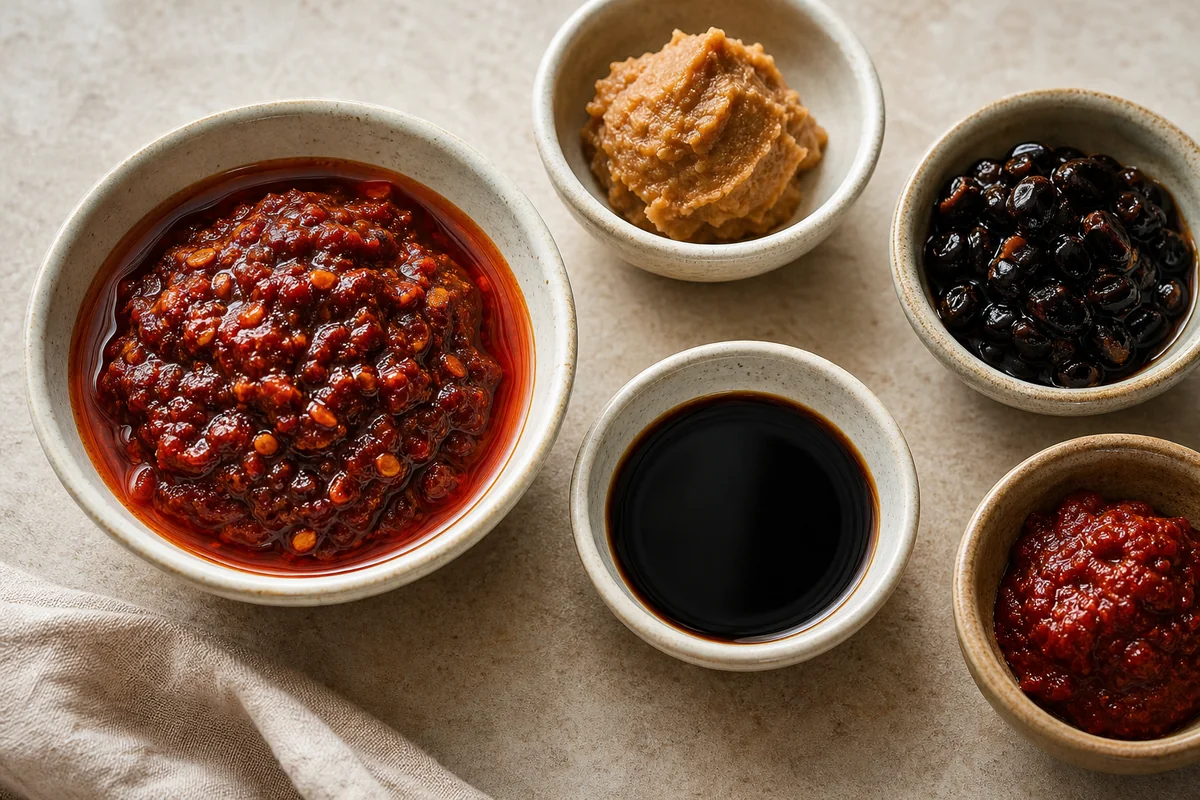
5 Best Chili Bean Sauce Substitutes Worth Trying
Ingredients
Method
- Match your goal: if you want the closest fermented bean flavor, start with doubanjiang or toban djan.
- Use the listed ratio, then adjust: add a small splash of water to loosen or a pinch of sugar (if needed) to balance harsh chili sharpness.
- Check texture: you want a spoonable paste that coats noodles/stir-fry; if it’s too oily, stir longer or add a bit more paste (not water).
- Taste once heated—fermented pastes mellow with a quick simmer or stir-fry for 30–60 seconds.
Notes
- If your chili bean sauce is used for stir-fry to sauce noodles, prioritize paste thickness and salty-fermented depth.
- If your dish is very sweet already, choose a substitute with less added sugar (doubanjiang over toban djan).
Tried this recipe?
Let us know how it was!
Carrie is a food writer and editor with more than 15 years of experience. She has worked for some of the biggest names in the food industry, including Bon Appétit, Food & Wine, and Martha Stewart Living.
As the Editor in Chief of EpicureDelight, Carrie oversees all of the content on the site. She also manages the team of contributing writers and editors, who help to create delicious recipes, helpful tips, and informative articles that you’ll find on the site.
A native of the Chicago area, Carrie is passionate about all things food. She loves trying new restaurants and experimenting with new recipes in her kitchen. She’s also a graduate of the Culinary Institute of America, so she knows a thing or two about food!



