
Chinese black vinegar has a flavor that's hard to ignore. Dark, tangy, and faintly sweet, it brings a sourness with real depth behind it.
Finding a chinese black vinegar substitute that matches all three of those qualities takes a little thought, but the good news is that most home kitchens already have something that works.
The ratios below are your starting point. Taste as you go.
Every substitute has a slightly different character, and a small adjustment can bring it much closer.
Chinese black vinegar is dark, tangy, and lightly sweet. The best substitutes match at least two of those qualities. Balsamic vinegar is the closest overall. Rice vinegar with a pinch of soy is cleaner and savory. Adjust sweetness in small steps and add your substitute near the end of cooking.
5 Best Chinese Black Vinegar Substitutes (with Ratios)
Start with the table to find your best match, then read the detailed section for the substitute you choose.
| # | Substitute | Best For | Ratio | Key Note |
|---|---|---|---|---|
| 1 | Balsamic Vinegar | Both | 1:1 | Reduce if dish has sugar |
| 2 | Rice Vinegar + Soy | Both | 1:1 | Cleanest savory swap |
| 3 | Apple Cider Vinegar | Both | 1:1 | Add tiny sweetener |
| 4 | Distilled White Vinegar | Both | ¾:1 | Sharper, sweeten slightly |
| 5 | Red Wine Vinegar | Both | 1:1 | More fruit-forward |
Skip any soy-based swap if your dish is already very salty. Taste before adding.
1. Balsamic Vinegar
Balsamic is the closest single-ingredient swap. It shares black vinegar's dark color, its tangy punch, and that background sweetness that makes the sourness feel rounded rather than sharp.
The fruit notes are more present, which is fine in glazes and stir-fry finishes. In a dish that already has honey or fruit, the sweetness can pile up fast.
Balsamic vs. Chinese Black Vinegar
Works for: dark sauces, stir-fry finishes, glazes, and dipping sauces where color matters
Skip if: the dish is already sweet, or you need a neutral, non-fruity vinegar base
If you're weighing balsamic against other options, picking a different swap is worth a look before committing.
- Starting ratio: Use 1:1 as your base swap in sauces and glazes
- If the dish has sugar or fruit: Reduce to ¾ of the amount and taste before adding more
- Color: Balsamic runs darker, so it matches black vinegar's appearance well in finished dishes
Skip if: you need a clean, neutral vinegar flavor. Balsamic reads sweeter and more complex than black vinegar in lighter preparations.
2. Rice Vinegar + Soy Sauce
Rice vinegar alone is clean and mild. It covers the tangy side of black vinegar without adding fruit.
The soy sauce (or a pinch of salt) fills in the savory, slightly dark edge that plain rice vinegar misses.
This combination works best in dipping sauces and dressings. It keeps things tasting like Chinese cooking rather than Italian.
If you want to check how long your rice vinegar stays fresh, that matters here since older vinegar can taste flat.
- Starting ratio: Use 1:1 rice vinegar, then add just ¼ teaspoon soy sauce per tablespoon of vinegar
- Want more depth? Add a second small drop of soy, but stop before it tastes soy-forward
- Avoiding soy entirely? Use a small pinch of salt instead. It adds the savory note without soy flavor
Skip if: you're avoiding soy and salt-only isn't enough. The combination won't replicate black vinegar's natural sweetness without an extra pinch of sugar.
3. Apple Cider Vinegar
Apple cider vinegar is tangier than rice vinegar and has a slightly fruity warmth that makes it a reasonable middle-ground swap. The goal is to round the sharpness with a tiny amount of sweetener so it reads closer to black vinegar's character.
For quick marinades and dressings, it performs well. If you're working with a recipe that already uses other bright ingredients, the apple note can blend in.
For broader cider vinegar swap ideas, there are a few more angles worth knowing.
- Starting ratio: Use 1:1 apple cider vinegar as a direct swap
- Sweeten it: Add sugar or honey in a single small pinch per tablespoon to reduce the sharp edge
- Color: It won't add dark color, so expect a lighter finish than black vinegar
Skip if: you can't tolerate apple-like flavor notes in the dish. In that case, rice vinegar with soy is a cleaner direction.
4. Distilled White Vinegar
White vinegar is sharper than any other substitute here. It has no sweetness, no depth, and very little nuance.
That's not a dealbreaker, but it does mean you need to use less of it and adjust carefully.
Start at ¾ of the amount called for, not 1:1. Then add a single pinch of sugar to soften the harshness.
Let the mixture sit for two or three minutes before tasting. For context on where white vinegar fits against other acids, choosing a sharper swap has a breakdown worth reading.
- Starting ratio: Use ¾ of the amount, not a full 1:1
- Adjust: One pinch of sugar per tablespoon softens the bite and adds a small amount of rounding
Skip if: the dish depends on aged, dark complexity. White vinegar is too flat and harsh to carry that role.
5. Red Wine Vinegar
Red wine vinegar has good tang and a color that sits somewhere between white and black vinegar. It's more fruit-forward than Chinese black vinegar, but in a finishing sauce or a quick stir-fry, that fruit note mostly disappears into the other flavors.
A small pinch of sugar brings it closer. Use it at the end of cooking, not at the start.
Red Wine Vinegar vs. Chinese Black Vinegar
Works for: finishing sauces, stir-fry balance, and quick salad dressings that need tang
Skip if: the dish is delicate and fruit notes would stand out, or you're making dumplings where black vinegar flavor is the point
- Starting ratio: Use 1:1 red wine vinegar as a direct swap
- Rounding: Add one pinch of sugar per tablespoon to bring the acidity closer to black vinegar's balance
- Best use: Finishing sauces and dressings where tang matters more than color or aged depth
Skip if: fruit notes would clash with the dish. Rice vinegar with soy is the better choice in that case.
Making Chinese Black Vinegar Substitutes Work
Matching Chinese black vinegar is mostly about order of operations. Get the tang right first, then dial in sweetness, then add a drop of depth (soy or salt).
Taste after combining, not before. The flavor changes once the substitute is in contact with other liquids.
For dishes where you're using clean tart swaps, start conservative and build up.
- Start with the ratio: Use the listed ratio as your opening amount, then adjust from there rather than guessing
- Adjust sweetness vs. depth separately: Add sugar in single pinches for sweetness; add a drop of soy or a pinch of salt for savory depth
- Taste after combining: Let the substitute sit in the sauce for one minute before deciding if it needs more adjustment
Chinese Black Vinegar Substitute FAQ
Yes, 1:1 works as a starting point. If your dish already has sugar or fruit, reduce balsamic to ¾ of the amount to avoid an overly sweet result.
Rice vinegar with a small pinch of soy sauce is your best option. It stays clean and savory without any fruit notes from balsamic or apple cider vinegar.
Add a single pinch of sugar and stir well. Let the sauce sit for one minute before tasting again, since sugar takes a moment to balance the acidity.
Soy adds a light brown tint and slight saltiness. It won't add sweetness, so the dish may taste less rounded than it would with black vinegar.
Add it near the end. Cooking burns off acidity quickly, and you lose the tang that makes Chinese black vinegar worth using in the first place.
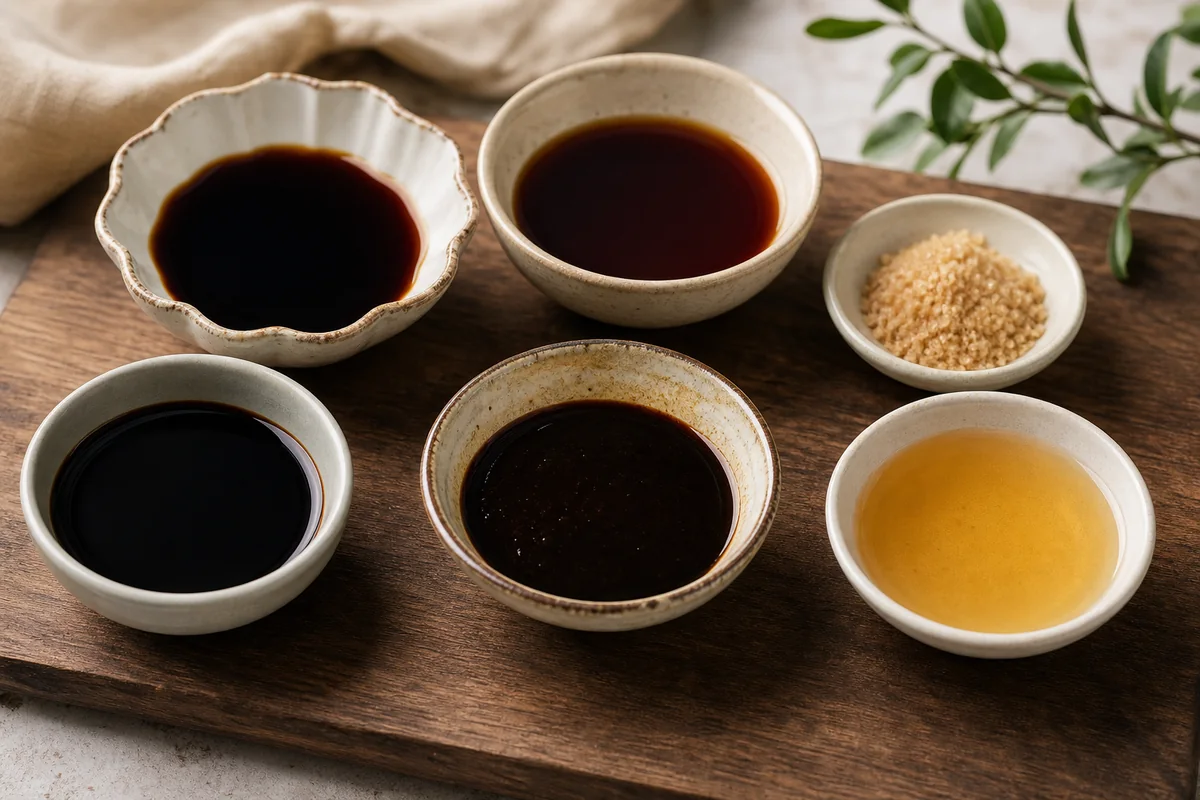
5 Best Chinese Black Vinegar Substitutes (with Ratios)
Ingredients
Equipment
Method
- Pick the substitute that matches what you have: want the closest color and complexity? choose balsamic; want the cleanest savory tang? choose rice vinegar + soy.
- Use the listed ratio as your starting point, then adjust by taste for sweetness (add 1–2 pinches sugar) or depth (add a few drops soy/salt).
- If your substitute is sharper (white vinegar), start at ¾ of the amount and let the mixture sit 2–3 minutes to round the acidity.
- For sauces and dressings, stir well and taste once the liquid is combined; for marinades, mix with other ingredients before adding.
- When cooking, add the vinegar near the end so you preserve the tang that Chinese black vinegar is known for.
Notes
- Goal flavor for swaps: tang + slight sweetness + dark depth (not just sourness).
- Start with the ratio, then fine-tune with tiny additions of sugar (sweetness) or soy/salt (depth).
Tried this recipe?
Let us know how it was!
Carrie is a food writer and editor with more than 15 years of experience. She has worked for some of the biggest names in the food industry, including Bon Appétit, Food & Wine, and Martha Stewart Living.
As the Editor in Chief of EpicureDelight, Carrie oversees all of the content on the site. She also manages the team of contributing writers and editors, who help to create delicious recipes, helpful tips, and informative articles that you’ll find on the site.
A native of the Chicago area, Carrie is passionate about all things food. She loves trying new restaurants and experimenting with new recipes in her kitchen. She’s also a graduate of the Culinary Institute of America, so she knows a thing or two about food!



