
Choy sum has a particular character that's hard to forget once you've cooked it. The stems stay firm for about 60 seconds longer than the leaves, so you get two textures in one bunch.
Finding the right choy sum substitute means matching that split personality, not just grabbing the nearest leafy green.
Most swaps work fine if you cook them in stages. Stems first, leaves second, heat off fast.
That habit alone keeps any of these five substitutes from going limp.
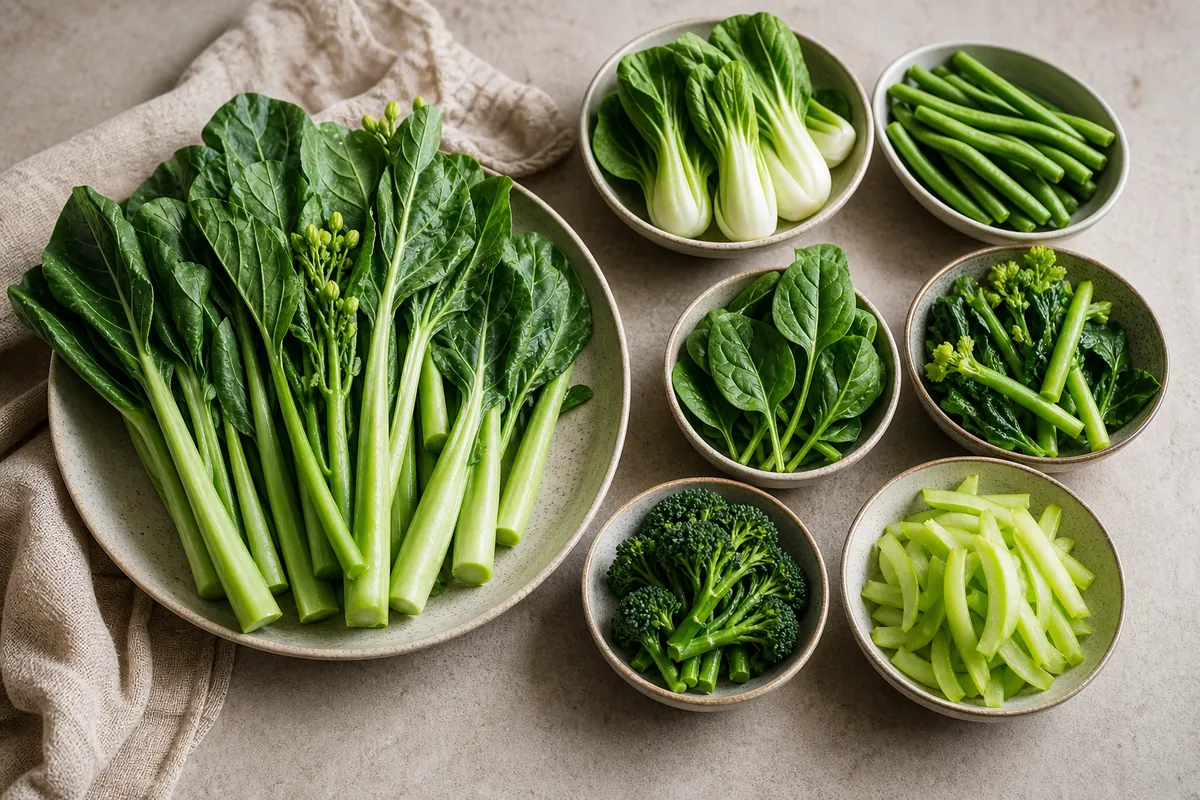
Choy sum offers tender leaves and quick-cooking stems in one bunch. The best replacements match that stem-leaf split. Gai lan and baby bok choy are closest for stir-fry texture. Mustard greens and turnip greens add more bite. Baby spinach is the fastest emergency swap.
5 Best Choy Sum Substitutes for Any Stir-Fry
Before jumping into each substitute, a quick note on the reference table below. It shows ratios and best-use context at a glance.
The per-substitute sections below it give you the actual cooking guidance, because ratios alone won't stop your greens from going soggy.
| # | Substitute | Best For | Ratio | Key Note |
|---|---|---|---|---|
| 1 | Gai lan | Both | 1:1 | Slice stems thin first |
| 2 | Baby bok choy | Both | 1:1 | Stage stems then leaves |
| 3 | Mustard greens | Cooked | 1:1 | Balance with sauce sweetness |
| 4 | Turnip greens | Cooked | 1:1 | Trim thick ribs before cooking |
| 5 | Baby spinach | Cooked | 1:1 | Add at the very end only |
1. Gai Lan
Gai lan is the closest thing to choy sum in flavor and structure. Its stems have a mild, slightly bitter edge that softens fast over high heat, and sturdy brassica stems hold texture without going mushy when you move quickly.
The key is separating your prep by a few seconds of cook time. Stems go in first, leaves follow about 45 seconds later.
Gai Lan
Works for: stir-fries needing both stem crunch and tender leaves, noodle dishes, oyster sauce preparations
Skip if: you want zero stem prep-gai lan needs thin-sliced stems or the centers stay raw
- Stem prep: Slice on a bias, about ¼-inch thick, so they cook in roughly 60 seconds
- Leaf timing: Add leaves after stems soften; toss for 20-30 seconds and pull the pan from heat
- Heat level: High heat only-medium heat dulls both flavor and color
2. Baby Bok Choy
Baby bok choy is the most reliable everyday swap. It has white, crunchy stems and dark leafy tops that behave almost exactly like choy sum when you pick the right size leaf.
Stick to smaller heads; the thinner stems cook fast and stay juicy rather than fibrous.
- Start with stems: Halve or quarter the heads and place cut-side down in the hot pan for 45-60 seconds
- Add the leaves: Toss in leafy tops once stems have a little color, cook for 20 seconds
- Season late: Add soy sauce after the leaves go in so the pan doesn't cool down too fast
Skip this if your bok choy is large and mature. Thick stems from full-grown heads need longer cooking and can turn the leaves to mush before the stems are done.
3. Mustard Greens
Mustard greens have more personality than choy sum. The sharp, peppery leaves are bold on their own but settle down fast over high heat.
A quick stir-fry of 90 seconds total keeps the sharpness pleasant rather than harsh.
Sauce balance matters more here than with other swaps. A small addition of sugar or a splash of rice wine alongside soy sauce takes the edge off without flattening the flavor.
- Use tender stems only: Discard any stems thicker than your finger; they stay fibrous
- Sweeten your sauce: Add ¼ teaspoon sugar per 2 tablespoon soy sauce to balance the pepper bite
- Cut small: Smaller pieces cook evenly and don't overpower the dish with raw peppery patches
Skip this if you can't adjust seasoning. Without sauce balance, mustard greens can taste sharply bitter rather than pleasantly spicy.
4. Turnip Greens
Turnip greens work in stir-fries when you handle them right. They have a mild bitterness that is far less aggressive than mustard greens, and they wilt quickly in a hot pan.
Trim any thick central ribs before cooking. Those ribs cook unevenly and can leave chewy, slightly bitter pieces next to perfectly tender leaves.
Once trimmed, cook turnip greens exactly as you would choy sum: high heat, constant tossing, and off the heat the moment the leaves go bright green. The fresh cut greens hold up well for a day or two if you haven't used them yet.
Skip this if the leaves are old or yellowing. At that stage, the ribs are thick and the bitterness is hard to cook out.
5. Baby Spinach
Add baby spinach at the very last second. That is the one rule that keeps it from turning into a soggy, dark heap at the bottom of your pan.
Baby spinach has no real stem structure, so it can't mimic choy sum's crunch. What it does well is fill out a dish with bright, tender leaves when you're out of everything else.
It wilts in about 10-15 seconds over high heat, which means it goes in after your sauce has already reduced and your other ingredients are cooked through.
- Timing is everything: Pull the pan off the burner, toss spinach in, let residual heat wilt it for 10 seconds
- Don't crowd: Add spinach in two batches if you're using a large amount; one big pile steams unevenly
- Skip the extra liquid: Spinach releases water fast; hold off on extra sauce until after it wilts
Skip this if your recipe depends on visible stems. Spinach replaces the leafy portion only and won't give you any stem texture at all.
Making the Substitute Work in Your Dish
The single habit that makes any of these swaps successful is staged cooking. Stems go into a hot, lightly oiled pan first, get 45-60 seconds of direct heat, and then the leaves follow.
When you're stir-frying greens at home, keeping that sequence tight prevents both underdone stems and overcooked leaves. For a deeper look at what makes these greens distinctive, crisp Asian greens have their own flavor profile worth understanding before you swap.
- Slice stems thin: Any stem thicker than ¼ inch needs to be sliced on a bias so the heat reaches the center in time
- High heat only: Medium heat causes steaming, which turns every substitute soggy within 30 seconds
- Serve immediately: These greens lose crunch fast; plate them the moment they come off the heat
Frequently Asked Questions
Gai lan is the closest match. It has edible stems and quick-wilting leaves that behave almost identically to choy sum when you slice the stems thin and stir-fry briefly on high heat.
Yes, for both. Cook the stems first for 45-60 seconds, then add the leaves. Skipping this step leaves you with raw stems and overcooked leaves at the same time.
Baby spinach is the fastest option. It wilts in 10-15 seconds and needs no prep beyond rinsing, making it the best emergency swap when time is the priority.
Trim all thick ribs and cook over high heat until just wilted. Adding a small pinch of sugar to your sauce also softens the sharp edge without masking the flavor.
Yes, if you add it last. Pull the pan off heat, toss spinach in, and let residual warmth wilt it for 10 seconds. Any longer and it turns dark and watery.
5 Best Choy Sum Substitutes for Home Cooks
Ingredients
Equipment
Method
- Choose the substitute based on texture: for a choy-sum-like stem bite, pick gai lan or bok choy; for leafy-only swaps, use spinach at the end.
- Prep like choy sum: trim tough ends, slice thicker stems thin (gai lan/bok choy/chard), and keep leaves larger so they don’t overcook.
- Stir-fry briefly: cook stems first for 60–90 seconds, then add leaves and toss until just wilted and bright.
- Taste and balance: if your substitute is peppery (mustard/turnip greens), add a small pinch of sugar or a touch more sauce to round the bite.
- Serve immediately for best texture—these greens lose crunch quickly if held.
Notes
- For substitutes with tougher ribs (Swiss chard), separate stems and leaves to control doneness.
- For peppery greens (mustard greens), shorten cook time and balance with sauce.
Tried this recipe?
Let us know how it was!
Carrie is a food writer and editor with more than 15 years of experience. She has worked for some of the biggest names in the food industry, including Bon Appétit, Food & Wine, and Martha Stewart Living.
As the Editor in Chief of EpicureDelight, Carrie oversees all of the content on the site. She also manages the team of contributing writers and editors, who help to create delicious recipes, helpful tips, and informative articles that you’ll find on the site.
A native of the Chicago area, Carrie is passionate about all things food. She loves trying new restaurants and experimenting with new recipes in her kitchen. She’s also a graduate of the Culinary Institute of America, so she knows a thing or two about food!



