
Collard greens have a particular personality: thick, slightly waxy leaves that hold up through a long, slow braise without dissolving into mush. That texture is the thing most substitutes struggle to match.
But the right swap, prepped correctly, gets you close enough that most people won't notice.
The key factor isn't flavor alone. Collard green substitute success depends on three things: leaf thickness, bitterness level, and how long the green can simmer before it falls apart. Get those three right and your dish stays on track.
For long braises, mustard greens or kale are your best collard replacements. They hold up under heat and develop a similar tender chew. Turnip greens work nearly as well but cook slightly faster. Use Swiss chard leaves or spinach only in quick-cook or finishing applications.
5 Best Collard Green Substitutes for Any Recipe
Every green on this list can step into a collard greens dish, but each has a different sweet spot. Match your substitute to your cooking method first, then adjust seasoning.
Sturdy greens like kale and mustard handle long simmering. Faster-cooking options like chard and spinach need a gentler hand.
| # | Substitute | Best For | Ratio | Key Note |
|---|---|---|---|---|
| 1 | Mustard Greens | Both | 1:1 | Peppery; use young leaves |
| 2 | Kale (de-stemmed) | Both | 1:1 | Remove ribs; chop smaller |
| 3 | Turnip Greens | Both | 1:1 | Cooks faster than collards |
| 4 | Swiss Chard (leaf-only) | Both | 1:1 | Separate stems from leaves |
| 5 | Spinach | Cooking | 2:1 | Add at the very end |
1. Mustard Greens
Mustard greens are the closest thing to collards in terms of structure. They have similarly broad leaves that soften during long simmering, and they respond well to the same aromatics: garlic, smoked meat, or a splash of vinegar.
The difference is flavor. Mustard greens carry a sharper, more peppery bite, especially in mature leaves.
Young mustard greens are noticeably milder and work better in dishes where you don't want that edge.
If you want to understand the full flavor comparison, the peppery-bitter profile of mustard greens is worth knowing before you cook with them. Use them at a 1:1 swap and adjust seasoning after tenderizing.
- Prep: Strip thick center ribs and chop leaves into 2-inch pieces before cooking.
- Simmer time: About the same as collards; 30-45 minutes for fully tender leaves.
- Bitterness control: Add a small splash of apple cider vinegar or lemon in the last 10 minutes.
- Best uses: Braised greens, Southern-style greens with pot liquor, stews.
Mustard Greens vs. Collards
Works for: Long braises, stews, any dish needing a sturdy leafy green that holds its shape.
Skip if: You dislike peppery bitterness or are working with very mature, thick mustard leaves.
2. Kale (De-Stemmed)
Kale is the most available collard replacement at most grocery stores. Lacinato (dinosaur) kale is the better pick here: its flat, dark leaves are less curly and soften more evenly than curly kale during braising.
De-stemming is non-negotiable. The thick ribs stay tough long after the leaves are ready.
To keep storing kale fresh before use, wrap it loosely in a damp paper towel and refrigerate for up to 5 days.
- De-stemming: Fold each leaf in half and pull the rib out; discard thick stems entirely.
- Chop size: Cut into 1.5-2 inch pieces so it softens at the same rate as collards.
- Simmer time: 25-40 minutes for tender results; don't rush it or it stays chewy.
- Ratio: 1:1 by weight, but pack the measuring cup since kale is bulkier before wilting.
Skip if: Your recipe cooks for under 15 minutes total. Kale still needs time to fully tenderize.
3. Turnip Greens
Turnip greens are an underrated swap that most cooks overlook. They have the same cooked-greens character as collards, a leafy softness after braising that feels right in Southern-style dishes or slow-simmered pots.
They also absorb smoked pork or ham hock flavor very well, which makes them a natural fit in recipes where those ingredients do the heavy seasoning work.
The one adjustment to make is time. Turnip greens soften faster than collards, typically 10-15 minutes sooner in a long braise.
When serving these greens as a side dish, start tasting for tenderness at the 20-minute mark. They also carry a peppery edge, less sharp than mustard greens but noticeable.
Season after softening to keep that bitterness in check.
Skip if: You want a very mild, slightly sweet profile similar to young collards. Turnip greens lean savory and sharp.
4. Swiss Chard (Leaf-Only)
Swiss chard is milder than collards and cooks faster, which makes it a good choice when you want a less assertive result. The catch is the stems.
Chard stems are fibrous and need significantly more time than the leaves, so if you cook them together from the start, you end up with overcooked leaves and undercooked stems. The fix is simple: separate them and add them at different times.
If you're deciding between chard-based options, choosing the best chard swap for your specific dish can help you avoid common texture problems. For a straight collard replacement, use leaves only at a 1:1 ratio.
| Part | When to Add | Notes |
|---|---|---|
| Chard stems (diced) | First 15-20 min | Treat like aromatics; stir in with onion or garlic |
| Chard leaves (chopped) | Last 10-15 min | Add after stems soften; simmer until just tender |
- Prep: Tear or chop leaves away from the stem at the base; don't include the lower third of the stem.
- Flavor note: Chard is earthier and milder than collards; it won't have the same slight bitterness.
- Best uses: Sautéed greens, pasta dishes, grain bowls, quick stir-ins for soups.
Skip if: You don't want to manage separate cook times. Use kale or mustard greens instead.
5. Spinach
Spinach is a finishing green, not a braising green. It wilts in under 2 minutes and turns gray-green and mushy if left in a hot pot too long.
That said, it works well when you need greens in a dish quickly, or when you're out of everything else and need something to round out a soup or stew at the end of cooking.
Baby spinach works better here than mature spinach. Mature leaves can get slimy when overcooked.
For a cooked-greens dish like Southern braised collards, check what these sturdy bitter leaves actually bring to the flavor so you know what spinach can and can't replace.
- Ratio: Use 2 cups of spinach for every 1 cup of collards called for; it reduces dramatically.
- Timing: Add in the final 60-90 seconds of cook time only.
- Frozen spinach: Thaw and squeeze out excess water before adding; it adds too much moisture otherwise.
- Best uses: Soups, egg dishes, quick sautés, pasta sauces.
Skip if: Your recipe calls for a long simmer from start to finish. Spinach has no place in a 45-minute braise.
Making Your Collard Green Substitute Taste Right
The adjustment loop is always the same: match the leaf thickness to your simmer time, then season at the end. Thicker, sturdier greens like kale or mustard need a full 30-45 minute braise to reach the soft, yielding texture that makes collards so satisfying.
Thinner greens like chard or turnip greens get there faster, around 20 minutes. The biggest seasoning mistake is adding salt and acid too early.
Both can intensify bitterness in cooking greens. Wait until the leaves are fully soft, then add salt, a splash of vinegar or lemon, and simmer 2-3 more minutes to blend.
If you're still deciding which leaf to use for your specific dish, picking the right leafy swap depends partly on what else is in the pot.
- Chop smaller for faster results: Cut any substitute into 1.5-2 inch pieces so it softens closer to collard speed.
- Use acid at the end: Add 1-2 teaspoons of apple cider vinegar or lemon juice after greens are tender, not before.
- Don't skip aromatics: Garlic, onion, and smoked meat carry a lot of the flavor that collards would have provided; keep them in the pot.
Frequently Asked Questions
Mustard greens are the closest match for long braises. They hold up under heat and develop a similar tender chew; just use young leaves to keep the peppery bite manageable.
No. Kale stems stay tough even after long cooking. Always strip the leaves from the ribs before using kale as a collard substitute.
Simmer fully until soft, then add a small splash of apple cider vinegar or lemon juice. Seasoning after tenderizing, rather than during, also keeps bitterness from amplifying.
Yes. Add diced stems 10-15 minutes before the leaves so both finish at the same time. Cooking them together from the start leaves leaves mushy and stems still tough.
Add spinach in the final 60-90 seconds of cooking, or stir it in off the heat entirely. Anything longer turns it gray and mushy.
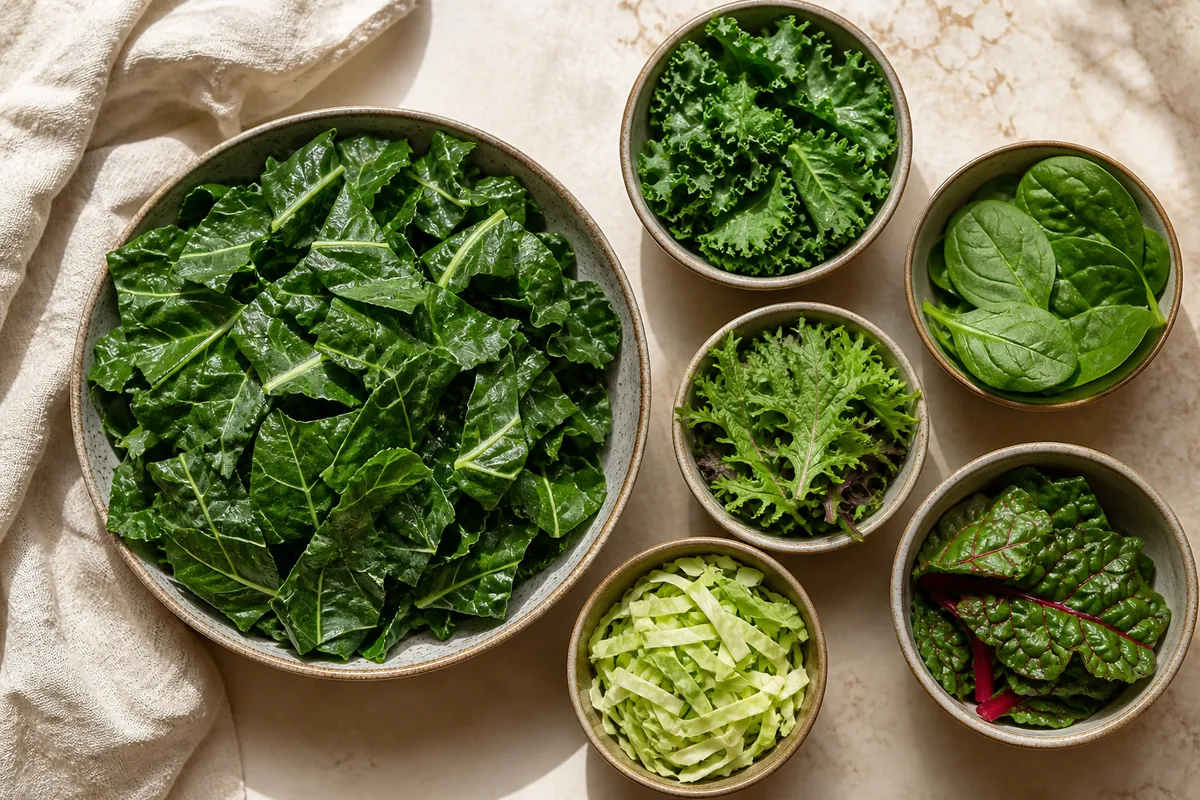
5 Best Collard Green Substitutes for Any Recipe
Ingredients
Equipment
Method
- Choose your substitute based on how you’re cooking: long-simmer dishes need sturdy greens (mustard, kale, turnip).
- Match texture by prep: de-stem and chop sturdy greens smaller so they soften like collards.
- Adjust time: greens that cook faster (chard, turnip) need less simmering; spinach must be added at the end.
- Balance flavor: if your substitute is more bitter than collards, simmer with a small splash of vinegar or lemon.
- Taste and tune: add salt and seasoning after the greens soften, then simmer 2–3 minutes more to blend flavors.
Notes
- For simmered greens, use sturdier leafy replacements and reduce cooking time for quick-cooking options.
- Bitterness varies by leaf maturity—young leaves simmer more gently than older ones.
Tried this recipe?
Let us know how it was!
Carrie is a food writer and editor with more than 15 years of experience. She has worked for some of the biggest names in the food industry, including Bon Appétit, Food & Wine, and Martha Stewart Living.
As the Editor in Chief of EpicureDelight, Carrie oversees all of the content on the site. She also manages the team of contributing writers and editors, who help to create delicious recipes, helpful tips, and informative articles that you’ll find on the site.
A native of the Chicago area, Carrie is passionate about all things food. She loves trying new restaurants and experimenting with new recipes in her kitchen. She’s also a graduate of the Culinary Institute of America, so she knows a thing or two about food!



