
Batter on the counter, sauce on the stove, and no corn flour in the cabinet. It happens.
The good news is that several pantry staples can step in cleanly, as long as you pick the right one for the job. A corn flour substitute for thickening behaves differently than one for breading, so the match matters.
Corn flour does two main things: it thickens liquids and adds a light, powdery texture to coatings and batters. Its flavor profile and texture notes are mild but distinctive, so swaps should be chosen based on whether you need clarity, structure, or crunch.
Starch-based replacements activate fast and give glossy results. Flour-based ones build more body but need longer cooking.
For thickening, cornstarch is the closest match at 1:1. For baking, rice flour holds up well. All-purpose flour works in roux-style cooking. Use potato starch at ¾:1 for powerful thickening. Tapioca starch at ¾:1 gives coatings a crisp chew. Pick your swap based on the recipe's job.
5 Best Corn Flour Alternatives (Quick Reference)
The table below covers all five substitutes with their best use and the swap ratio you'll see repeated in each section below. Scan it first, then read only the sections that match your recipe.
| # | Substitute | Best For | Ratio | Key Note |
|---|---|---|---|---|
| 1 | Cornstarch | Thickening | 1:1 | Glossy, smooth finish |
| 2 | Rice Flour | Baking | 1:1 | Neutral, light crumb |
| 3 | All-Purpose Flour | Structure/Roux | 1:1 | Cook out raw taste |
| 4 | Potato Starch | Thickening | ¾:1 | Strong, use less |
| 5 | Tapioca Starch | Coatings | ¾:1 | Crisp, chewy bite |
A note on the table: the ratio column is a starting point. Every recipe is different, so taste and check consistency before you commit to the full amount.
1. Cornstarch
Cornstarch is the straightest path when you need to thicken a sauce, gravy, or stir-fry glaze. It activates at a lower temperature than flour and gives a clear, glossy finish that corn flour also tends toward.
If you've used it for grain-based swaps before, note that cornstarch is purely starch, no grain texture at all.
Cornstarch
Works for: sauces, gravies, stir-fry glazes, and any recipe where glossy clarity matters
Skip if: you need corn flour's slight grainy texture for breading, cornstarch is too smooth to replicate that bite
- Slurry first: Whisk cornstarch into cold water or broth before adding it to any hot liquid.
- Heat briefly: Simmer for 30-60 seconds after adding the slurry. The sauce will turn glossy and thicken fast.
- Ratio: Use 1:1, but reduce by 1 teaspoon if your sauce is already on the thicker side before adding the starch.
2. Rice Flour
Rice flour is a steady, neutral option when your recipe calls for corn flour in baked goods. It produces a light, slightly dry crumb that most batters handle well.
The mild, clean character of rice flour means it won't fight sweet or savory flavors.
- Moisture check: If the batter feels stiff after mixing, add 1-2 teaspoon of liquid to loosen it.
- Slurry method: For thickening, whisk rice flour into cold liquid first to prevent clumping.
- Gluten-free note: Rice flour is naturally gluten-free, so it's a solid pick for gluten-sensitive recipes.
Skip if: your recipe depends on corn flour for clear sauce thickening. Rice flour can make sauces slightly cloudy and thicker than expected. Check out neutral flour alternatives if rice flour also falls short.
3. All-Purpose Flour
All-purpose flour builds structure and body, but it thickens more slowly than either cornstarch or corn flour. It's best in roux-based cooking or in batters where a slightly denser result is fine.
Understanding wheat flour's flavor range helps you predict whether it will taste right in your dish.
- Roux method: Cook AP flour in butter or oil for 1-2 minutes before adding liquid to avoid a raw flour taste.
- Simmer time: Let the thickened sauce cook at least 3-4 minutes so the starchy, powdery flavor cooks out.
- Batter use: Swap 1:1 in breading, but expect a slightly heavier, less crisp coating than corn flour gives.
- Ratio: Use 1:1 across baking and thickening applications.
Skip if: you need a smooth, glossy finish on a pan sauce. AP flour thickens opaquely and can feel slightly gummy if undercooked.
4. Potato Starch
Potato starch is a powerful thickener. It gelatinizes faster than corn flour and produces a glossy, almost silky sauce.
The key is using slightly less than you'd think.
| Use | Ratio | Notes |
|---|---|---|
| Sauce / Gravy | ¾:1 | Potato starch; whisk into cold liquid first |
| Soup thickening | ½:1 | Potato starch; add near end of cooking |
| Coating / Breading | ¾:1 | Potato starch; dust lightly for crispness |
The starch's storage and stability properties mean it keeps well in a sealed container, so it's worth having on hand.
- Start low: Begin at ¾ of the amount called for, then add small splashes of hot liquid if the result is too thick.
- Avoid boiling hard: Hard boiling after adding potato starch can break the gel and make the sauce watery.
- Texture check: If the finish feels gummy, thin with 1 tablespoon of warm broth and stir off the heat.
Skip if: your recipe needs a light, airy baked crumb. Potato starch can make baked goods dense and heavier than expected.
5. Tapioca Starch
Tapioca starch does something corn flour can't quite match: it gives coatings a snappy, slightly chewy crispness that holds up even after resting. For fried or oven-baked coatings, the starch-versus-gum tradeoff almost always lands in tapioca's favor for texture.
Tapioca Starch
Works for: crisp coatings, pan-fried proteins, and any recipe where you want a defined, snappy outer layer
Skip if: you need a tender cake crumb or delicate sauce finish, tapioca starch adds noticeable chew
- Thin layer only: Dust proteins lightly at a ¾:1 ratio. A thick coating can peel during cooking.
- Binder needed: Pair tapioca starch with egg wash or buttermilk so it adheres evenly to the surface.
- Baking finish: For oven-baked coatings, a quick spray of oil before baking helps tapioca starch crisp up fully.
Making Any Corn Flour Substitute Work
The single most reliable strategy is to match your substitute to the recipe's main job before you measure anything. Starch-based swaps (cornstarch, potato starch, tapioca starch) work fast and need cold-liquid whisking.
Flour-based swaps need heat and time to lose their raw edge. Most problems with substitutions come from skipping the adjustment step, not from choosing the wrong ingredient.
- Test consistency early: Simmer your thickened dish for 30-60 seconds, then pull a spoonful and let it cool for 10 seconds. It will thicken further as it cools.
- Fix over-thickening: Add warm water or broth in 1 tablespoon increments, stirring between each, until the texture is right.
- Fix dry batters: If your baking batter feels stiff after swapping in a flour-based substitute, add liquid 1 teaspoon at a time until it loosens to the original consistency.
Frequently Asked Questions
Yes, cornstarch works at a 1:1 ratio and gives a glossy, smooth result. Whisk it into cold liquid before adding it to the hot pan to prevent lumps.
Start at ¾ of the amount called for in the recipe. Potato starch is a stronger thickener and too much will produce a gummy, overly thick finish.
Generally yes, though you may need to add 1-2 teaspoon of extra liquid if the batter feels dry. Rice flour absorbs moisture slightly differently than corn flour.
It can if undercooked. Simmer the sauce for at least 3-4 minutes after adding AP flour so the starchy, raw taste fully cooks out.
Use cornmeal when your recipe specifically wants a coarse, grainy corn texture in breading or rustic bakes. It is not a good swap for smooth thickening or fine batters.
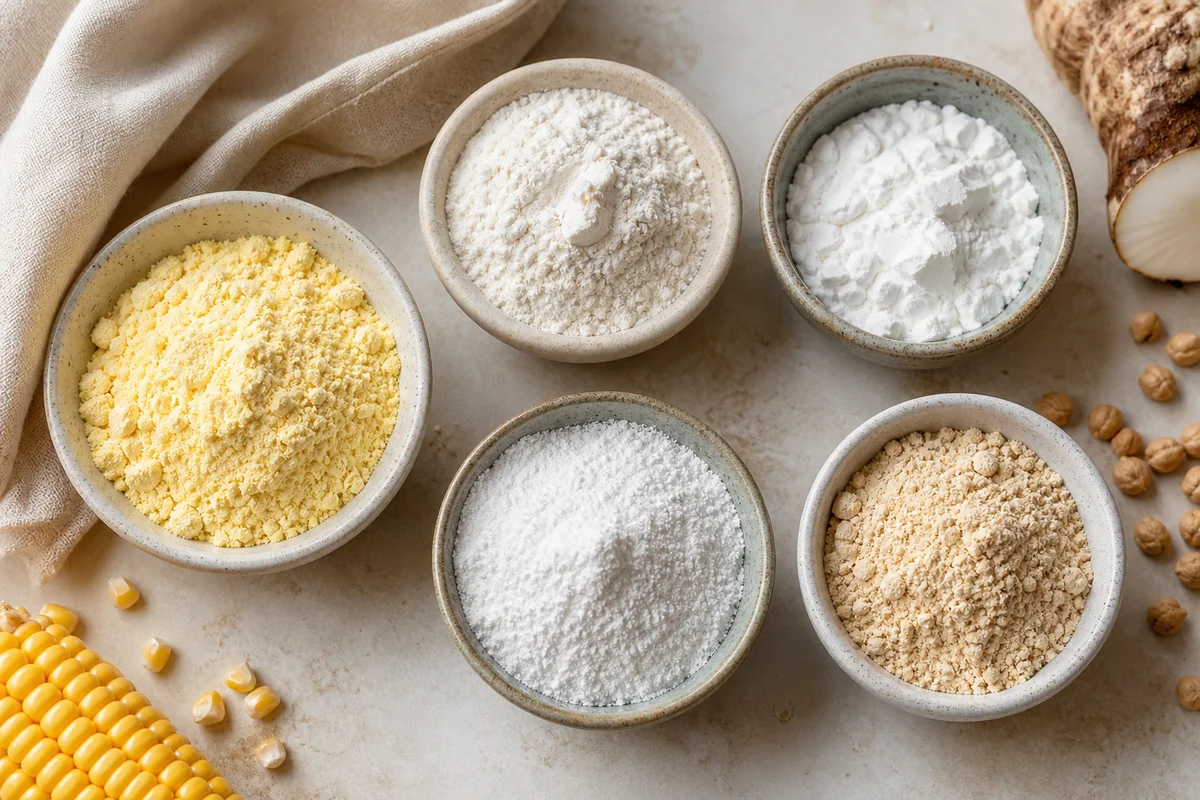
5 Best Corn Flour Substitutes for Home Cooks
Ingredients
Equipment
Method
- Identify your use case: thickening (sauces/gravy), crisp coating, or baking structure.
- Choose the closest match from the substitute list and use the ratio given for the specific substitute.
- If your swap is starch-based and your dish looks too thick or dull, loosen with water/broth in 1–2 tablespoon increments.
- If your swap is flour-based and the texture is too soft, bake longer or increase heat to drive off moisture.
- Do a quick consistency check: simmer 30–60 seconds for thickener swaps, then adjust.
Notes
- For thickening, most starch swaps activate quickly—simmer briefly and whisk to prevent lumps.
- For baking, start with the 1:1 swap if you want similar dryness; adjust with a spoon of liquid if batter feels stiff.
Tried this recipe?
Let us know how it was!
Carrie is a food writer and editor with more than 15 years of experience. She has worked for some of the biggest names in the food industry, including Bon Appétit, Food & Wine, and Martha Stewart Living.
As the Editor in Chief of EpicureDelight, Carrie oversees all of the content on the site. She also manages the team of contributing writers and editors, who help to create delicious recipes, helpful tips, and informative articles that you’ll find on the site.
A native of the Chicago area, Carrie is passionate about all things food. She loves trying new restaurants and experimenting with new recipes in her kitchen. She’s also a graduate of the Culinary Institute of America, so she knows a thing or two about food!



