
Couscous has a strange hold on weeknight dinners. It's done in five minutes, it soaks up whatever sauce you're serving, and it disappears without demanding attention.
When you're out of it, the replacement isn't just about finding a grain. It's about matching the texture your dish expects.
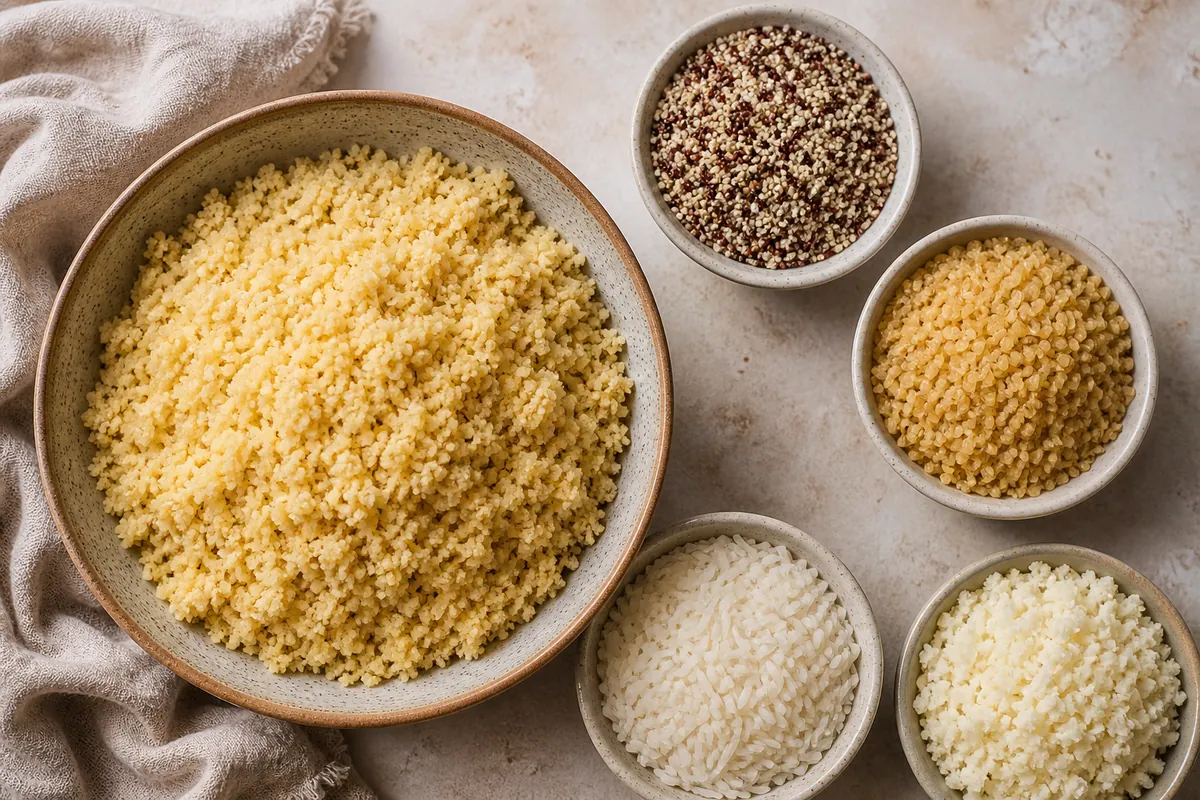
The best couscous substitute depends on texture first. Fine bulgur is the closest match for fluffy, spoonable results. Israeli couscous works well for salads and saucy sides. Quinoa and rice cover most pantry emergencies. Use instant polenta only when a creamy base suits your dish.
The couscous replacement question really splits into two scenarios. You either want something fluffy and spoonable that blends into the dish, or you want loose grains with a bit more structure.
Those two goals point you toward different options.
5 Best Couscous Substitutes Ranked by Texture
The table below maps each option to its texture and the ratio to use. Scan it first, then read the section that matches your dish.
| # | Substitute | Best For | Ratio | Key Note |
|---|---|---|---|---|
| 1 | Fine Bulgur | Both | 1:1 | Soak, drain, fluff |
| 2 | Israeli Couscous | Both | 1:1 | Cook shorter, avoid mush |
| 3 | Short-Grain Rice | Saucy | 1:1 | Rest with broth |
| 4 | Quinoa | Both | ¾:1 | Rinse first, then fluff |
| 5 | Instant Polenta | Stews | ¾:1 | Creamy base, not loose |
If you're gluten-free, skip bulgur and go straight to quinoa or polenta. Both are naturally gluten-free and handle broth and spices well.
1. Fine Bulgur
Fine bulgur is the closest thing to a true couscous alternative. Both are wheat-based, both hydrate quickly, and both go fluffy when you add hot liquid. The key difference is a slightly more pronounced chew. It's subtle, but noticeable if you're eating it plain.
To use it, pour boiling water or broth over the bulgur at a 1:1 ratio. Cover and rest for 10 minutes.
Drain any excess liquid, then fluff with a fork. If your bulgur is labeled "coarse," soak for an extra 5 minutes.
The fine version is what you want here. Because bulgur and couscous share wheat's mild, neutral flavor, sake-based swaps in marinades pair just as well with bulgur as they do with the original grain.
- Ratio: 1:1 by dry volume
- Soak time: 10 minutes in boiling liquid, covered
- Fluff step: Fork-fluff after draining, then rest 2 more minutes uncovered
- Best dishes: Tabbouleh, grain bowls, stew bases
Skip if: you want true couscous steam pearls. Fine bulgur has a slightly more distinct chew that shows up in simple, lightly dressed preparations.
2. Israeli Couscous
Israeli couscous, also called pearl couscous, is larger than standard couscous but behaves similarly when cooked in broth. It has a springy, satisfying bite that holds up well in salads and saucy sides.
Cook it like small pasta: simmer in salted water or broth for 8 to 9 minutes, not the 10 to 12 the package may suggest. Pulling it a minute early keeps it from going soft.
When deciding between pearl couscous and a lighter grain, choosing a fluffier grain instead may suit very light vinaigrette-dressed salads better.
- Ratio: 1:1 by dry volume
- Cook time: 8-9 minutes (not package time) to avoid softening
- Best dishes: Warm salads, roasted vegetable sides, brothy grain bowls
- Texture note: Pearls are visibly larger, so the final plate looks different
Skip if: you need the ultra-fine grain look. Pearl couscous is noticeably bigger and changes the visual presentation of the dish.
3. Short-Grain Rice
Short- or medium-grain rice is the pantry option most people already have. It's neutral in flavor, spoonable, and absorbs sauces the same way couscous does when it's warm.
The starchiness that makes it slightly sticky is actually an asset here, because it keeps individual grains from scattering when you spoon stew or tagine over the top.
Cook the rice normally, then warm it with 2 tablespoons of the dish's broth stirred in. That loosens it and helps it read more like couscous and less like a rice side dish.
Rest for 3 minutes before serving. It won't be fluffy in the traditional sense, but it carries sauce cleanly and disappears into the background of the dish.
Skip if: you're making a crisp or dry couscous-style salad. Rice reads softer and moister, which works poorly with light dressings.
4. Quinoa
Quinoa fluffs up well and has a light, almost airy texture that gets close to couscous when it's handled correctly. The catch is flavor.
Unrinsed quinoa carries a bitter coating called saponin. One rinse under cold water for 30 seconds removes it and makes the final grain taste clean and mild.
The slightly nutty finish quinoa has is part of its character. If you want to understand that flavor before committing, this earthy grain's profile is worth a quick read.
Cook at a 1.75:1 water-to-quinoa ratio, then pull it off heat and rest covered for 5 minutes before fluffing.
- Ratio: ¾ cup quinoa per 1 cup couscous called for
- Must-do: Rinse under cold water before cooking
- Fluff step: Rest covered 5 minutes, then fork-fluff to separate grains
- Best dishes: Grain salads, herb-heavy sides, light tagine bases
Skip if: you strongly dislike quinoa's flavor. Even rinsed, it has a distinct nuttiness that couscous doesn't.
5. Instant Polenta
Instant polenta doesn't replicate couscous grain-for-grain. It works differently: instead of loose, separate grains, it forms a creamy, cohesive base that acts like couscous when your goal is to catch a thick sauce or braise.
Instant Polenta as a Couscous Swap
Works for: thick stews, tagines, braises where you want the grain to absorb the sauce and act as a bed
Skip if: you need loose, individual grains for a salad or a lightly dressed couscous dish
Use ¾ cup instant polenta for every 1 cup couscous the recipe calls for. Stir it into simmering salted broth, keep whisking for 3 to 4 minutes, then pull from heat and let it sit 2 minutes.
It thickens fast, so don't walk away. Season it aggressively with cumin, turmeric, or whatever spice profile your dish is using so it integrates rather than sitting flat under the sauce.
Skip if: you need individual, spoonable grains. Polenta sets up into a soft, sliceable or creamy mass, which is a different eating experience entirely.
Making Couscous Substitutes Taste Right
The fastest way to make any swap taste intentional is to cook it in broth, not plain water. Chicken or vegetable broth adds the background flavor couscous would normally pick up from a dish's steam.
Season with salt before the grain absorbs any liquid. That way the seasoning goes into the grain, not just onto it.
- Match your liquid: Use the same broth the dish calls for, not water, for any grain substitute
- Rest before serving: Give every substitute at least 3 to 5 minutes covered off heat to finish hydrating and loosen
- Season twice: Once in the cooking liquid, and again with a small pinch of salt after fluffing
Skip this step if: your dish is served immediately without resting. Some swaps, particularly quinoa and bulgur, turn gummy if you rush them from pan to plate without that brief rest.
Frequently Asked Questions
Fine bulgur is the closest match. Soak it in boiling broth for 10 minutes, drain, and fork-fluff. The result is nearly identical in texture to couscous.
Use the same volume of liquid as the original couscous recipe. If the grain looks dry after resting, stir in 1 tablespoon of warm broth at a time.
Yes. Short-grain rice absorbs sauces well and holds up under a tagine. Stir 2 tablespoons of warm broth into the cooked rice before serving to loosen it.
Quinoa or fine bulgur. Both stay loose and separate after fluffing. Avoid polenta, which sets into a creamy mass instead of individual grains.
Add 1 to 2 tablespoons of broth or water, cover, and microwave on medium for 90 seconds. Fluff immediately after reheating to separate any clumped grains.
5 Best Couscous Substitutes That Taste Right
Ingredients
Method
- Identify your couscous use: side for saucy dishes (fluffy/steamed) vs thick base (bed for stew).
- Choose a substitute from the table that matches the bite you want (fine, pearl, or fluffy grains).
- Use the listed ratio (for grain swaps) or measure the same serving size, then adjust with 1–2 tablespoons more liquid if it feels dry.
- Let the cooked substitute rest 5 minutes, then fluff (or stir well) to prevent clumps.
- Season immediately with salt/broth and any couscous spices so the swap tastes integrated, not bland.
Notes
- For steamy, fluffy results, prioritize fine grains and allow a short rest before fluffing.
- If the substitute is more absorbent than couscous, add a splash of warm broth and mix right before serving.
Tried this recipe?
Let us know how it was!
Carrie is a food writer and editor with more than 15 years of experience. She has worked for some of the biggest names in the food industry, including Bon Appétit, Food & Wine, and Martha Stewart Living.
As the Editor in Chief of EpicureDelight, Carrie oversees all of the content on the site. She also manages the team of contributing writers and editors, who help to create delicious recipes, helpful tips, and informative articles that you’ll find on the site.
A native of the Chicago area, Carrie is passionate about all things food. She loves trying new restaurants and experimenting with new recipes in her kitchen. She’s also a graduate of the Culinary Institute of America, so she knows a thing or two about food!



